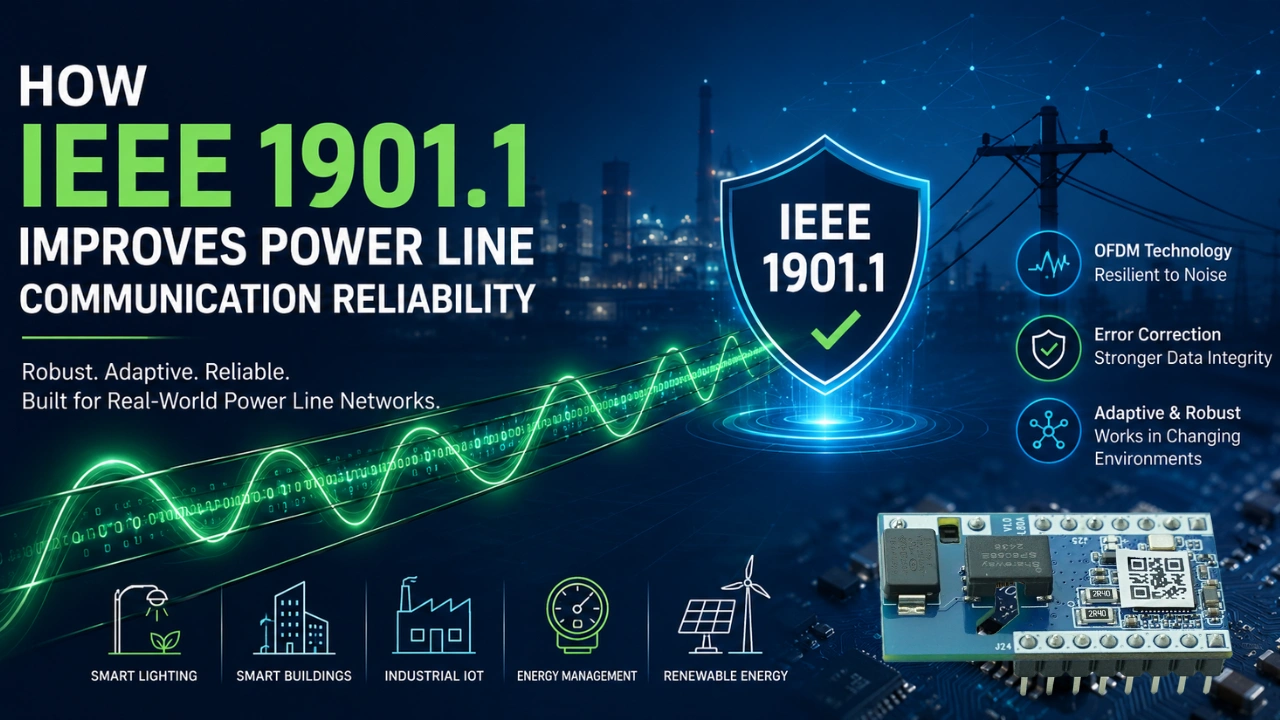
IEEE P1901.1 verbessert die Zuverlässigkeit der Stromleitungskommunikation durch den Einsatz von Technologien wie OFDM, Fehlerkontrollmechanismen, Interleaving, adaptive Kommunikation und Netzwerkmanagementfunktionen, die für wechselnde und verrauschte Stromleitungskanäle konzipiert sind. Die Stromleitungskommunikation (SPS) nutzt bestehende Stromleitungen zur Datenübertragung, sodass Geräte kommunizieren können, ohne separate Kommunikationskabel installieren zu müssen. Stromleitungen wurden jedoch ursprünglich so konzipiert, dass sie elektrische Energie liefern – nicht um einen sauberen und stabilen Kommunikationskanal bereitzustellen.
Elektrisches Rauschen, Dämpfung, Impedanzänderungen, Störungen und sich verändernde Lasten können alle die Leistung der SPS-Kommunikation beeinflussen. Dies ist besonders wichtig in Industrieanlagen, smarten Beleuchtungsnetzen, intelligenten Gebäuden und anderen Anwendungen, bei denen eine zuverlässige Kommunikation über bestehende Strominfrastruktur erforderlich ist.
IEEE P1901.1 Viele dieser Herausforderungen werden gelöst, indem ein Breitband-Stromnetzkommunikationsstandard für Mittelfrequenzanwendungen und zuverlässige Datenübertragung über Stromleitungen definiert wird.
Praktisch verhilft IEEE P1901.1 SPS-Systemen, eine zuverlässigere Kommunikation zu erreichen, indem robuste physikalische Technologien, Fehlerkontrollmechanismen, Kanalanpassung und Netzwerkfähigkeiten kombiniert werden.
Dieser Artikel erklärt, was IEEE P1901.1 ist, wie es die Zuverlässigkeit von SPS verbessert und warum es für moderne SPS-Kommunikationsmodule und industrielle IoT-Systeme relevant ist.
Was ist IEEE P1901.1?
IEEE P1901.1 ist ein IEEE-Standard für Mittelfrequenz-(MF) Powerline-Kommunikation. Es definiert Kommunikationstechnologien und Protokolle, die für eine zuverlässige Datenübertragung über Stromleitungen vorgesehen sind.
Im Gegensatz zu herkömmlichen kabelgebundenen Kommunikationsnetzen, die dedizierte Ethernet- oder Kommunikationskabel verwenden, übertragen SPS-Systeme Daten über bestehende Stromleiter.
Ein typisches SPS-System kann Folgendes umfassen:
- Ein SPS-Kommunikationsmodul
- Ein SPS-Gateway oder Konzentrator
- SPS-fähige Controller
- Sensoren und Zähler
- Lichtsteuerungen
- Industriegeräte
- Cloud- oder Verwaltungssoftware
IEEE P1901.1 bietet einen standardisierten Rahmen für die Kommunikation zwischen SPS-Geräten und berücksichtigt dabei die schwierigen Eigenschaften von Powerline-Kanälen.
Der Standard ist besonders relevant für Anwendungen, in denen die Installation neuer Kommunikationsverkabelung teuer, schwierig oder unpraktisch ist.
Warum ist die Zuverlässigkeit der Stromnetzkommunikation so herausfordernd?
Der größte Vorteil der SPS – die Nutzung bestehender Stromleitungen – ist ebenfalls eine ihrer größten technischen Herausforderungen.
Das elektrische Netz kann sich je nach angeschlossener Ausrüstung und Betriebsbedingungen kontinuierlich ändern.
Häufige Faktoren, die die PLC-Kommunikation beeinflussen können, sind:
Elektrisches Rauschen
Schaltnetzteile, LED-Treiber, Motoren, Frequenzvariablen, Wechselrichter und andere elektronische Geräte können Störungen in die Stromleitung einführen. Für einen praktischeren Ansatz zur Diagnose von Kommunikationsproblemen siehe unser PLC-Signalstörungsfehlerbehebung Leitfaden.
Wenn Kommunikationssignale im Vergleich zum Hintergrundrauschen schwach sind, können Paketfehler und Kommunikationsunterbrechungen auftreten.
Signaldämpfung
SPS-Signale werden schwächer, je weiter sie durch das Stromnetz reisen. Lange Kabelstrecken, Transformatoren, Filter und andere elektrische Komponenten können die Dämpfung erhöhen.
Veränderte Impedanz
Die Impedanz eines Stromnetzes ist nicht konstant. Sie kann sich ändern, wenn elektrische Lasten angeschlossen oder abgeschaltet werden.
Dies macht eine Stromleitung zu einem viel weniger vorhersehbaren Kommunikationskanal als ein dediziertes Netzwerkkabel.
Reflexionen und Interferenzen
Äste, Kabel, Lasten und andere elektrische Komponenten können Signalreflexionen und frequenzselektive Störungen verursachen.
Raue Industriebedingungen
Industrieanlagen können große Motoren, Schweißgeräte, Frequenzvariablenantriebe, Leistungswandler und andere Quellen elektromagnetischer Störungen enthalten.
Für SPS-Systeme, die in diesen Umgebungen eingesetzt werden, ist die Zuverlässigkeit der Kommunikation daher ein entscheidender Designaspekt.
Wie IEEE P1901.1 die Zuverlässigkeit der SPS-Kommunikation verbessert
IEEE P1901.1 ist auf die Eigenschaften von Powerline-Kanälen herum konzipiert. Mehrere Technologien und Mechanismen tragen zu einer zuverlässigen Kommunikation bei.
1. OFDM verbessert die Kommunikation in lauten Kanälen
Eine wichtige Technologie, die von P1901.1 verwendet wird, ist Orthogonale Frequenzteilungsmultiplexierung (OFDM). Um zu verstehen, warum OFDM in anspruchsvollen SPS-Umgebungen weit verbreitet eingesetzt wird, siehe unseren Leitfaden für OFDM vs. FSK in der Stromleitungskommunikation, der die beiden Modulationsansätze hinsichtlich Geschwindigkeit, Zuverlässigkeit, Rauschresistenz und Anwendungsszenarien vergleicht.
Anstatt alle Informationen über eine einzige Trägerfrequenz zu übertragen, teilt OFDM die Daten auf mehrere Unterträger auf.
Dieser Ansatz bietet mehrere Vorteile für SPS:
- Bessere Resistenz gegen frequenzselektive Interferenz
- Verbesserte Toleranz von Schmalbandrauschen
- Eine effizientere Nutzung des verfügbaren Spektrums
- Größere Robustheit, wenn einige Frequenzbänder Störungen erfahren
Wenn Störungen einen Teil des Kommunikationsspektrums betreffen, fällt die gesamte Kommunikationsverbindung nicht zwangsläufig aus.
Dies macht OFDM besonders nützlich für Stromnetzumgebungen, in denen die Rauscheigenschaften stark variieren können.
2. Adaptive Kommunikation hilft bei wechselnden Stromleitungen
Ein Stromleitungskanal kann sich je nach elektrischer Last und Betriebsbedingungen ändern.
Ein robustes SPS-System muss sich daher an sich ändernde Kanalbedingungen anpassen.
IEEE P1901.1 unterstützt Mechanismen, die es ermöglichen, die Kommunikationsleistung an den Zustand des Kanals anzupassen.
Je nach Implementierung können Parameter wie Modulation und Codierung ausgewählt werden, um auszubalancieren:
Zuverlässigkeit der Datenratenkommunikation ↔
Wenn die Kanalbedingungen gut sind, kann das System von einer höheren Kommunikationsleistung profitieren.
Wenn sich die Kanalbedingungen verschlechtern, können robustere Übertragungseinstellungen helfen, die Kommunikation aufrechtzuerhalten.
Diese Anpassungsfähigkeit ist für reale SPS-Netzwerke wichtig, da die elektrische Umgebung selten statisch ist.
3. Vorwärtsfehlerkorrektur reduziert Kommunikationsfehler
Powerline-Kanäle können Bitfehler aufgrund von Rauschen und Störungen verursachen.
Fehlerkontrolltechnologien helfen dem Empfänger, Informationen korrekt wiederherzustellen, selbst wenn das übertragene Signal teilweise betroffen ist.
Die Vorwärtsfehlerkorrektur (FEC) fügt den übertragenen Daten Redundanz hinzu. Der Empfänger kann diese zusätzlichen Informationen nutzen, um bestimmte Fehler zu erkennen und zu korrigieren, ohne dass jede beschädigte Übertragung erneut gesendet werden muss.
Das kann sich verbessern:
- Paketzuverlässigkeit
- Kommunikationsstabilität
- Netzeffizienz
- Leistung in lauten Umgebungen
Für Anwendungen wie intelligente Beleuchtung und industrielle Überwachung ist die Reduzierung von Kommunikationsfehlern wichtig, da Geräte möglicherweise lange ohne manuelles Eingreifen verbunden bleiben müssen.
4. Interleaving hilft, Burst-Geräusche zu kontrollieren
Stromleitungsstörungen sind nicht immer kontinuierlich.
Einige elektrische Geräte können kurze Phasen intensiver Störungen erzeugen, was zu Fehlerausbrüchen führt.
Interleaving verteilt die übertragenen Daten auf verschiedene Positionen, sodass ein Störungsstoß weniger wahrscheinlich einen großen kontinuierlichen Teil der ursprünglichen Daten zerstört.
In Kombination mit Fehlerkorrekturmechanismen kann Interleaving die Fähigkeit eines SPS-Systems verbessern, sich von vorübergehenden Störungen zu erholen.
Dies ist besonders nützlich in Industrieumgebungen, in denen elektrische Geräte häufig ein- und ausgeschaltet werden können.
5. Zuverlässige MAC-Schicht-Kommunikation verbessert die Netzwerkstabilität
Zuverlässigkeit hängt nicht nur von der physischen Schicht ab.
Ein SPS-Netzwerk benötigt außerdem Mechanismen zur Verwaltung des Zugangs zum gemeinsamen Kommunikationsmedium.
IEEE P1901.1 enthält MAC-Layer-Funktionen, die die Kommunikation zwischen Geräten koordinieren.
Diese Mechanismen helfen SPS-Netzwerken, Folgendes zu verwalten:
- Gerätekommunikation
- Datenübertragung
- Kanalzugang
- Paketzustellung
- Netzwerkkoordination
Das ist wichtig, wenn viele SPS-Knoten dasselbe elektrische Netz teilen.
Eine gut gestaltete MAC-Schicht hilft, Kommunikationskonflikte zu vermeiden und unterstützt einen vorhersehbareren Netzwerkbetrieb.
6. Multi-Hop-Netzwerke können die praktische Abdeckung erweitern
SPS-Kommunikation muss nicht immer von einer einzigen direkten Verbindung zwischen zwei Geräten abhängen.
Vernetzte SPS-Systeme können mehrere Knoten nutzen, um Kommunikationswege durch das elektrische Netz bereitzustellen.
In einer Multi-Hop-Architektur können Daten über Zwischengeräte zu ihrem Ziel gelangen.
Zum Beispiel:
SPS-Gateway → SPS-Controller → SPS-Controller → SPS-Controller SPS-Controller
Dieser Ansatz kann helfen, herausfordernde Bereiche des elektrischen Netzes zu überwinden, in denen ein direkter Kommunikationsweg schwach sein kann.
Multi-Hop-Kommunikation ist besonders nützlich für große intelligente Beleuchtungsanlagen, Industrieanlagen, Campusse, Lagerhäuser und andere verteilte Systeme.
7. Robuste Netzwerke unterstützen große SPS-Implementierungen
Moderne SPS-Anwendungen enthalten oft viele angeschlossene Geräte.
Ein intelligentes Straßenbeleuchtungssystem kann beispielsweise Hunderte oder Tausende von Beleuchtungssteuerungen umfassen, die über eine große elektrische Infrastruktur verteilt sind.
Die Zuverlässigkeit der Kommunikation umfasst daher mehr als nur die Aufrechterhaltung einer einzelnen Verbindung.
Das Netzwerk muss außerdem Folgendes unterstützen:
- Geräteentdeckung
- Netzwerkorganisation
- Datenrouting
- Kommunikationsmanagement
- Fehlerwiederherstellung
- Skalierbare Bereitstellung
IEEE P1901.1 bietet einen standardisierten Kommunikationsrahmen, der als Grundlage für diese Arten von vernetzten SPS-Anwendungen dienen kann.
IEEE P1901.1 vs. konventionelle Powerline-Kommunikation
Die Zuverlässigkeitsvorteile einer standardisierten SPS-Technologie werden deutlicher im Vergleich zu einfacheren Powerline-Kommunikationsansätzen.
| Ausstattung | Grundlegender SPS-Ansatz | IEEE P1901.1-basierter Ansatz |
|---|---|---|
| Kommunikation über bestehende Stromleitungen | Ja | Ja |
| Entwickelt für verrauschte Stromnetze | Kommt auf die Implementierung an | Ja |
| OFDM-basierte Übertragung | Vielleicht oder auch nicht | Unterstützt |
| Fehlerkontrollmechanismen | Kommt auf die Implementierung an | Definiert durch den Standard |
| Adaptive Kommunikation | In einigen Systemen eingeschränkt | Unterstützt |
| Netzwerkkommunikation | Grundlegend bis fortgeschritten | Standardisiertes Rahmenwerk |
| Multi-Geräte-Anwendungen | Kommt auf das Design an | Geeignet |
| Industrielle Anwendungen | Kommt auf die Implementierung an | Sehr passend |
| Anwendungen für intelligente Beleuchtung | Möglich | Geeignet |
Die genaue Leistung eines SPS-Produkts hängt weiterhin von Hardware, Firmware, Antennen-/Kopplungsdesign, Stromleitungsbedingungen, Netzwerkarchitektur und Implementierung des Standards ab.
Ein Standard allein garantiert keine spezifische Kommunikationsentfernung oder Datenrate.
Wie IEEE P1901.1 bei der intelligenten Beleuchtung hilft
Intelligente Beleuchtung ist eine starke Anwendung für zuverlässige SPS-Kommunikation, da die Beleuchtungsinfrastruktur bereits umfangreiche elektrische Verkabelung enthält.
Ein SPS-basiertes intelligentes Beleuchtungssystem kann die bestehenden Stromleitungen für beides nutzen:
- Stromversorgung
- Datenkommunikation
Eine typische Architektur kann so aussehen:
Cloud-Plattform → SPS-Gateway → Stromleitung → SPS-Controller → LED-Lampen
Das SPS-Gateway kommuniziert über die bestehende elektrische Infrastruktur mit Beleuchtungssteuerungen.
Die Lichtregler können dann Funktionen wie:
- Fernsteuerung AN/AUS
- Dimmen
- Terminplanung
- Energieüberwachung
- Fehlererkennung
- Statusüberwachung
- Gruppenkontrolle
Eine zuverlässige SPS-Kommunikation ist besonders wichtig, wenn Lichtsteuerungen auf Straßen, Lagerhäuser, Industrieanlagen, Häfen, Tunnel oder große Außenbereiche verteilt sind.
Wenn die Kommunikation instabil ist, können Fernbefehle verzögert sein oder Geräte vorübergehend nicht verfügbar sein.
Eine robuste SPS-Kommunikationstechnologie hilft, diese Probleme zu verringern.
Wie IEEE P1901.1 das industrielle IoT unterstützt
Die gleichen Prinzipien gelten für das industrielle IoT.
Industrieanlagen verfügen oft über umfangreiche elektrische Netze, können jedoch hohe elektromagnetische Störungen und ständig wechselnde Lasten aufweisen.
SPS kann einen Kommunikationsweg für Geräte wie:
- Sensoren
- Controller
- Meter
- Industriebeleuchtung
- Energiemanagementgeräte
- Überwachungsgeräte
IEEE P1901.1 kann helfen, eine zuverlässigere Kommunikationsschicht für diese verteilten Geräte zu schaffen.
Für industrielle IoT-Anwendungen ist Zuverlässigkeit oft wichtiger als das Erreichen der höchsten theoretischen Datenrate.
Eine stabile Kommunikationsverbindung kann einen praktischeren Mehrwert bieten als eine Hochgeschwindigkeitsverbindung, die häufig Pakete verliert.
IEEE P1901.1 und SPS-Kommunikationsmodule
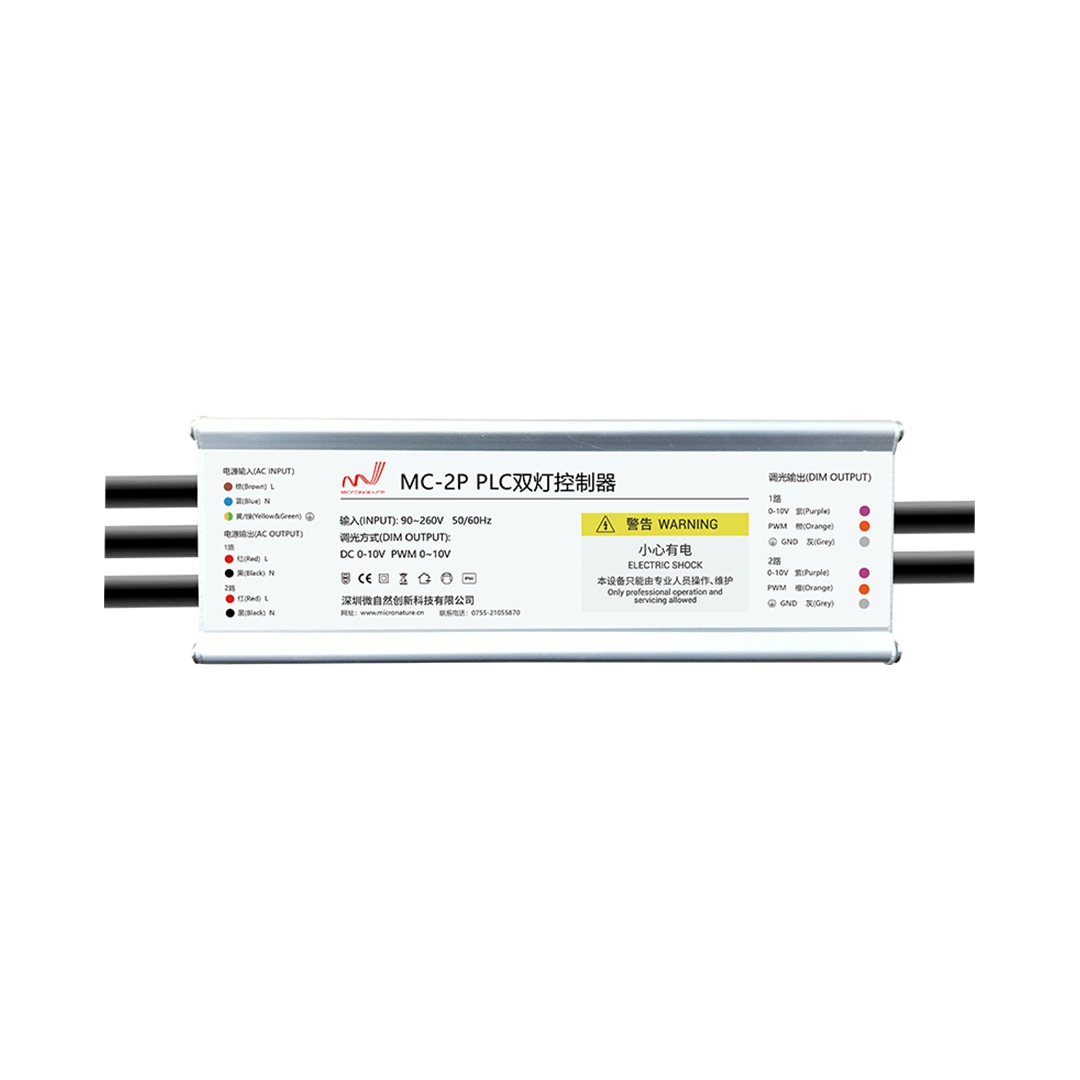
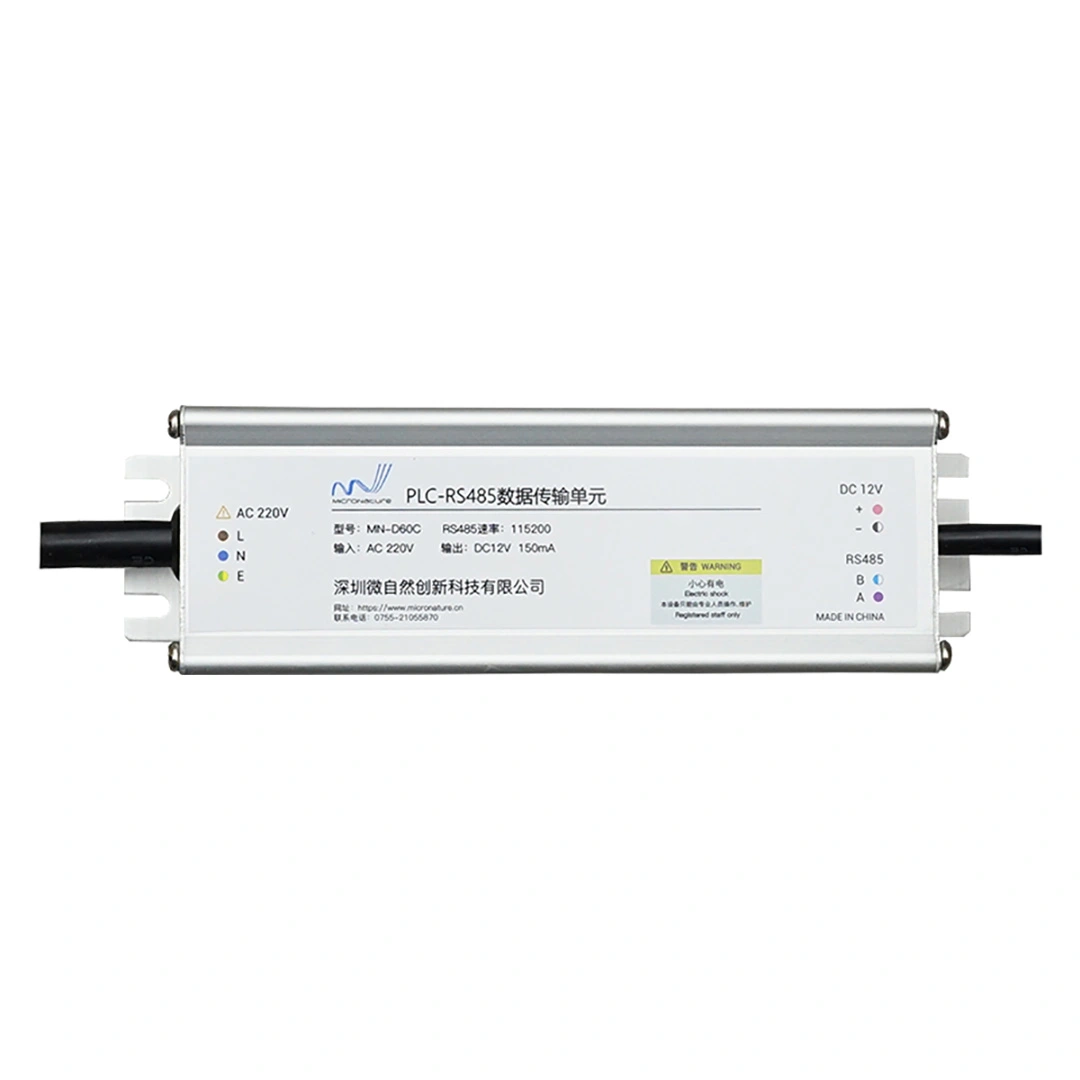
Ein SPS-Kommunikationsmodul stellt die Hardware und Firmware bereit, die erforderlich sind, um Powerline-Kommunikation in ein eingebettetes Produkt zu integrieren. MicroNature bietet an Module zur Stromleitungskommunikation für OEM- und Embedded-System-Anwendungen, bei denen eine zuverlässige SPS-Konnektivität erforderlich ist.
Für OEM-Anwendungen kann ein SPS-Modul integriert werden in:
- Intelligente Lichtsteuerungen
- Energiemesser
- Industrielle Steuerungen
- IoT-Gateways
- Ladesysteme für Elektrofahrzeuge
- Solar- und PV-Geräte
- Gebäudeautomationsgeräte
Bei der Auswahl eines SPS-Kommunikationsmoduls sollten Ingenieure mehr bewerten als nur, ob es IEEE P1901.1 unterstützt. Wenn Sie ein Modul für ein OEM-Produkt auswählen, finden Sie unseren Leitfaden auf Wahl des richtigen SPS-Kommunikationsmoduls behandelt die wichtigsten Spezifikationen und Integrationsfaktoren, die zu berücksichtigen sind.
Wichtige Faktoren sind:
Kommunikationsstandard
Bestätigen Sie, dass das Modul den erforderlichen SPS-Standard und das Frequenzband für die Zielanwendung unterstützt.
Kommunikationsdistanz
Die tatsächliche Kommunikationsentfernung hängt von der Powerline-Topologie, den Kabeleigenschaften, dem Rauschniveau, der Impedanz, der Kopplungsschaltung und der Netzwerkarchitektur ab.
Lärmimmunität
Das Modul sollte unter realistischen elektrischen Rauschbedingungen getestet werden und nicht nur unter Laborbedingungen.
Datenrate
Höhere theoretische PHY-Raten bedeuten nicht automatisch eine bessere Anwendungsleistung.
Die erforderliche Datenrate sollte von der Anwendung bestimmt werden.
Netzwerkkapazität
Für große SPS-Installationen sollten Sie berücksichtigen, wie viele Knoten über ein Gateway oder Netzwerksegment kommunizieren müssen.
Hardware-Integration
OEM-Ingenieure sollten Folgendes bewerten:
- Versorgungsspannung
- UART/SPI oder andere Host-Schnittstellen
- PCB-Layoutanforderungen
- Kopplungsschaltung
- Isolationsanforderungen
- Firmware-Unterstützung
- Betriebstemperatur
- EMC-Leistung
Software- und Protokollunterstützung
Ein zuverlässiges SPS-Modul sollte außerdem geeignete Firmware, APIs, Konfigurationswerkzeuge und Netzwerkmanagementfunktionen bereitstellen.
Garantiert IEEE P1901.1 eine zuverlässige SPS-Kommunikation?
Nein.
IEEE P1901.1 bietet Technologien und Mechanismen, die darauf ausgelegt sind, die zuverlässige Kommunikation zu verbessern, aber es kann nicht alle durch die elektrische Umgebung verursachten Probleme eliminieren.
Die tatsächliche SPS-Leistung hängt vom gesamten System ab.
Wichtige Faktoren sind:
- Powerline-Topologie
- Kabellänge
- Elektrisches Rauschen
- Lasteigenschaften
- Kopplungsschaltung
- Signaldämpfung
- EMI-Filterung
- SPS-Moduldesign
- Gateway-Architektur
- Netzwerkkonfiguration
- Firmware-Implementierung
Aus diesem Grund sollten Ingenieure die Kommunikationsleistung der SPS wann immer möglich anhand realer elektrischer Bedingungen bewerten.
Wie man die Zuverlässigkeit von SPS über den Kommunikationsstandard hinaus verbessert
Ein zuverlässiges SPS-Netzwerk erfordert Systemtechnik.
Mehrere zusätzliche Maßnahmen können die Leistung verbessern.
Verwenden Sie geeignete SPS-Kopplung
Die Kopplungsschaltung verbindet den SPS-Transceiver mit der Stromleitung. Sein Design beeinflusst direkt die Signalinjektion und -empfang.
Kontroll-EMI
Filter und andere EMV-Maßnahmen können helfen, Störungen durch Geräte zu reduzieren, die erhebliches elektrisches Rauschen erzeugen.
Optimierung des PCB-Layouts
Das SPS-Modul, die Kupplungsschaltung, die Isolationskomponenten und das Netzteil sollten gemäß den Empfehlungen des Herstellers entworfen werden.
Testen unter realen Lasten
Tests nur unter sauberen Laborbedingungen zeigen möglicherweise keine im Feld auftretenden Probleme.
Testen Sie mit Vertreter:
- LED-Treiber
- Motoren
- Wechselrichter
- Schaltnetzteile
- Lange Kabel
- Elektrische Lasten
Das Netzwerk richtig entwerfen
Für große Deployments sollten Sie Gateway-Platzierung, Netzwerktopologie, Knotendichte, Routing und Kommunikationsredundanz berücksichtigen.
Wo ist IEEE P1901.1 am nützlichsten?
IEEE P1901.1 kann besonders wertvoll in Anwendungen sein, bei denen die Kommunikationsverkabelung schwierig ist oder bestehende elektrische Infrastruktur wiederverwendet werden kann.
Typische Anwendungen sind:
- Intelligente Straßenbeleuchtung
- Industriebeleuchtung
- Intelligente Gebäude
- Industrielles IoT
- Energieüberwachung
- Intelligente Zähler
- Verteilte Steuerungssysteme
- Infrastrukturüberwachung
- Ladeinfrastruktur für Elektrofahrzeuge
- PV- und erneuerbare Energiesysteme
Der gemeinsame Vorteil ist die Möglichkeit, bestehende Strominfrastruktur als Kommunikationsmedium zu nutzen.
Wichtige Erkenntnisse
IEEE P1901.1 verbessert die Zuverlässigkeit der Stromnetzkommunikation durch die Bereitstellung von Technologien, die speziell für die herausfordernden Eigenschaften elektrischer Stromnetze entwickelt wurden.
Zu den wichtigsten Vorteilen gehören:
- OFDM verbessert den Widerstand gegen frequenzselektive Interferenz.
- Adaptive Kommunikation hilft, sich ändernden Kanalbedingungen anzupassen.
- Vorwärtsfehlerkorrektur Hilft dabei, Daten wiederherzustellen, die von Übertragungsfehlern betroffen sind.
- Interleaving Verbessert die Widerstandsfähigkeit gegen Burst-Geräusche.
- MAC-Schicht-Mechanismen Helfen Sie bei der Verwaltung der Kommunikation zwischen mehreren Geräten.
- Netzwerkfähigkeiten Unterstützung größerer und stärker verteilter SPS-Deployments.
- Standardisierung bietet einen definierten technischen Rahmen für kompatible SPS-Implementierungen.
Für smarte Beleuchtung, industrielles IoT und andere verteilte Anwendungen können diese Fähigkeiten SPS zu einer praktischen Alternative zur Installation dedizizierter Kommunikationsleitungen machen.
Die zuverlässige SPS-Leistung hängt jedoch vom gesamten System ab – nicht nur vom Kommunikationsstandard. SPS-Moduldesign, Kopplungsschaltungen, EMI-Steuerung, Netzwerktopologie, Firmware und reale Tests spielen alle wichtige Rollen.