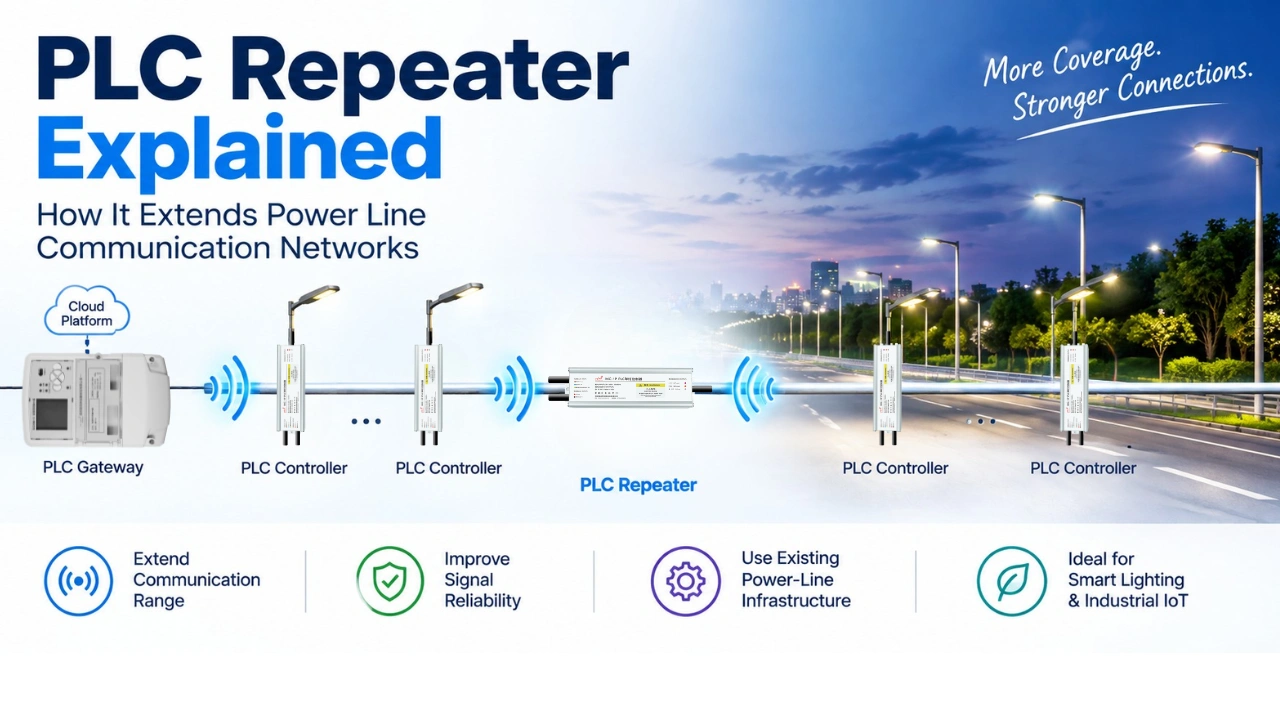
La communication par ligne électrique (PLC) permet aux données de circuler sur les lignes électriques existantes, éliminant ainsi le besoin de câbles de communication dédiés dans de nombreuses applications. Cependant, les signaux des PLC peuvent s’affaiblir lorsqu’ils traversent de longs câbles, des réseaux de distribution, des transformateurs, des charges électriques et des zones à fort bruit électrique.
Un Répéteur PLC est conçu pour aider à surmonter ces limitations de communication en recevant un signal API affaibli et en le retransmettant afin d’étendre une couverture de communication fiable.
Dans l’éclairage intelligent, l’IoT industriel, l’éclairage public et d’autres réseaux PLC à grande échelle, les répéteurs peuvent jouer un rôle important dans la conception du réseau lorsque la distance de communication ou l’environnement électrique dépasse la portée fiable de la communication directe des PLC.
Ce guide explique ce qu’est un répéteur PLC, son fonctionnement, quand vous en avez besoin, où il doit être installé, et en quoi il diffère d’une passerelle PLC.
Qu’est-ce qu’un répéteur PLC ?
Un Répéteur PLC est un dispositif de communication qui reçoit un signal de données PLC provenant d’une section d’un réseau de lignes électriques et retransmet le signal à une autre section du réseau.
En termes simples :
Dispositif PLC → signal affaibli → répéteur PLC → signal régénéré → appareils API en aval
Contrairement à une passerelle PLC, dont le rôle principal est de connecter le réseau PLC à un autre réseau de communication ou plateforme de gestion, un répéteur est principalement utilisé pour étendre ou améliorer la couverture de communication des PLC au sein du réseau CPL.
Un répéteur PLC peut être utile lorsque la distance entre les appareils PLC devient trop grande ou lorsque les conditions électriques provoquent une atténuation excessive du signal.
Que fait un répéteur PLC ?
Un répéteur PLC peut aider :
- Extension de la couverture des communications des API
- Régénération des signaux API affaiblis
- Améliorer la fiabilité des communications sur de longues lignes électriques
- Surmonter certaines sections d’un réseau électrique difficile
- Connectez les appareils PLC à des installations d’éclairage ou industrielles plus grandes
- Réduire les zones mortes de communication dans les grands réseaux PLC
La performance exacte dépend de la technologie des PLC, de la bande de fréquences, des caractéristiques de la ligne électrique, de la topologie du réseau, du bruit électrique et de la conception du répéteur.
Comment fonctionne un répéteur PLC ?
Le principe de base est simple.
Un émetteur PLC place un signal de communication haute fréquence sur une ligne électrique. À mesure que le signal traverse le réseau, sa puissance peut diminuer en raison de la résistance du câble, des variations d’impédance, des charges électriques, des branchements, des composants de filtrage et des interférences électromagnétiques.
Lorsque le signal atteint un répéteur, le répéteur reçoit la communication du PLC, traite ou régénère le signal, puis le retransmet.
Un chemin de communication simplifié ressemble à ceci :
Nœud PLC A → Ligne électrique → Répéteur PLC → Ligne électrique → PLC Nœud B
Le répéteur crée donc un segment de communication supplémentaire au sein du réseau PLC.
Étape 1 : Recevoir le signal de l’API
Le répéteur surveille la ligne électrique et reçoit la communication PLC transmise par un autre nœud.
Le signal entrant peut déjà être plus faible que la transmission initiale car il a traversé une longue section du réseau ou électriquement complexe.
Étape 2 : Traiter et régénérer la communication
Le répéteur traite le signal PLC reçu selon la technologie de communication utilisée par le réseau.
Selon l’architecture, cela peut impliquer la détection du signal, la démodulation, le traitement des données, la gestion des erreurs et la retransmission.
Étape 3 : Retransmettre le signal
Le répéteur renvoie le signal de communication régénéré sur la ligne électrique.
Les dispositifs PLC en aval peuvent alors communiquer avec le répéteur et continuer à communiquer avec le reste du réseau.
Étape 4 : Poursuivre la communication réseau
Dans un réseau correctement conçu, le répéteur étend effectivement le chemin de communication sans nécessiter un câble de communication séparé.
Cela rend les répéteurs particulièrement utiles dans les applications où l’installation de nouveaux câblages de communication serait coûteuse ou peu pratique.
Pourquoi les réseaux PLC ont-ils besoin de répéteurs ?
La communication par PLC utilise l’infrastructure électrique existante, mais les lignes électriques ne sont pas principalement conçues comme des canaux de communication.
Les caractéristiques électriques d’un réseau électrique peuvent varier considérablement d’une installation à l’autre.
Plusieurs facteurs peuvent réduire la fiabilité des communications des PLC.
1. Longue distance sur la ligne électrique
À mesure que la distance de communication augmente, l’atténuation du signal des PLC devient généralement plus significative.
Un système PLC fonctionnant de manière fiable sur un circuit électrique relativement court peut nécessiter une planification réseau supplémentaire lorsqu’il est déployé sur une grande installation, un réseau d’éclairage public, un entrepôt, un port ou un site industriel.
Un répéteur peut diviser un long chemin de communication en sections plus gérables.
2. Bruit électrique
Les alimentations à découpage, les variateurs de fréquence, les moteurs, les transducteurs LED, les équipements industriels et autres dispositifs électriques peuvent introduire du bruit dans le réseau électrique.
Des niveaux de bruit élevés peuvent réduire le rapport signal/bruit de la communication API et augmenter les erreurs de paquets ou les retransmissions.
Un répéteur n’élimine pas la source du bruit électrique, mais un équipement réseau stratégiquement déployé peut aider à maintenir la couverture des communications dans des environnements difficiles.
3. Branches de lignes électriques
Les grands réseaux électriques contiennent souvent plusieurs branches.
Lorsqu’un signal PLC atteint un point de dérivation, une partie du signal peut se déplacer dans différentes directions. Les variations d’impédance peuvent affecter la propagation et l’atténuation du signal.
Les topologies de lignes électriques grandes ou complexes nécessitent donc une planification plus rigoureuse des réseaux PLC.
4. Transformateurs et autres équipements électriques
Certains composants électriques peuvent affecter de manière significative la propagation du signal des PLC.
Les transformateurs, filtres, disjoncteurs, alimentations et autres composants peuvent atténuer ou bloquer le signal de communication selon leurs caractéristiques électriques et la plage de fréquences de l’API.
Dans ces situations, un répéteur ou une autre architecture de réseau API adaptée peut être nécessaire.
5. Grands réseaux d’éclairage extérieur
L’éclairage public est une application courante pour la communication avec les PLC car les contrôleurs d’éclairage peuvent communiquer via la même infrastructure électrique que les lampes.
Cependant, une longue route, un grand parking, un parc industriel ou un réseau d’éclairage municipal peuvent comporter d’importantes distances de câble et plusieurs sections de distribution.
Les répéteurs PLC peuvent être envisagés lorsque la communication directe entre tous les nœuds n’est pas suffisamment fiable.
Répéteur PLC vs. passerelle PLC
Une question fréquente est de savoir si un répéteur PLC et une passerelle PLC sont le même appareil.
Ce n’est pas le cas.
| Caractéristiques | Répéteur PLC | Passerelle PLC |
|---|---|---|
| Objectif principal | Étendre la communication des API | Connecter un réseau PLC à un autre réseau |
| Extension de la couverture des PLC | Oui | Ce n’est normalement pas la fonction principale |
| Se connecte à Ethernet/4G/cloud | Pas forcément | Couramment |
| Utilisation pour les réseaux PLC longs | Oui | Oui, cela dépend de l’architecture |
| Communique avec les nœuds PLC | Oui | Oui |
| Fournit un backhaul réseau | En général, non | Oui |
| Application typique | Extension du signal | Surveillance à distance et gestion réseau |
Un Répéteur PLC se concentre sur la couverture des communications au sein du réseau PLC.
Un Passerelle PLC sert généralement de connexion entre le réseau PLC et un système de communication de haut niveau tel que l’Ethernet, la communication cellulaire, une plateforme cloud ou un système de gestion de l’éclairage.
Pour un système d’éclairage public intelligent, par exemple :
Plateforme cloud → passerelle PLC 4G/Ethernet → → réseau PLC → répéteur PLC → contrôleurs d’API distants
La passerelle et le répéteur remplissent donc des fonctions différentes et peuvent fonctionner ensemble.
Répéteur PLC vs. amplificateur de signal PLC
Les conditions Répéteur PLC et Amplificateur de signal PLC sont parfois utilisés de manière interchangeable dans les discussions générales, mais ils ne décrivent pas nécessairement exactement la même architecture.
Un répéteur traditionnel reçoit généralement et régénère la communication avant de la retransmettre.
Un amplificateur de signal peut plutôt désigner un équipement conçu principalement pour augmenter la puissance du signal ou améliorer les conditions de transmission électrique.
Pour les applications d’ingénierie, il est important de vérifier l’architecture de communication réelle de l’appareil plutôt que de sélectionner un produit uniquement en se basant sur le terme « booster ».
La question clé est la suivante :
L’appareil reçoit-il et régénère-t-il réellement la communication des PLC, et est-il compatible avec la technologie PLC utilisée dans le réseau ?
Quand avez-vous besoin d’un répéteur PLC ?
Un répéteur ne doit pas être automatiquement installé dans tous les réseaux PLC.
Elle est généralement prise en compte lorsque l’analyse réseau montre que la communication directe des API est insuffisante.
Les situations typiques incluent :
Longues distances de communication
Si la distance entre les appareils PLC dépasse la portée de communication fiable de la technologie PLC sélectionnée, un répéteur peut aider à étendre le réseau.
Grands réseaux PLC
Les grands réseaux d’éclairage ou industriels peuvent contenir des centaines voire des milliers de points d’extrémité répartis sur une vaste infrastructure électrique.
Une architecture de répéteur correctement conçue peut aider à maintenir la couverture de communication.
Bruit électrique élevé
Dans les environnements industriels, de fortes interférences électriques peuvent réduire la fiabilité des communications.
Un répéteur peut faire partie de la solution, bien qu’il faille aussi envisager d’identifier et de réduire la source de bruit réelle.
Topologie électrique complexe
Plusieurs branches, armoires de distribution, longues sections de câbles et différents circuits électriques peuvent rendre la communication des PLC plus difficile.
Un répéteur peut aider à connecter les sections de communication où la transmission directe est peu fiable.
Zones mortes de communication
Si les tests identifient une zone particulière où les nœuds PLC ne peuvent pas communiquer de manière fiable avec le reste du réseau, un répéteur peut potentiellement éliminer le trou de communication.
Comment déterminer la meilleure position de répéteur d’API
Le placement des répéteurs est une partie importante de la conception des réseaux PLC.
Une erreur courante est d’installer un répéteur simplement au milieu physique d’un câble.
Le meilleur emplacement est déterminé par Caractéristiques du réseau électrique et performance de communication mesurée, pas seulement par la distance physique. Pour les grandes installations, le placement des répéteurs doit être pris en compte comme faisant partie de la topologie globale du réseau PLC plutôt que comme une décision d’équipement isolé. Consultez notre guide sur comment concevoir un réseau d’éclairage intelligent API pour des considérations supplémentaires de planification du réseau.
Lors de la planification du placement des répéteurs, considérez :
- Puissance du signal des PLC
- Rapport signal/bruit
- Longueur du câble
- Type de câble et section transversale
- Topologie électrique
- Armoires de distribution
- Circuits de dérivation
- Transformateurs
- Filtres
- Charges électriques
- Sources EMI
- Caractéristiques de fréquence des PLC
- Taux d’erreur de communication
Pour les grands projets, les essais sur le terrain peuvent fournir des informations plus fiables que le calcul de distance seul.
Exemple de placement d’un répéteur d’API
Considérons un long réseau intelligent d’éclairage public.
Sans répéteur :
Passerelle PLC → Contrôleur 1 → Contrôleur 2 → Contrôleur 3 → ... → Contrôleur 80
Si la communication devient peu fiable vers l’extrémité opposée du réseau, un répéteur peut être introduit :
Passerelle PLC → Contrôleurs PLC → Répéteur PLC → Contrôleurs PLC → Contrôleurs PLC
Le répéteur fournit un point de communication supplémentaire et peut améliorer la couverture pour la section en aval.
Le nombre réel de nœuds PLC pris en charge et le nombre requis de répéteurs dépendent du protocole PLC, de la topologie réseau, de l’architecture de passerelle, de la bande passante de communication, de l’environnement électrique et des spécifications de l’appareil.
Par conséquent, un répéteur doit être sélectionné et positionné en fonction de la conception complète du réseau, plutôt que d’utiliser une règle universelle « un répéteur équivaut à X mètres ».
Jusqu’où un répéteur PLC peut-il étendre la communication ?
Il n’existe pas de distance universelle applicable à tous les répéteurs PLC. Parce que la distance de communication des PLC dépend des caractéristiques des câbles, du bruit électrique, de la topologie, des transformateurs, des embranchements et des charges connectées, les ingénieurs doivent estimer la portée de communication attendue avant de décider si un répéteur est nécessaire. Notre Calculateur de distance de communication pour PLC constitue un point de départ pratique pour la planification de réseaux PLC.
La portée effective de communication dépend de :
- Technologie de modulation des PLC
- Fréquence de fonctionnement
- Puissance de transmission
- Caractéristiques des câbles
- Topologie des réseaux électriques
- Niveau de bruit
- Conditions d’impédance
- Équipements de distribution
- Nombre et type de charges connectées
- Sensibilité du répéteur et performance de transmission
Pour cette raison, les fabricants devraient éviter de présenter un répéteur comme ayant une plage garantie sans spécifier les conditions de test.
Pour un vrai déploiement, la question d’ingénierie la plus utile est la suivante :
Le réseau PLC peut-il maintenir la fiabilité de communication requise à travers l’infrastructure électrique réelle ?
Considérations de conception du réseau de répéteurs d’API
Lors de la conception d’un réseau PLC avec des répéteurs, il faut prendre en compte les facteurs suivants.
Utiliser une technologie API compatible
Le répéteur doit supporter la même technologie de communication API compatible ou la même que celle utilisée par le réseau.
Des paramètres importants peuvent inclure :
- Bande de fréquences PLC
- Méthode de modulation
- Technologie PHY
- Débit de données
- Protocole de communication
- Topologie du réseau
- Mécanisme de synchronisation
Par exemple, un répéteur conçu pour une technologie de communication d’un API ne doit pas être supposé fonctionner avec un protocole API différent simplement parce que les deux dispositifs sont appelés « API ».
Considérons la capacité réseau
L’ajout de répéteurs peut étendre la couverture, mais la capacité réseau, la latence de communication et la charge de trafic doivent également être prises en compte. Pour les grands réseaux d’éclairage intelligent, les ingénieurs doivent évaluer le nombre de nœuds, les intervalles de communication, les besoins en bande passante et la segmentation du réseau. Voir notre Guide de calcul de la capacité du réseau des PLC pour plus d’informations sur la dimensionnement et la planification d’un réseau PLC évolutif.
Un grand réseau avec de nombreux points de terminaison peut nécessiter une planification minutieuse du routage, de la planification des communications, de la segmentation du réseau et de la gestion du trafic.
Analyse du bruit électrique
Si un réseau présente une forte perte de paquets, ne supposez pas immédiatement que des répéteurs supplémentaires sont la seule solution.
La première étape doit être d’identifier la cause.
Les sources potentielles incluent :
- Haut-parleurs LED
- Alimentations électriques à découpage
- Moteurs
- Variateurs de fréquence
- Onduleurs
- Machines industrielles
- Connexions électriques médiocres
- Interférences électromagnétiques
Dans certaines installations, améliorer le filtrage ou réduire les EMI peut offrir de meilleurs résultats que simplement ajouter des répéteurs.
Considérez les conditions environnementales
Les dispositifs API extérieurs et industriels peuvent être exposés à :
- Pluie
- Poussière
- Températures élevées
- Basses températures
- Humidité
- Pics
- Transitoires électriques
- Interférences électromagnétiques
L’enceinte du répéteur, le niveau de protection, la température de fonctionnement et la protection électrique doivent donc correspondre à l’environnement d’application.
Répéteurs PLC dans l’éclairage intelligent
Les répéteurs PLC sont particulièrement pertinents pour les grands réseaux d’éclairage intelligent car l’infrastructure d’éclairage fournit déjà la voie de communication par ligne électrique.
Une architecture d’éclairage public intelligente typique peut ressembler à :
Plateforme Cloud
↓
4G / Ethernet
↓
Passerelle PLC
↓
Ligne électrique
↓
Répéteur PLC
↓
Contrôleurs d’éclairage PLC
↓
Lampadaires LED
Cette architecture permet au système de gestion de l’éclairage de communiquer avec les contrôleurs d’éclairage distribués sans installer un câble de communication séparé pour chaque lampe.
Selon la conception du système, le réseau PLC peut prendre en charge des fonctions telles que :
- Contrôle ON/OFF à distance
- Contrôle individuel de la lampe
- Contrôle du groupe
- Atténuation
- Programmation
- Surveillance de l’énergie
- Détection des défauts
- Surveillance de l’état
- Configuration à distance
Pour les grands projets d’éclairage municipal, les répéteurs PLC peuvent donc faire partie de l’infrastructure réseau utilisée pour maintenir la couverture des communications.
Répéteurs PLC dans l’IoT industriel
Les répéteurs PLC ne se limitent pas à l’éclairage public.
Ils peuvent également être envisagés pour des applications industrielles IoT où l’infrastructure électrique couvre une vaste surface physique.
Les applications potentielles incluent :
- Entrepôts
- Usines
- Ports
- Chantiers navals
- Parcs industriels
- Installations de stationnement
- Tunnels
- Centrales électriques
- Grands bâtiments commerciaux
- Installations agricoles
L’avantage est que l’infrastructure électrique existante peut potentiellement servir à la fois de système de distribution d’énergie et de moyen de communication.
Cependant, les environnements industriels présentent souvent un bruit électrique nettement plus élevé que les environnements résidentiels ou commerciaux. Les tests de réseaux PLC et l’analyse EMI sont donc particulièrement importants.
Dépannage des répéteurs d’API
Si un réseau PLC rencontre des problèmes de communication, ajouter un répéteur ne devrait pas être la première étape de dépannage. Si les problèmes de communication sont causés par des interférences électriques, il faut identifier la source de bruit avant d’ajouter du matériel réseau. Pour un processus de dépannage plus détaillé, consultez notre Guide de dépannage du bruit du signal des PLC.
Une approche systématique est préférable.
Vérification 1 : Mesurer la qualité du signal des PLC
Déterminez si le problème est lié à l’atténuation du signal, au bruit ou à la topologie du réseau.
Vérification 2 : Identifier les sources de bruit
Isoler temporairement les dispositifs électriques suspects lorsque cela est possible et observer si les performances de communication changent.
Vérifier 3 : Vérifier les connexions électriques
Des bornes desserrées, des câbles endommagés, des connexions défaillantes et des conditions électriques anormales peuvent affecter la fiabilité des communications.
Vérifier 4 : Analyser la topologie du réseau
Vérifiez si les nœuds PLC concernés se trouvent derrière une section électrique difficile, un long câble, un circuit de dérivation, un transformateur ou un filtre.
Vérification 5 : Évaluer le placement du répéteur
Si le signal est trop faible à une section spécifique du réseau, déterminez si un répéteur peut fournir un meilleur chemin de communication.
Contrôle 6 : Tester à nouveau
Après l’installation, vérifiez :
- Perte de paquets
- Latence de communication
- Qualité du signal
- Connectivité des nœuds
- Stabilité du réseau
- Fiabilité à long terme
L’objectif n’est pas simplement d’augmenter la puissance du signal. L’objectif est d’atteindre communication PLC stable de bout en bout.
Avantages et limitations des répéteurs PLC
Avantages
Les répéteurs PLC peuvent offrir plusieurs avantages :
- Extension de la couverture des communications des API
- Utilisation de l’infrastructure existante de lignes électriques
- Réduire le besoin de câblage de communication supplémentaire
- Améliorer la communication dans les grandes installations
- Soutenir les réseaux d’éclairage intelligent distribué
- Aider à surmonter certains problèmes d’atténuation du signal
- Simplifier le déploiement dans certains projets de rénovation
Limitations
Un répéteur n’est pas une solution universelle.
Les limitations potentielles incluent :
- Il ne peut pas éliminer toutes les sources de bruit électrique
- Il ne peut pas garantir la communication entre des circuits électriques incompatibles
- Une mauvaise topologie réseau peut tout de même causer des problèmes
- Des sauts réseau supplémentaires peuvent affecter la latence de communication
- Le placement du répéteur nécessite une analyse technique
- Le répéteur doit être compatible avec la technologie API
- Les grands réseaux nécessitent encore une planification de capacité
L’approche la plus efficace consiste à traiter le répéteur comme un composant de l’architecture globale du réseau PLC.
Répéteur PLC vs. ajout de nouvelles passerelles PLC
Une autre question de conception est de savoir s’il faut installer des répéteurs PLC ou des passerelles PLC supplémentaires.
Ces approches résolvent différents problèmes.
Utilisez un répéteur lorsque :
- Le réseau PLC lui-même nécessite une couverture de communication supplémentaire.
- La passerelle peut déjà communiquer avec le réseau principal.
- Le problème est principalement l’atténuation du signal ou les sections de réseau difficiles.
Envisager des passerelles supplémentaires lorsque :
- Le réseau doit être divisé en plusieurs réseaux API indépendants.
- Les différentes zones de distribution électrique nécessitent une gestion de communication séparée.
- La capacité réseau nécessite une segmentation.
- Plusieurs connexions de backhaul sont nécessaires.
L’architecture correcte dépend de la taille du projet, du système de distribution électrique, des exigences de communication et de la plateforme de gestion.
Comment choisir un répéteur PLC
Lors du choix d’un répéteur PLC, évaluez plus que sa distance de communication annoncée.
Les spécifications importantes incluent :
Compatibilité des API
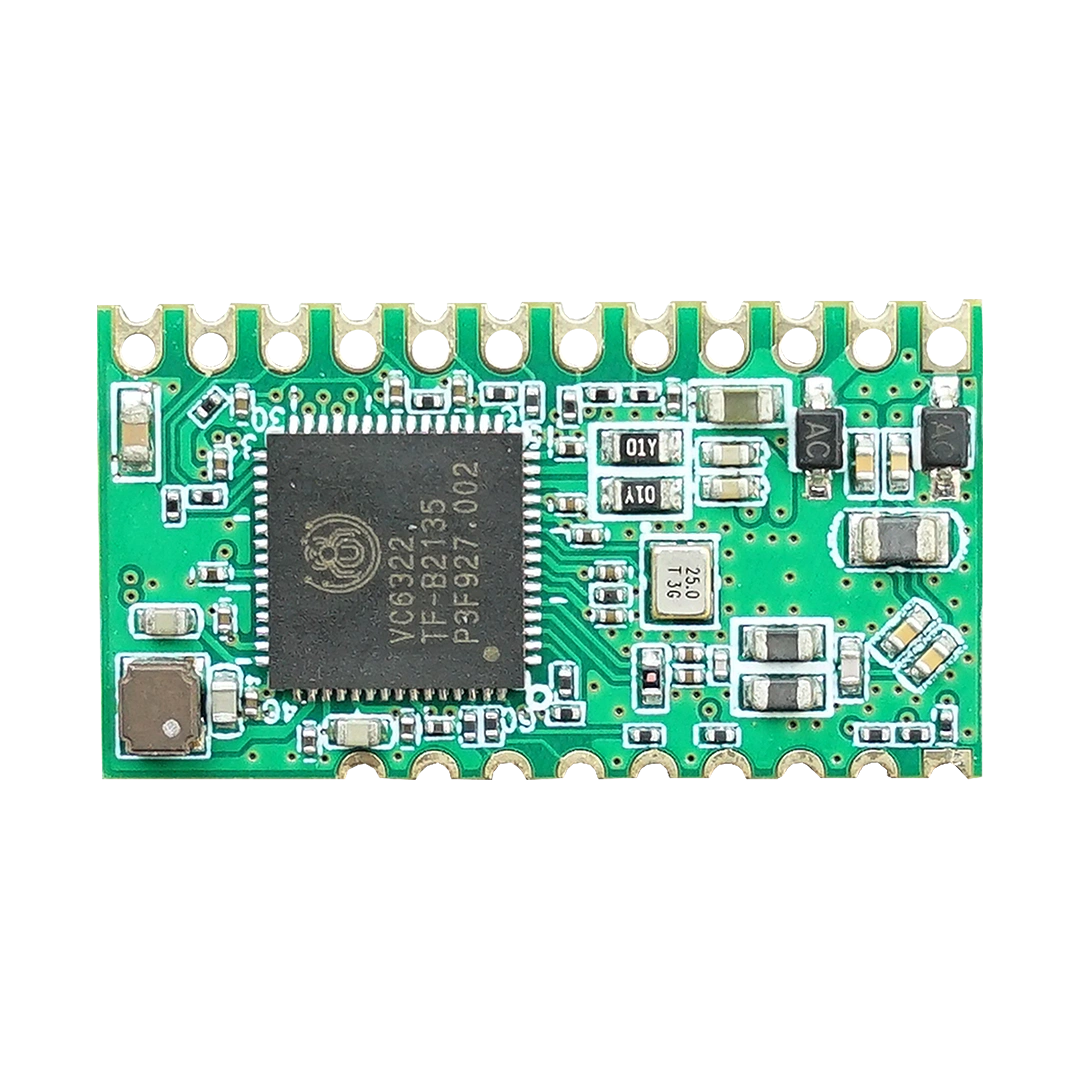
La compatibilité doit être vérifiée au niveau de la technologie PLC, de la fréquence, de la modulation, du PHY/MAC et du protocole. Par exemple, des dispositifs PLC basés sur IEEE P1901.1 la technologie peut utiliser l’OFDM/FSK et est conçue pour des applications telles que l’éclairage intelligent et l’IoT industriel. Voir le Module de communication sur ligne électrique MN-80X-DIP pour un exemple de module de communication API embarqué. Confirmez que le répéteur prend en charge la même technologie de communication PLC et la même plage de fréquences que le système existant.
Communication Performance
Vérifiez le débit de données pris en charge, la sensibilité, les caractéristiques de transmission, le protocole réseau et la capacité de communication.
Compatibilité électrique
Vérifiez que le répéteur est conçu pour la tension cible, la fréquence et l’installation électrique.
Protection de l’environnement
Pour l’éclairage extérieur ou les applications industrielles, vérifiez :
- Classification IP
- Température de fonctionnement
- Protection contre les surtensions
- Isolation électrique
- Performances EMC
Gestion du réseau
Pour les grands déploiements, la configuration à distance, les diagnostics, les mises à jour du firmware et la surveillance réseau peuvent simplifier la maintenance.
OEM et exigences de personnalisation
Pour les fabricants d’équipements et les intégrateurs de systèmes, la personnalisation peut être importante.
Les exigences potentielles incluent :
- Interfaces de communication personnalisées
- Modifications matérielles
- Personnalisation du firmware
- Intégration des protocoles
- Personnalisation mécanique
- Solutions de marque privée/OEM