PLC Repeater Explained: How It Extends PLC Communication

Learn what a PLC repeater is, how it works, when you need one, and how it extends reliable power line communication networks.

PLC Repeaters Explained: How They Extend Power Line Communication Networks

A PLC repeater extends power line communication coverage by receiving and retransmitting weakened PLC signals. Learn how PLC repeaters work, when they are needed, and how to use them in smart lighting and industrial IoT networks.

Power Line Communication (PLC) allows data to travel over existing electrical power lines, eliminating the need for dedicated communication cables in many applications. However, PLC signals can weaken as they travel through long cables, distribution networks, transformers, electrical loads, and areas with high electrical noise.

A PLC repeater is designed to help overcome these communication limitations by receiving a weakened PLC signal and retransmitting it to extend reliable communication coverage.

In smart lighting, industrial IoT, street lighting, and other large-scale PLC networks, repeaters can be an important part of network design when the communication distance or electrical environment exceeds the reliable range of direct PLC communication.

This guide explains what a PLC repeater is, how it works, when you need one, where it should be installed, and how it differs from a PLC gateway.

What Is a PLC Repeater?

A PLC repeater is a communication device that receives a PLC data signal from one section of a power line network and retransmits the signal to another section of the network.

In simple terms:

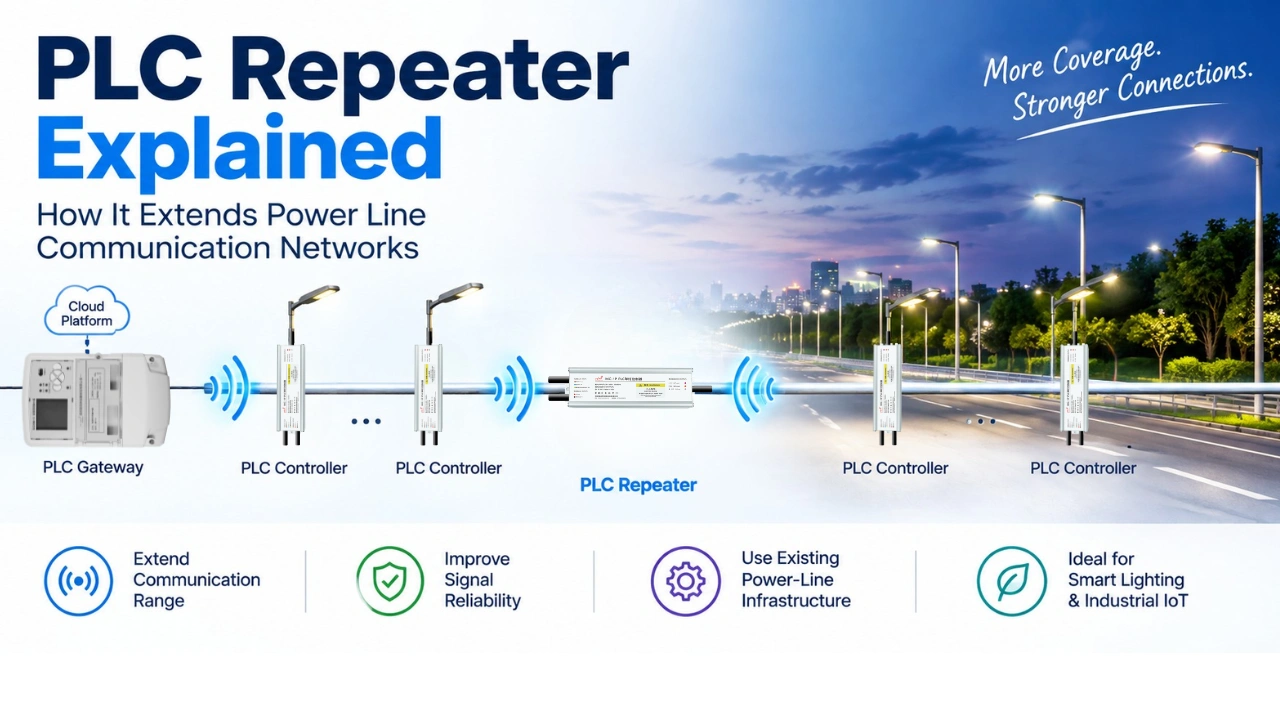
PLC device → weakened signal → PLC repeater → regenerated signal → downstream PLC devices

Unlike a PLC gateway, whose primary role is to connect the PLC network to another communication network or management platform, a repeater is primarily used to extend or improve PLC communication coverage within the power-line network.

A PLC repeater may be useful when the distance between PLC devices becomes too large or when electrical conditions cause excessive signal attenuation.

What Does a PLC Repeater Do?

A PLC repeater can help:

  • Extend PLC communication coverage
  • Regenerate weakened PLC signals
  • Improve communication reliability over long power lines
  • Overcome certain sections of a difficult electrical network
  • Connect PLC devices across larger lighting or industrial installations
  • Reduce communication dead zones in large PLC networks

The exact performance depends on the PLC technology, frequency band, power-line characteristics, network topology, electrical noise, and repeater design.

How Does a PLC Repeater Work?

The basic principle is straightforward.

A PLC transmitter places a high-frequency communication signal onto an electrical power line. As the signal travels through the network, its strength can decrease because of cable resistance, impedance changes, electrical loads, branching, filtering components, and electromagnetic interference.

When the signal reaches a repeater, the repeater receives the PLC communication, processes or regenerates the signal, and retransmits it.

A simplified communication path looks like this:

PLC Node A → Power Line → PLC Repeater → Power Line → PLC Node B

The repeater therefore creates an additional communication segment within the PLC network.

Step 1: Receive the PLC Signal

The repeater monitors the power line and receives PLC communication transmitted by another node.

The incoming signal may already be weaker than the original transmission because it has traveled through a long or electrically complex section of the network.

Step 2: Process and Regenerate the Communication

The repeater processes the received PLC signal according to the communication technology used by the network.

Depending on the architecture, this may involve signal detection, demodulation, data processing, error handling, and retransmission.

Step 3: Retransmit the Signal

The repeater sends the regenerated communication signal back onto the power line.

The downstream PLC devices can then communicate with the repeater and continue communicating with the rest of the network.

Step 4: Continue Network Communication

In a properly designed network, the repeater effectively extends the communication path without requiring a separate communication cable.

This makes repeaters particularly useful in applications where installing new communication wiring would be expensive or impractical.

Why Do PLC Networks Need Repeaters?

PLC communication uses existing electrical infrastructure, but power lines are not designed primarily as communication channels.

The electrical characteristics of a power network can vary significantly from one installation to another.

Several factors can reduce PLC communication reliability.

1. Long Power-Line Distance

As the communication distance increases, PLC signal attenuation generally becomes more significant.

A PLC system that works reliably over a relatively short electrical circuit may require additional network planning when deployed across a large facility, street-lighting network, warehouse, port, or industrial site.

A repeater can divide a long communication path into more manageable sections.

2. Electrical Noise

Switching power supplies, variable-frequency drives, motors, LED drivers, industrial equipment, and other electrical devices can introduce noise into the power network.

High noise levels can reduce the signal-to-noise ratio of PLC communication and increase packet errors or retransmissions.

A repeater does not eliminate the source of electrical noise, but strategically deployed network equipment can help maintain communication coverage in challenging environments.

3. Power-Line Branches

Large electrical networks often contain multiple branches.

When a PLC signal reaches a branch point, part of the signal may travel in different directions. Changes in impedance can affect signal propagation and attenuation.

Large or complicated power-line topologies therefore require more careful PLC network planning.

4. Transformers and Other Electrical Equipment

Certain electrical components can significantly affect PLC signal propagation.

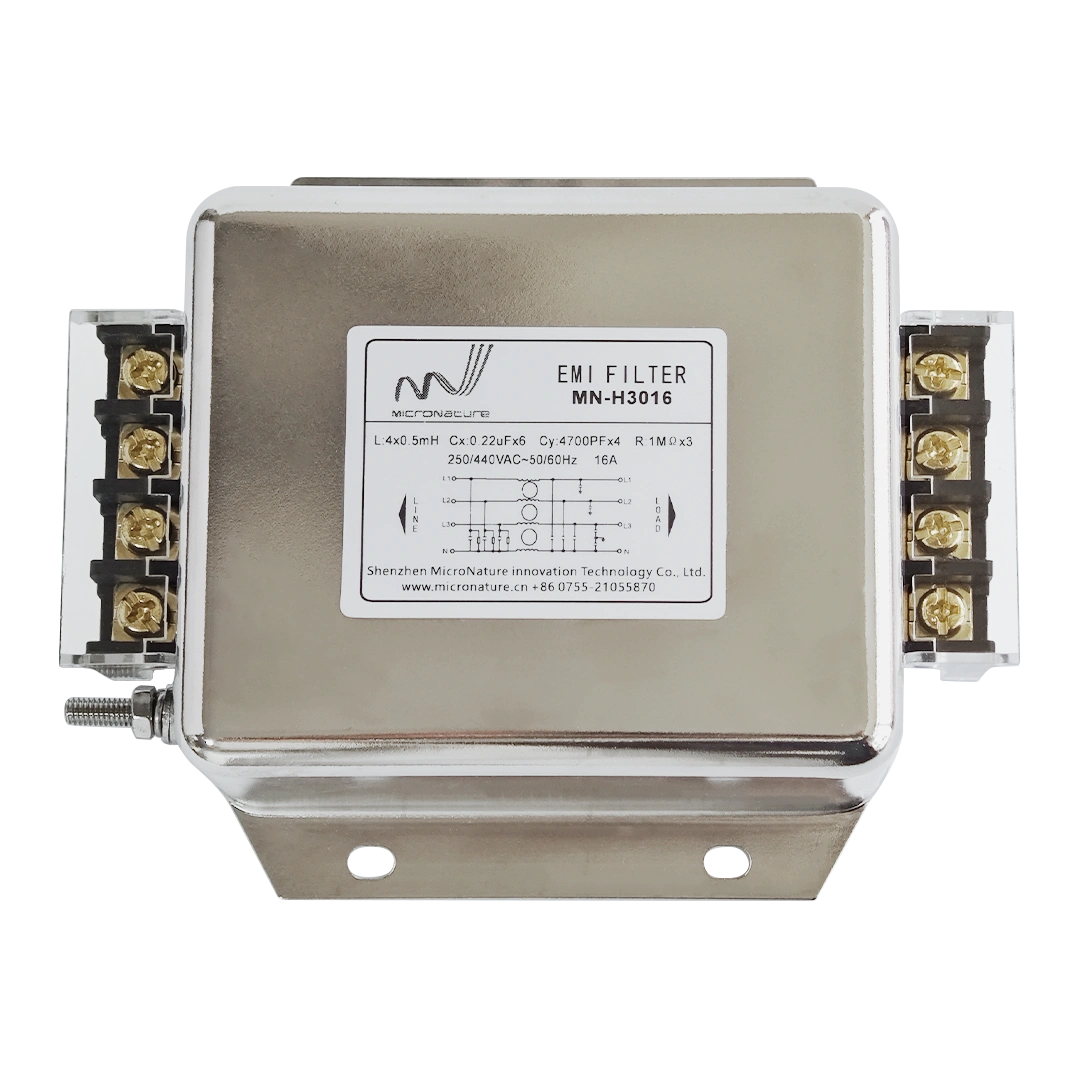
Transformers, filters, circuit breakers, power supplies, and other components may attenuate or block the communication signal depending on their electrical characteristics and the PLC frequency range.

In these situations, a repeater or another suitable PLC network architecture may be required.

5. Large Outdoor Lighting Networks

Street lighting is a common application for PLC communication because lighting controllers can communicate over the same power infrastructure that supplies the lamps.

However, a long road, large parking area, industrial park, or municipal lighting network can contain substantial cable distances and multiple distribution sections.

PLC repeaters can be considered when direct communication between all nodes is not sufficiently reliable.

PLC Repeater vs. PLC Gateway

A common question is whether a PLC repeater and PLC gateway are the same device.

They are not.

특징 PLC Repeater PLC 게이트웨이
Main purpose Extend PLC communication Connect PLC network to another network
Extends PLC coverage Not normally the primary function
Connects to Ethernet/4G/cloud Not necessarily Commonly
Used for long PLC networks Yes, depending on architecture
Communicates with PLC nodes
Provides network backhaul Usually no
Typical application Signal extension Remote monitoring and network management

A PLC repeater focuses on communication coverage within the PLC network.

A PLC 게이트웨이 typically serves as the connection between the PLC network and an upper-level communication system such as Ethernet, cellular communication, a cloud platform, or a lighting management system.

For a smart street-lighting system, for example:

Cloud platform → 4G/Ethernet → PLC Gateway → PLC Network → PLC Repeater → Remote PLC Controllers

The gateway and repeater therefore perform different functions and can work together.

PLC Repeater vs. PLC Signal Booster

The terms PLC repeater 그리고 PLC signal booster are sometimes used interchangeably in general discussions, but they do not necessarily describe exactly the same architecture.

A traditional repeater generally receives and regenerates communication before retransmitting it.

A signal booster may instead refer to equipment designed primarily to increase signal strength or improve the electrical transmission conditions.

For engineering applications, it is important to check the device’s actual communication architecture rather than selecting a product based only on the term “booster.”

The key question is:

Does the device actually receive and regenerate PLC communication, and is it compatible with the PLC technology used in the network?

When Do You Need a PLC Repeater?

A repeater should not automatically be installed in every PLC network.

It is usually considered when network analysis shows that direct PLC communication is insufficient.

Typical situations include:

Long Communication Distances

If the power-line distance between PLC devices exceeds the reliable communication range of the selected PLC technology, a repeater may help extend the network.

Large PLC Networks

Large lighting or industrial networks may contain hundreds or thousands of endpoints distributed across extensive electrical infrastructure.

A properly designed repeater architecture can help maintain communication coverage.

High Electrical Noise

In industrial environments, strong electrical interference may reduce communication reliability.

A repeater may be part of the solution, although identifying and reducing the actual noise source should also be considered.

Complex Electrical Topology

Multiple branches, distribution cabinets, long cable sections, and different electrical circuits can make PLC communication more difficult.

A repeater may help connect communication sections where direct transmission is unreliable.

Communication Dead Zones

If testing identifies a particular area where PLC nodes cannot reliably communicate with the rest of the network, a repeater can potentially eliminate the communication gap.

How to Determine the Best PLC Repeater Location

Repeater placement is an important part of PLC network design.

A common mistake is to install a repeater simply at the physical midpoint of a cable.

The best location is determined by electrical network characteristics and measured communication performance, not only by physical distance. For large installations, repeater placement should be considered as part of the overall PLC network topology rather than as an isolated equipment decision. See our guide on how to design a PLC smart lighting network for additional network-planning considerations.

When planning repeater placement, consider:

  • PLC signal strength
  • Signal-to-noise ratio
  • 케이블 길이
  • Cable type and cross-section
  • Electrical topology
  • Distribution cabinets
  • 지선 회로
  • 트랜스포머
  • Filters
  • Electrical loads
  • EMI sources
  • PLC frequency characteristics
  • Communication error rate

For large projects, field testing can provide more reliable information than calculating distance alone.

PLC Repeater Placement Example

Consider a long smart street-lighting network.

Without a repeater:

PLC Gateway → Controller 1 → Controller 2 → Controller 3 → … → Controller 80

If communication becomes unreliable toward the far end of the network, a repeater can be introduced:

PLC Gateway → PLC Controllers → PLC Repeater → PLC Controllers → PLC Controllers

The repeater provides an additional communication point and can improve coverage for the downstream section.

The actual number of PLC nodes supported and the required number of repeaters depend on the PLC protocol, network topology, gateway architecture, communication bandwidth, electrical environment, and device specifications.

Therefore, a repeater should be selected and positioned based on the complete network design rather than using a universal “one repeater equals X meters” rule.

How Far Can a PLC Repeater Extend Communication?

There is no universal distance that applies to every PLC repeater. Because PLC communication distance depends on cable characteristics, electrical noise, topology, transformers, branching, and connected loads, engineers should estimate the expected communication range before deciding whether a repeater is required. Our PLC 통신 거리 계산기 provides a practical starting point for PLC network planning.

The effective communication range depends on:

  1. PLC modulation technology
  2. Operating frequency
  3. Transmission power
  4. Cable characteristics
  5. Electrical network topology
  6. 소음 수준
  7. Impedance conditions
  8. Distribution equipment
  9. Number and type of connected loads
  10. Repeater sensitivity and transmission performance

For this reason, manufacturers should avoid presenting a repeater as having a guaranteed range without specifying the test conditions.

For a real deployment, the more useful engineering question is:

Can the PLC network maintain the required communication reliability across the actual electrical infrastructure?

PLC Repeater Network Design Considerations

When designing a PLC network with repeaters, consider the following factors.

Use a Compatible PLC Technology

The repeater must support the same or compatible PLC communication technology used by the network.

Important parameters may include:

  • PLC frequency band
  • Modulation method
  • PHY technology
  • Data rate
  • Communication protocol
  • 네트워크 토폴로지
  • Synchronization mechanism

For example, a repeater designed for one PLC communication technology should not be assumed to work with a different PLC protocol simply because both devices are called “PLC.”

Consider Network Capacity

Adding repeaters can extend coverage, but network capacity, communication latency, and traffic load must also be considered. For large smart-lighting networks, engineers should evaluate the number of nodes, communication intervals, bandwidth requirements, and network segmentation. See our PLC 네트워크 용량 계산 가이드 for more information on sizing and planning a scalable PLC network.

A large network with many endpoints may require careful planning of routing, communication scheduling, network segmentation, and traffic management.

Analyze Electrical Noise

If a network has high packet loss, do not immediately assume that additional repeaters are the only solution.

The first step should be identifying the cause.

Potential sources include:

  • LED 드라이버
  • 스위칭 전원 공급 장치
  • 모터
  • Variable-frequency drives
  • 인버터
  • 산업 기계
  • Poor electrical connections
  • 전자기 간섭

In some installations, improving filtering or reducing EMI can provide better results than simply adding repeaters.

Consider Environmental Conditions

Outdoor and industrial PLC devices may be exposed to:

  • Rain
  • 먼지
  • High temperatures
  • Low temperatures
  • 습도
  • Surges
  • Electrical transients
  • 전자기 간섭

The repeater enclosure, protection level, operating temperature, and electrical protection should therefore match the application environment.

PLC Repeaters in Smart Lighting

PLC repeaters are particularly relevant to large smart-lighting networks because lighting infrastructure already provides the power-line communication path.

A typical smart street-lighting architecture may look like:

클라우드 플랫폼

4G / Ethernet

PLC 게이트웨이

전력선

PLC Repeater

PLC 조명 컨트롤러

LED 가로등

This architecture allows the lighting management system to communicate with distributed lighting controllers without installing a separate communication cable for every lamp.

Depending on the system design, the PLC network can support functions such as:

  • 원격 ON/OFF 제어
  • Individual lamp control
  • 그룹 통제
  • 디밍
  • 일정
  • 에너지 모니터링
  • 결함 검출
  • 상태 모니터링
  • 원격 구성

For large municipal lighting projects, PLC repeaters can therefore become part of the network infrastructure used to maintain communication coverage.

PLC Repeaters in Industrial IoT

PLC repeaters are not limited to street lighting.

They can also be considered for industrial IoT applications where electrical power infrastructure covers a large physical area.

Potential applications include:

  • 창고
  • 공장
  • 이식
  • 조선소
  • 산업 단지
  • 주차 시설
  • 터널
  • Power plants
  • Large commercial buildings
  • Agricultural facilities

The advantage is that the existing power infrastructure can potentially serve both as an energy distribution system and a communication medium.

However, industrial environments often have significantly higher electrical noise than residential or commercial environments. PLC network testing and EMI analysis are therefore especially important.

PLC Repeater Troubleshooting

If a PLC network is experiencing communication problems, adding a repeater should not be the first troubleshooting step. If communication problems are caused by electrical interference, identifying the noise source should come before adding network equipment. For a more detailed troubleshooting process, see our PLC Signal Noise Troubleshooting Guide.

A systematic approach is better.

Check 1: Measure PLC Signal Quality

Determine whether the problem is related to signal attenuation, noise, or network topology.

Check 2: Identify Noise Sources

Temporarily isolate suspected electrical devices where practical and observe whether communication performance changes.

Check 3: Check Electrical Connections

Loose terminals, damaged cables, poor connections, and abnormal electrical conditions can affect communication reliability.

Check 4: Analyze the Network Topology

Check whether the affected PLC nodes are located behind a difficult electrical section, long cable, branch circuit, transformer, or filter.

Check 5: Evaluate Repeater Placement

If the signal is too weak at a specific section of the network, determine whether a repeater can provide a better communication path.

Check 6: Test Again

After installation, verify:

  • 패킷 손실
  • Communication latency
  • 신호 품질
  • Node connectivity
  • 네트워크 안정성
  • Long-term reliability

The goal is not simply to increase signal strength. The goal is to achieve stable end-to-end PLC communication.

Advantages and Limitations of PLC Repeaters

장점

PLC repeaters can provide several benefits:

  • Extend PLC communication coverage
  • Use existing power-line infrastructure
  • Reduce the need for additional communication wiring
  • Improve communication in large installations
  • Support distributed smart-lighting networks
  • Help overcome certain signal attenuation problems
  • Simplify deployment in some retrofit projects

Limitations

A repeater is not a universal solution.

Potential limitations include:

  • It cannot remove all sources of electrical noise
  • It cannot guarantee communication across incompatible electrical circuits
  • Poor network topology can still cause problems
  • Additional network hops may affect communication latency
  • Repeater placement requires engineering analysis
  • The repeater must be compatible with the PLC technology
  • Large networks still require capacity planning

The most effective approach is to treat the repeater as one component of the overall PLC network architecture.

PLC Repeater vs. Adding More PLC Gateways

Another design question is whether to install PLC repeaters or additional PLC gateways.

These approaches solve different problems.

Use a repeater when:

  • The PLC network itself needs additional communication coverage.
  • The gateway can already communicate with the main network.
  • The problem is primarily signal attenuation or difficult network sections.

Consider additional gateways when:

  • The network needs to be divided into multiple independent PLC networks.
  • Different electrical distribution areas need separate communication management.
  • Network capacity requires segmentation.
  • Multiple backhaul connections are needed.

The correct architecture depends on the project size, electrical distribution system, communication requirements, and management platform.

How to Choose a PLC Repeater

When selecting a PLC repeater, evaluate more than its advertised communication distance.

Important specifications include:

PLC Compatibility

Compatibility should be checked at the PLC technology, frequency, modulation, PHY/MAC, and protocol levels. For example, PLC devices based on IEEE P1901.1 technology may use OFDM/FSK and are designed for applications such as smart lighting and industrial IoT. See the MN-80X-DIP 전력선 통신 모듈 for an example of an embedded PLC communication module. Confirm that the repeater supports the same PLC communication technology and frequency range as the existing system.

Communication Performance

Check the supported data rate, sensitivity, transmission characteristics, network protocol, and communication capacity.

Electrical Compatibility

Verify that the repeater is designed for the target voltage, frequency, and electrical installation.

Environmental Protection

For outdoor lighting or industrial applications, check:

  • IP rating
  • 작동 온도
  • 서지 보호
  • Electrical isolation
  • EMC performance

네트워크 관리

For large deployments, remote configuration, diagnostics, firmware updates, and network monitoring can simplify maintenance.

OEM and Customization Requirements

For equipment manufacturers and system integrators, customization may be important.

Potential requirements include:

  • Custom communication interfaces
  • Hardware modifications
  • Firmware customization
  • Protocol integration
  • Mechanical customization
  • Private-label/OEM solutions

스티븐 셰

CTO & PLC Technology Expert of Shenzhen MicroNature Innovation Technology Co. Ltd. Doctor of Chinese Academy of Science, focus on power line communication technology over 15 years. Awarded 11 patents for outdoor and indoor smart lighting devices.

FAQ

A PLC repeater is a device that receives and retransmits power line communication signals to help extend reliable communication coverage across an electrical power network.

이 글을 공유하세요