For infrastructure partners and facility managers, the challenge isn’t just finding a smart light—it’s finding a control system that doesn’t require tearing down walls or failing in high-interference zones. Power Line Communication (PLC) leverages your existing electrical wiring to transmit data, making it the premier choice for environments where wireless signals fail and rewiring costs are prohibitive.
Quick Summary for Decision Makers:
- Best For: Retrofit projects, high-EMI industrial plants, tunnels, and smart city street lighting.
- Key Advantage: 99.99% stable communication without extra control cables like DALI or Cat5.
- ROI: Achieve up to 70% energy savings in warehouses and over 50% in municipal projects.
Strategic Deployment of PLC Technology
PLC (Power Line Communication) lighting is applicable in any environment where existing power infrastructure must serve as the data backbone. It is specifically designed for large-scale, high-interference, or hard-to-wire locations. While wireless solutions often struggle with physical obstructions and wired systems demand heavy labor investment, PLC offers a middle ground of extreme reliability with zero additional cabling.
Deciding between these technologies depends on your specific site constraints. The following comparison highlights why engineers prioritize PLC for industrial-grade applications.
| Feature | PLC (MicroNature) | Wireless (Zigbee/LoRa) | Wired (DALI/KNX) |
|---|---|---|---|
| Wiring Requirement | None (Uses Power Lines) | None (Wireless) | High (Dedicated Cables) |
| Signal Stability | Extreme (High Noise Immunity) | Variable (Blocked by Obstacles) | High |
| Transmission Distance | Long (Kilometers via Gateway) | Short to Medium | Limited by Cable Length |
| Best Use Case | Tunnels, Factories, Cities | Small Offices, Homes | New High-End Buildings |
Smart City Streets and High-Speed Infrastructure
Municipalities face constant pressure from energy mandates and rising maintenance costs. PLC technology allows city planners to transform traditional streetlights into a Smart City Grid without digging up pavements or installing kilometers of new control wires. This is particularly vital for urban centers where road closures for infrastructure upgrades are economically disruptive.
By utilizing the existing AC lines, a single Industrial PLC Gateway can manage thousands of nodes across vast distances. To understand the technical specifics, you can explore how PLC lighting works in street lighting systems, which details the architecture needed for centralized municipal management. This architecture supports real-time monitoring and instant fault alarms via Cloud platforms, which effectively eliminates the need for manual “scout” patrols.
Lighting Solutions for High-Interference Tunnels
Tunnels represent one of the most challenging environments for communication technology. Thick reinforced concrete and heavy metal structures create “wireless dead zones” where Zigbee or Wi-Fi signals simply cannot penetrate. Furthermore, signal reflection off tunnel walls leads to massive data packet loss.
PLC bypasses these physical barriers by keeping the data signal inside the copper wire itself. For a deeper look at the system architecture in these environments, read our complete guide on how PLC lighting works in tunnel systems. This ensures that emergency dimming protocols or ventilation-linked lighting adjustments occur instantly, regardless of how deep underground the fixtures are located. For tunnel operators, this reliability isn’t just a convenience; it’s a critical safety requirement.
Logistics Hubs and High-Ceiling Warehouses
In facilities with 15-meter ceilings, the logistics of lighting maintenance become complex. Replacing batteries in wireless sensors or running 10,000 meters of signal wire across a warehouse roof is both dangerous and expensive. Logistics managers often find that the labor cost of installing a smart system exceeds the cost of the hardware itself.
MicroNature addresses this through PLC-enabled UFO High Bay lights and AI Vision Sensors. Because these devices communicate through the power lines they are already plugged into, installation is a simple “plug-and-play” process. These systems enable adaptive dimming—lights only brighten to 100% when a forklift or worker is detected in a specific aisle. In large-scale operations like those at Liebherr, this strategy results in energy savings of up to 70%, drastically improving the project’s ROI.
Heavy Industrial Plants and Power Stations
Industrial environments, particularly power plants and shipyards, are saturated with Electromagnetic Interference (EMI). Large turbines, boilers, and heavy machinery generate massive magnetic fields that disrupt most wireless communication. In these settings, “99% stable” isn’t good enough; a dropped signal could mean a failure in critical facility lighting during a high-stakes operation.
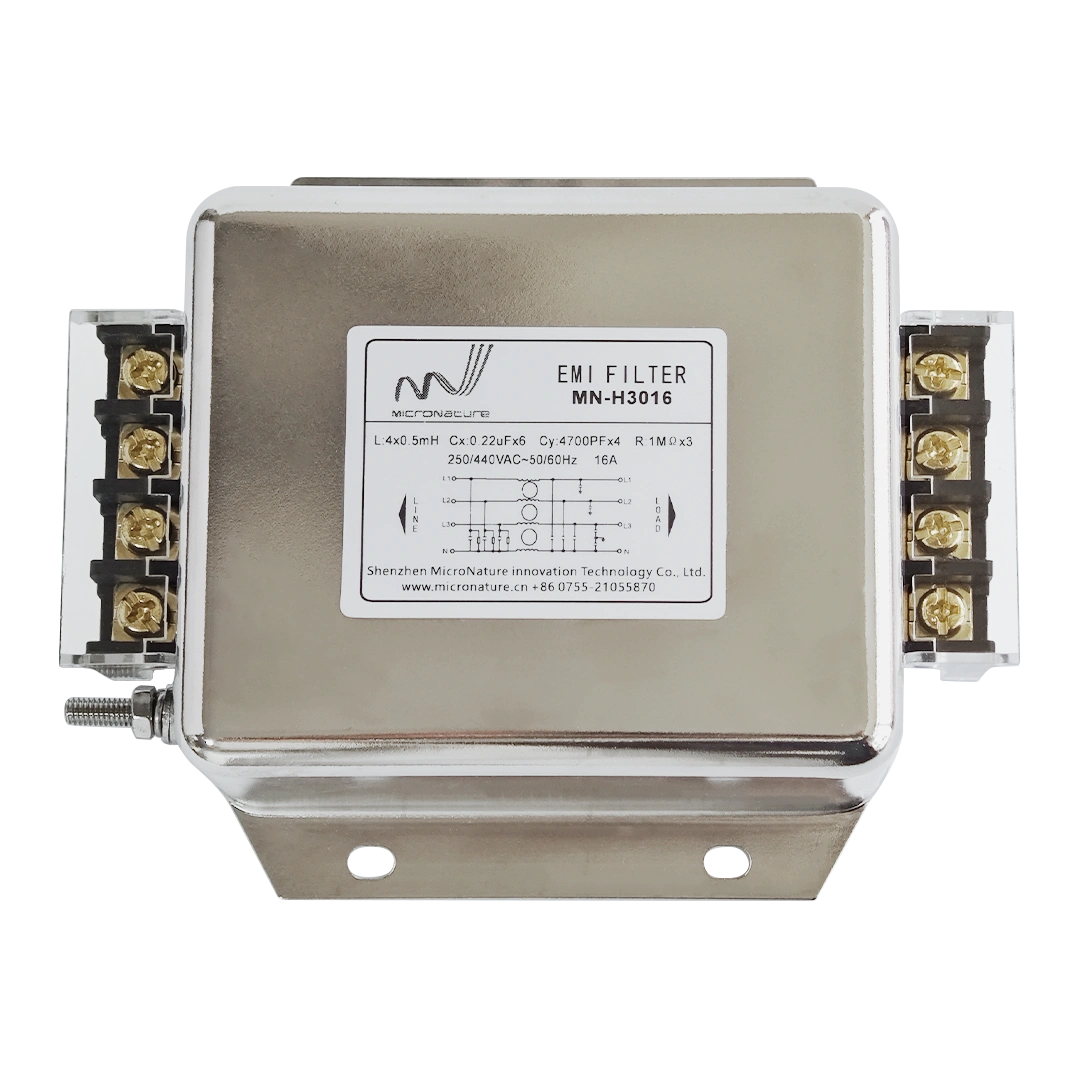
PLC systems, when reinforced with specialized Signal Isolators, ensure 99.99% communication stability. These isolators suppress high-frequency noise generated by industrial equipment, allowing the PLC signal to remain crystal clear. Whether in a Cosco Shipyard or a high-voltage boiler hall, the lighting system remains responsive, providing the visibility needed for safe industrial operations.
The Retrofit Revolution: Why Engineers Choose PLC
The primary pain point in building upgrades is the labor cost of wiring. In many historical or established industrial sites, the cost of labor can account for 60% of a lighting project’s budget. PLC turns your existing electrical infrastructure into a high-speed data network, essentially giving you a “smart” building for the price of a standard lamp replacement.
Wireless signals struggle with metal shelving and multi-level steel structures found in parking lots. PLC signals, however, travel wherever electricity flows. This ensures 100% coverage even in complex environments like vast shipyards or multi-story commercial buildings. If you have power, you have control.
Overcoming Technical Hurdles in Complex Environments
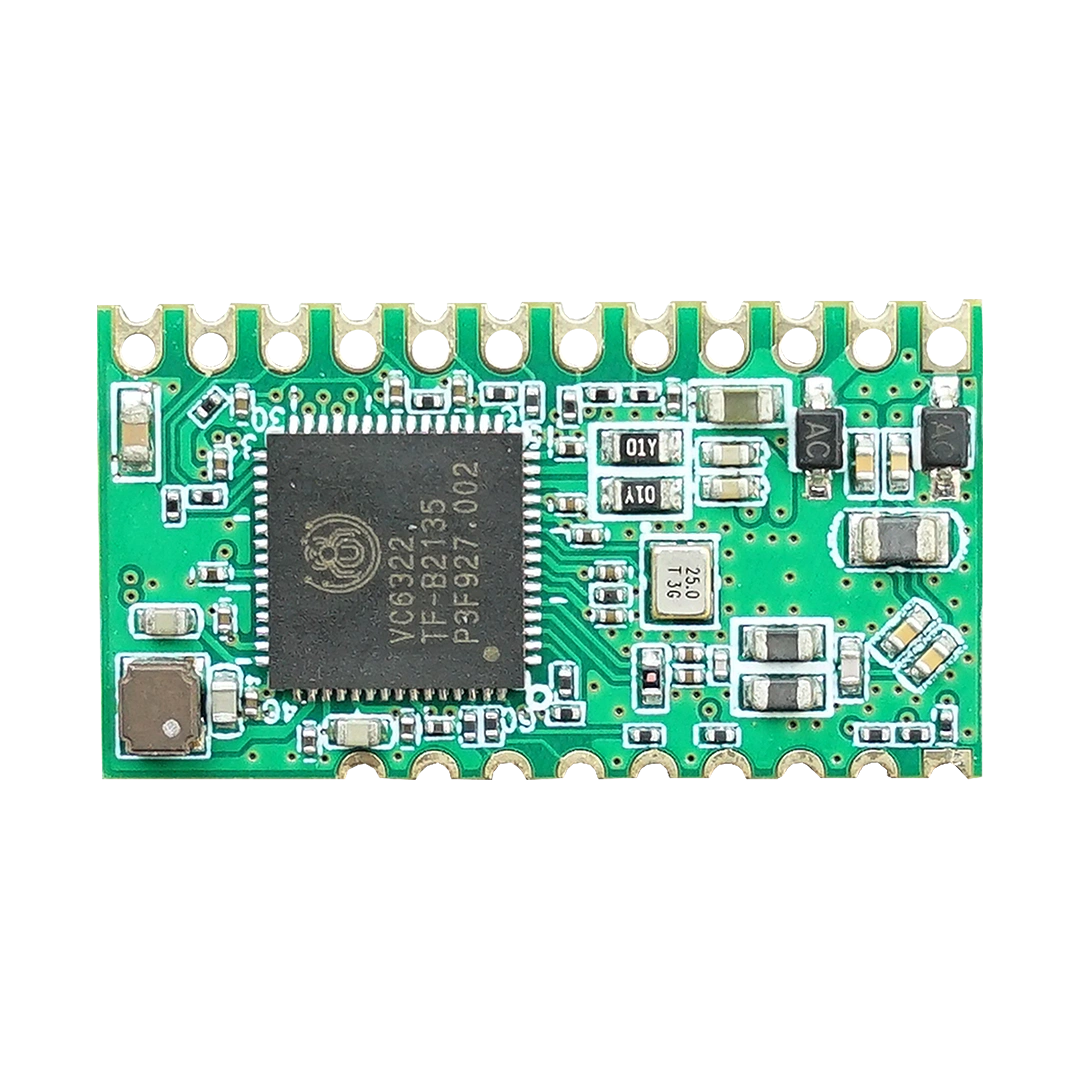
While critics sometimes point to electrical noise as a weakness of power line technology, modern engineering has solved these challenges. Advanced modules like the MN-L80X Series utilize frequency hopping and 3-phase signal isolation to outmaneuver EMI from industrial machinery. This technical evolution has turned PLC from a niche alternative into an industry standard for reliability.
However, successful implementation requires understanding potential pitfalls. Engineers should be aware of common problems in PLC lighting systems, such as improper phase coupling or signal attenuation, to ensure long-term performance. By identifying these issues early, facility managers can maintain the 99.99% stability that PLC technology promises.
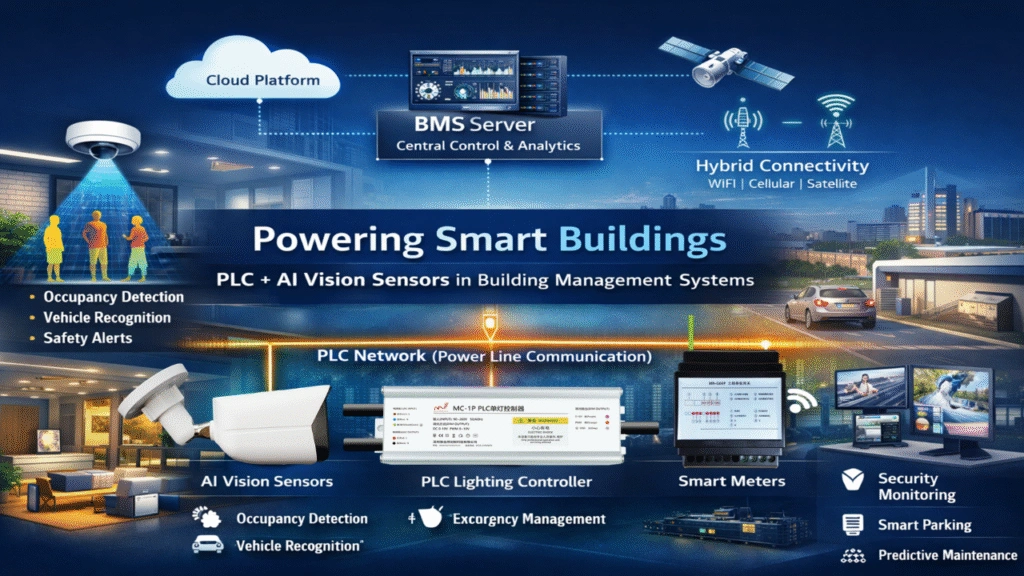
Furthermore, the integration of AI is changing the landscape of facility management. By combining AI Vision Sensors with a PLC backbone, managers can transition from reactive repairs to predictive maintenance. The system can identify failing drivers or abnormal power consumption patterns before a light goes dark, allowing teams to schedule maintenance during off-peak hours and avoid operational downtime.
PLC lighting is applicable wherever reliability is non-negotiable and budget efficiency is a priority. If your project involves long distances, harsh industrial noise, or a strict need to avoid rewiring costs, PLC is the optimal solution. With a decade of focus on this technology and a 99.5% customer satisfaction rate across 30+ countries, MicroNature provides the hardware and R&D expertise to bring smart intelligence to your existing power lines.
Take the next step in your infrastructure upgrade. Contact our engineering team today for a custom PLC Solution Architecture or view our patent-backed product catalog to find the right fit for your facility.