A IoT Industrial (IIoT) conecta máquinas, sensores, controladores, medidores e outros equipamentos industriais para que os dados possam ser coletados, analisados e usados para a tomada de decisões automatizada. Uma rede de comunicação confiável é uma das partes mais importantes de um sistema IIoT.
Comunicação PLC, ou Comunicação por Linha de Energia, é uma opção para conectar dispositivos industriais transmitindo dados por linhas elétricas existentes. Isso pode reduzir a necessidade de cabos de comunicação adicionais, ao mesmo tempo em que possibilita monitoramento, controle e transmissão de dados remotos.
Para ambientes industriais onde já existe infraestrutura de energia, mas a instalação de nova fiação de comunicação é difícil ou cara, a comunicação por PLC pode fornecer uma camada prática de comunicação para aplicações de IoT Industrial.
O que é comunicação com PLC para IoT Industrial?
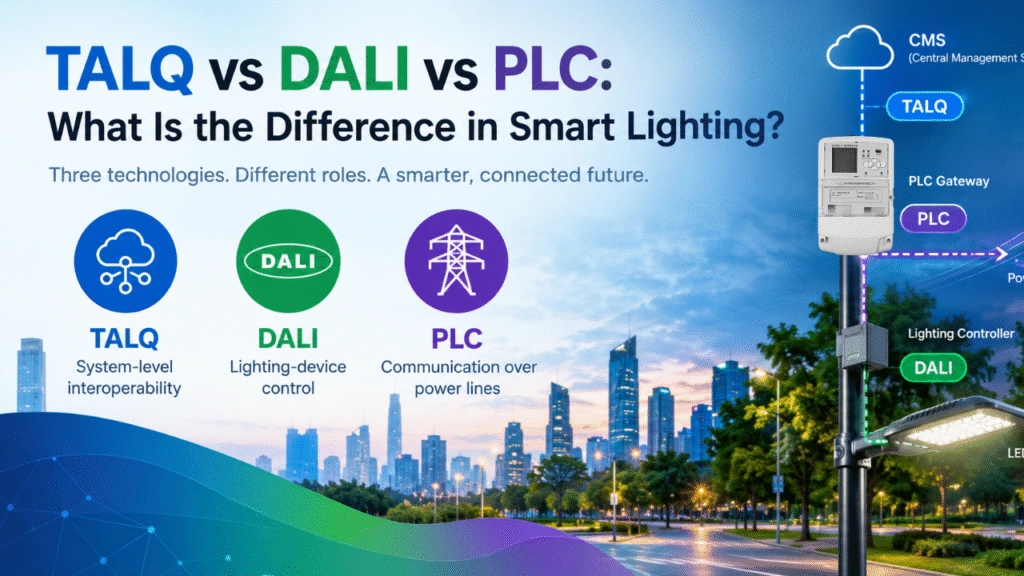
Comunicação PLC para usos em IoT Industrial Linhas de energia para transmitir tanto energia elétrica quanto dados de comunicação. Precisa de fósforo Normas IEEE 1901 enquanto uso em projetos urbanos.
Em vez de instalar um cabo de comunicação separado entre cada dispositivo, um dispositivo habilitado por PLC pode usar a rede elétrica existente como caminho de comunicação.
Um sistema típico de PLC IIoT pode incluir:
- Módulos de comunicação PLC
- Sensores industriais
- Controladores PLC
- Medidores inteligentes
- Atuadores
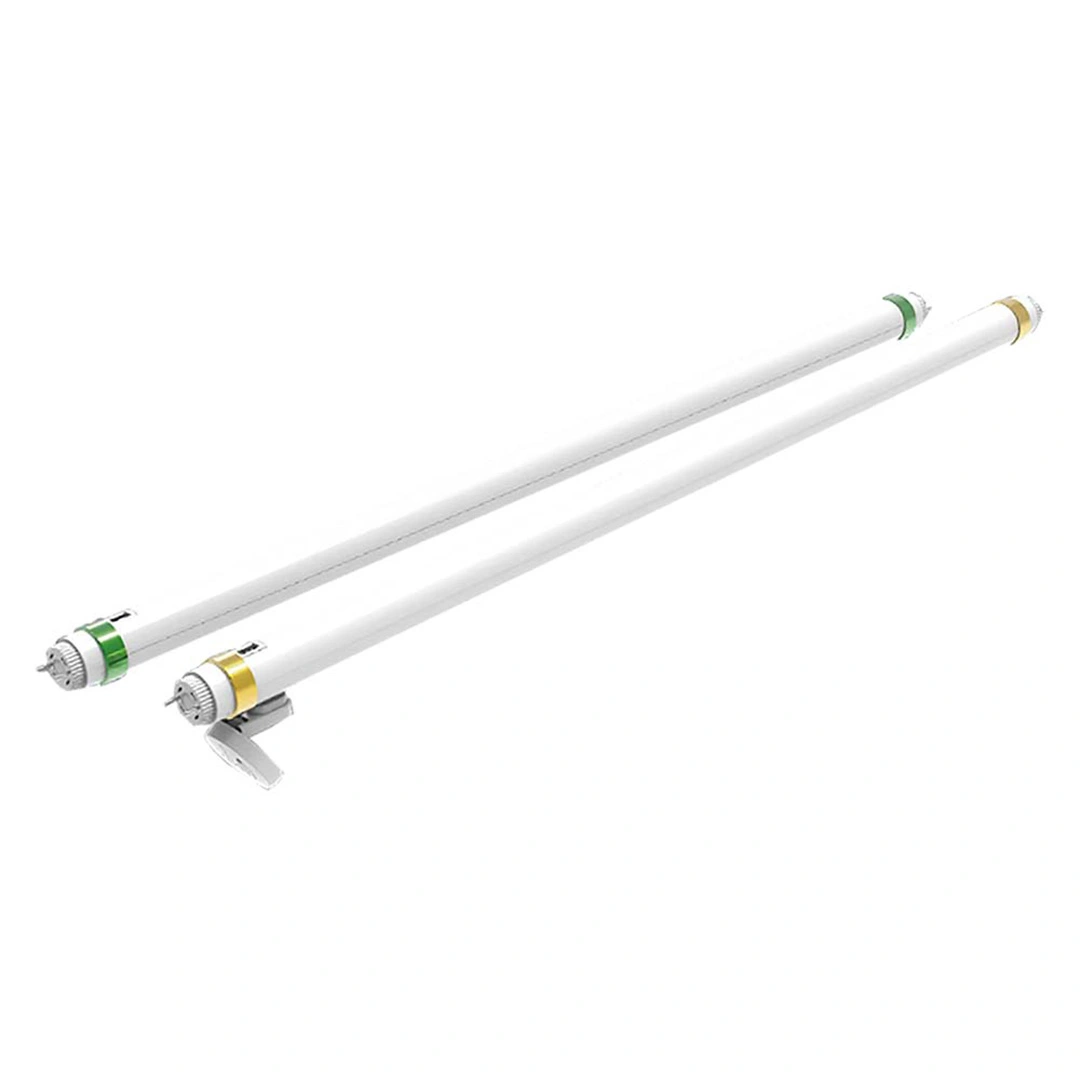
- Controladores de iluminação
- Gateways PLC
- Computadores industriais
- Portais de borda
- Plataformas em nuvem
- Software de monitoramento e gestão
O processo básico de comunicação é:
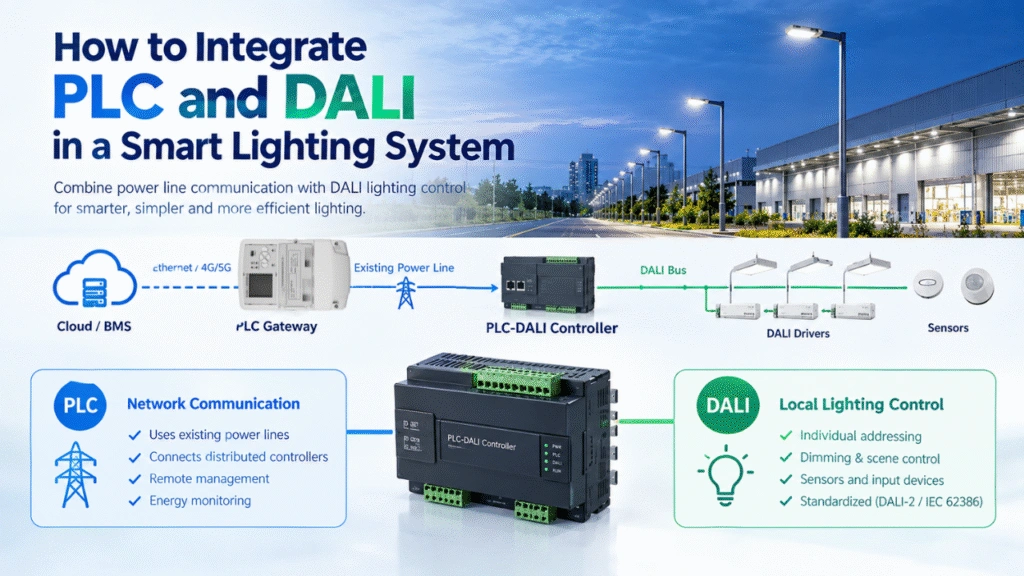
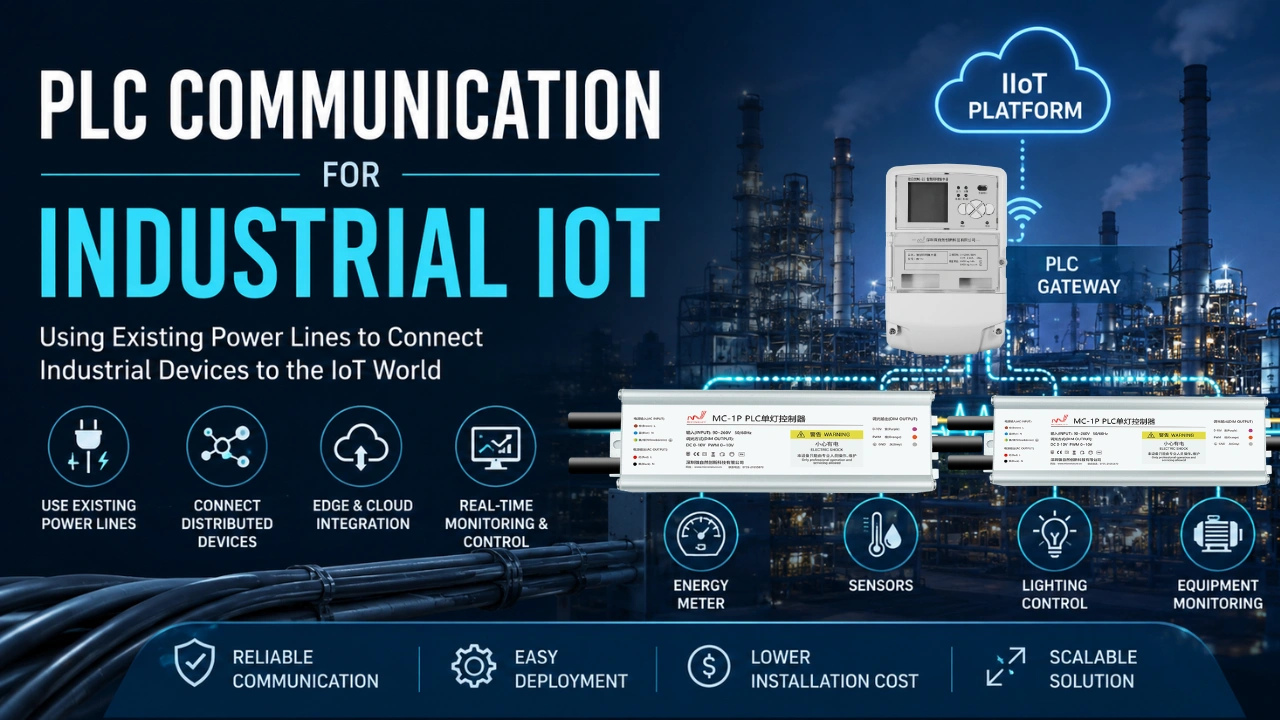
Módulo de PLC → Dispositivo Industrial → Gateway de Linha → PLC → Ethernet/4G/5G → Plataforma em Nuvem ou IIoT
Essa arquitetura permite que dispositivos de campo se comuniquem com um sistema de gestão industrial de nível superior sem exigir uma rede de comunicação cabeada completamente separada.
Como funciona a comunicação com PLC em IoT industrial?
A comunicação por PLC funciona modulando dados digitais em uma linha elétrica de energia.
Um módulo de comunicação PLC é conectado à rede de energia e troca dados com outros dispositivos habilitados por PLC. Dependendo da tecnologia de PLC e do design da rede, os dispositivos podem se comunicar por meio de arquiteturas de rede ponto a ponto, multi-nós ou malha.
Uma arquitetura simplificada de comunicação IIoT é a seguinte:
Sensores e Dispositivos Industriais
↓
Módulos de comunicação PLC
↓
Rede Industrial de Energia
↓
Gateway PLC / Concentrador de Dados
↓
Ethernet / 4G / 5G
↓
Edge Computing / Plataforma em Nuvem
↓
Aplicação Industrial de IoT
A camada PLC cuida da comunicação entre dispositivos de campo, enquanto o gateway fornece uma interface entre a rede PLC local e uma rede baseada em IP ou plataforma em nuvem.
Essa separação possibilita conectar dispositivos de campo relativamente simples a plataformas IIoT modernas.
Por que usar comunicação por PLC para IoT industrial?
Uma das maiores vantagens da comunicação por CLP é que ela pode usar infraestrutura já disponível.
Em muitas instalações industriais, cabos elétricos já conectam máquinas, equipamentos de iluminação, armários de controle, medidores e outros dispositivos. A instalação de uma segunda rede de comunicação pode exigir cabos adicionais, conduítes, mão de obra e tempo de instalação.
A comunicação por CLP pode usar a infraestrutura elétrica existente como parte da rede de comunicação.
1. Utiliza linhas de energia existentes
A principal vantagem da comunicação com CLP é que os dados de comunicação podem viajar por linhas de energia existentes.
Isso pode ser especialmente útil em:
- Fábricas
- Armazéns
- Ports
- Estaleiros
- Usinas de energia
- Parques industriais
- Grandes instalações comerciais
- Infraestrutura municipal
- Ambientes industriais externos
Quando a instalação de fiação de comunicação é difícil, o PLC pode fornecer outra forma de conectar dispositivos distribuídos.
2. Reduz a fiação adicional de comunicação
Redes industriais tradicionais de comunicação podem exigir cabos dedicados de Ethernet, RS-485, fibra óptica ou outros cabos de comunicação.
O PLC não elimina a necessidade de toda a infraestrutura de comunicação, mas pode reduzir a quantidade de fiação dedicada de comunicação necessária no nível do dispositivo de campo.
Isso pode simplificar a implantação em instalações grandes ou distribuídas.
3. Adequado para Dispositivos Distribuídos
A IoT industrial frequentemente envolve um grande número de dispositivos distribuídos por uma ampla área física.
Exemplos incluem:
- Medidores de energia
- Sensores de temperatura
- Monitores de equipamentos
- Controladores de iluminação
- Controladores de bomba
- Dispositivos de monitoramento relacionados a motores
- Sensores ambientais
- Atuadores industriais
A comunicação por PLC pode fornecer uma camada de comunicação entre dispositivos distribuídos e um gateway centralizado.
4. Possibilita o Monitoramento e Controle Remotos
Uma vez que os dispositivos PLC são conectados a um gateway IIoT, seus dados podem ser transferidos para uma plataforma de borda ou nuvem.
Isso possibilita funções como:
- Monitoramento em tempo real
- Controle remoto de dispositivos
- Monitoramento energético
- Monitoramento do status do equipamento
- Reporte de alarme
- Detecção de falhas
- Registro de dados
- Programação
- Aplicações de manutenção preditiva
Assim, a rede PLC torna-se mais do que uma rede de comunicação local. Ela pode se tornar parte da arquitetura industrial IoT completa.
5. Trabalha com redes industriais existentes
O PLC não necessariamente substitui Ethernet, 4G, 5G, RS-485 ou outras tecnologias de comunicação.
Em vez disso, pode funcionar como Camada de comunicação de campo, enquanto outras tecnologias fornecem comunicação de backhaul.
Por exemplo:
PLC → Ethernet → Servidor Industrial
ou:
PLC → Gateway 4G/5G → Plataforma de Nuvem
Essa arquitetura híbrida pode tornar o PLC adequado para implantações IIoT, onde dispositivos de campo e sistemas em nuvem têm requisitos de comunicação diferentes.
Comunicação PLC vs. Comunicação Industrial Tradicional
A tecnologia de comunicação certa depende da aplicação.
| Tecnologia da Comunicação | Força Típica | Aplicação Comum |
|---|---|---|
| PLC | Utiliza linhas de energia existentes | Dispositivos industriais distribuídos |
| Ethernet | Alta largura de banda e conectividade IP | Redes industriais, controladores, servidores |
| RS-485 | Comunicação cabeada simples e confiável | Sensores, medidores, controladores |
| Fibra Óptica | Longa distância e forte imunidade a EMI | Redes de espinha dorsal industrial |
| Wi-Fi | Conectividade sem fio | Dispositivos móveis ou flexíveis |
| 4G/5G | Comunicação sem fio de larga distância | Locais e gateways remotos |
O PLC é particularmente interessante quando A infraestrutura elétrica já está disponível, mas instalar cabos de comunicação dedicados é difícil.
Por exemplo, um sistema de iluminação industrial pode já ter cabos de energia espalhados por um armazém. A comunicação por PLC pode usar essas linhas de energia para conectar controladores de iluminação e sensores, enquanto um gateway conecta a rede local a uma plataforma em nuvem.
Arquitetura de Comunicação PLC para IIoT
Uma rede prática de PLC Industrial IoT pode ser dividida em quatro camadas.
Camada 1: Dispositivos de Campo
A camada de campo contém sensores, controladores, medidores, atuadores e outros dispositivos.
Exemplos incluem:
- Controladores de luz
- Sensores de temperatura
- Medidores de energia
- Sensores de movimento
- Sensores de equipamentos
- Interruptores industriais
- Atuadores
Um módulo de comunicação PLC pode ser integrado diretamente a esses dispositivos.
Camada 2: Rede de Comunicação PLC
A rede PLC fornece comunicação sobre a infraestrutura elétrica.
Dispositivos habilitados por PLC trocam informações pelas linhas de energia e formam a rede de comunicação local.
O design dessa camada depende de:
- Topologia de linha de energia
- Comprimento do cabo
- Cargas elétricas
- Nível de ruído
- Método de acoplamento
- Tecnologia de modulação de PLC
- Densidade da rede
- Protocolo de comunicação
Camada 3: Gateway PLC
O gateway PLC é a ponte entre a rede local de PLC e a rede de nível superior.
Um gateway pode suportar interfaces como:
- Ethernet
- 4G
- 5G
- RS-485
- Wi-Fi
- Outras interfaces industriais de comunicação
O gateway pode coletar dados de múltiplos dispositivos PLC e enviá-los para um computador de borda, servidor ou plataforma em nuvem.
Camada 4: Plataforma IIoT
A camada superior oferece visualização de dados, gerenciamento de dispositivos, análises e automação.
Funções típicas incluem:
- Monitoramento de dashboards
- Gestão de energia
- Configuração do dispositivo
- Controle remoto
- Gerenciamento de alarmes
- Análise histórica de dados
- Detecção de falhas
- Integração com API
- Gerenciamento de dispositivos baseado em nuvem
Essa arquitetura em camadas permite que a rede de comunicação PLC se integre a sistemas industriais IoT maiores.
Aplicações Comuns de IoT Industrial da Comunicação com PLCs
A comunicação por CLP pode ser aplicada a muitos cenários industriais.
Smart Factory
Em fábricas inteligentes, a comunicação com CLP pode conectar sensores e dispositivos distribuídos a uma plataforma IIoT.
Possíveis aplicações incluem:
- Monitoramento de equipamentos
- Monitoramento energético
- Monitoramento ambiental
- Coleção de status da máquina
- Controle de iluminação na área de produção
- Gerenciamento remoto de dispositivos
A rede PLC pode fornecer um caminho de comunicação entre equipamentos de campo e um gateway industrial.
Iluminação industrial
A iluminação industrial é uma aplicação especialmente adequada para comunicação com CLPs porque dispositivos de iluminação já requerem energia elétrica.
Um sistema de iluminação habilitado por PLC pode combinar:
Energia + Comunicação + Controle
na mesma infraestrutura elétrica.
Isso pode permitir:
- Controle remoto de iluminação
- Controle individual da lâmpada
- Controle do grupo
- Escurecimento
- Programação
- Monitoramento energético
- Detecção de falhas
- Controle baseado na ocupação
- Gestão centralizada
Para grandes armazéns, fábricas, portos e instalações industriais, essa arquitetura pode reduzir a complexidade de instalar uma rede de comunicação separada.
Armazéns
Grandes armazéns podem conter centenas ou milhares de luminárias distribuídas por uma grande área.
A comunicação com CLP pode conectar controladores de iluminação através de linhas de energia existentes.
Quando combinado com sensores, o sistema pode suportar:
- Iluminação baseada em ocupação
- Controle de zona
- Escurecimento automático
- Monitoramento energético
- Detecção remota de falhas
Isso transforma uma rede de iluminação convencional em um sistema de iluminação industrial habilitado por IoT.
Portos e Estaleiros
Portos e estaleiros frequentemente possuem grandes áreas externas com infraestrutura elétrica amplamente distribuída.
A fiação de comunicação pode ser difícil de instalar e manter nesses ambientes.
A comunicação com CLP pode ser usada para aplicações como:
- Iluminação de mastro alto
- Iluminação do quintal
- Monitoramento energético
- Monitoramento de equipamentos
- Controle remoto de iluminação
Um gateway PLC pode coletar dados de campo e transmiti-los por Ethernet ou redes celulares para uma plataforma centralizada de gerenciamento.
Usinas de Energia e Sistemas de Energia Industrial
Usinas de energia e outras instalações que consomem muita energia exigem monitoramento extensivo dos equipamentos e do consumo de energia.
A comunicação com CLP pode fornecer uma opção adicional de comunicação para dispositivos de monitoramento distribuído.
As aplicações potenciais incluem:
- Monitoramento energético
- Monitoramento de equipamentos elétricos
- Sensoriamento ambiental
- Iluminação industrial
- Coleta remota de status
A camada de comunicação do CLP pode então se conectar a uma plataforma IIoT para visualização e análise.
Parques Industriais Inteligentes
Parques industriais podem conter múltiplos edifícios, estradas, sistemas de iluminação, medidores de energia e outras infraestruturas distribuídas.
A comunicação por CLP pode ajudar a conectar esses dispositivos distribuídos usando infraestrutura elétrica existente.
Uma plataforma centralizada pode então fornecer:
- Gerenciamento de iluminação
- Gestão de energia
- Monitoramento de equipamentos
- Gerenciamento de alarmes
- Manutenção remota
Desafios de Comunicação com PLC na IoT Industrial
Embora a comunicação com CLP tenha vantagens importantes, ela não é adequada para todos os ambientes industriais.
Ruído Elétrico
Ambientes industriais podem conter interferência eletromagnética significativa de:
- Motores
- Acionamentos de frequência variável
- Inversores
- Fontes de alimentação comutadas
- Equipamentos de soldagem
- Máquinas industriais
Esses dispositivos podem afetar o desempenho da comunicação.
Portanto, o projeto da rede PLC deve considerar as características do ambiente elétrico.
Topologia de linha de energia
A topologia elétrica física pode ter um efeito significativo na comunicação do CLP.
Os engenheiros devem avaliar:
- Comprimento do cabo
- Ramos
- Transformadores
- Disjuntores
- Armários de distribuição
- Conexões de fase
- Circuitos de energia diferentes
O caminho de comunicação deve ser testado sob condições reais de operação.
Circuitos Elétricos Diferentes
Um sinal PLC pode não passar automaticamente por todos os componentes elétricos.
Por exemplo, transformadores, filtros, dispositivos de isolamento e certos tipos de equipamentos de energia podem afetar a transmissão de sinais.
Portanto, o planejamento da rede PLC deve ser realizado juntamente com a análise do sistema elétrico.
Confiabilidade da Comunicação
Aplicações industriais de IoT podem exigir comunicação confiável para monitoramento e controle.
Uma implementação robusta de PLC deve considerar:
- Qualidade do sinal
- Perda de pacotes
- Topologia da rede
- Retransmissão
- Detecção de erros
- Gestão de rede
- Supressão de EMI
- Densidade de dispositivos
Em ambientes exigentes, a comunicação com PLC deve ser validada sob condições operacionais reais, em vez de depender apenas de testes laboratoriais.
Como Melhorar a Confiabilidade da Comunicação dos PLCs
Diversas práticas de projeto podem melhorar o desempenho da rede PLC.
1. Analisar o Ambiente Elétrico
Antes de implantar uma rede PLC, identifique as principais fontes de ruído e equipamentos elétricos.
Preste atenção especial em:
- Motores
- Inversores
- Dispositivos de comutação
- Cargas de alta potência
- Conversores de energia
2. Teste da qualidade do sinal do PLC
Meça o desempenho da comunicação em pontos representativos da rede elétrica.
Os testes devem incluir diferentes condições de operação, pois o ruído elétrico pode mudar quando equipamentos industriais começam ou param.
3. Uso de Filtragem EMI Apropriada
Em algumas aplicações, filtros EMI ou componentes de isolamento de sinal podem ajudar a reduzir interferências indesejadas.
No entanto, a filtragem deve ser cuidadosamente projetada porque um filtro inadequado também pode atenuar o sinal de comunicação do CLP.
4. Projete cuidadosamente a localização do portal
O gateway PLC deve ser instalado de modo que possa se comunicar efetivamente com a rede PLC pretendida.
Para instalações maiores, múltiplos gateways podem ser necessários dependendo de:
- Tamanho da rede
- Topologia elétrica
- Distância de comunicação
- Quantidade do dispositivo
- Qualidade do sinal
5. Considere a Escalabilidade da Rede
Sistemas industriais de IoT frequentemente crescem ao longo do tempo.
Uma rede que inicialmente contém 50 dispositivos pode, eventualmente, conter centenas ou milhares.
Portanto, o planejamento da rede PLC deve considerar:
- Número máximo de dispositivos
- Gerenciamento de endereços
- Tráfego de comunicação
- Capacidade do Gateway
- Segmentação da rede
- Expansão futura
Protocolos de Comunicação e Modulação do PLC
A tecnologia PLC não é um protocolo único.
Diferentes soluções de PLC podem usar diferentes tecnologias de camada física, métodos de modulação, faixas de frequência e padrões de comunicação.
Por exemplo, tecnologias de PLC podem usar:
- OFDM
- FSK
- PLC de banda estreita
- PLC de banda larga
A tecnologia apropriada depende da distância de comunicação exigida, taxa de dados, ambiente de ruído, alocação de frequência e requisitos de aplicação.
Para aplicações de IoT Industrial, os engenheiros devem avaliar toda a pilha de comunicação em vez de selecionar uma tecnologia PLC baseada apenas na taxa de dados de pico.
Parâmetros importantes incluem:
- Taxa de dados
- Distância de comunicação
- Latência
- Confiabilidade
- Capacidade da rede
- Desempenho na EMI
- Densidade de dispositivos
- Segurança
- Interoperabilidade
Comunicação com PLC e Computação de Borda
A comunicação com PLC pode funcionar particularmente bem com computação de borda.
Em vez de enviar todas as mensagens brutas em nível de campo diretamente para a nuvem, um gateway de borda pode processar informações localmente.
Por exemplo:
Dispositivos PLC → Gateway PLC → Plataforma de Processamento de Borda → Nuvem
A camada de borda pode realizar:
- Agregação de dados
- Filtragem
- Alarmes locais
- Conversão de protocolo
- Controle de dispositivos
- Análise local
Isso pode reduzir o tráfego desnecessário na nuvem e melhorar o tempo de resposta para algumas aplicações industriais.
Plataformas de Comunicação PLC e IoT em Nuvem
Uma rede PLC também pode se tornar a camada de campo de um sistema IIoT conectado à nuvem.
Uma arquitetura típica é:
Sensores / Controladores
↓
Rede PLC
↓
PLC Gateway
↓
Ethernet / 4G / 5G
↓
Plataforma em Nuvem
↓
Painel / API / Aplicações
A plataforma em nuvem pode fornecer gerenciamento centralizado para dispositivos distribuídos por várias fábricas, armazéns, parques industriais ou locais externos.
Isso é especialmente útil para empresas que gerenciam múltiplas instalações remotas.
A comunicação por PLC é adequada para IoT industrial?
A comunicação por PLC pode ser uma boa escolha para IoT Industrial quando:
- As linhas de energia existentes estão disponíveis.
- Os dispositivos são distribuídos por uma grande instalação.
- Instalar cabos de comunicação adicionais é difícil.
- A aplicação requer largura de banda de comunicação moderada.
- O ambiente elétrico pode ser devidamente analisado.
- Um gateway pode conectar a rede PLC a Ethernet ou redes celulares.
- O sistema precisa de monitoramento e controle centralizados.
O PLC pode ser menos adequado quando é necessário ter uma largura de banda extremamente alta, latência determinística muito baixa ou forte isolamento elétrico. Nesses casos, Ethernet, fibra ou outra tecnologia de comunicação podem ser mais apropriadas.
A melhor arquitetura IIoT também pode combinar várias tecnologias em vez de depender de um único método de comunicação.
PLC vs. Wireless para IoT Industrial
PLC e comunicação sem fio resolvem diferentes problemas.
A comunicação sem fio pode simplificar a instalação onde passar cabos é difícil, mas ambientes industriais podem conter estruturas metálicas, interferência eletromagnética, obstáculos e outras condições que afetam os sinais sem fio.
O PLC, por outro lado, utiliza a infraestrutura elétrica existente.
Um processo prático de seleção deve considerar:
- A energia já está disponível no local do dispositivo?
- Instalar um novo cabo de comunicação é difícil?
- A rede elétrica é adequada para PLC?
- Qual distância de comunicação é necessária?
- Quantos dispositivos precisam se comunicar?
- Qual taxa de dados é necessária?
- Qual o nível de confiabilidade necessário?
- O ambiente é adequado para comunicação sem fio?
A resposta para essas perguntas determina se PLC, sem fio, Ethernet ou uma arquitetura híbrida é a melhor solução.
Como Projetar uma Rede PLC para IoT Industrial
Uma rede PLC IIoT confiável deve ser projetada sistematicamente.
Passo 1: Defina a Aplicação
Determine o que o sistema precisa monitorar ou controlar.
Exemplos incluem:
- Iluminação
- Energia
- Temperatura
- Status do equipamento
- Condições ambientais
- Processos industriais
Passo 2: Mapear a Rede Elétrica
Documento:
- Distribuição de energia
- Painéis elétricos
- Rotas de cabo
- Circuitos ramificados
- Transformadores
- Principais cargas
Essas informações são importantes para determinar o possível caminho de comunicação do PLC.
Passo 3: Determinar a quantidade do dispositivo
Calcule o número de dispositivos habilitados por PLC e estime a expansão futura.
Passo 4: Selecione PLC Communication Technology
Avalie:
- Frequência
- Modulação
- Taxa de dados
- Distância
- Capacidade da rede
- Resistência ao ruído
- Compatibilidade de protocolo
Passo 5: Planeje o Gateway PLC
Determine onde o gateway PLC deve ser instalado e qual interface de backhaul é necessária.
Passo 6: Teste a Rede
Realizar testes de campo sob condições reais de carga elétrica.
Passo 7: Conecte-se à Plataforma IIoT
Integre o gateway PLC com a plataforma de edge, nuvem, SCADA ou empresa necessária.
Passo 8: Monitore a Saúde da Rede
Após a implantação, monitore:
- Qualidade da comunicação
- Status online do dispositivo
- Perda de pacotes
- Falhas
- Consumo de energia
- Desempenho da rede
Isso permite identificar problemas antes que afetem todo o sistema.
Comunicação PLC para IoT Industrial: Principais Pontos
A comunicação por CLP oferece uma forma prática de conectar dispositivos IoT industriais distribuídos por meio da infraestrutura elétrica existente.
Suas principais vantagens incluem:
- Uso de linhas de energia existentes para comunicação
- Redução de fiação adicional de comunicação de campo
- Suporte a dispositivos distribuídos
- Conectando equipamentos de campo a gateways PLC
- Suportando Ethernet, 4G e backhaul 5G
- Possibilitando monitoramento e controle remotos
- Integração com plataformas de edge e nuvem
- Suporte a aplicações como iluminação industrial, monitoramento de energia, armazéns, portos e instalações industriais
No entanto, a implantação bem-sucedida de PLCs requer uma consideração cuidadosa da topologia elétrica, EMI, qualidade do sinal, capacidade da rede e requisitos de aplicação.
Para aplicações de IoT Industrial onde dispositivos já estão conectados à infraestrutura elétrica, a comunicação por PLC pode fornecer uma camada eficaz de comunicação em nível de campo entre equipamentos físicos e plataformas modernas de IoT.