As cities upgrade traditional street lighting into intelligent smart lighting networks, selecting the right communication technology has become one of the most critical design decisions. Two widely adopted technologies—4G wireless communication and PLC (Power Line Communication)—are leading solutions for modern smart street lighting infrastructure.
Each technology offers distinct advantages depending on project requirements, installation conditions, and infrastructure availability. Understanding how these systems differ helps municipalities, contractors, and system integrators choose the most efficient and reliable solution.
This article explains how 4G and PLC communication technologies work in smart street lighting systems, compares their strengths, and provides guidance on selecting the right approach for different project environments.
Understanding 4G Smart Street Lighting Communication
4G-based lighting systems use cellular networks to transmit data between individual lighting controllers and centralized management platforms.
In this architecture, each streetlight operates as an independent communication node connected directly to a cloud-based control platform.
How 4G Lighting Communication Works
A typical 4G smart lighting system includes:
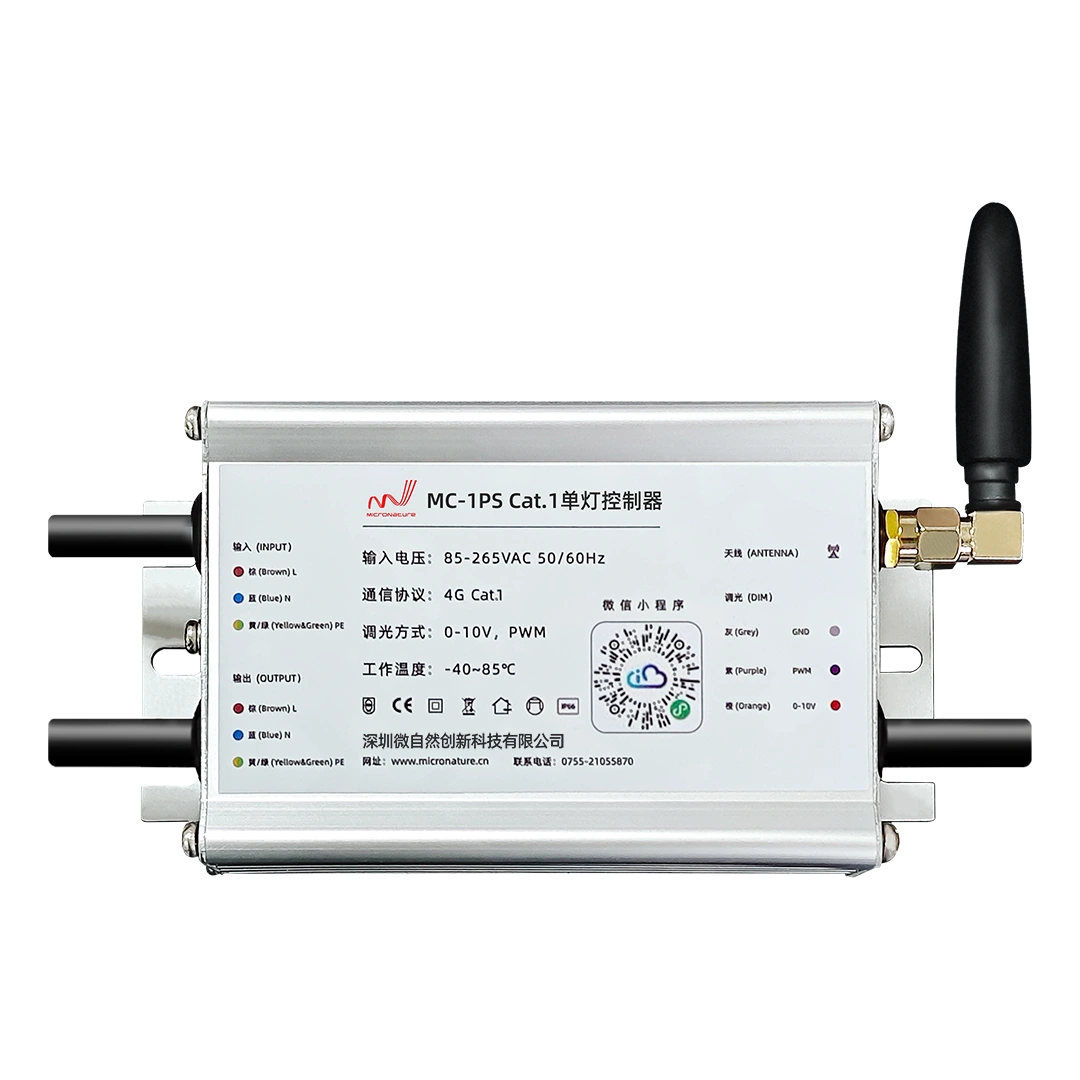
- 4G NEMA lighting controllers installed on luminaires
- Cellular communication network
- Cloud-based SaaS lighting platform
- LED drivers with DALI dimming
- Centralized monitoring dashboard
Each lighting controller communicates directly with the cloud platform through the 4G cellular network. Modern systems often use cloud-based smart lighting platforms to enable centralized monitoring and remote control.
This eliminates the need for dedicated communication cables, making deployment faster and more flexible.
Key Advantages of 4G Lighting Systems
Fast Deployment
4G wireless systems require minimal infrastructure preparation.
This makes them ideal for:
- Urban street lighting retrofits
- New road installations
- Distributed lighting projects
- Remote locations
Installation typically involves mounting controllers and activating cellular connectivity.
High Scalability
Because each node connects independently, expanding the lighting network is straightforward.
New luminaires can be added without modifying the existing communication structure.
This allows cities to scale lighting networks gradually.
Reliable Communication Coverage
Cellular networks provide extensive coverage across urban and suburban regions.
This supports:
- Long-distance communication
- Stable data transmission
- Reduced communication failures
Understanding PLC Smart Street Lighting Communication
PLC-based lighting systems use existing electrical power lines to transmit communication signals between lighting controllers and central management systems.
Instead of wireless transmission, data travels through the same cables used to deliver electrical power.
How PLC Lighting Communication Works
A typical PLC lighting system includes:
- PLC lighting controllers installed on luminaires
- PLC central concentrator
- Power line communication network
- Central gateway
- Cloud-based management platform
Communication flows through the power line network, allowing centralized control of lighting groups.
Key Advantages of PLC Lighting Systems
Uses Existing Power Infrastructure
PLC systems utilize the existing electrical grid.
This reduces:
- Communication cable installation
- Infrastructure cost
- Network deployment complexity
This makes PLC highly attractive in structured lighting networks.
Strong Network Stability
Power line communication offers stable performance in environments where wireless communication may be limited.
This is particularly valuable in:
- Tunnels
- Industrial facilities
- Underground installations
These environments often challenge wireless communication reliability.
Centralized Control Efficiency
PLC systems often group lighting nodes through concentrators, allowing efficient centralized management of multiple luminaires.
This simplifies system architecture in high-density installations.
4G vs PLC Communication: Core Technology Differences
While both technologies support smart street lighting, their communication methods differ significantly.
Understanding these differences helps project planners match technology to project needs.
Communication Architecture Comparison
| Feature | 4G Wireless System | PLC Power Line System |
|---|---|---|
| Communication Medium | Cellular Network | Power Lines |
| Infrastructure Requirement | Cellular Coverage | Electrical Grid |
| Installation Complexity | Low | Moderate |
| Communication Method | Wireless | Wired (via power line) |
| Expansion Flexibility | Very High | High |
| System Topology | Node-based | Network-based |
Performance Comparison for Real Projects
Real-world performance depends heavily on installation conditions.
Each technology performs best under specific environmental conditions.
Deployment Speed
4G systems offer faster installation because they require minimal physical infrastructure.
PLC systems may require configuration of concentrators and power line tuning.
Best choice:
- Fast deployment → 4G
- Structured infrastructure → PLC
Communication Reliability
Both technologies offer reliable communication, but reliability depends on environment type.
4G reliability depends on:
- Cellular coverage quality
- Signal strength
- Network availability
PLC reliability depends on:
- Power line quality
- Electrical noise levels
- Network configuration
Best choice:
- Outdoor urban roads → 4G
- Controlled infrastructure → PLC
Maintenance Efficiency
Both technologies support remote monitoring and diagnostics.
However:
4G systems allow individual node-level independence.
PLC systems allow grouped network management.
Best choice:
- Independent node management → 4G
- Centralized group control → PLC
Application Scenarios: When to Use 4G Lighting Systems
4G lighting communication performs best in flexible and distributed environments.
Ideal Use Cases
Urban Street Lighting
4G is highly suitable for:
- City roads
- Residential districts
- Commercial streets
- Municipal lighting upgrades
Wireless deployment reduces civil construction requirements.
Retrofit Projects
Existing lighting networks can be upgraded without installing new communication cables.
This significantly reduces:
- Construction cost
- Installation time
- Traffic disruption
Remote or Expanding Areas
Wireless communication allows lighting deployment in areas lacking communication infrastructure.
Examples include:
- Newly developed districts
- Suburban roads
- Rural highways
Application Scenarios: When to Use PLC Lighting Systems
PLC communication excels in structured infrastructure environments.
Ideal Use Cases
Tunnel Lighting Systems
PLC performs extremely well in enclosed environments. This is why PLC technology is widely used in tunnel lighting systems.
Reasons include:
- Shielded communication
- Stable cable networks
- Minimal wireless interference
This makes PLC one of the most preferred solutions for tunnel lighting.
Industrial Zones
Factories and industrial parks benefit from PLC reliability.
Electrical infrastructure is typically structured and stable.
Campus and Facility Lighting
Controlled environments support consistent power line communication performance.
Typical installations include:
- Airports
- Ports
- Logistics hubs
- Large facilities
Hybrid 4G + PLC Systems: The Best of Both Technologies
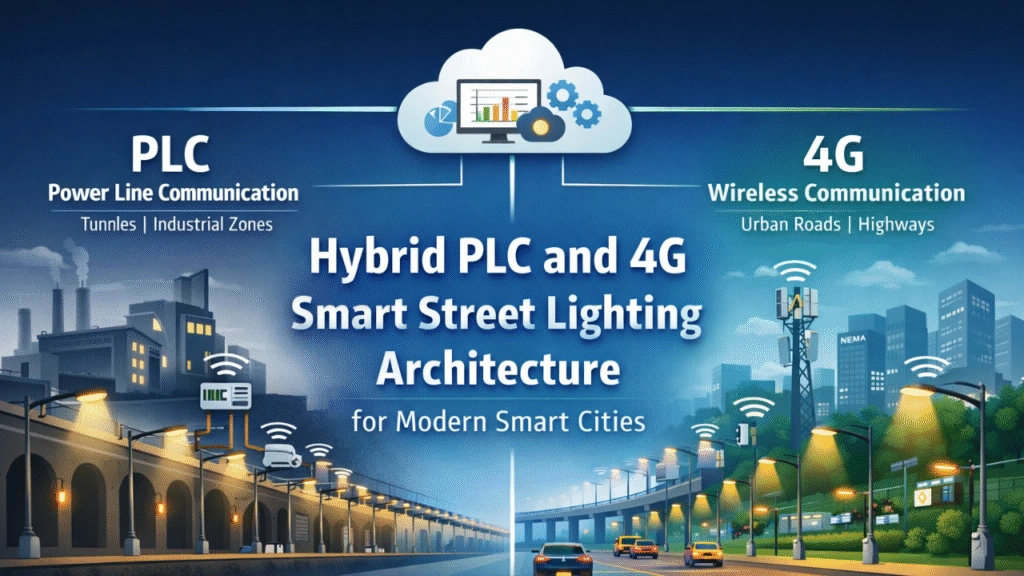
In many real-world projects, a hybrid PLC and 4G smart lighting architecture delivers optimal performance.
This approach leverages the strengths of each system.
How Hybrid Systems Work
Typical hybrid deployments include:
- PLC communication inside tunnels
- 4G communication on open roads
- Centralized cloud platform managing both systems
This allows seamless operation across different environments.
Benefits of Hybrid Communication
Hybrid systems provide:
- Maximum coverage flexibility
- Improved network redundancy
- Environment-specific optimization
- Enhanced scalability
This architecture is increasingly used in modern smart city lighting deployments.
Key Decision Factors When Choosing Between 4G and PLC
Selecting the right communication method depends on project-specific conditions. You can explore real deployment examples in our smart street lighting case studies.
Decision-makers should evaluate the following factors.
Infrastructure Availability
Check whether:
- Cellular coverage is available
- Power line networks are stable
- Existing infrastructure supports expansion
Infrastructure conditions strongly influence technology choice.
Project Scale
Large-scale deployments benefit from flexible architectures.
Both technologies support large systems, but expansion models differ.
Environmental Conditions
Environmental factors affect communication performance.
Consider:
- Open urban environments
- Underground installations
- Industrial interference sources
These conditions determine the most reliable communication method.
Long-Term Maintenance Strategy
Operational efficiency is critical for long-term projects.
Evaluate:
- Maintenance accessibility
- System upgrade capability
- Device replacement flexibility
Future Trends in Smart Street Lighting Communication
Smart lighting networks are evolving toward more intelligent and interconnected systems.
Future developments are expected to include:
- AI-based lighting optimization
- Real-time traffic-adaptive dimming
- Predictive maintenance systems
- Integrated smart city services
Both 4G and PLC communication technologies will continue playing important roles in these evolving infrastructures.