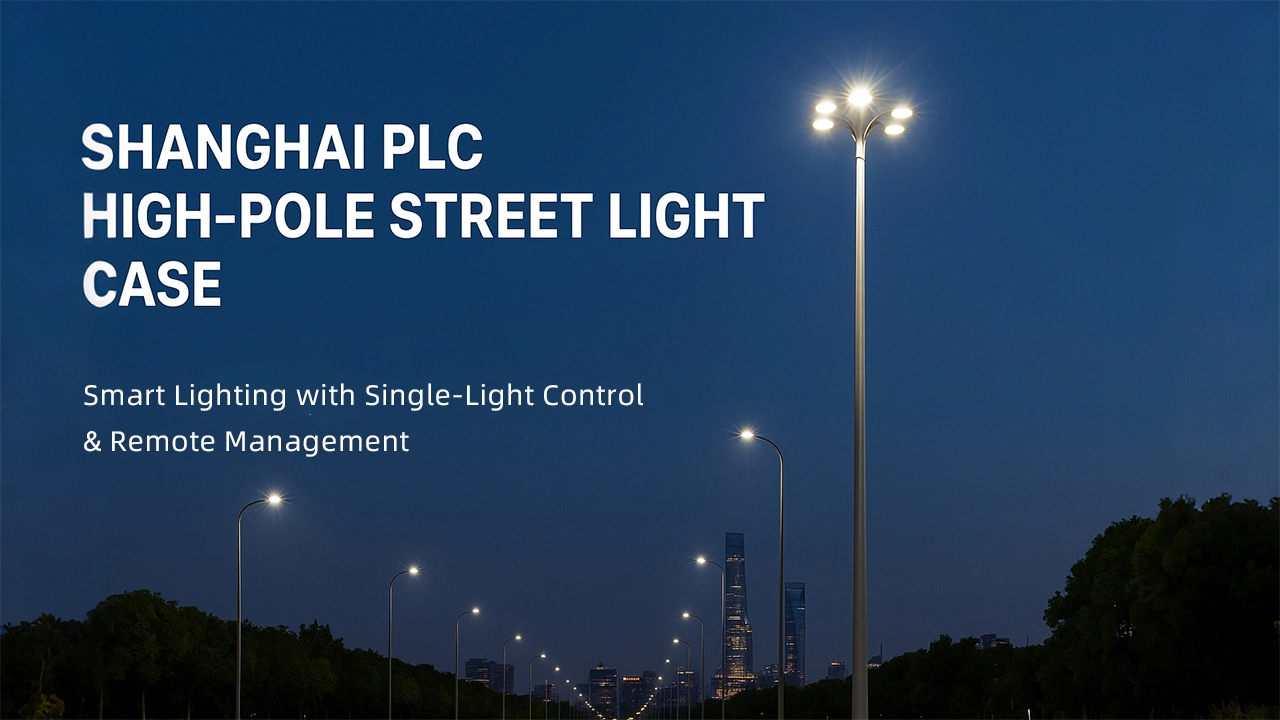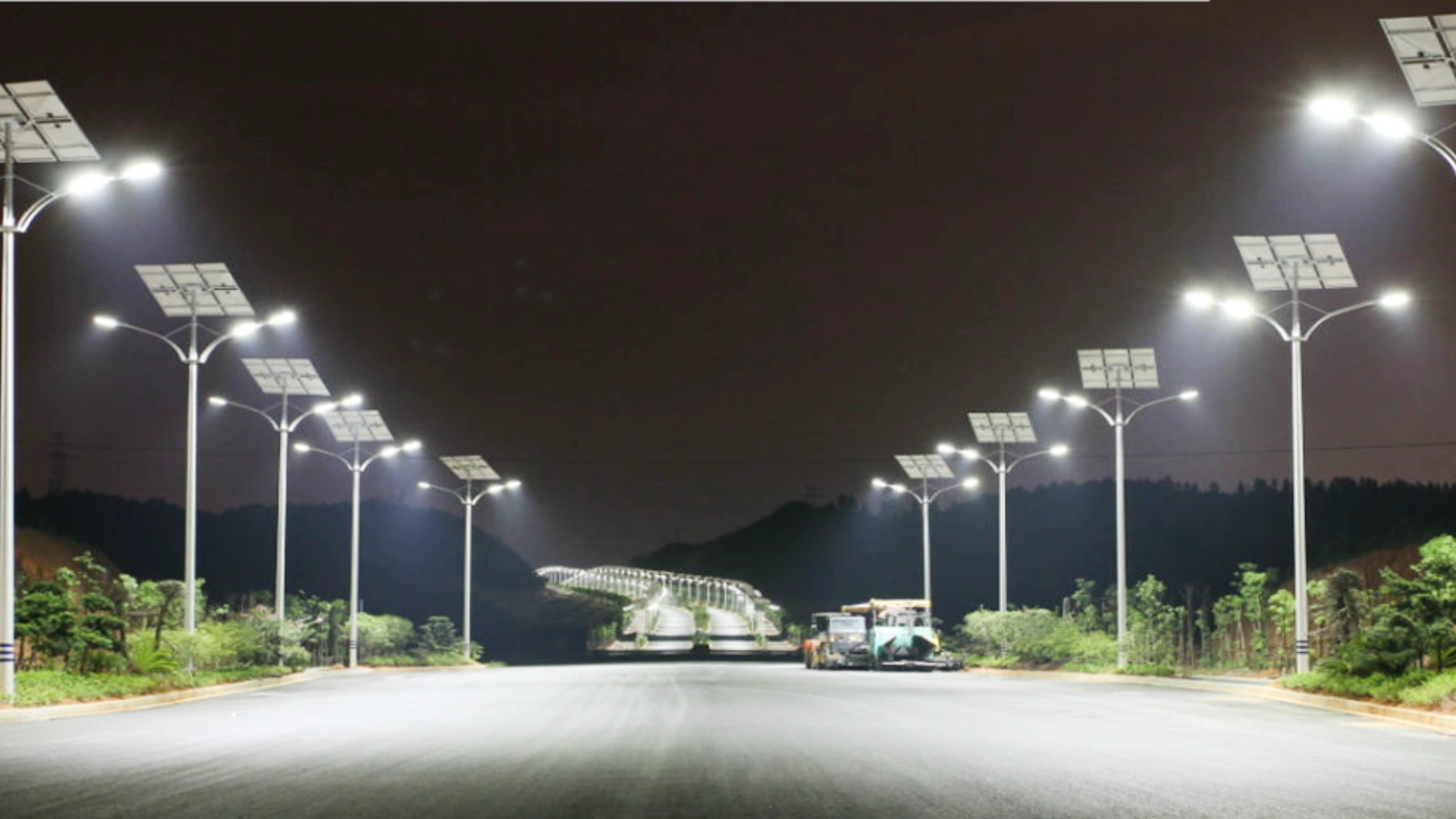

Project Overview
The Shanghai Oil Power Plant Lighting Project is a large-scale industrial lighting upgrade designed to improve operational safety, energy efficiency, and maintenance visibility in a complex power-generation environment. By adopting PLC (Power Line Communication) smart lighting technology combined with PLC AI sensor linkage, the project transforms traditional industrial lighting into an intelligent, remotely managed system without the need for additional communication cabling.
Using existing power lines for both power supply and data transmission, the solution ensures reliable communication even in electrically noisy industrial environments such as oil power plants.
Project Challenges
Oil power plants present unique challenges for lighting systems:
- Strong electromagnetic interference from heavy electrical equipment
- Large outdoor and indoor areas with long-distance lighting circuits
- High safety and reliability requirements
- Difficult maintenance and fault troubleshooting
- Limited flexibility in traditional lighting control systems
The customer required a solution that could deliver stable communication, real-time monitoring, intelligent control, and fast fault alarms, while minimizing installation complexity and downtime.
Solution: PLC Smart Lighting with AI Sensor Linkage
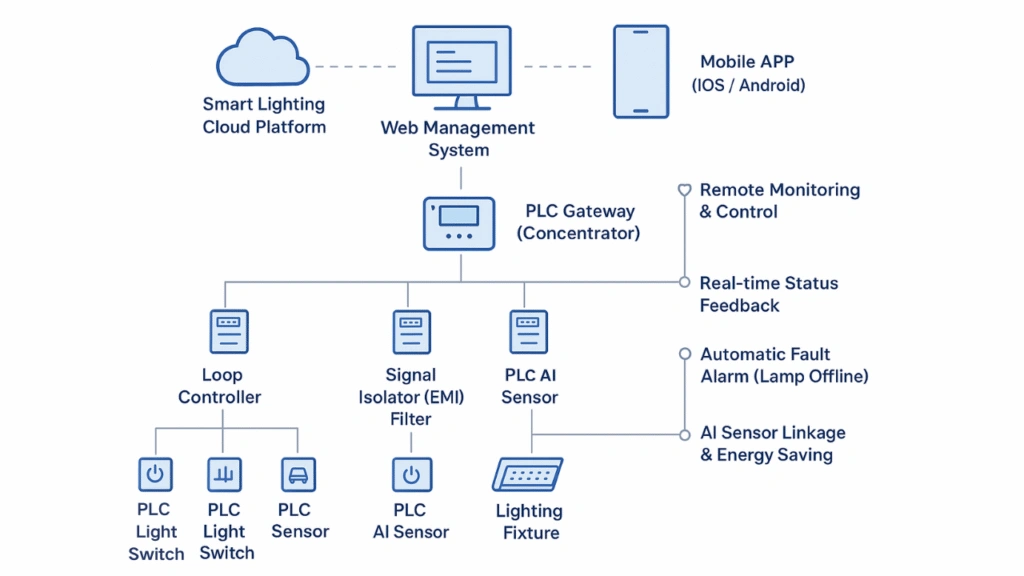
To meet these requirements, the project deployed a PLC-based smart lighting control system with AI sensor integration. The system uses multiple PLC devices working together to form a unified, intelligent lighting network.
Key Devices Used
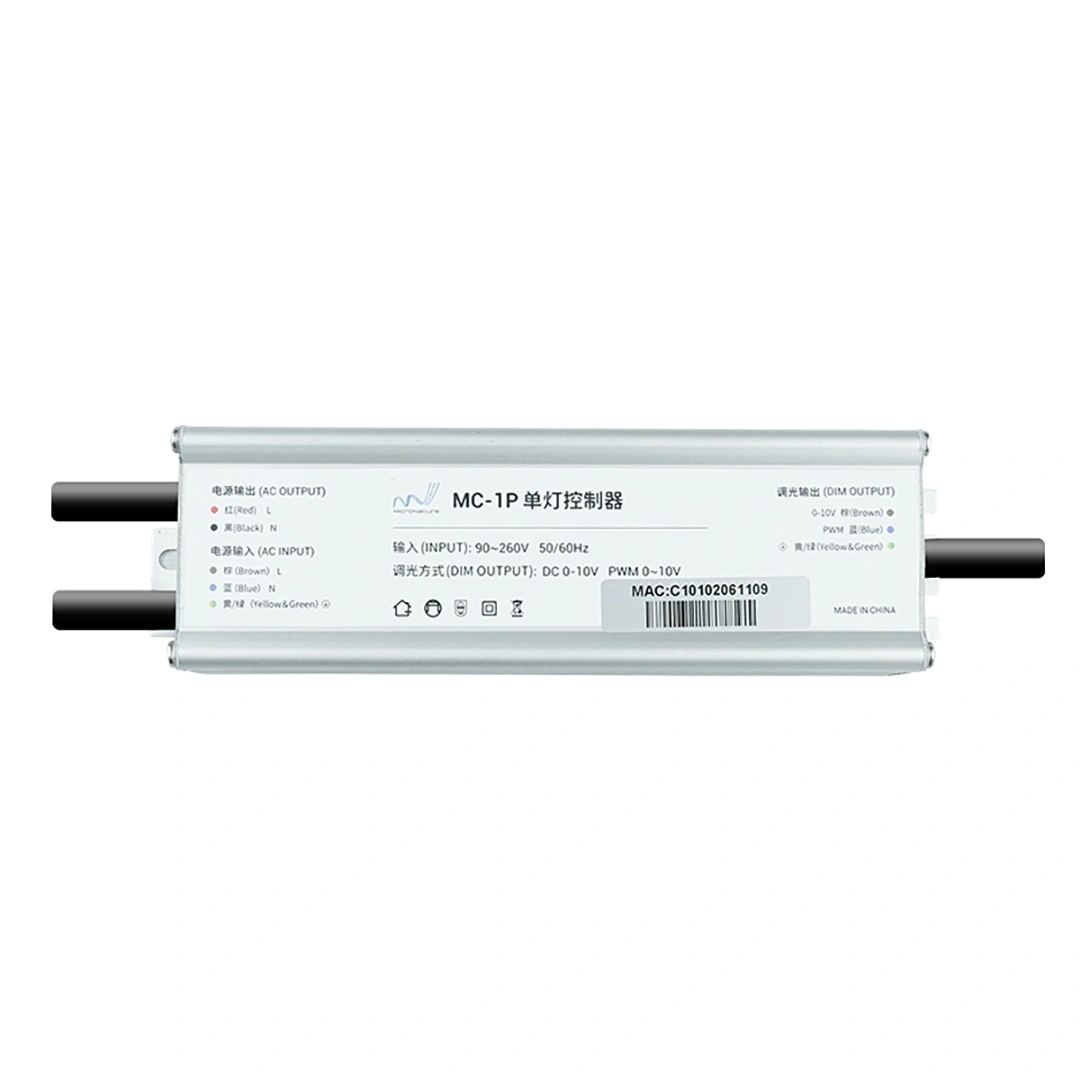
- PLC Single Light Switch
Enables individual lamp control, status feedback, and remote on/off or dimming commands. - PLC Gateway (Concentrator)
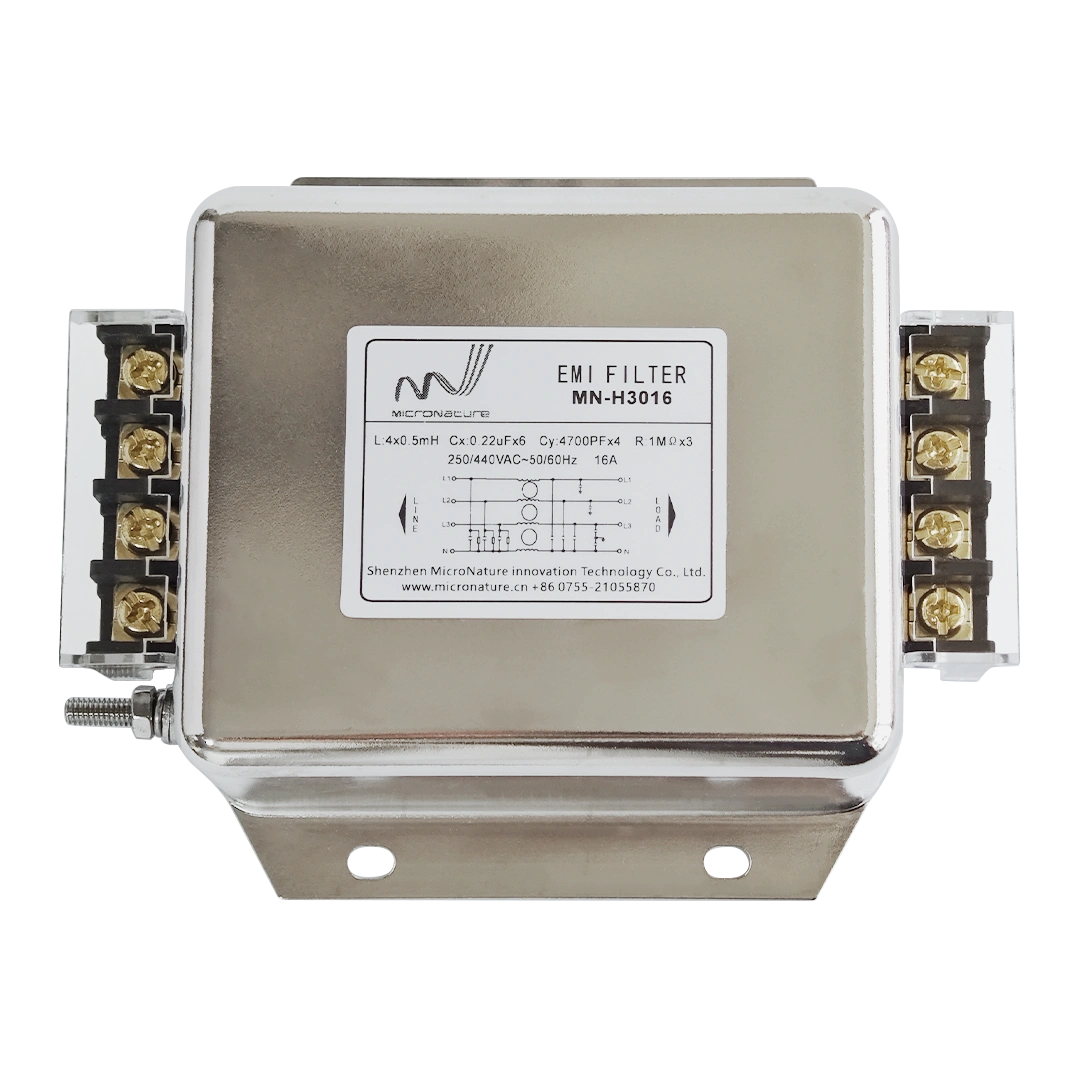
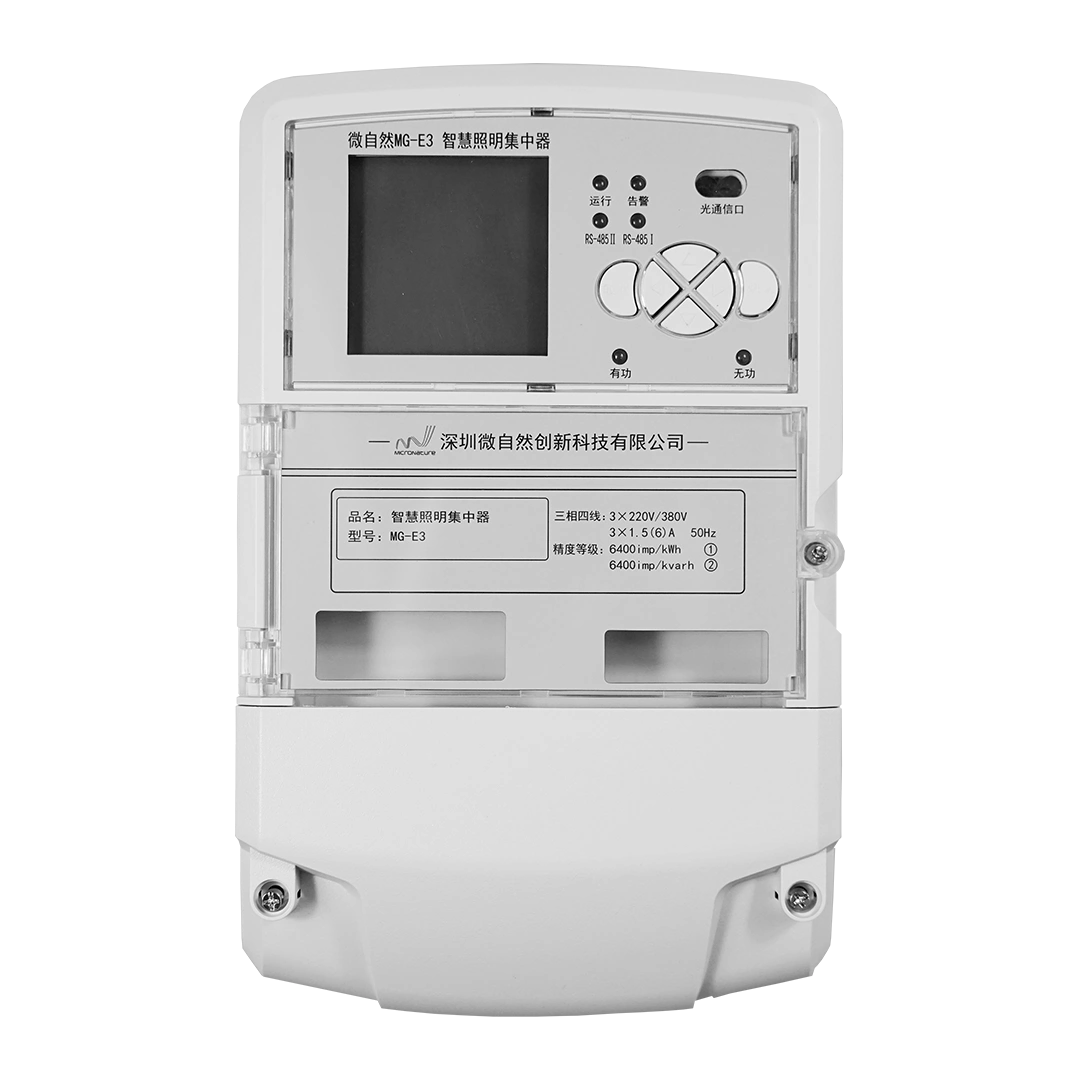
Acts as the central communication hub, collecting data from all lighting nodes and connecting the PLC network to the cloud platform. - Signal Isolator (EMI Filter)
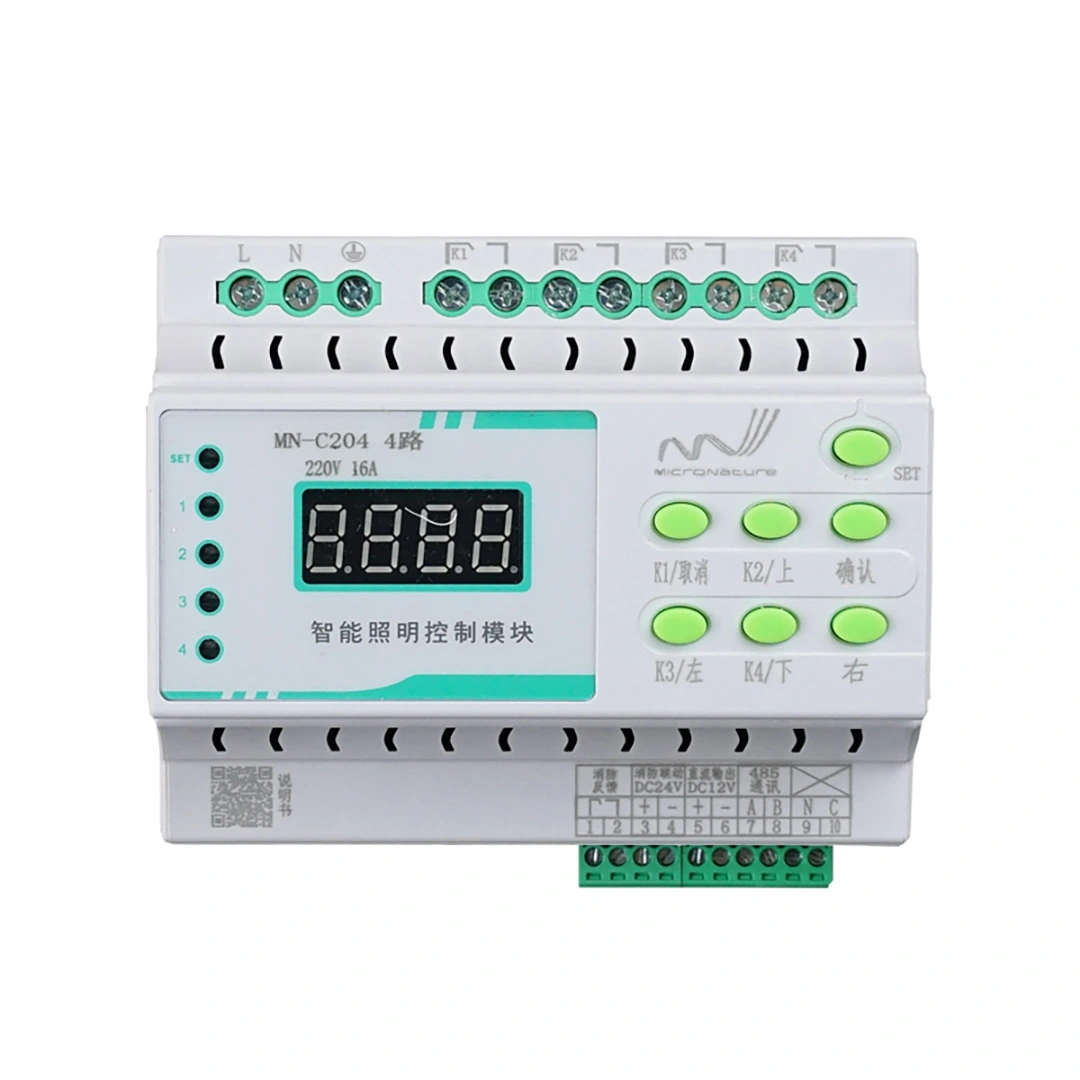
Effectively suppresses electromagnetic interference, ensuring stable PLC communication in high-noise power plant environments. - Loop Controller
Provides centralized control and protection for lighting circuits, improving operational safety and system reliability. - PLC AI Sensor
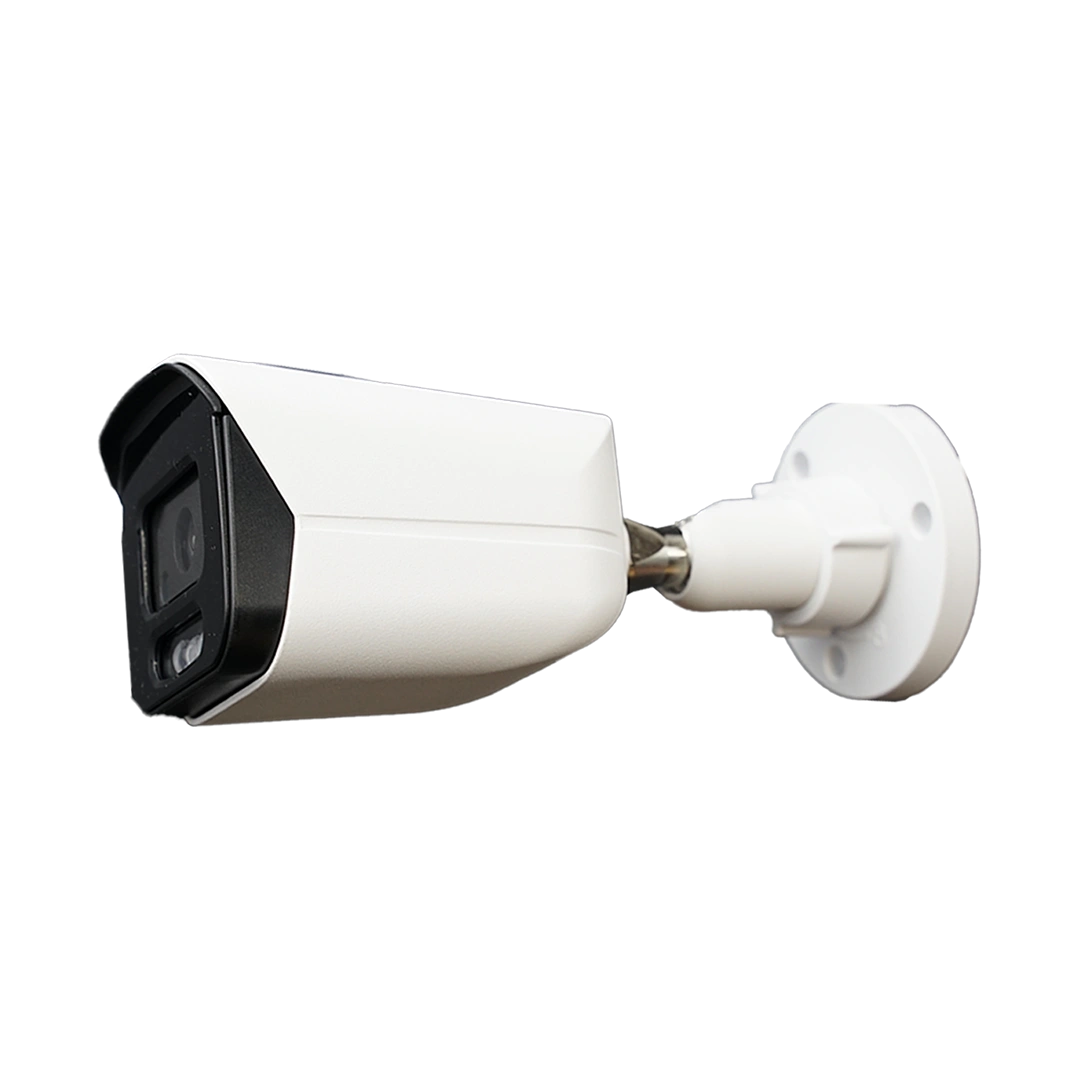
Detects human activity, vehicle movement, and environmental conditions, enabling intelligent lighting linkage and automated control strategies. - Other Auxiliary Devices
Ensure seamless integration, power stability, and long-term system performance.
Intelligent Control & AI Sensor Linkage
The PLC AI sensor linkage feature is a core highlight of this project. Lighting behavior is automatically adjusted based on real-time conditions:
- Lights turn on or increase brightness when personnel or vehicles are detected
- Lights dim or switch off during idle periods to reduce energy consumption
- Zonal control allows different areas to operate with customized lighting strategies
This intelligent linkage significantly improves both energy efficiency and on-site safety.
Remote Monitoring & Management
The entire lighting system can be remotely managed through web-based software and mobile applications, supporting both iOS and Android platforms.
Platform Features
- Real-time lamp status monitoring
- Remote on/off and dimming control
- Device grouping and scene management
- Historical operation and energy consumption data
- User-friendly interface for daily operation and maintenance
Alarm & Fault Notification System
To reduce maintenance response time, the system provides automatic alarm and fault notifications:
- Instant alerts when a lamp goes offline
- Device communication failure detection
- Abnormal operation alarms
- Fault information displayed on web and APP platforms
This proactive monitoring mechanism enables faster troubleshooting and helps minimize downtime.
Project Benefits
The Shanghai Oil Power Plant PLC Smart Lighting Project delivers measurable value:
- Stable communication in high-interference industrial environments
- Reduced installation cost by using existing power lines
- Improved energy efficiency through AI sensor-based control
- Enhanced safety with reliable and adaptive lighting
- Lower maintenance workload with remote monitoring and fault alarms