High Quality PLC Power Line Communication Module Supplier | OEM/ODM Smart Industrial Lighting Solutions
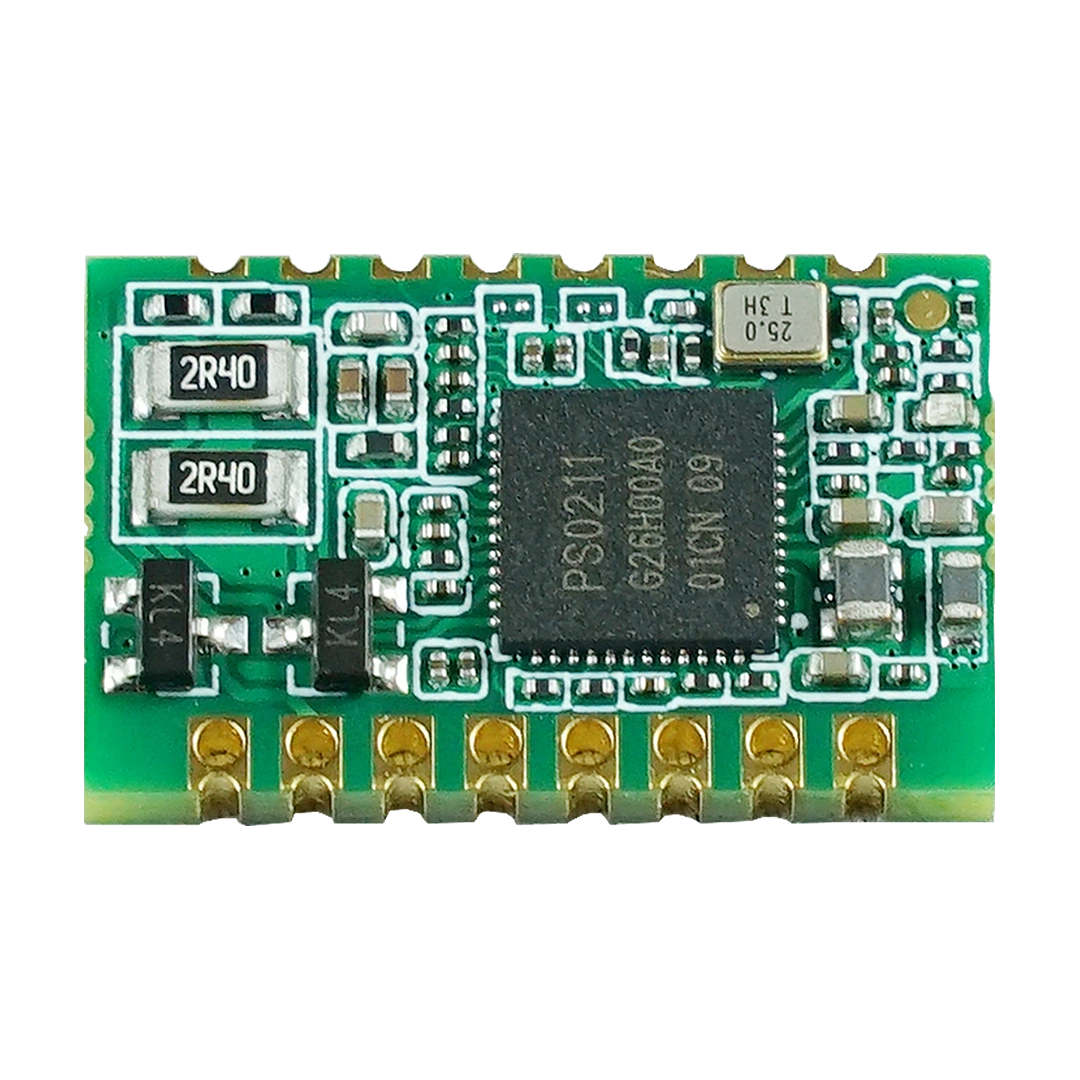
We are a China Manufacture & Provider offering customized Power Line Carrier Communication (PLC) modules (e.g., MN-L80A) and robust solutions for smart industrial and street lighting. Our high quality PLC technology delivers unparalleled stability, cost efficiency, and granular control over existing power lines, fully supported by OEM/ODM services.
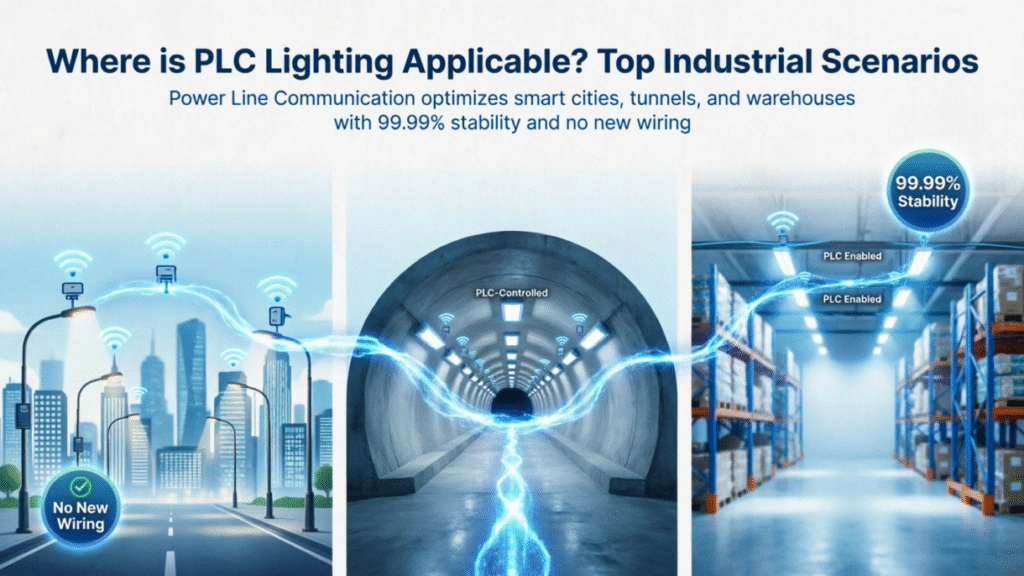
PLC-IoT enables intelligent industrial lighting over existing power lines, eliminating dedicated communication wiring. It delivers robust connectivity, granular control, and operational efficiency in demanding settings such as factories, tunnels, and ports, while significantly reducing deployment and maintenance costs.
Introduction to Power Line Communication (PLC) in Smart Lighting
Power Line Communication (PLC) is revolutionizing the way we approach smart lighting, offering a robust and cost-effective solution for controlling and managing lighting systems. PLC technology leverages existing power lines to transmit data, eliminating the need for additional wiring and significantly reducing installation costs. This makes it an ideal choice for a wide range of applications, from smart cities and street lighting to industrial facilities and tunnels. By integrating PLC technology, municipalities, EPC contractors, and system integrators can achieve enhanced energy efficiency, improved operational control, and reduced maintenance expenses. This comprehensive guide delves into the various aspects of PLC technology in smart lighting, providing detailed insights and practical information for professionals in the field.
The core advantage of PLC lies in its ability to utilize the existing electrical infrastructure. Unlike traditional lighting control systems that require dedicated communication cables, PLC systems transmit data over the power lines that already supply electricity to the lighting fixtures. This simplifies the installation process, minimizes disruption, and lowers the overall project cost. Moreover, PLC technology offers a reliable and secure communication channel, ensuring stable and consistent performance even in challenging environments. As smart city initiatives continue to gain momentum, PLC is emerging as a key enabler for intelligent lighting solutions that can adapt to changing conditions and optimize energy consumption.
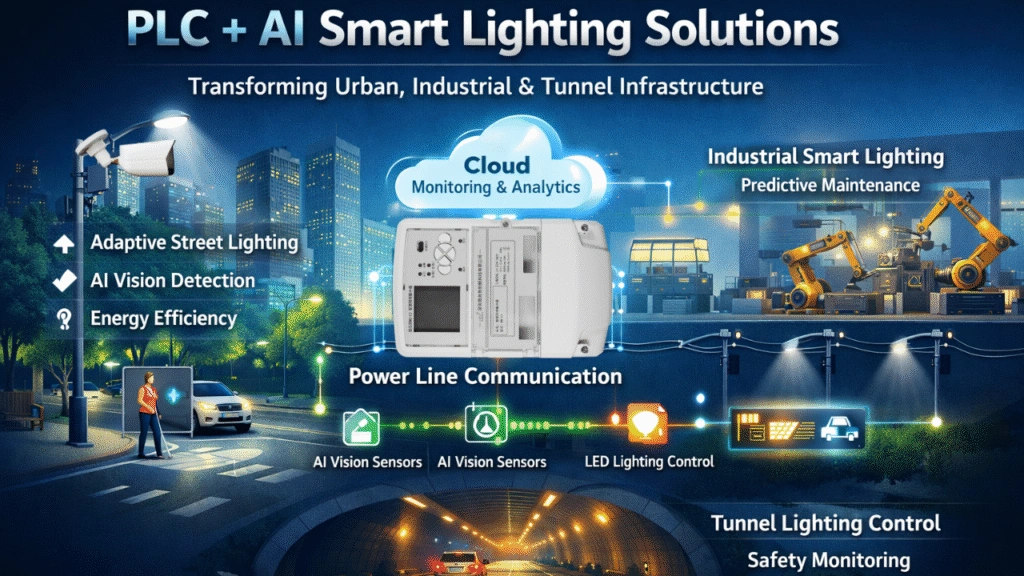
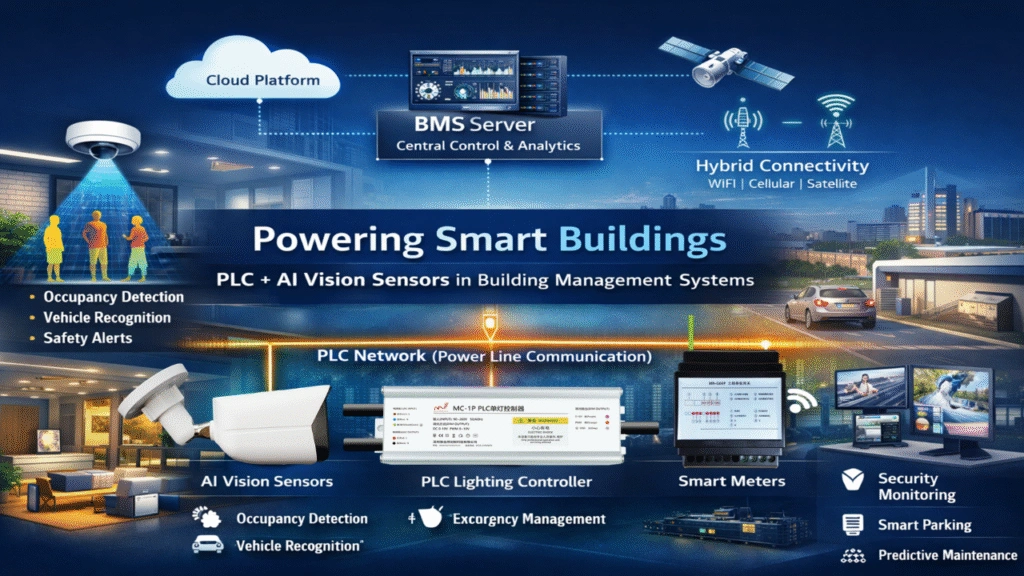
Furthermore, the integration of PLC with LED drivers and lighting control systems allows for advanced functionalities such as remote monitoring, dimming, and scheduling. This level of control enables municipalities and facility managers to fine-tune lighting levels based on real-time needs, reducing energy waste and enhancing safety. For instance, streetlights can be dimmed during off-peak hours to conserve energy and brightened during periods of high traffic or pedestrian activity to improve visibility. In industrial settings, PLC-enabled lighting systems can be integrated with other building management systems to create a cohesive and intelligent environment. This synergy between lighting and other systems can lead to significant improvements in operational efficiency and overall cost savings.
In this guide, we will explore the key components of a PLC-based smart lighting system, including PLC modules, LED drivers, and control software. We will also examine the benefits of PLC in various applications, such as smart cities, street lighting, tunnels, and industrial facilities. Additionally, we will provide practical guidance on how to implement and maintain a PLC system, including installation tips, troubleshooting techniques, and best practices for ensuring optimal performance. By the end of this guide, you will have a comprehensive understanding of PLC technology and its potential to transform the way we light our cities and industries.
High-Resolution Product Images
Visual representation plays a crucial role in understanding the functionality and application of PLC-based smart lighting components. High-resolution product images provide a detailed view of PLC modules, smart lighting equipment, and their installation setups. These images serve as a valuable resource for EPC contractors and system integrators, enabling them to visualize how the products integrate into their projects. Clear and detailed images can significantly aid in the decision-making process, ensuring that the selected components meet the specific requirements of the application. Moreover, high-quality visuals enhance the overall user experience, making it easier for potential customers to assess the suitability of the products.
To further enhance the utility of product images, it is beneficial to include installation demonstrations. These demonstrations can be presented as step-by-step visual guides, showcasing the process of installing PLC modules and smart lighting devices in various scenarios. For example, an installation demonstration for street lighting might illustrate how to integrate a PLC module with an LED driver and connect it to the existing power line. Similarly, an installation demonstration for industrial lighting could show how to install PLC-enabled fixtures in a factory setting and connect them to a central control system. These visual guides not only provide practical assistance but also build confidence in the ease of installation, encouraging wider adoption of PLC technology.
In addition to installation demonstrations, it is essential to showcase the products in different application scenarios. Images of PLC-based smart lighting systems in factories, tunnels, and smart city environments provide a tangible understanding of their real-world applications. For instance, images of a tunnel illuminated with PLC-controlled LED lighting can demonstrate the system's ability to provide consistent and reliable illumination in a challenging environment. Similarly, images of a factory floor with PLC-enabled lighting can highlight the system's ability to improve energy efficiency and enhance worker safety. By presenting these diverse application scenarios, potential customers can better appreciate the versatility and adaptability of PLC technology.
Furthermore, incorporating 360-degree product views and zoom functionalities can significantly enhance the user experience. A 360-degree view allows users to examine the product from all angles, providing a comprehensive understanding of its design and construction. Zoom functionalities enable users to inspect specific details, such as the placement of connectors, the labeling of components, and the quality of the materials. These features are particularly valuable for technical professionals who require a thorough understanding of the product's specifications and capabilities. By providing high-resolution images, installation demonstrations, and diverse application scenarios, manufacturers can effectively communicate the value proposition of PLC-based smart lighting solutions and drive greater adoption across various industries.
Technical Specifications Section
A comprehensive technical specifications section is essential for providing detailed information about PLC-based smart lighting products. This section should include critical technical parameters such as dimensions, power consumption, and operating temperature range. Providing this information allows EPC contractors, system integrators, and municipalities to accurately assess the suitability of the products for their specific applications. Detailed technical specifications ensure that the selected components meet the required performance standards and can be seamlessly integrated into existing systems. Moreover, transparency in technical specifications builds trust and confidence among potential customers, encouraging informed decision-making.
In addition to basic technical parameters, the specifications section should also include performance and reliability test data. This data provides valuable insights into the product's ability to perform consistently under various operating conditions. For example, data on the product's ability to withstand voltage fluctuations, temperature variations, and electromagnetic interference can help customers assess its suitability for demanding industrial environments. Similarly, data on the product's lifespan and mean time between failures (MTBF) can provide insights into its long-term reliability and maintenance requirements. By providing this data, manufacturers can demonstrate the robustness and durability of their products, enhancing their credibility and appeal.
Furthermore, it is beneficial to include information about third-party certifications. These certifications, such as those from UL, CE, and RoHS, demonstrate that the product has been tested and certified to meet specific safety and performance standards. Third-party certifications provide an independent validation of the product's quality and compliance, giving customers added assurance. Including information about these certifications in the technical specifications section can significantly enhance the product's credibility and marketability. Moreover, it can help customers streamline their procurement process by ensuring that the selected products meet the required regulatory standards.
The technical specifications section should also include detailed information about the product's communication protocols and compatibility with other systems. This information is crucial for ensuring seamless integration with existing lighting control systems, building management systems, and other smart city infrastructure. Providing clear and concise information about communication protocols, data rates, and interoperability standards can help customers avoid compatibility issues and ensure smooth operation. Additionally, it is beneficial to include information about the product's security features, such as encryption and authentication protocols, to address concerns about data privacy and cybersecurity. By providing a comprehensive and transparent technical specifications section, manufacturers can empower customers to make informed decisions and ensure the successful implementation of PLC-based smart lighting solutions.
Customer Testimonials & Case Studies
Customer testimonials and case studies are powerful tools for showcasing the real-world benefits of PLC-based smart lighting solutions. These narratives provide authentic and credible accounts of how the technology has been successfully implemented in various industrial domains. By sharing the experiences of satisfied customers, manufacturers can build trust, enhance their reputation, and drive greater adoption of their products. Customer testimonials and case studies offer tangible evidence of the technology's effectiveness, making it easier for potential customers to envision the positive impact it can have on their own operations.
To maximize the impact of customer testimonials, it is essential to include specific details about the application, the challenges faced, and the results achieved. For example, a testimonial from a factory manager could describe how PLC-based smart lighting helped them reduce energy consumption, improve worker safety, and streamline maintenance operations. The testimonial should include quantifiable data, such as the percentage reduction in energy costs, the improvement in lighting levels, and the decrease in maintenance downtime. By providing concrete evidence of the benefits, the testimonial becomes more compelling and persuasive.
Case studies provide a more in-depth analysis of successful PLC-based smart lighting implementations. These studies should include a detailed description of the project, the technology used, the implementation process, and the outcomes achieved. For example, a case study on a smart city project could describe how PLC-controlled streetlights were deployed to improve energy efficiency, enhance public safety, and reduce operational costs. The case study should include data on the energy savings, the reduction in crime rates, and the cost savings achieved through remote monitoring and maintenance. Additionally, the case study should highlight any challenges encountered during the implementation process and how they were overcome.
It is also beneficial to include case studies from a variety of industrial sectors, such as factories, tunnels, and commercial buildings. This demonstrates the versatility of PLC-based smart lighting and its applicability to a wide range of environments. For example, a case study on a tunnel lighting project could highlight the technology's ability to provide reliable and consistent illumination in a challenging underground environment. A case study on a commercial building project could showcase the technology's ability to integrate with building management systems and optimize energy consumption based on occupancy patterns. By presenting a diverse range of case studies, manufacturers can effectively communicate the broad applicability of PLC-based smart lighting and its potential to transform various industries.
Implementation Guide & Tutorials
A detailed implementation guide and tutorials are essential for providing practical assistance to customers who are deploying PLC-based smart lighting solutions. These resources should offer step-by-step instructions, visual aids, and troubleshooting tips to ensure a smooth and successful installation process. By providing comprehensive guidance, manufacturers can empower customers to confidently implement the technology and maximize its benefits. The implementation guide should cover all aspects of the installation process, from initial planning and preparation to final testing and commissioning.
The implementation guide should include detailed diagrams and illustrations to visually demonstrate the installation steps. These visual aids can help customers understand the connections, configurations, and settings required for proper operation. For example, a diagram could show how to connect a PLC module to an LED driver, how to configure the communication settings, and how to verify the connection. The diagrams should be clear, concise, and easy to understand, even for users with limited technical expertise. Additionally, the implementation guide should include a checklist of tasks to ensure that all steps are completed correctly.
Video tutorials can provide an even more engaging and informative learning experience. These tutorials can demonstrate the installation process in real-time, allowing customers to see exactly how each step is performed. The video tutorials should be professionally produced, with clear audio and video quality. They should also be structured in a logical and easy-to-follow manner, with each step clearly explained and demonstrated. The video tutorials should cover a variety of topics, such as installing PLC modules, configuring communication settings, troubleshooting common issues, and optimizing performance.
In addition to the implementation guide and video tutorials, it is essential to provide a comprehensive FAQ section. This section should address common questions and concerns that customers may have about the installation process. The FAQ section should be organized by topic, with clear and concise answers to each question. It should also include links to relevant sections of the implementation guide and video tutorials. Furthermore, it is important to provide detailed contact information for technical support, including phone numbers, email addresses, and online chat options. By providing comprehensive support resources, manufacturers can ensure that customers have the assistance they need to successfully implement PLC-based smart lighting solutions.
Comparison with Alternative Technologies
A comprehensive comparison with alternative smart lighting communication technologies is crucial for helping customers make informed decisions about the best solution for their needs. This comparison should include a detailed analysis of the advantages and disadvantages of each technology, as well as their suitability for different applications. By providing a balanced and objective assessment, manufacturers can empower customers to choose the technology that best meets their specific requirements and constraints. The comparison should cover a range of technologies, including Wi-Fi, ZigBee, and other wireless communication protocols.
The comparison should begin with a brief overview of each technology, including its key features, benefits, and limitations. For example, Wi-Fi offers high bandwidth and widespread availability, but it can be susceptible to interference and security vulnerabilities. ZigBee is a low-power, mesh networking technology that is well-suited for large-scale deployments, but it has a limited range and bandwidth. PLC offers the advantage of using existing power lines for communication, but it can be affected by noise and signal attenuation. The overview should provide a clear and concise summary of each technology's strengths and weaknesses.
The comparison should also include a detailed analysis of the key performance metrics for each technology, such as data rate, range, latency, and power consumption. These metrics can help customers evaluate the suitability of each technology for their specific application. For example, if the application requires high bandwidth, Wi-Fi may be the best choice. If the application requires low power consumption, ZigBee may be more suitable. If the application requires long-range communication, a technology with a longer range may be necessary. The analysis should be supported by data and evidence, such as test results and performance benchmarks.
To further enhance the clarity of the comparison, it is beneficial to include tables and charts that visually summarize the key differences between the technologies. These visual aids can make it easier for customers to quickly compare the performance and features of each technology. For example, a table could compare the data rate, range, latency, and power consumption of Wi-Fi, ZigBee, and PLC. A chart could illustrate the relative cost of implementing each technology. By providing clear and concise visual aids, manufacturers can help customers quickly understand the key differences between the technologies and make informed decisions about the best solution for their needs.
What Is PLC-IoT?
PLC-IoT (Power Line Communication Internet of Things) is a robust communication technology that uses existing power lines to transmit data—eliminating the need to roll out additional communication lines. Compliant with HPLC/IEEE 1901.1 standards, it delivers reliable, secure, and real-time connectivity even in harsh industrial environments.
In industrial lighting, this means every light fixture can become an intelligent node on a unified network. Roads, tunnels, ports, and warehouses can achieve granular lighting control, energy savings, and simplified maintenance—all over the same wires that bring the power.
How PLC-IoT Works?
The implementation of PLC-IoT is simple and is described as follows:
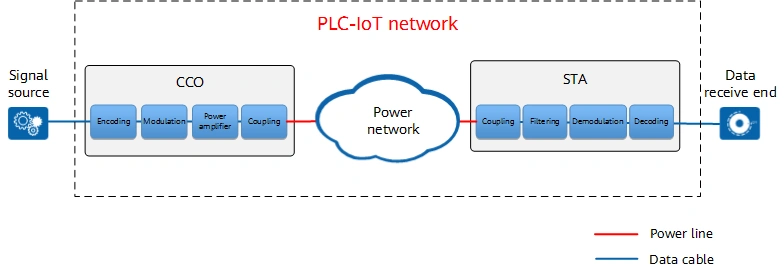
At the signal source side, the PLC modulation module modulates the data signals to be transmitted into high-frequency signals through a series of operations such as encoding and modulation, and couples the high-frequency signals to power lines through coupling circuits.
At the receive end, the PLC demodulation module separates data signals from high-frequency signals transmitted over power lines, and performs demodulation to restore the original data signals.
To put it simply, the PLC module modulates the communication data sent by the signal source into high-frequency electromagnetic waves and transmits them to the data receive end over power lines. The PLC module at the receive end then separates the high-frequency electromagnetic waves from the current.
Why PLC-IoT for Industrial Lighting?
Revolutionary Cost Efficiency
Dramatically reduces both CAPEX and OPEX by entirely eliminating the need for dedicated communication cabling. This offers the most significant economic advantage for large-scale new deployments and retrofit projects.
Unmatched Reliability & Stability
Impervious to radio interference, physical obstructions, and metal environments—common challenges for wireless technologies like Wi-Fi and ZigBee. The connection is as robust and stable as the electrical grid itself.
Granular Control & Intelligence
Enables precise single-lamp control—individual on/off, dimming, and real-time monitoring of each fixture. This forms the foundation for advanced energy-saving strategies and predictive maintenance.
Massive, Scalable Connectivity
A single gateway supports hundreds of nodes over extensive distances—such as multi-kilometer tunnels or sprawling port areas—enabling a seamlessly scalable and future-proof ecosystem.
Application Scenarios: Where It Shines
Urban Road Lighting: Centralized management of city-wide streetlights for maintenance and dimming schedules.
Tunnel Lighting: Adaptive lighting control based on external light and traffic; eliminates the nightmare of running data cables through kilometers of tunnels.
Smart Factories & Warehouses: Reliable lighting control in metal-rich environments; vision-sensing zones for massive energy savings.
Stadiums & Large Venues:
Precise control of high-pole and field lighting across the entire facility; enables dynamic scene switching for events, enhances operational safety, and reduces energy consumption during non-peak hours.
The Future is Bright
PLC-IoT is more than just a lighting control technology; it’s a strategic infrastructure decision that offers unparalleled simplicity, reliability, and intelligence.
The lighting grid, powered by PLC-IoT, can evolve into a foundational data network for broader IoT applications (e.g., environmental sensors, security devices), making industrial facilities truly smart and connected.
Steven Xie
CTO of Shenzhen MicroNature Innovation Technology Co. Ltd. Doctor of Chinese Academy of Science, focus on power line communication technology over 15 years. Adwarded 11 patents for outdoor and indoor smart lighting devices.