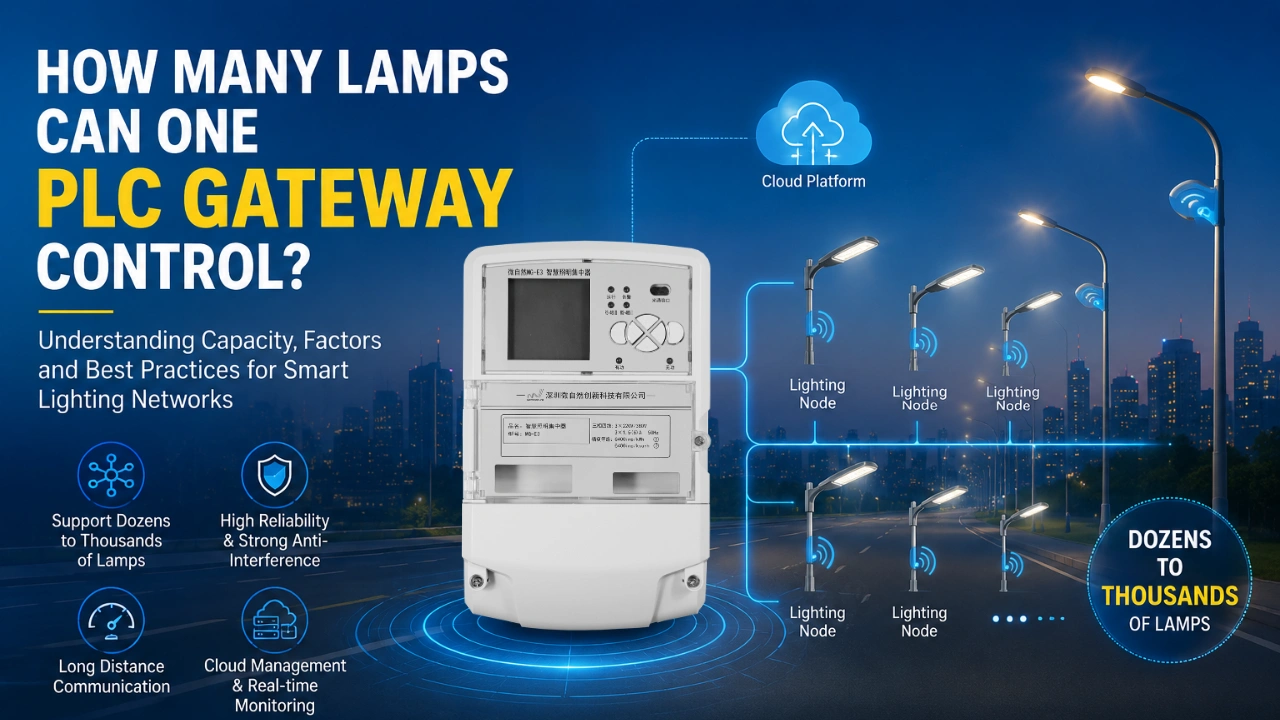
Когда инженеры, подрядчики EPC и муниципальные планировщики оценивают Связь по линии электропередачи (PLC) Система освещения, один из первых вопросов, который они задают:
Сколько ламп может управлять один шлюз ПЛК?
Короткий ответ: обычно один шлюз PLC может управлять Десятки, сотни или даже тысячи световых узлов, в зависимости от топологии сети, протокола связи, электрической среды и конструкции системы.
В отличие от традиционных беспроводных технологий, ПЛК использует существующие силовые кабели в качестве каналов связи, устраняя необходимость дополнительной коммуникационной проводки и обеспечивая высоконадежную передачу данных для уличного освещения, складов, тоннелей, промышленных объектов, кампусов, портов и умных городов.
Однако для определения фактического количества поддерживаемых ламп требуется более тщательный анализ нескольких технических факторов.
Что делает шлюз PLC?
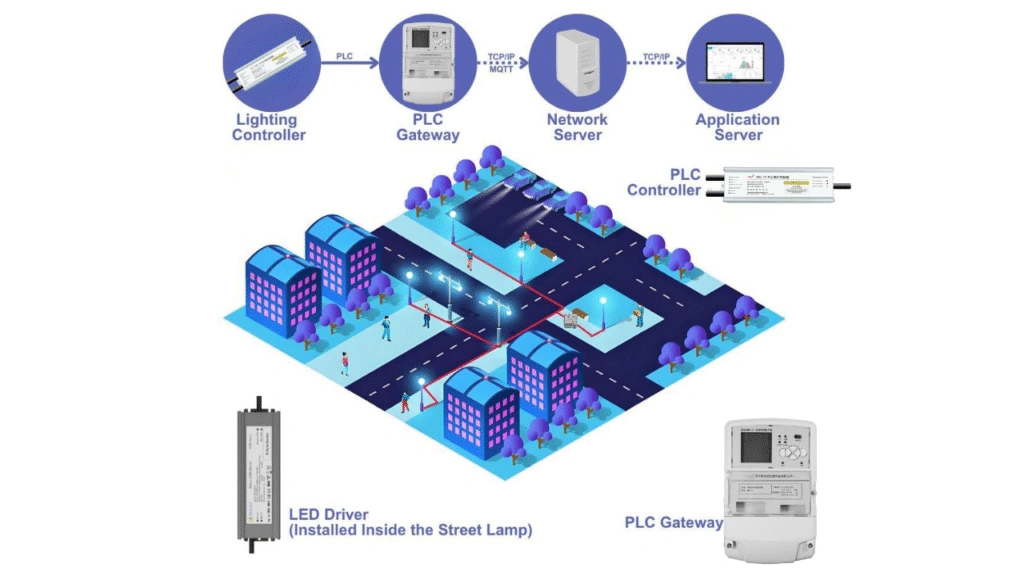
Шлюз ПЛК служит центральным коммуникационным узлом всей сети освещения. Он отвечает за:
- Управление коммуникацией между облачной платформой и половыми устройствами
- Сбор рабочих данных с отдельных ламп
- Отправка команд переключения и затемнения
- Мониторинг энергопотребления
- Обнаружение отказов и выдача тревог
- Управление политикой расписания
В типичной архитектуре умного освещения шлюз подключается к:
- Контроллеры ПЛК с одной лампой
- Контроллеры циклов
- Датчики
- Платформы управления облаком
- Ethernet, Wi-Fi или сотовые сети
Шлюз служит мостом между локальными сетями электропередач и системами удалённого управления.
Факторы, определяющие количество ламп
Несколько переменных напрямую влияют на ёмкость шлюза.
1. Протокол связи
Разные протоколы ПЛК обеспечивают разные уровни производительности.
Распространённые технологии включают:
- OFDM (Ортогональное частотное деление мультиплексирования)
- FSK (Частотное смещение ключей)
- IEEE P1901.1 Стандарты
- Проприетарные протоколы PLC
Системы на базе OFDM обычно обеспечивают большую пропускную способность, лучшую устойчивость к шуму и большую пропускную способность сети.
2. Топология сети
Структура сети существенно влияет на общую производительность. Если вы новичок, можете посмотреть нашу статью Руководство по расчету ёмкости сети PLC для умного освещения.
Типичные топологии включают:
- Звёздная топология
- Топология дерева
- Топология сетки
- Гибридная топология
Mesh-сеть особенно полезна, поскольку каждый узел может помогать передавать информацию другим узлам, расширяя диапазон связи и повышая надёжность.


3. Расстояние связи
Расстояние общения — ещё один важный фактор.
Факторы, влияющие на расстояние передачи, включают:
- Качество кабеля
- Распределение трансформаторов
- Электрический шум
- Ответвления
- Ослабление сигнала
- Электромагнитные помехи
По мере увеличения расстояния связи пропускная способность данных обычно уменьшается.
4. Сетевой трафик
Нагрузка на связь внутри сети также влияет на пропускную способность системы. Как спроектировать умную сеть освещения PLC Эта статья может помочь вам узнать об этом больше.
Примеры включают:
- Затемнение в реальном времени
- Мониторинг энергии
- Отчётность о неисправностях
- Интеграция датчиков
- Обновления прошивки
- Аналитика на основе ИИ
Сеть, которая отправляет только простые команды включения/выключения, обычно поддерживает больше узлов, чем сеть, передающая большие объемы данных датчиков.
5. Требования к времени отклика
У разных проектов свои требования.
| Приложения | Требования к отклику |
|---|---|
| Уличное освещение | Секунды |
| Промышленное освещение | Сотни миллисекунд |
| Тоннельное освещение | Почти в реальном времени |
| Освещение стадиона | В реальном времени |
Требования к более быстрому отклику обычно уменьшают максимальное количество устройств, поддерживаемых шлюзом.
Типичная ёмкость шлюза ПЛК
В следующей таблице приведены общие оценки.
| Сценарий развертывания | Приблизительное количество ламп |
|---|---|
| Небольшое офисное здание | 20–100 |
| Склад | 50–300 |
| Промышленное предприятие | 100–500 |
| Тоннельное освещение | 100–800 |
| Система уличного освещения | 300–1,000+ |
| Внедрение умных городов | Тысячи |
Фактическая производительность зависит от местных условий.
Пример: проект муниципального уличного освещения
Представьте себе город, который установил 1000 интеллектуальных уличных фонарей на нескольких километрах.
Установка может включать:
- Четыре шлюза ПЛК
- Два электрических распределительных шкафа
- Одна облачная платформа управления
- Несколько контроллеров ПЛК
- Световые и экологические датчики
В этом сценарии каждый шлюз мог управлять примерно 250 лампами, сохраняя стабильную связь и быстрое время отклика.
Такая распределённая архитектура предлагает несколько преимуществ:
- Упрощение обслуживания
- Большая избыточность
- Меньшая задержка связи
- Повышенная надёжность
- Лучшая масштабируемость
Как увеличить пропускную способность шлюза
Системные проектировщики часто используют несколько методов расширения сети.
Сегментировать сеть
Разделите крупные развертывания на более мелкие коммуникационные домены.
Используйте ретрансляторы или mesh-сеть
Пересылка сигналов улучшает как покрытие, так и стабильность.
Снижение частоты связи
Длительные интервалы отчёта снижают перегрузку сети.
Улучшение качества электроэнергии
Фильтры сигнала и устройства изоляции могут значительно снизить помехи.
Избранные промышленные модули ПЛК
Высокопроизводительные модули обеспечивают лучшую чувствительность и более устойчивую устойчивость к шуму.
Почему ПЛК идеально подходит для крупных сетей освещения
По сравнению с беспроводными решениями, технология ПЛК обладает рядом преимуществ:
| Особенности | Технология ПЛК | Беспроводные технологии |
|---|---|---|
| Дополнительная проводка | Не требуется | Обычно требуется |
| Устойчивость к электромагнитным перешкодам | Отлично | Умеренный |
| Сложность установки | Низкий | Умеренный |
| Междугородняя связь | Отлично | Лимитированный |
| Надёжность | Высокий | Терпимая |
| Затраты на обслуживание | Низкий | Выше |
Эти преимущества объясняют, почему технология ПЛК становится всё более популярной в приложениях умных городов.
Заключительные мысли
Универсального ответа на вопрос: «Сколько ламп может управлять одним шлюзом ПЛК?»
Ответ зависит от множества факторов, включая протоколы связи, электрические условия, топологию сети, интервалы отчётности и требования проекта.
Для большинства профессиональных внедрений интеллектуального освещения системные архитекторы ставят в приоритет надёжность, масштабируемость и обслуживаемость, а не просто максимизацию количества подключённых ламп.
Хорошо спроектированная сеть ПЛК может обеспечить стабильную связь для сотен или даже тысяч осветительных узлов, при этом значительно снижая затраты на установку и обслуживание.