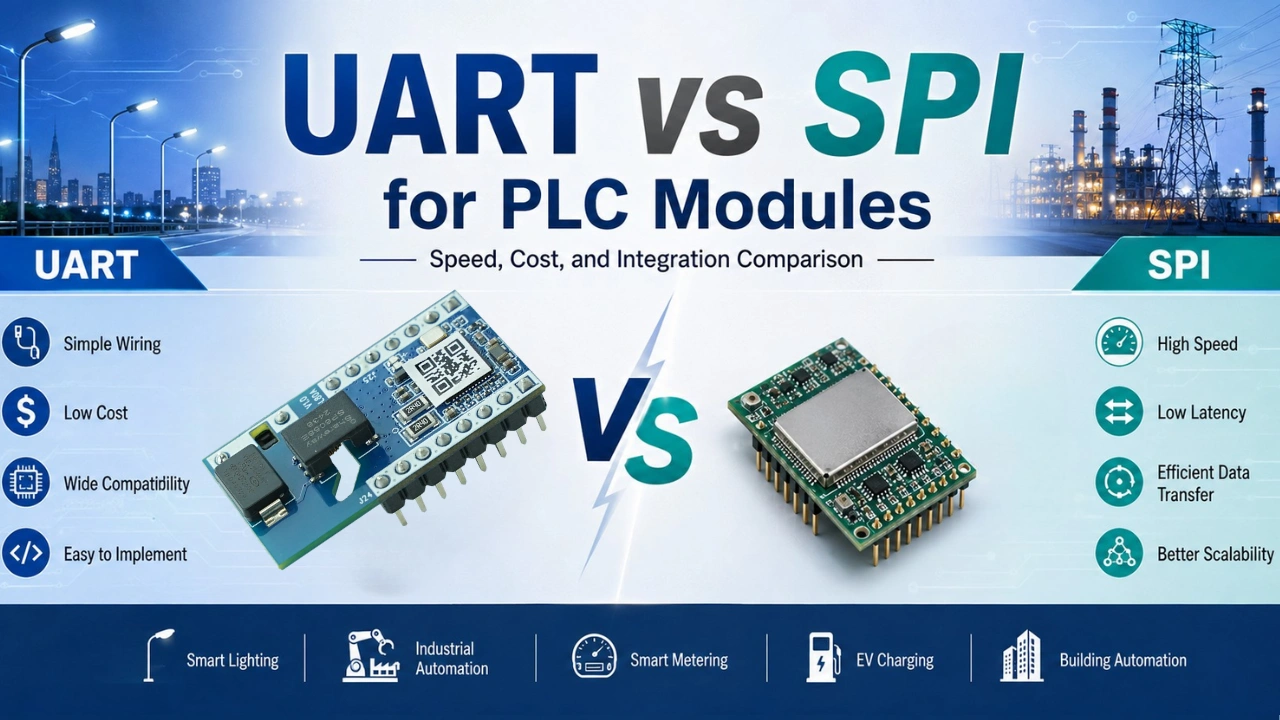
Выбор между ними UART против SPI для модулей PLC — одно из важнейших решений при проектировании систем умного освещения, оборудования промышленной автоматизации, умных сетей и сетей IoT. Выбранный интерфейс напрямую влияет на скорость связи, аппаратную сложность, энергопотребление, затраты на разработку и общую производительность системы.
Среди всех доступных интерфейсов, UART (универсальный асинхронный приёмник/передатчик) и SPI (Последовательный периферийный интерфейс) это два самых часто используемых варианта.
Но какой из них стоит выбрать? Перед выбором интерфейса инженерам следует понять основы, изложенные в нашей статье, Что такое связь по линии электропередачи (PLC)?
Ответ зависит от нескольких факторов, включая скорость передачи, аппаратную сложность, стоимость разработки, возможности обработки и требования к применению.
В этой статье мы подробно сравним UART и SPI и объясним, какой интерфейс лучше всего подходит для различных приложений ПЛК.
UART против SPI для модулей PLC: какой интерфейс лучше?
По мере того как технологии связи по линии электропередач (PLC) становятся всё более популярными в умном освещении, промышленной автоматизации, умных сетях, зарядке электромобилей и IoT-приложениях, выбор правильного интерфейса связи между контроллером хоста и модулем PLC становится крайне важным.
Среди всех доступных интерфейсов, UART (универсальный асинхронный приёмник/передатчик) и SPI (Последовательный периферийный интерфейс) это два самых часто используемых варианта.
Но какой из них стоит выбрать?
Ответ зависит от нескольких факторов, включая скорость передачи, аппаратную сложность, стоимость разработки, возможности обработки и требования к применению.
В этой статье мы подробно сравним UART и SPI и объясним, какой интерфейс лучше всего подходит для различных приложений ПЛК.
UART против SPI для модулей PLC: понимание UART
UART — это асинхронный последовательный протокол связи, который передаёт данные по одному биту через выделенные линии передачи (TX) и приёма (RX). Если вы новичок, можете посмотреть нашу статью Как интегрировать модуль ПЛК в встроенные системы.
В отличие от синхронных интерфейсов, UART не требует тактового сигнала. Вместо этого оба устройства работают по заранее заданной скорости передачи.
Типичное соединение UART
- TX (Передача)
- RX (Приём)
- GND (Ground)
- Опциональные сигналы управления потоком
Преимущества UART
- Простая аппаратная конструкция
- Низкая стоимость реализации
- Меньшее количество соединительных проводов
- Отличная совместимость с микроконтроллерами
- Простое отладка и тестирование
Ограничения UART
- Меньшая скорость передачи
- Большая задержка связи
- Большая восприимчивость к временным несоответствиям
- Ограниченная масштабируемость
UART против SPI для модулей PLC: понимание SPI
SPI — это синхронный протокол связи, использующий тактовый сигнал, генерируемый главным устройством. Это видно Стандарт IEEE Для справки.
Поскольку оба устройства имеют одинаковый временной ориентир, SPI может достигать значительно более высоких скоростей передачи, чем UART.
Типичное соединение SPI
- MOSI (Вход ведущего выхода и ведомого устройства)
- MISO (Master Input Slave Output)
- SCLK (часы)
- CS (Chip Select)
Преимущества SPI
- Высокоскоростная связь
- Низкая задержка
- Полнодуплексная работа
- Отличная производительность в приложениях, работающих с интенсивными данными
- Более эффективная передача данных
Ограничения SPI
- Более сложный аппаратный дизайн
- Дополнительные требования к проводке
- Более высокая сложность разработки программного обеспечения
- Меньшее расстояние связи
UART против SPI: подробное сравнение
| Особенности | UART | SPI |
|---|---|---|
| Синхронизация | Асинхронный | Синхронный |
| Тактовый сигнал | Не требуется | Обязательно |
| Режим связи | Полный дуплекс | Полный дуплекс |
| Типичная скорость | 9,6 кбит/с — 1 Мбит/с | От нескольких Мбит/с до десятков Мбит/с |
| Сложность проводки | Низкий | Терпимая |
| Накладные расходы процессора | Умеренный | Низкий |
| Стоимость реализации | Нижний | Чуть выше |
| Масштабируемость | Лимитированный | Лучше |
| Сложность отладки | Спокойно | Умеренный |
| Пригодность модуля ПЛК | Системы начального уровня | Высокопроизводительные системы |
Модуль PLC против PLC-чипсета: объяснение ключевых различий Эта статья может помочь вам узнать об этом больше.
Почему многие модули ПЛК поддерживают оба интерфейса
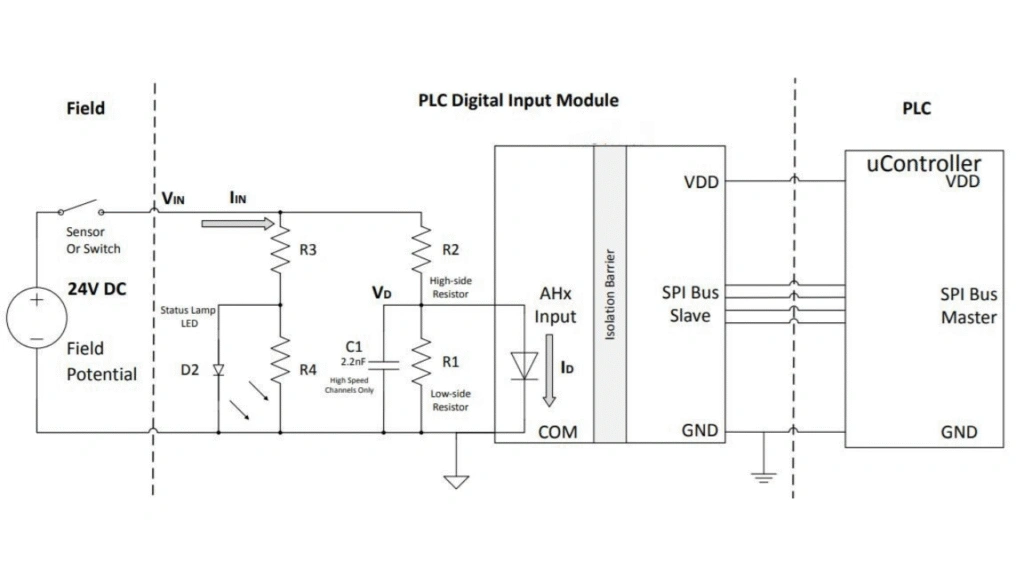
Современные производители ПЛК-модулей часто предоставляют интерфейсы UART и SPI, поскольку у разных приложений разные требования.
UART обычно отбирается по:
- Умные системы уличного освещения
- Автоматизация зданий
- Системы экологического мониторинга
- Удалённое измерение
- Сети датчиков с низкой пропускной способностью
SPI часто предпочитают для:
- Системы промышленной автоматизации
- Платформы для освещения на основе искусственного интеллекта
- Приложения на периферийных вычислениях
- Сети датчиков высокой плотности
- Системы управления в реальном времени
Например, умный контроллер уличного фонаря может передавать только команды переключения, инструкции по затемнению и данные датчиков, что делает UART экономически эффективным решением.
Однако промышленный шлюз ПЛК, обрабатывающий большие объемы данных с нескольких узлов, может потребовать более высокой пропускной способности, обеспечиваемой SPI.
Ключевые факторы, которые следует учитывать при выборе интерфейса
1. Скорость передачи
Если ваше приложение требует быстрого обмена данными, SPI обычно лучший выбор.
2. Аппаратные ресурсы
Маленькие микроконтроллеры часто имеют ограниченное количество контактов и ресурсов памяти, что делает UART более привлекательным.
3. Сложность программного обеспечения
Драйверы UART, как правило, проще разрабатывать и поддерживать.
4. Электромагнитные помехи (EMI)
Промышленные помещения часто сопровождаются сильным электрическим шумом. Правильная фильтрация, экранирование и изоляция становятся необходимыми независимо от выбранного интерфейса.
5. Будущая масштабируемость
Приложения, ожидаемые с поддержкой дополнительных датчиков, шлюзов или возможностей периферийных вычислений, могут выиграть от более высокой пропускной способности SPI.
Типичная архитектура модуля PLC
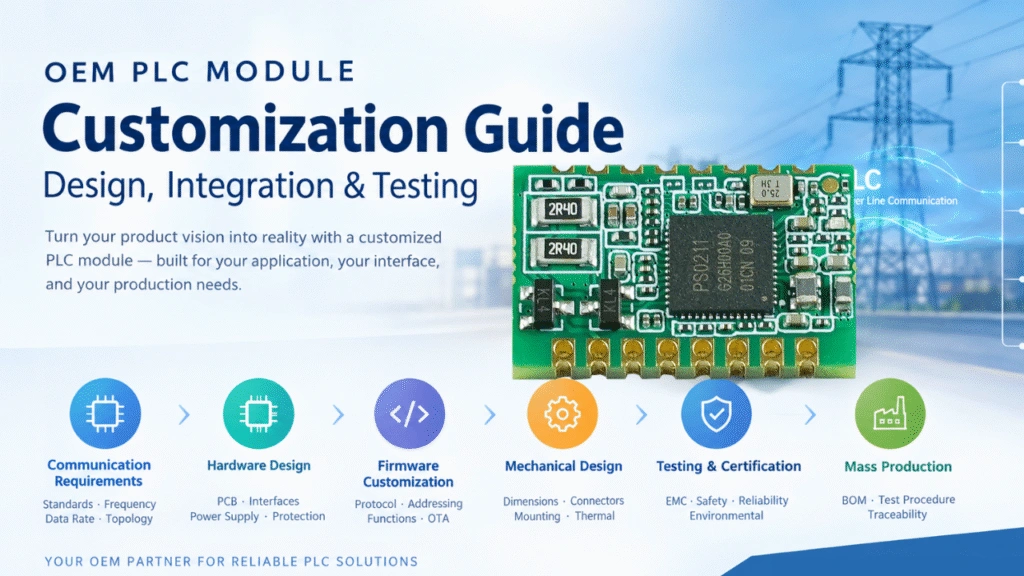
Типичное встраиваемое решение ПЛК обычно состоит из следующих компонентов:
- Микроконтроллер хоста (MCU)
- Интерфейс UART или SPI
- Чип модема PLC
- Аналоговая передняя схема
- Схема силового соединения
- Сеть линий электропередач
Эта архитектура позволяет инженерам интегрировать технологии ПЛК в системы интеллектуального освещения, промышленное управление и платформы управления энергией, минимизируя сложность разработки.
UART против SPI для модулей PLC: какой интерфейс лучше выбрать?
Следующие рекомендации могут служить практическим ориентиром:
| Сценарий | Рекомендуемый интерфейс |
|---|---|
| Недорогие устройства | UART |
| Быстрое развертывание | UART |
| Ограниченные ресурсы MCU | UART |
| Высокоскоростная связь | SPI |
| Приложения в реальном времени | SPI |
| Промышленная автоматизация | SPI |
| Крупные сети ПЛК | SPI |
В конечном итоге, ни один из интерфейсов не является универсально лучше. Правильное решение полностью зависит от архитектуры вашей системы и требований к производительности.