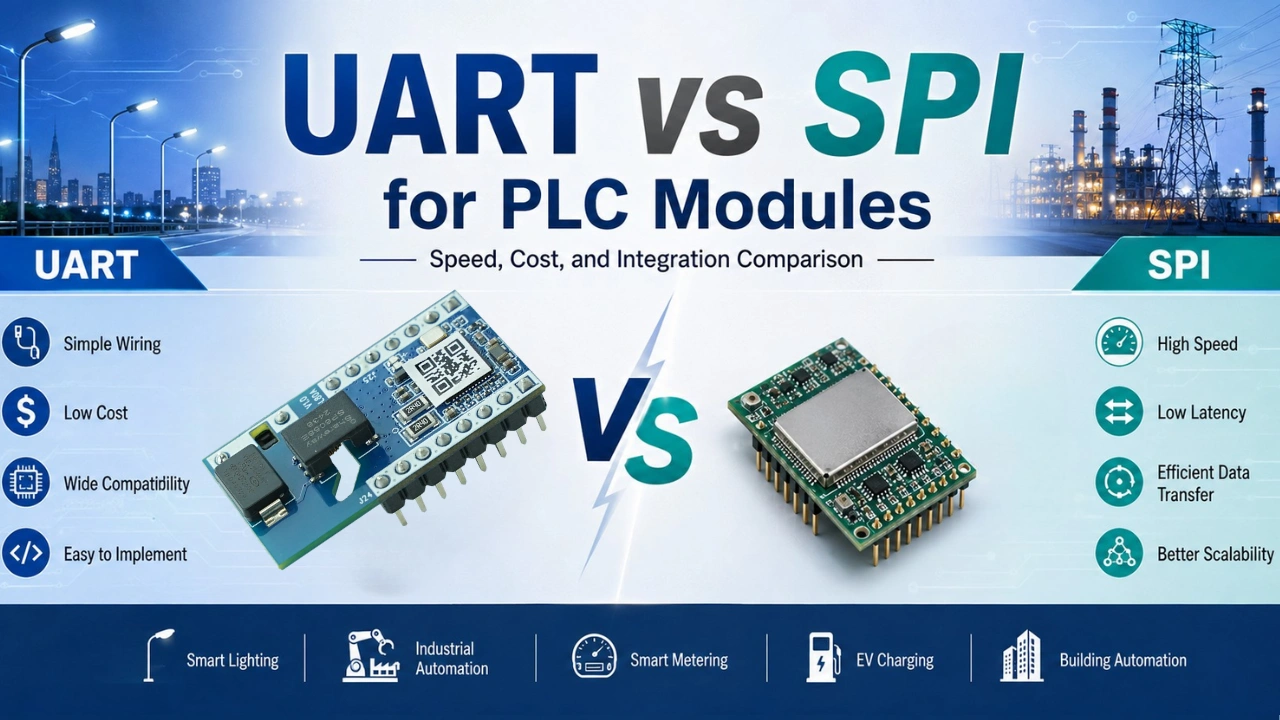
どちらかを選ぶ PLCモジュール向けのUARTとSPIの対立 スマート照明システム、産業用オートメーション機器、スマートグリッド、IoTネットワークの設計において最も重要な決定の一つです。選択されたインターフェースは、通信速度、ハードウェアの複雑さ、消費電力、開発コスト、そしてシステム全体の性能に直接影響します。
利用可能なインターフェースの中で、 UART(ユニバーサル非同期受信機/送信機) そして SPI(シリアル周辺インターフェース) これが最も一般的に使われる2つの選択肢です。
しかし、どちらを選ぶべきでしょうか?インターフェースを選択する前に、エンジニアは記事で説明している基本を理解しておくべきです。 電力線通信(PLC)とは何ですか?
その答えは、伝送速度、ハードウェアの複雑さ、開発コスト、処理能力、アプリケーション要件など、いくつかの要因に依存します。
この記事では、UARTとSPIを詳細に比較し、異なるPLCアプリケーションに最適なインターフェースについて説明します。
PLCモジュールのUARTとSPIの比較:どちらのインターフェースが優れているのか?
電力線通信(PLC)技術がスマート照明、産業オートメーション、スマートグリッド、EV充電、IoTアプリケーションでますます普及する中、ホストコントローラーとPLCモジュール間の適切な通信インターフェースの選択が極めて重要になっています。
利用可能なインターフェースの中で、 UART(ユニバーサル非同期受信機/送信機) そして SPI(シリアル周辺インターフェース) これが最も一般的に使われる2つの選択肢です。
しかし、どちらを選ぶべきでしょうか?
その答えは、伝送速度、ハードウェアの複雑さ、開発コスト、処理能力、アプリケーション要件など、いくつかの要因に依存します。
この記事では、UARTとSPIを詳細に比較し、異なるPLCアプリケーションに最適なインターフェースについて説明します。
PLCモジュール向けUARTとSPIの比較:UARTの理解
UARTは、専用の送信(TX)および受信(RX)ラインを通じて1ビットずつデータを転送する非同期シリアル通信プロトコルです。新規ユーザーの方は、当記事をご覧ください PLCモジュールを組み込みシステムに統合する方法.
同期インターフェースとは異なり、UART通信はクロック信号を必要としません。代わりに、両デバイスはあらかじめ定められたボーレートに従って動作します。
典型的なUART接続
- TX(送信)
- RX(受信)
- GND(グラウンド)
- オプションの流量制御信号
UARTの利点
- シンプルなハードウェア設計
- 低い実装コスト
- 接続線の減少
- マイコンとの優れた互換性
- 簡単なデバッグとテスト
UARTの制限
- 伝達速度の低下
- 通信遅延の増加
- タイミングミスマッチへの感受性が高まる
- 限定的なスケーラビリティ
PLCモジュール向けUARTとSPIの比較:SPIの理解
SPIは、マスターデバイスによって生成されるクロック信号を使用する同期通信プロトコルです。これにより、 IEEE規格 参考までに。
両デバイスが同じタイミング基準を共有しているため、SPIはUARTよりも大幅に高速な伝送速度を実現できます。
典型的なSPI接続
- MOSI(マスター出力スレーブ入力)
- MISO(マスター入力スレーブ出力)
- SCLK(時計)
- CS(チップセレクト)
SPIの利点
- 高速通信
- レイテンシの低さ
- 全二重運転
- データ集約型アプリケーションでの優れたパフォーマンス
- より効率的なデータ転送
SPIの制限
- より複雑なハードウェア設計
- 追加の配線要件
- ソフトウェア開発の複雑さが高まる
- 通信距離の短縮
UARTとSPI:詳細な比較
| 特徴 | UART | SPI |
|---|---|---|
| 同期 | 非同期 | 同期 |
| クロック信号 | 必須ではありません | 必須 |
| 通信モード | フルデュプレックス | フルデュプレックス |
| 典型速度 | 9.6 kbps–1 Mbps | 数Mbpsから数十Mbpsまで |
| 配線の複雑さ | 低め | 中程度 |
| CPUオーバーヘッド | 中程度 | 低め |
| 実装コスト | 下 | 少し高い |
| スケーラビリティ | 限定 | いいよ |
| デバッグの難易度 | 簡単だ | 中程度 |
| PLCモジュールの適合性 | エントリーレベルシステム | 高性能システム |
PLCモジュールとPLCチップセット:主な違いの解説 この記事はその点についてより詳しく知る助けになるかもしれません。
なぜ多くのPLCモジュールが両方のインターフェースをサポートするのか
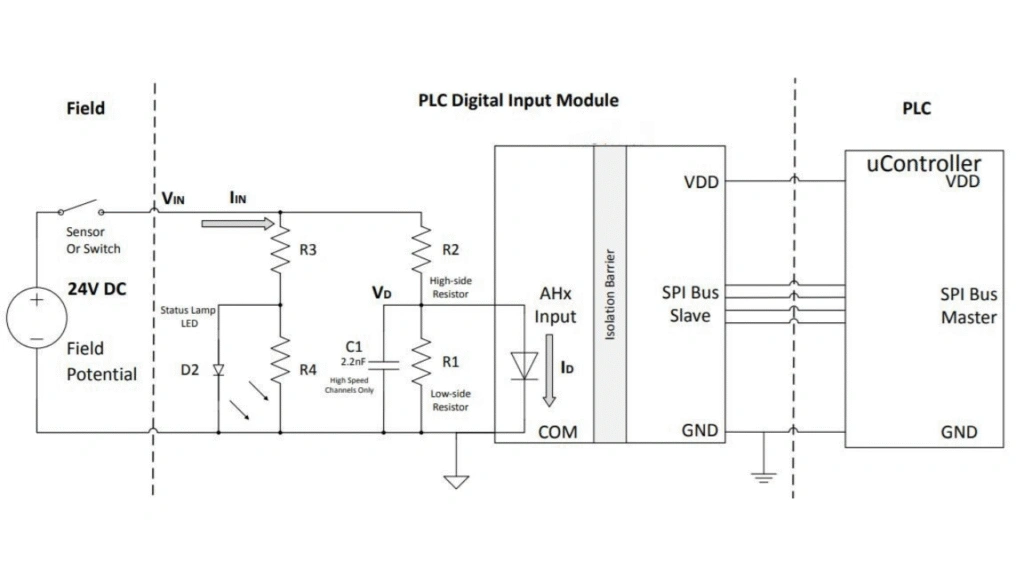
現代のPLCモジュールメーカーは、用途ごとに異なる要件があるため、UARTとSPIの両方のインターフェースを提供することが多いです。
UARTは一般的に以下に選ばれます:
- スマート街路灯システム
- ビルディングオートメーション
- 環境モニタリングシステム
- 遠隔計測
- 低帯域幅センサーネットワーク
SPIはしばしば以下の用途で好まれます:
- 産業オートメーションシステム
- AIビジョン照明プラットフォーム
- エッジコンピューティングの応用
- 高密度センサーネットワーク
- リアルタイム制御システム
例えば、スマート街灯コントローラーはスイッチング命令、調光指示、センサーデータのみを送信できるため、UARTはコスト効率の良いソリューションとなります。
しかし、複数のノードから大量のデータを処理する産業用PLCゲートウェイは、SPIが提供する高いスループットを必要とする場合があります。
インターフェース選択時に考慮すべき主な要素
1.伝送速度
アプリケーションが高速なデータ交換を必要とする場合、SPIの方が通常より良い選択肢です。
2. ハードウェアリソース
小型のマイコンはピン数やメモリリソースが限られていることが多いため、UARTの方が魅力的です。
3. ソフトウェアの複雑さ
UARTドライバーは一般的に開発や保守が容易です。
4.電磁干渉(EMI)
工業環境ではしばしば強い電気ノイズが発生します。適切なフィルタリング、シールド、隔離は、選択したインターフェースに関わらず不可欠です。
5.将来のスケーラビリティ
追加のセンサー、ゲートウェイ、エッジコンピューティング機能をサポートすると期待されるアプリケーションは、SPIの高い帯域幅の恩恵を受ける可能性があります。
典型的なPLCモジュールアーキテクチャ
典型的な組み込みPLCソリューションは通常、以下のコンポーネントで構成されています。
- ホストマイコン(MCU)
- UARTまたはSPIインターフェース
- PLCモデムチップ
- アナログフロントエンド回路
- 電力結合回路
- 送電線網
このアーキテクチャにより、エンジニアはPLC技術をスマート照明システム、産業用制御機器、エネルギー管理プラットフォームに統合しつつ、開発の複雑さを最小限に抑えることができます。
PLCモジュールのUARTとSPIのどちらのインターフェースを選ぶべきか?
以下の推奨事項が実用的な指針として役立ちます。
| シナリオ | 推奨インターフェース |
|---|---|
| 低コストデバイス | UART |
| 迅速な展開 | UART |
| 限られたMCUリソース | UART |
| 高速通信 | SPI |
| リアルタイムアプリケーション | SPI |
| 産業自動化 | SPI |
| 大規模なPLCネットワーク | SPI |
結局のところ、どちらのインターフェースも普遍的に優れているわけではありません。最適な判断は完全にシステムアーキテクチャとパフォーマンス要件に依存します。