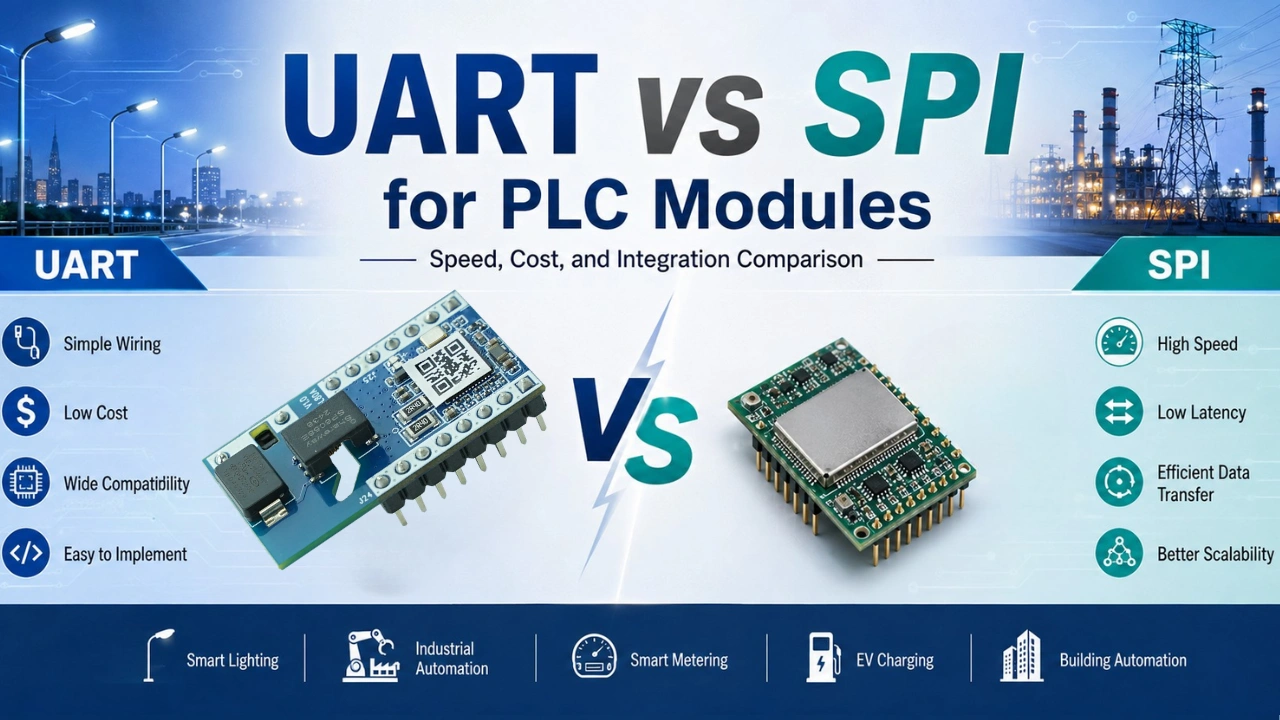
Wahl zwischen UART vs. SPI für SPS-Module ist eine der wichtigsten Entscheidungen bei der Entwicklung von smarten Beleuchtungssystemen, Industrieautomationsanlagen, Smart Grids und IoT-Netzwerken. Die gewählte Schnittstelle beeinflusst direkt die Kommunikationsgeschwindigkeit, die Hardwarekomplexität, den Energieverbrauch, die Entwicklungskosten und die Gesamtleistung des Systems.
Unter allen verfügbaren Schnittstellen, UART (Universeller asynchroner Empfänger/Sender) und SPI (Serielle Peripherie-Schnittstelle) sind die beiden am häufigsten verwendeten Optionen.
Aber welchen solltest du wählen? Bevor sie eine Schnittstelle auswählen, sollten Ingenieure die in unserem Artikel erläuterten Grundlagen verstehen. Was ist Powerline Communication (SPS)?
Die Antwort hängt von mehreren Faktoren ab, darunter Übertragungsgeschwindigkeit, Hardwarekomplexität, Entwicklungskosten, Verarbeitungskapazität und Anwendungsanforderungen.
In diesem Artikel vergleichen wir UART und SPI im Detail und erklären, welche Schnittstelle für verschiedene SPS-Anwendungen am besten geeignet ist.
UART vs. SPI für SPS-Module: Welche Schnittstelle ist besser?
Da die Stromleitungskommunikationstechnologie (SPS) in Smart-Lighting, Industrieautomation, Smart Grids, EV-Laden und IoT-Anwendungen immer beliebter wird, wird die Wahl der richtigen Kommunikationsschnittstelle zwischen dem Host-Controller und dem SPS-Modul von entscheidender Bedeutung.
Unter allen verfügbaren Schnittstellen, UART (Universeller asynchroner Empfänger/Sender) und SPI (Serielle Peripherie-Schnittstelle) sind die beiden am häufigsten verwendeten Optionen.
Aber welchen solltest du wählen?
Die Antwort hängt von mehreren Faktoren ab, darunter Übertragungsgeschwindigkeit, Hardwarekomplexität, Entwicklungskosten, Verarbeitungskapazität und Anwendungsanforderungen.
In diesem Artikel vergleichen wir UART und SPI im Detail und erklären, welche Schnittstelle für verschiedene SPS-Anwendungen am besten geeignet ist.
UART vs. SPI für SPC-Module: UART verstehen
UART ist ein asynchrones serielles Kommunikationsprotokoll, das Daten Bit für Bit über dedizierte Übertragungs- (TX) und Empfangsleitungen (RX) überträgt. Wenn Sie ein neuer Nutzer sind, können Sie unseren Artikel lesen Wie man ein SPS-Modul in eingebettete Systeme integriert.
Im Gegensatz zu synchronen Schnittstellen erfordert die UART-Kommunikation kein Taktsignal. Stattdessen arbeiten beide Geräte nach einer vordefinierten Baudrate.
Typische UART-Verbindung
- TX (Senden)
- RX (Empfangen)
- GND (Boden)
- Optionale Durchflusskontrollsignale
Vorteile von UART
- Einfaches Hardware-Design
- Niedrige Implementierungskosten
- Weniger Verbindungsleitungen
- Ausgezeichnete Kompatibilität mit Mikrocontrollern
- Einfaches Debuggen und Testen
Einschränkungen von UART
- Niedrigere Getriebegeschwindigkeit
- Höhere Kommunikationslatenz
- Größere Anfälligkeit für Timing-Fehlanpassungen
- Begrenzte Skalierbarkeit
UART vs. SPI für SPC-Module: SPI verstehen
SPI ist ein synchrones Kommunikationsprotokoll, das ein vom Mastergerät erzeugtes Taktsignal verwendet. Das kann die IEEE-Standard Zur Orientierung.
Da beide Geräte denselben Zeitpunkt teilen, kann SPI deutlich höhere Übertragungsgeschwindigkeiten als UART erreichen.
Typische SPI-Verbindung
- MOSI (Master Output Slave Input)
- MISO (Master-Eingang-Slave-Ausgang)
- SCLK (Uhr)
- CS (Chip Select)
Vorteile von SPI
- Hochgeschwindigkeitskommunikation
- Geringere Latenz
- Vollduplexbetrieb
- Ausgezeichnete Leistung in datenintensiven Anwendungen
- Effizientere Datenübertragung
Einschränkungen von SPI
- Komplexeres Hardwaredesign
- Zusätzliche Verkabelungsanforderungen
- Höhere Softwareentwicklungskomplexität
- Kürzere Kommunikationsdistanz
UART vs. SPI: Ein detaillierter Vergleich
| Ausstattung | UART | SPI |
|---|---|---|
| Synchronisation | Asynchron | Synchron |
| Taktsignal | Nicht erforderlich | Erforderlich |
| Kommunikationsmodus | Vollduplex | Vollduplex |
| Typische Geschwindigkeit | 9,6 kbps–1 Mbit/s | Mehrere Mbit/s bis Dutzend Mbit/s |
| Verdrahtungskomplexität | Niedrig | Mittel |
| CPU-Overhead | Moderat | Niedrig |
| Implementierungskosten | Lower | Etwas höher |
| Skalierbarkeit | Begrenzt | Besser |
| Debugging-Schwierigkeit | Ganz ruhig | Moderat |
| Eignung von SPS-Modulen | Einstiegssysteme | Hochleistungssysteme |
SPS-Modul vs. SPS-Chipsatz: Wesentliche Unterschiede erklärt Dieser Artikel könnte Ihnen helfen, mehr darüber zu erfahren.
Warum viele SPS-Module beide Schnittstellen unterstützen
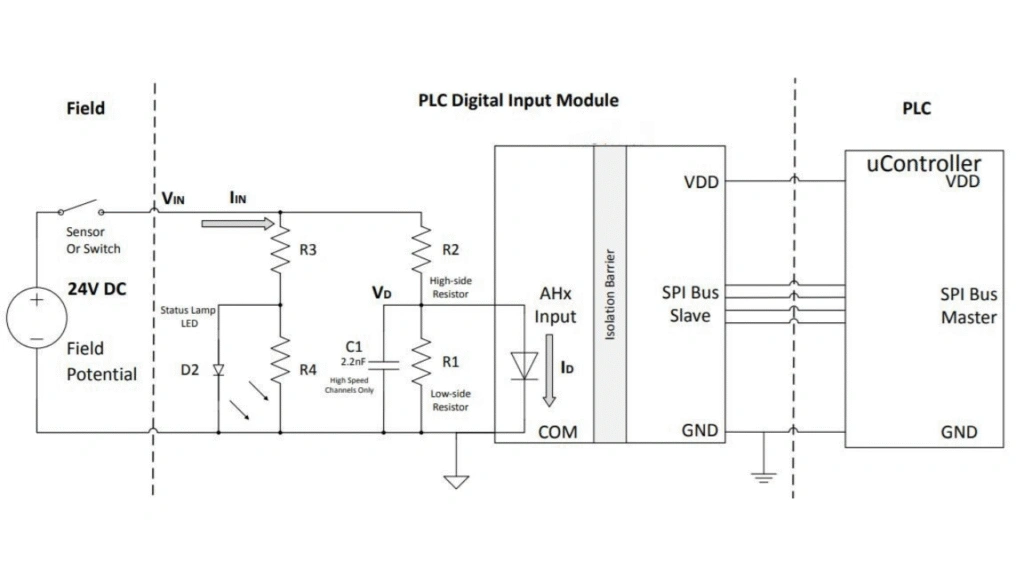
Moderne Hersteller von SPS-Modulen bieten häufig sowohl UART- als auch SPI-Schnittstellen an, da unterschiedliche Anwendungen unterschiedliche Anforderungen haben.
UART wird häufig ausgewählt für:
- Intelligente Straßenbeleuchtungssysteme
- Gebäudeautomation
- Umweltüberwachungssysteme
- Fernmessung
- Sensornetzwerke mit niedriger Bandbreite
SPI wird oft bevorzugt für:
- Industrielle Automatisierungssysteme
- KI-Visionsbeleuchtungsplattformen
- Anwendungen im Edge-Computing
- Hochdichte Sensornetzwerke
- Echtzeit-Regelungssysteme
Beispielsweise kann ein smarter Straßenlaternencontroller nur Schaltbefehle, Dimmbefehle und Sensordaten übertragen, was UART zu einer kostengünstigen Lösung macht.
Ein industrielles SPS-Gateway, das große Datenmengen von mehreren Knoten verarbeitet, benötigt jedoch möglicherweise den höheren Durchsatz, den SPI bietet.
Wichtige Faktoren bei der Auswahl einer Schnittstelle
1. Übertragungsgeschwindigkeit
Wenn Ihre Anwendung einen schnellen Datenaustausch erfordert, ist SPI in der Regel die bessere Wahl.
2. Hardware-Ressourcen
Kleine Mikrocontroller haben oft begrenzte Pins und Speicherressourcen, was UART attraktiver macht.
3. Softwarekomplexität
UART-Treiber sind im Allgemeinen leichter zu entwickeln und zu warten.
4. Elektromagnetische Störungen (EMI)
Industrieumgebungen enthalten häufig starke elektrische Störungen. Richtige Filterung, Abschirmung und Isolierung werden unabhängig von der gewählten Schnittstelle unerlässlich.
5. Zukünftige Skalierbarkeit
Anwendungen, die zusätzliche Sensoren, Gateways oder Edge-Computing-Fähigkeiten unterstützen sollen, können von der höheren Bandbreite von SPI profitieren.
Typische SPS-Modularchitektur
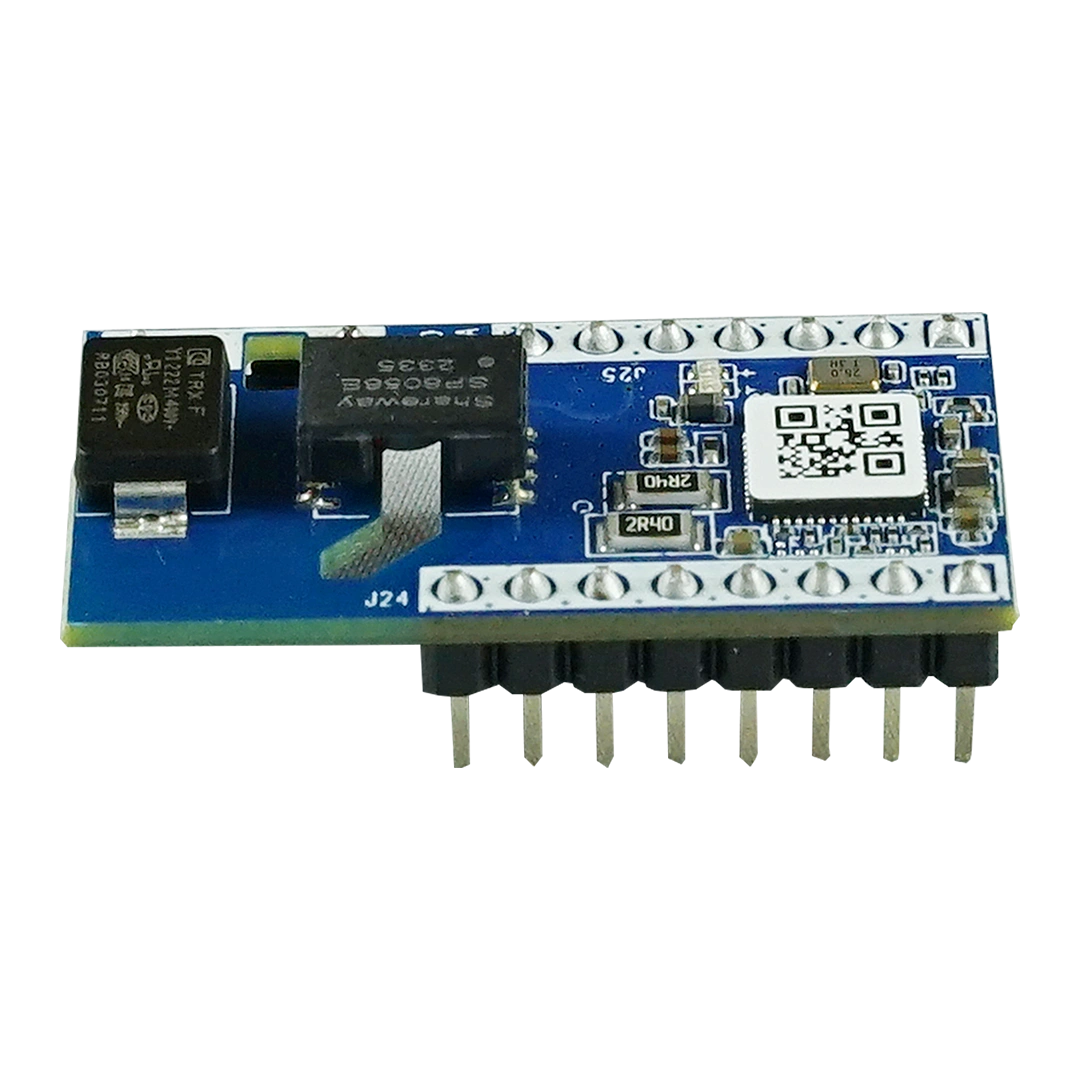
Eine typische Embedded-SPS-Lösung besteht üblicherweise aus folgenden Komponenten:
- Host-Mikrocontroller (MCU)
- UART- oder SPI-Schnittstelle
- SPS-Modemchip
- Analoge Frontend-Schaltung
- Leistungskopplungsschaltung
- Stromleitungsnetz
Diese Architektur ermöglicht es Ingenieuren, SPS-Technologie in intelligente Beleuchtungssysteme, industrielle Steuerungsanlagen und Energiemanagementplattformen zu integrieren und dabei die Entwicklungskomplexität zu minimieren.
UART vs SPI für SPS-Module: Welche Schnittstelle sollten Sie wählen?
Die folgenden Empfehlungen können als praktische Richtlinie dienen:
| Szenario | Empfohlene Schnittstelle |
|---|---|
| Kostengünstige Geräte | UART |
| Schneller Einsatz | UART |
| Begrenzte MCU-Ressourcen | UART |
| Hochgeschwindigkeitskommunikation | SPI |
| Echtzeitanwendungen | SPI |
| Industrielle Automatisierung | SPI |
| Große SPS-Netzwerke | SPI |
Letztlich ist keine der beiden Oberflächen universell besser. Die richtige Entscheidung hängt vollständig von Ihrer Systemarchitektur und Ihren Leistungsanforderungen ab.