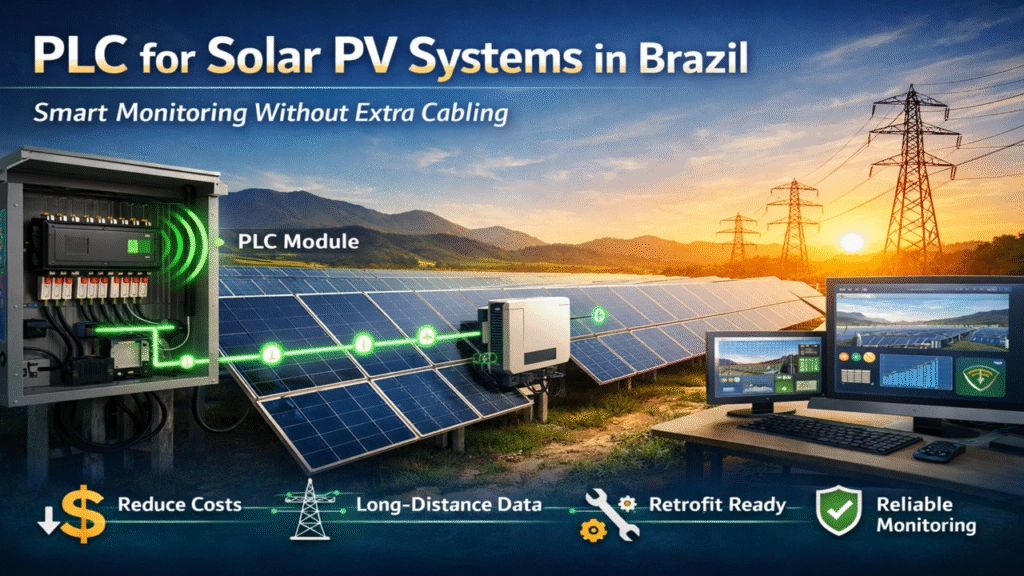
The Rise of AI-Driven Infrastructure
At NVIDIA GTC 2026, Jensen Huang introduced a powerful idea:
future data centers are no longer storage hubs—they are “Token factories.”
This concept reflects a broader transformation:
AI is no longer just a computing tool—it is becoming a production system, where efficiency, throughput, and real-time intelligence define value.
While this shift is reshaping cloud computing, it is also quietly revolutionizing physical infrastructure, especially in:
- Urban lighting systems
- Industrial facilities
- Tunnel and transportation environments
At the intersection of these changes lies a powerful combination:
👉 Power Line Communication (PLC) + AI Vision
Why Infrastructure Lighting Needs Intelligence Now
Modern infrastructure projects are facing increasing complexity:
- Aging electrical systems in renewal projects
- High installation costs in urban retrofits
- Harsh environments (dust, vibration, humidity in tunnels and factories)
- Demand for real-time monitoring and automation
Traditional lighting control systems (e.g., wireless or centralized control) often struggle with:
- Signal interference
- Additional wiring requirements
- Maintenance complexity
This is where PLC + AI becomes essential—not optional.
What is PLC and Why It Matters
Power Line Communication (PLC) uses existing electrical power lines to transmit data.
Instead of deploying new communication cables or relying on unstable wireless signals, PLC enables:
- Zero additional communication wiring
- Stable communication in shielded or underground environments
- High reliability in electrically noisy industrial scenarios
For infrastructure lighting, this means:
✔ Faster deployment
✔ Lower installation cost
✔ Minimal disruption during renovation
PLC + AI: Turning Lighting Networks into “Edge Intelligence Systems”
Just as NVIDIA envisions data centers as “Token factories,”
modern lighting systems are evolving into distributed AI nodes.
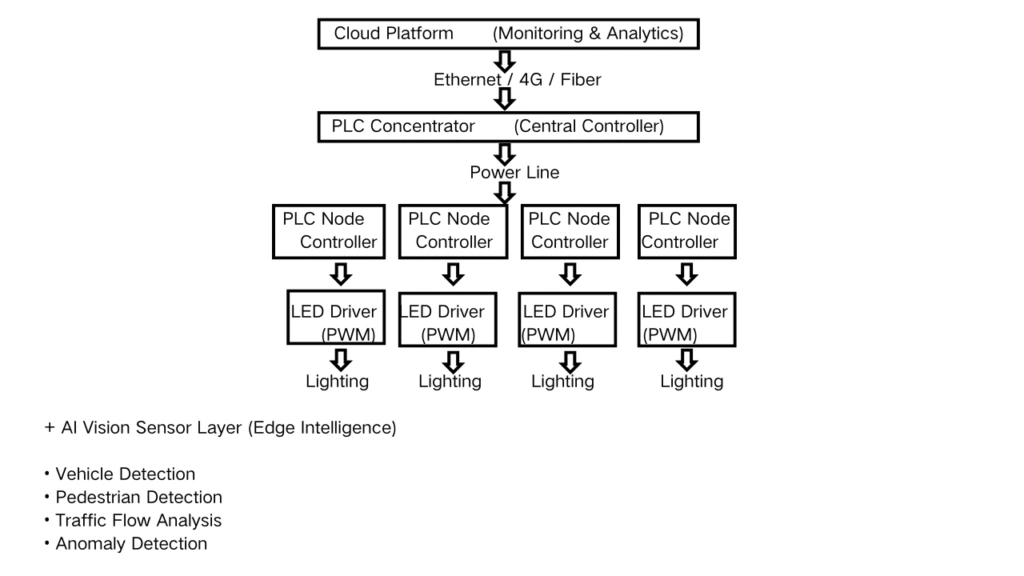
Architecture Overview
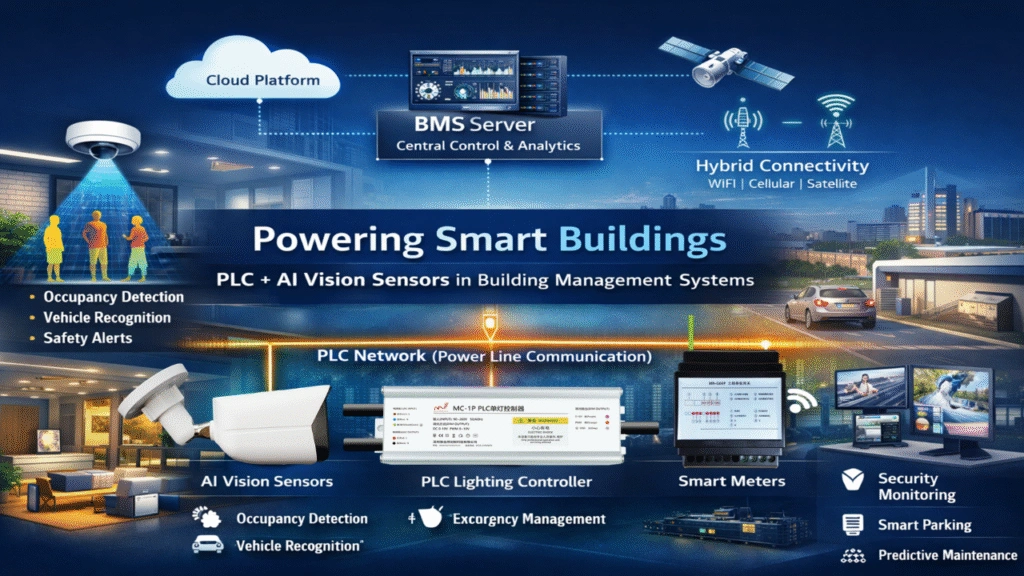
A typical PLC + AI lighting system includes:
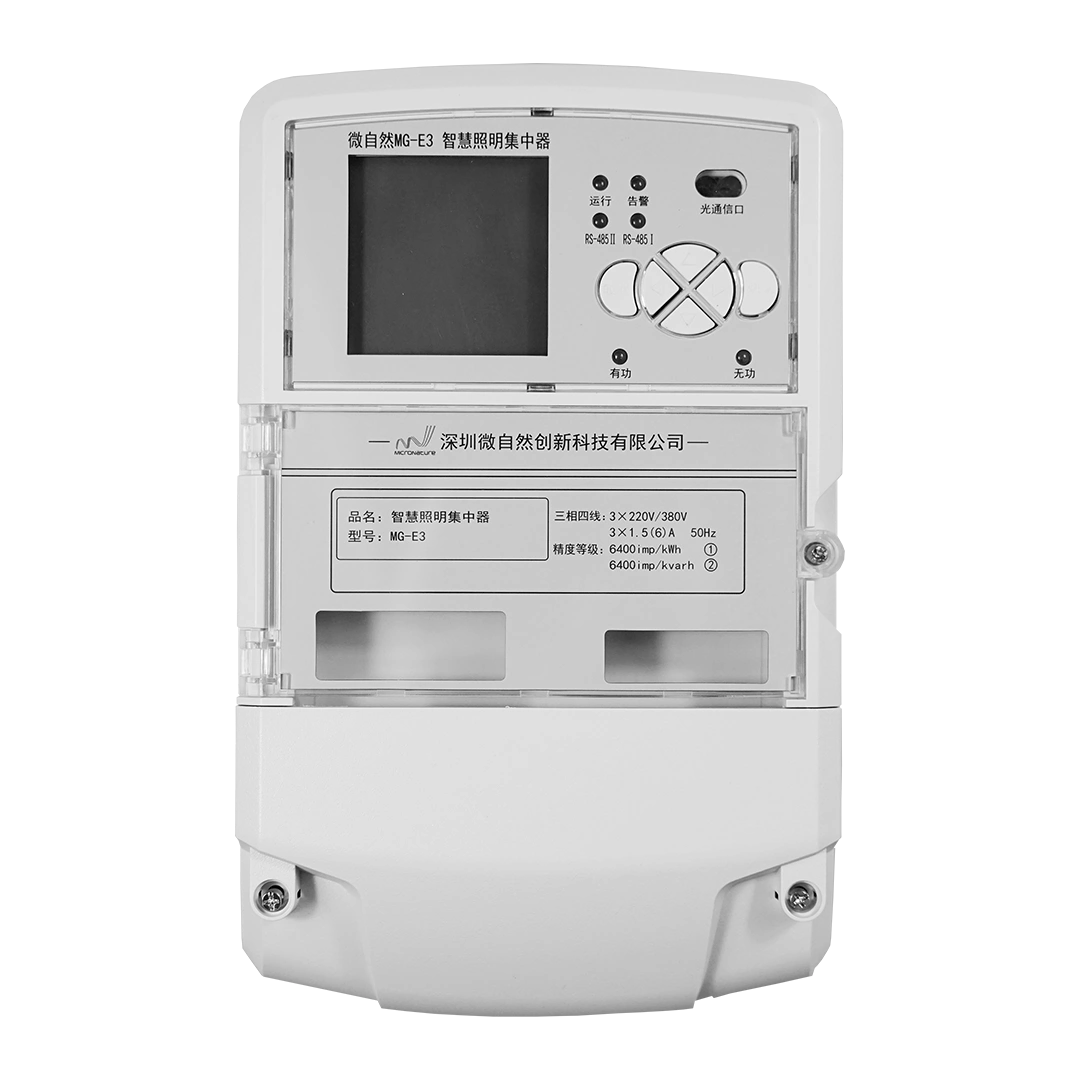
- PLC concentrator (central controller)
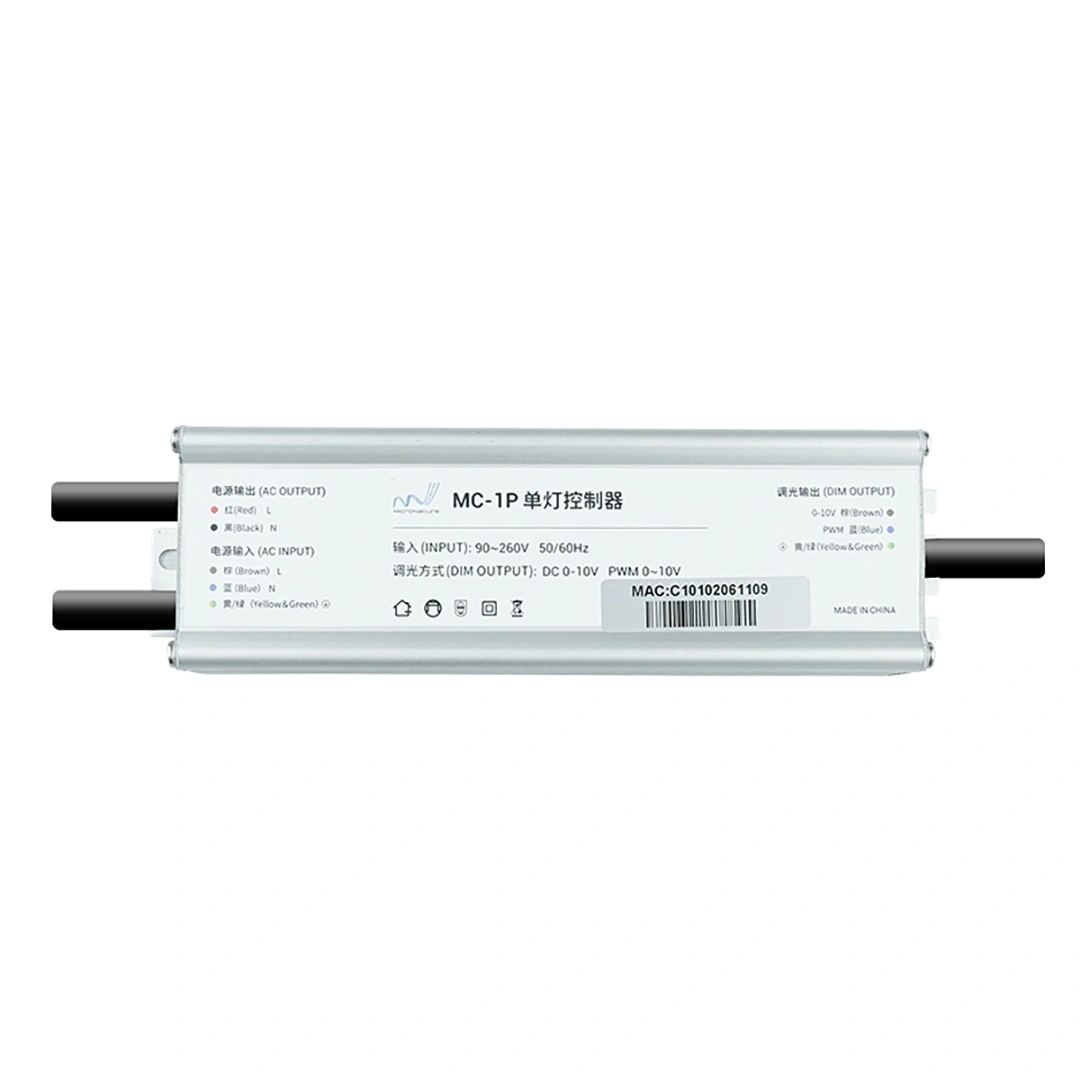
- PLC single lamp controllers
- PWM LED drivers
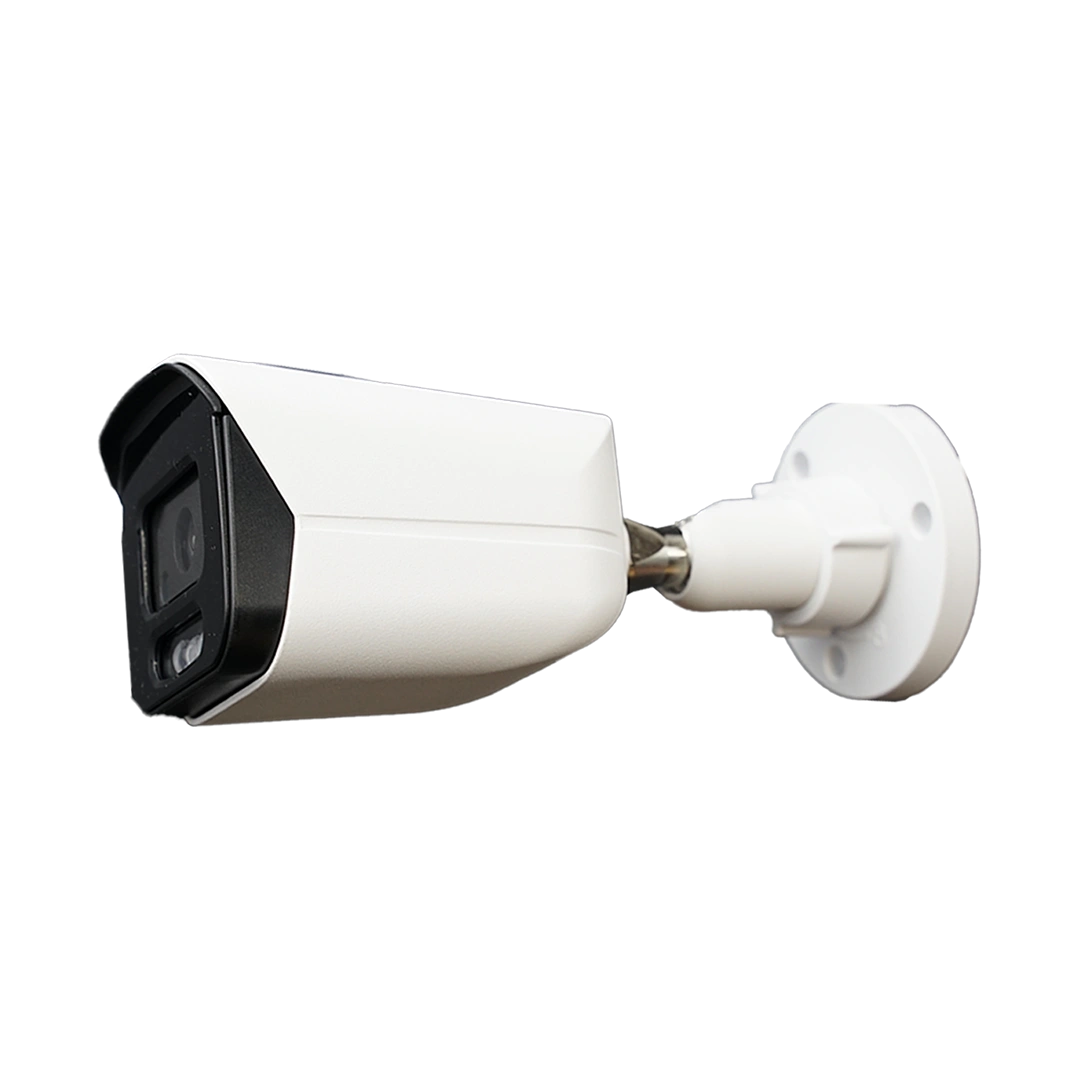
- AI vision sensors (edge intelligence layer)
How It Works
- PLC Network Layer
- Uses existing power lines for communication
- Connects every lighting node without extra cabling
- AI Vision Layer
- Detects vehicles, pedestrians, traffic flow, or anomalies
- Processes data locally (edge computing)
- Control & Optimization Layer
- Adjusts brightness dynamically
- Enables predictive maintenance
- Sends operational data to cloud platforms
Key Application Scenarios
1. Urban Infrastructure Lighting
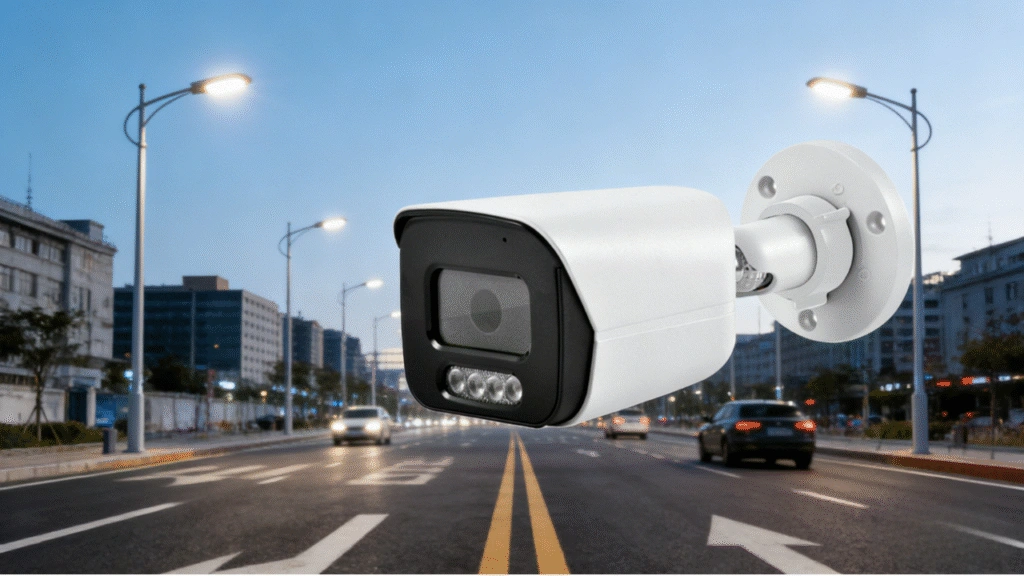
In smart cities, PLC + AI enables:
- Adaptive street lighting based on traffic density
- Real-time fault detection
- Energy savings up to 60–80%
AI vision sensors can identify:
- Vehicle flow
- License plates
- Pedestrian movement
This transforms lighting from static infrastructure → responsive urban intelligence system
2. Industrial Lighting Systems
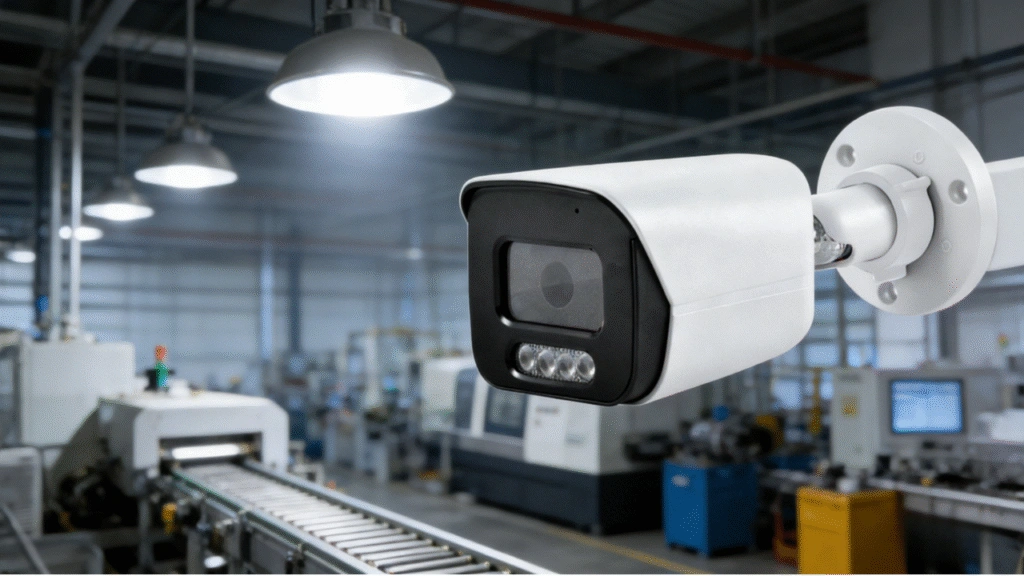
Factories are becoming AI-driven environments.
With PLC + AI:
- Lighting responds to machine activity and human presence
- AI detects safety risks or abnormal behavior
- No wireless interference in metal-heavy environments
This aligns with the broader shift toward AI-powered industrial automation.
3. Tunnel Lighting (Critical Use Case)
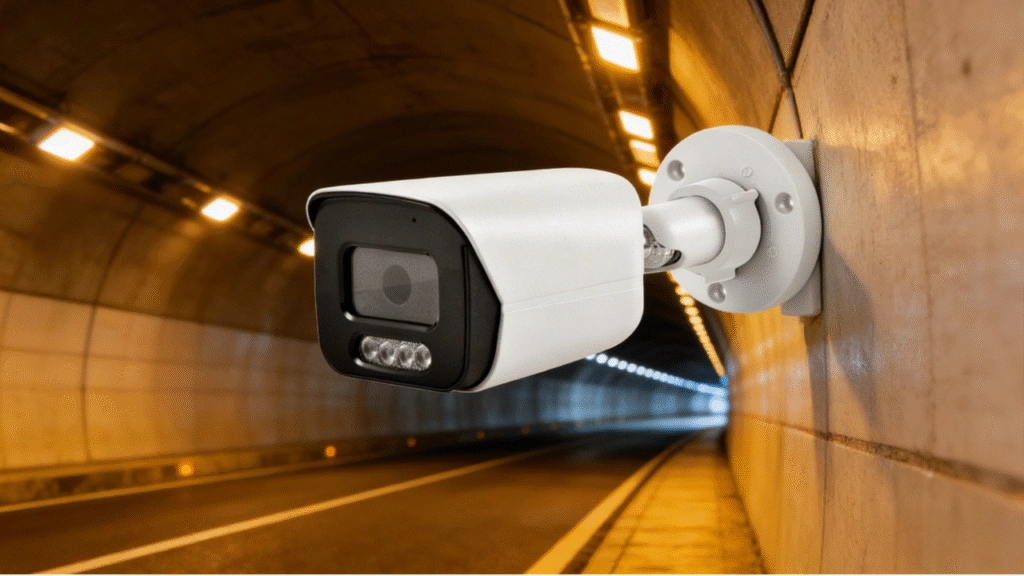
Tunnel environments are one of the most challenging:
- No GPS signal
- High humidity and dust
- Long linear infrastructure
- Strict safety requirements
PLC is ideal because:
- It works where wireless fails
- It avoids additional communication cabling
AI enhances tunnel lighting by:
- Adjusting brightness based on vehicle speed and density
- Detecting incidents (stopped vehicles, accidents)
- Improving driver visibility and safety
Why PLC + AI is Essential for Renewal Projects
Retrofit and renovation projects are where PLC + AI delivers maximum value.
Challenges in Renewal Projects
- Existing infrastructure cannot be easily modified
- Limited installation space
- High labor costs
- Downtime must be minimized
PLC + AI Advantages
| Challenge | PLC + AI Solution |
|---|---|
| No space for new cables | Uses existing power lines |
| Complex environment | AI adapts in real time |
| High installation cost | Reduces labor and materials |
| System upgrades | Plug-and-play scalability |
👉 Result: Faster deployment + lower cost + higher intelligence
From Token Economy to Energy Efficiency
Jensen Huang emphasized that performance per watt defines competitiveness in AI infrastructure.
The same principle applies to lighting systems:
- More intelligence per watt
- More control per node
- More efficiency per deployment
PLC + AI enables:
- Precise energy control
- Data-driven optimization
- Scalable infrastructure intelligence
Lighting systems are no longer passive—they are becoming active data-generating assets.
The Future: Converging AI, Energy, and Infrastructure
As AI continues to expand from data centers into the physical world:
- Infrastructure becomes computational
- Lighting becomes intelligent
- Power networks become data networks
The convergence of:
- AI (decision-making)
- PLC (communication backbone)
- Lighting systems (execution layer)