
PLC Light Dimmer Switch
Unlock the Potential of PLC Light Dimmer Switches
Welcome to an in-depth exploration of PLC (Power Line Communication) light dimmer switches. These innovative devices are revolutionizing how we control lighting in various environments, from smart cities to industrial complexes. This page aims to provide you with a comprehensive understanding of their applications, benefits, and technical aspects. We'll delve into real-world case studies, offer detailed installation guides, showcase customer feedback, and provide tools to help you evaluate the return on investment. Whether you're an EPC contractor, a municipal planner, or simply looking to optimize your lighting setup, this resource is designed to empower you with the knowledge you need.
Product Application Cases (Case Studies)
Understanding how PLC light dimmer switches perform in real-world scenarios is crucial for making informed decisions. Let's explore some compelling case studies that highlight the versatility and effectiveness of these solutions.
Smart City Street Lighting in Copenhagen: The city of Copenhagen, known for its commitment to sustainability, implemented a PLC-based smart street lighting system. The challenge was to reduce energy consumption while maintaining optimal lighting levels for public safety and comfort. By integrating PLC light dimmer switches, the city was able to remotely control and adjust lighting levels based on real-time conditions such as traffic density and ambient light. The solution involved replacing traditional streetlights with LED fixtures equipped with PLC dimmers. These dimmers communicated with a central control system via existing power lines, eliminating the need for additional wiring. The results were impressive: a 40% reduction in energy consumption, improved lighting quality, and reduced maintenance costs due to remote monitoring and diagnostics. The success in Copenhagen serves as a model for other cities looking to embrace smart lighting solutions.
Industrial Park Lighting in Shanghai: A large industrial park in Shanghai faced the challenge of managing lighting across a vast area with varying operational needs. Different zones within the park required different lighting levels at different times of the day. Implementing a traditional lighting control system would have been prohibitively expensive and complex. The solution was to deploy PLC light dimmer switches, allowing for granular control over individual lighting fixtures. The system was integrated with the park's existing building management system (BMS), enabling automated lighting schedules and remote override capabilities. For example, lighting levels in parking areas could be dimmed during off-peak hours to conserve energy, while lighting in production areas could be adjusted based on the specific tasks being performed. The outcome was a significant reduction in energy costs, improved operational efficiency, and enhanced safety and security throughout the park. This case study demonstrates the scalability and adaptability of PLC lighting solutions in large industrial settings.
Tunnel Lighting in the Swiss Alps: Maintaining optimal lighting levels in tunnels is critical for driver safety. However, tunnels present unique challenges, including fluctuating ambient light conditions and the need for robust and reliable control systems. A tunnel in the Swiss Alps implemented a PLC-based lighting control system to address these challenges. The system used sensors to monitor ambient light levels at the tunnel entrances and automatically adjust the lighting inside the tunnel to ensure a smooth transition for drivers. PLC light dimmer switches were used to precisely control the brightness of the LED luminaires, providing consistent and glare-free illumination. The system also included remote monitoring and diagnostics capabilities, allowing for proactive maintenance and minimizing downtime. The result was improved driver safety, reduced energy consumption, and lower maintenance costs. This case study highlights the reliability and precision of PLC lighting control in demanding environments.
These case studies illustrate the diverse applications and benefits of PLC light dimmer switches. By understanding how these solutions have been successfully implemented in different contexts, you can gain valuable insights for your own lighting projects. Consider the specific challenges and requirements of your environment and explore how PLC technology can help you achieve your goals.
Installation & User Guide
Proper installation and usage are key to maximizing the benefits of PLC light dimmer switches. This section provides a comprehensive guide to help you through the process, ensuring a smooth and efficient setup.
Step-by-Step Installation Instructions: Installing a PLC light dimmer switch involves several steps, each requiring careful attention. First, ensure that you have the correct tools and safety equipment, including insulated screwdrivers, wire strippers, and a voltage tester. Before starting any electrical work, always turn off the power at the circuit breaker. Next, identify the existing wiring connections. Typically, you'll have a hot wire (usually black), a neutral wire (usually white), and a ground wire (usually green or bare copper). Disconnect the old switch and carefully label each wire. Now, connect the wires to the PLC dimmer switch according to the manufacturer's instructions. Ensure that all connections are secure and properly insulated. Finally, mount the dimmer switch in the wall box and attach the faceplate. Turn the power back on at the circuit breaker and test the dimmer switch to ensure it is functioning correctly. For a visual guide, refer to the detailed installation diagrams provided with the product. These diagrams illustrate each step clearly, making the installation process straightforward even for those with limited electrical experience. Remember to always consult a qualified electrician if you are unsure about any aspect of the installation.
Troubleshooting Common Issues: Even with careful installation, you may encounter some common issues. One frequent problem is the dimmer switch not responding. This could be due to a loose wiring connection, a blown fuse, or a compatibility issue with the connected lighting fixtures. Check all wiring connections to ensure they are secure. Use a voltage tester to verify that power is reaching the dimmer switch. If the fuse is blown, replace it with a fuse of the correct amperage. If the issue persists, try using the dimmer switch with a different type of lighting fixture to rule out compatibility problems. Another common issue is flickering lights. This can be caused by using the dimmer switch with incompatible LED bulbs. Ensure that you are using dimmable LED bulbs that are specifically designed for use with dimmer switches. If the lights are still flickering, try adjusting the dimmer switch's trim settings. These settings allow you to fine-tune the dimmer's performance to match the characteristics of the connected lighting fixtures. Refer to the user manual for instructions on adjusting the trim settings. If you continue to experience problems, contact our technical support team for assistance. We are here to help you resolve any issues and ensure that your PLC light dimmer switch is functioning optimally.
Usage Tips and Best Practices: To get the most out of your PLC light dimmer switch, follow these usage tips and best practices. First, always use the dimmer switch within its specified voltage and current ratings. Overloading the dimmer switch can damage it and create a safety hazard. Second, avoid using the dimmer switch in damp or wet environments. Moisture can damage the internal components and cause the dimmer switch to malfunction. Third, clean the dimmer switch regularly with a soft, dry cloth. Avoid using harsh chemicals or abrasive cleaners, as these can damage the finish. Fourth, take advantage of the dimmer switch's advanced features, such as preset lighting levels and automated scheduling. These features can help you save energy and create customized lighting scenes. Finally, keep the user manual handy for quick reference. The user manual contains valuable information about the dimmer switch's features, settings, and troubleshooting tips. By following these usage tips and best practices, you can ensure that your PLC light dimmer switch provides years of reliable and efficient performance.
This comprehensive installation and user guide provides you with the knowledge and resources you need to successfully install and use your PLC light dimmer switch. By following the step-by-step instructions, troubleshooting tips, and usage best practices, you can ensure a smooth and efficient setup and maximize the benefits of your lighting control system.
Customer Reviews & Testimonials
Hearing from other customers can provide valuable insights into the real-world performance and reliability of PLC light dimmer switches. This section features a collection of customer reviews and testimonials, showcasing their experiences and highlighting the benefits they have realized.
John S., Electrical Contractor: "As an electrical contractor, I've installed countless lighting control systems over the years. I was initially skeptical about PLC technology, but after trying PLC Lighting's dimmer switches, I'm a convert. The installation was straightforward, and the performance has been rock solid. My clients have been thrilled with the energy savings and the level of control they have over their lighting. I highly recommend PLC Lighting to any contractor looking for a reliable and cost-effective lighting solution."
Maria L., City Planner: "Our city was looking for a way to reduce energy consumption in our street lighting system without compromising public safety. PLC Lighting's dimmer switches were the perfect solution. The ability to remotely control and adjust lighting levels based on real-time conditions has allowed us to significantly reduce our energy costs. The system is also very easy to manage, thanks to the intuitive control interface. I'm impressed with the quality and reliability of PLC Lighting's products, and I would recommend them to any municipality looking to implement smart lighting solutions."
David K., Industrial Engineer: "We needed a lighting control system for our manufacturing facility that could withstand the harsh industrial environment. PLC Lighting's dimmer switches have exceeded our expectations. They are rugged, reliable, and easy to maintain. The ability to adjust lighting levels based on the specific tasks being performed has improved worker productivity and reduced eye strain. We've also seen a significant reduction in our energy costs. I'm very satisfied with PLC Lighting's products and their level of customer support."
Sarah M., Homeowner: "I wanted to upgrade the lighting in my home to be more energy-efficient and convenient. PLC Lighting's dimmer switches were the perfect solution. The installation was easy, and the switches work flawlessly with my LED bulbs. I love being able to adjust the lighting levels to create different moods and save energy. The customer service was also excellent. I highly recommend PLC Lighting to anyone looking to improve their home lighting."
These testimonials highlight the diverse benefits of PLC light dimmer switches, including energy savings, improved lighting quality, enhanced control, and ease of use. By reading these reviews, you can gain a better understanding of how PLC lighting solutions can help you achieve your specific goals. We are committed to providing our customers with high-quality products and exceptional customer support. Your satisfaction is our top priority. We encourage you to share your own experiences with PLC Lighting's products and services. Your feedback helps us to continuously improve and provide the best possible solutions for your lighting needs.
Technical Whitepapers & Research Reports
For those seeking a deeper understanding of the technical aspects of PLC light dimmer switches, this section provides access to technical whitepapers and research reports. These resources offer detailed insights into the technology, performance, and applications of PLC lighting solutions.
PLC Technology Overview: This whitepaper provides a comprehensive overview of PLC technology, including its principles of operation, advantages, and limitations. It discusses the different types of PLC systems, the communication protocols used, and the factors that affect performance. The whitepaper also explores the various applications of PLC technology, including lighting control, industrial automation, and smart grid communications. This resource is ideal for those who want to gain a solid understanding of the underlying technology behind PLC light dimmer switches.
Energy Efficiency Analysis: This research report presents the results of a study that analyzed the energy efficiency of PLC light dimmer switches compared to traditional lighting control systems. The study measured the energy consumption of different lighting scenarios, including dimming, scheduling, and occupancy sensing. The results showed that PLC light dimmer switches can significantly reduce energy consumption, leading to substantial cost savings. The report also discusses the factors that affect energy efficiency, such as the type of lighting fixtures used, the dimming levels, and the control strategies employed. This resource is valuable for those who want to quantify the energy savings potential of PLC lighting solutions.
Performance and Reliability Testing: This technical whitepaper details the performance and reliability testing procedures used to evaluate PLC light dimmer switches. The testing included a range of environmental conditions, such as temperature, humidity, and vibration. The results showed that PLC light dimmer switches can withstand harsh environments and provide reliable performance over long periods. The whitepaper also discusses the design features that contribute to the robustness of PLC lighting solutions. This resource is essential for those who want to ensure the reliability and durability of their lighting control system.
Case Study: Smart City Lighting Implementation: This research report presents a detailed case study of a smart city lighting implementation using PLC light dimmer switches. The report discusses the challenges faced, the solutions implemented, and the results achieved. The case study provides valuable insights into the practical aspects of deploying PLC lighting solutions in a real-world setting. The report also includes a cost-benefit analysis, demonstrating the economic benefits of smart city lighting. This resource is useful for those who are planning to implement smart lighting solutions in their own cities or municipalities.
These technical whitepapers and research reports provide a wealth of information about PLC light dimmer switches. By delving into these resources, you can gain a deeper understanding of the technology, performance, and applications of PLC lighting solutions. We are committed to providing our customers with the knowledge and resources they need to make informed decisions and achieve their lighting goals.
Comparison Guides
Choosing the right lighting control system can be challenging, with numerous options available in the market. This section provides comparison guides to help you evaluate PLC light dimmer switches against other technologies, highlighting their strengths and weaknesses.
PLC vs. Wireless Lighting Control: This comparison guide examines the key differences between PLC and wireless lighting control systems. PLC systems use existing power lines for communication, eliminating the need for additional wiring. This can significantly reduce installation costs and complexity. Wireless systems, on the other hand, use radio frequencies to communicate, offering greater flexibility and scalability. However, wireless systems can be susceptible to interference and security vulnerabilities. The guide also compares the performance, reliability, and cost of PLC and wireless systems, helping you to determine which technology is best suited for your specific needs.
PLC vs. Traditional Dimming Systems: This comparison guide contrasts PLC light dimmer switches with traditional dimming systems, such as TRIAC and 0-10V dimmers. PLC systems offer advanced features, such as remote control, automated scheduling, and energy monitoring. Traditional dimming systems are simpler and less expensive, but they lack these advanced capabilities. The guide also compares the dimming performance, compatibility, and energy efficiency of PLC and traditional dimming systems, helping you to choose the right solution for your lighting application.
PLC vs. DALI Lighting Control: This comparison guide explores the differences between PLC and DALI (Digital Addressable Lighting Interface) lighting control systems. DALI is a digital communication protocol specifically designed for lighting control. It offers advanced features, such as individual luminaire addressing and bidirectional communication. PLC systems, on the other hand, use existing power lines for communication, simplifying installation and reducing costs. The guide compares the functionality, scalability, and cost of PLC and DALI systems, helping you to decide which technology is the best fit for your project.
Key Considerations for Choosing a Lighting Control System: This guide provides a checklist of key considerations to keep in mind when selecting a lighting control system. These considerations include the size and complexity of the lighting installation, the desired level of control, the budget, and the technical expertise available. The guide also offers tips for evaluating different lighting control systems and choosing the right solution for your specific needs. This resource is invaluable for those who are new to lighting control and want to make an informed decision.
These comparison guides provide you with the information you need to evaluate PLC light dimmer switches against other lighting control technologies. By understanding the strengths and weaknesses of each technology, you can choose the solution that best meets your specific requirements and budget. We are committed to providing our customers with the resources they need to make informed decisions and achieve their lighting goals.
ROI Calculator
Understanding the return on investment (ROI) is crucial when considering any new technology. This section provides an ROI calculator to help you estimate the energy savings and cost benefits of using PLC light dimmer switches.
How to Use the ROI Calculator: The ROI calculator is a simple and intuitive tool that allows you to estimate the energy savings and cost benefits of using PLC light dimmer switches. To use the calculator, you will need to enter some basic information about your lighting installation, such as the number of lighting fixtures, the wattage of each fixture, the hours of operation per day, and the cost of electricity. You will also need to specify the dimming levels and scheduling strategies you plan to implement. The calculator will then estimate the annual energy savings, the annual cost savings, and the payback period for your investment. The calculator also allows you to compare the ROI of PLC light dimmer switches with other lighting control technologies, helping you to make an informed decision.
Factors Affecting ROI: Several factors can affect the ROI of PLC light dimmer switches. These factors include the cost of electricity, the dimming levels, the scheduling strategies, and the maintenance costs. Higher electricity costs will result in greater energy savings and a faster payback period. More aggressive dimming levels and scheduling strategies will also increase energy savings. Lower maintenance costs will improve the overall ROI. The ROI calculator allows you to adjust these factors to see how they affect the estimated energy savings and cost benefits.
Real-World Examples: To illustrate the ROI potential of PLC light dimmer switches, consider the following real-world examples. A commercial building with 1000 lighting fixtures, each consuming 100 watts, can save approximately $10,000 per year by implementing PLC light dimmer switches and dimming the lights by 50% during off-peak hours. An industrial facility with 500 lighting fixtures, each consuming 200 watts, can save approximately $15,000 per year by implementing PLC light dimmer switches and scheduling the lights to turn off automatically when the facility is not in use. These examples demonstrate the significant energy savings and cost benefits that can be achieved with PLC lighting solutions.
Disclaimer: The ROI calculator is intended to provide an estimate of the energy savings and cost benefits of using PLC light dimmer switches. The actual results may vary depending on the specific circumstances of your lighting installation. We recommend consulting with a qualified lighting professional to obtain a more accurate ROI estimate. We are not responsible for any errors or omissions in the ROI calculator or for any decisions made based on the results of the calculator.
This ROI calculator provides you with a valuable tool to estimate the energy savings and cost benefits of using PLC light dimmer switches. By using the calculator and considering the factors that affect ROI, you can make an informed decision about whether PLC lighting solutions are right for your needs. We are committed to providing our customers with the resources they need to make informed decisions and achieve their lighting goals.
Single Light Controller with Power Line Communication (PLC) Technology
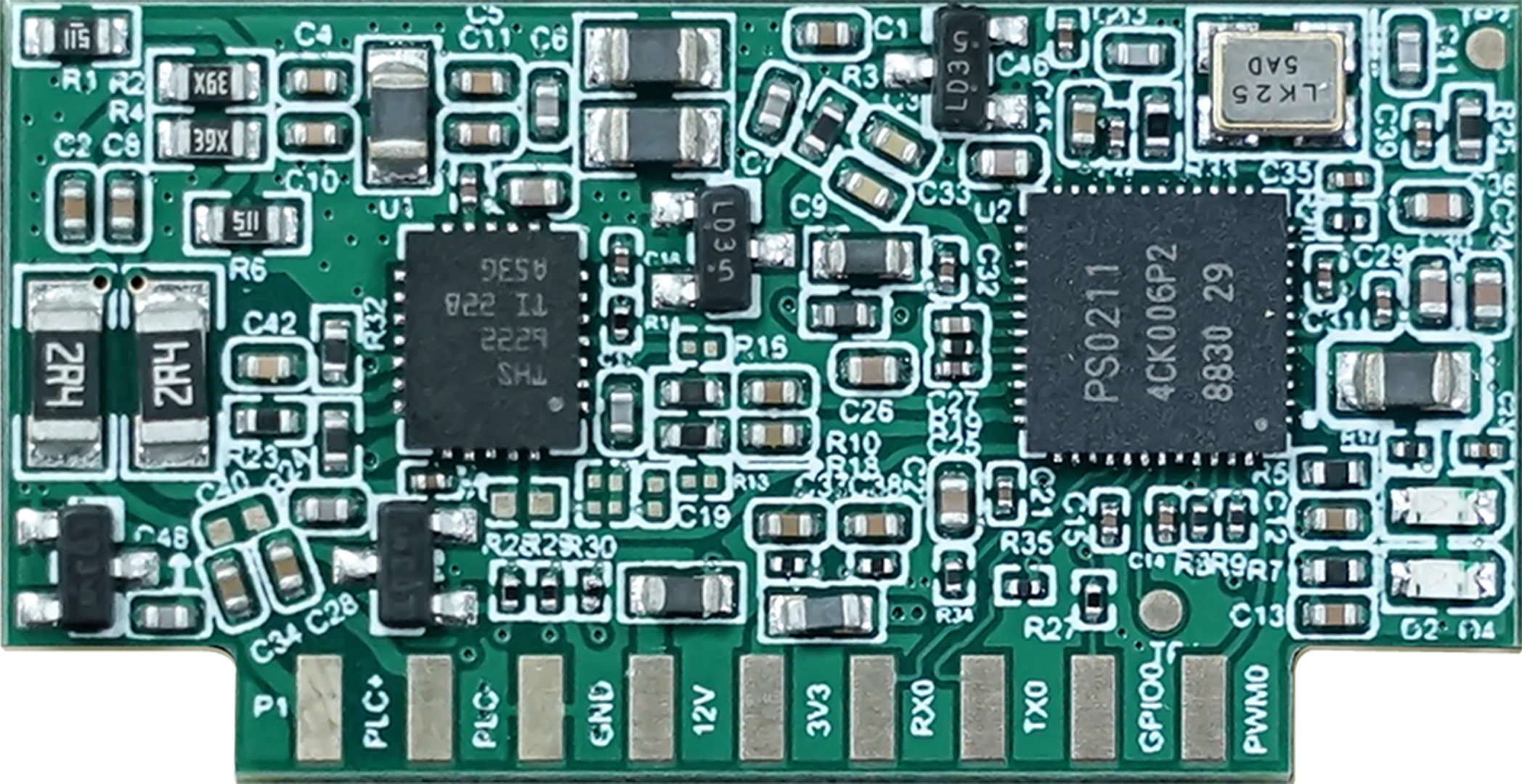
Our Single Light Controller utilizes advanced Broadband Power Line Communication (PLC) technology to enable reliable, high-speed data transmission directly through existing power lines—no extra wiring required. This significantly reduces construction and installation costs while simplifying network deployment.
With a peak physical layer rate of 0.507 Mbit/s and OFDM modulation, the controller ensures fast, stable communication and strong anti-interference performance. It supports automatic and rapid networking, completing setup in just 10 seconds, and allows up to 15 relay levels for long-distance communication across lighting systems.
The controller continuously collects and transmits real-time electrical data, including:
- Input current and voltage
- Active power and total electricity consumption
- Power factor
- Switch status
All data is reported through the power line communication network, enabling remote monitoring, energy management, and smart lighting control.
Ideal for street lighting, industrial parks, tunnels, and smart city applications, this device helps improve energy efficiency, system reliability, and maintenance convenience.
Product Advantage
- Utilizes Power Line Communication (PLC) technologies.
- Supports 0-10V and PWM dimming outputs.
- Realizes multi-function detection of current, voltage, active power, electricity, power factor, etc.
- Meets international meter measurement standards.
- Provides 1-channel 10%-100% arbitrary ratio stepless dimming output.
- Supports controller temperature detection for real-time ambient temperature monitoring.
- Supports overcurrent, overvoltage, undervoltage, overload protection, lamp condition detection, and default lighting function
- Actively reports faults such as overcurrent, overvoltage, undervoltage, and overload.
- Suitable for switching and dimming of various LED lamps; supports multiple light-off modes for power supplies and relays.
- Supports local strategies and automatically executes cloud configuration strategies in network abnormalities or no network status.
- Supports timed switch and time control mode.
- Operating temperature: – 40℃~+85℃
- Waterproof grade: IP66
- Lightning grade: ±6KV (line to line)
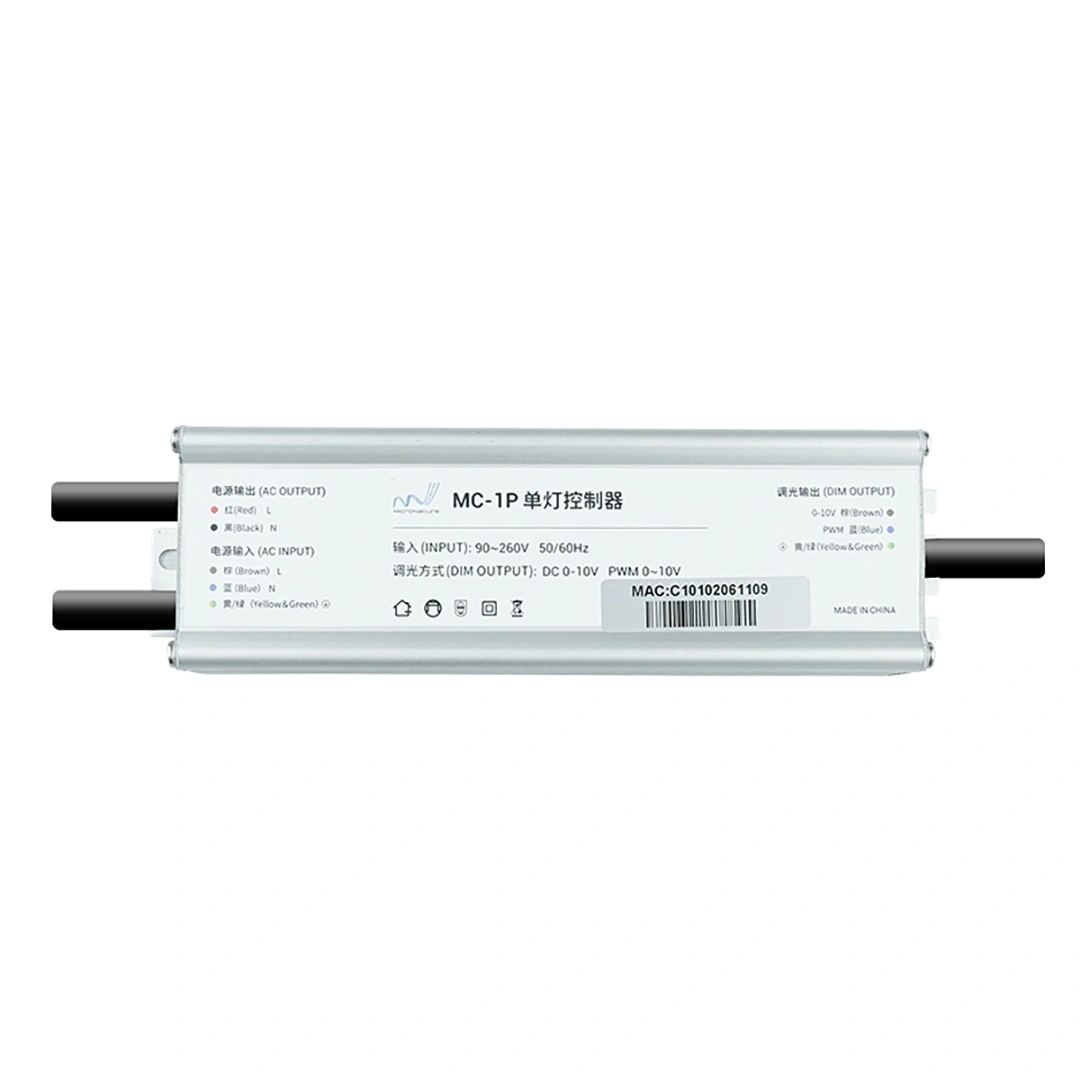
Product Parameters
|
Parameter |
Value |
|
|
AC Parameter |
Voltage Supply |
90VAC~260VAC |
|
Frequency |
50~60Hz |
|
|
Load Parameter |
Max Load Power Consumption |
800W |
|
Power Consumption |
<2W |
|
|
Dimming Type |
0-10V |
|
PWM |
|
|
Data Collection |
Current, voltage, active power, electricity, power factor |
|
Warning Protection |
Overvoltage, undervoltage, overcurrent, overload, overtemperature |
|
Edge Computing |
Local strategy, can work offline |
|
Current |
0~5A ±5% |
|
Voltage |
0~220V ±2% |
|
Active Power |
1W~800W ±5% |
|
Power Factor |
0~1PF ≤±2% |
|
Power |
±5% |
|
Temperature |
-40~85℃, typical measurement error ±1℃ |
|
Communication Method |
PLC |
|
Peak Rate |
0.507Mbit/s |
|
Frequency Band |
0.5-3.7M, 2.5-5.7M |
|
Sensitivity |
<=-80dbm |
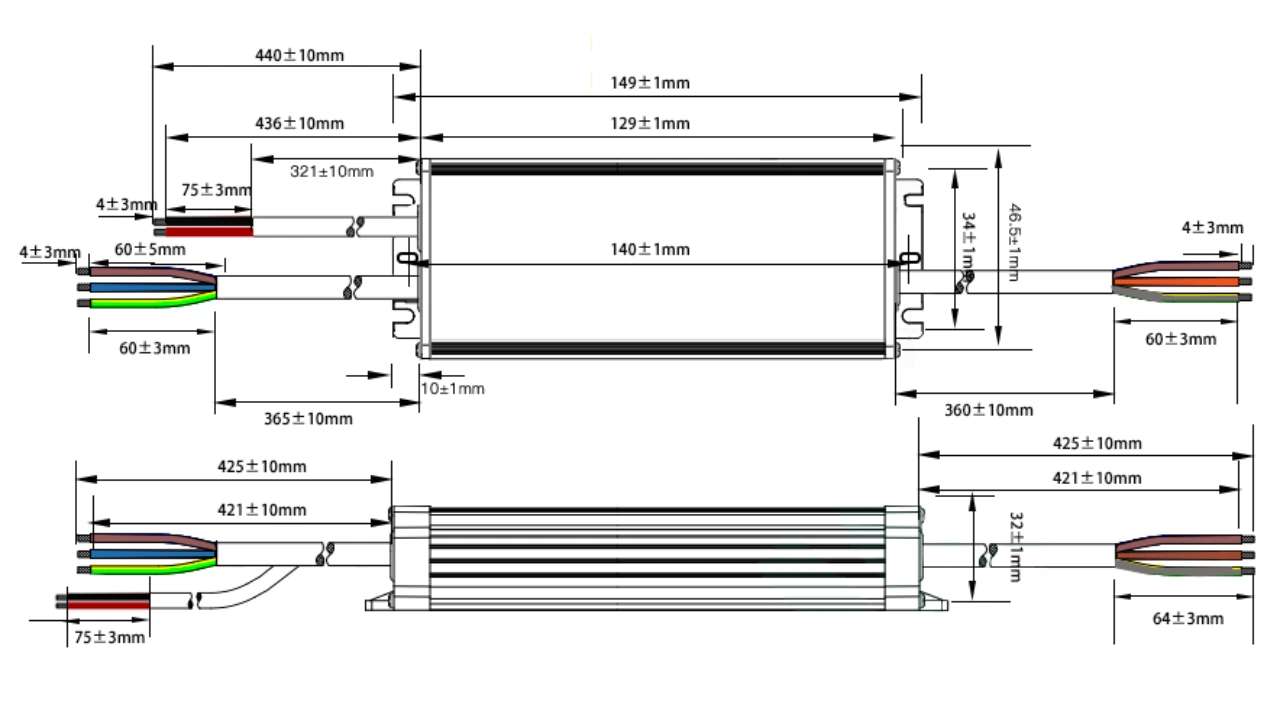
Dimensions
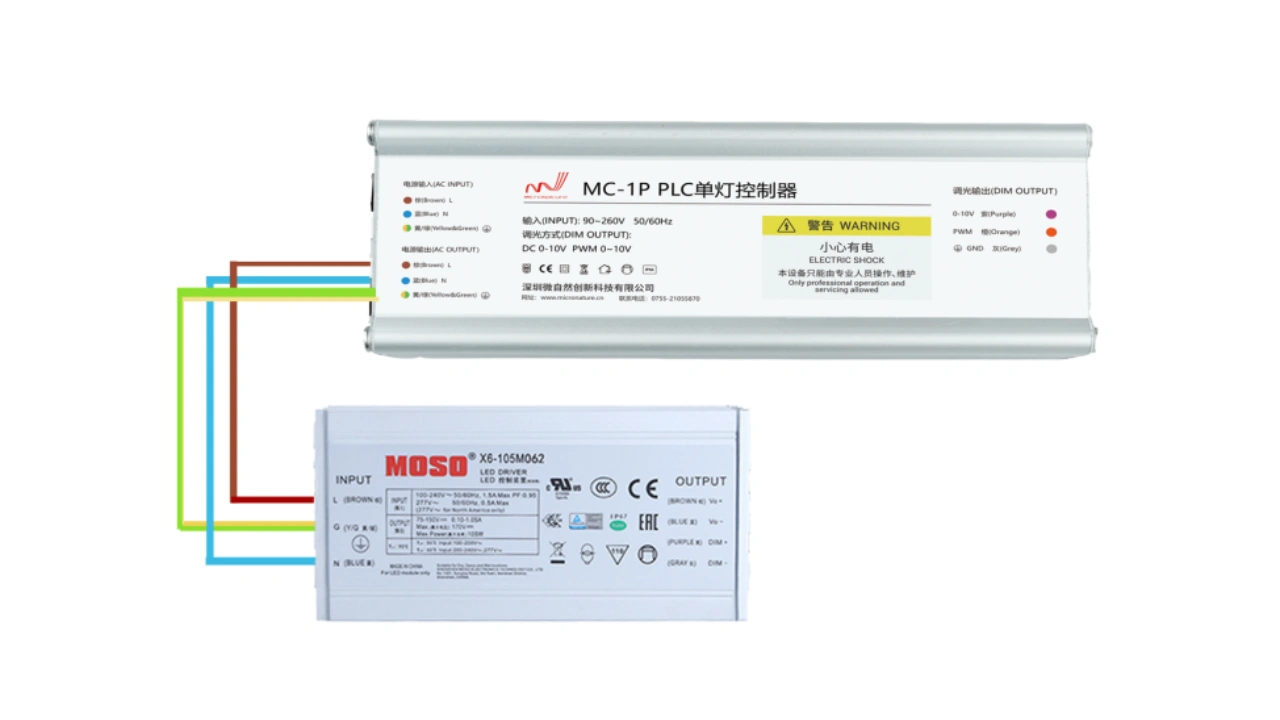
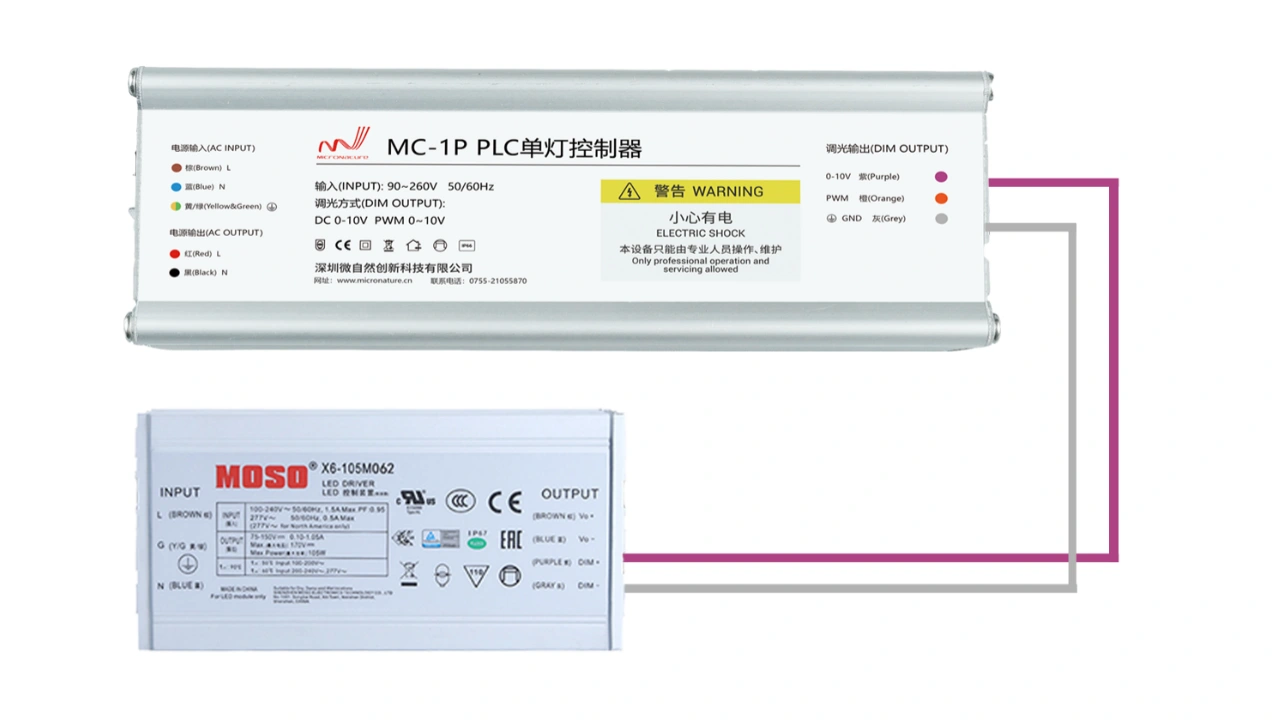
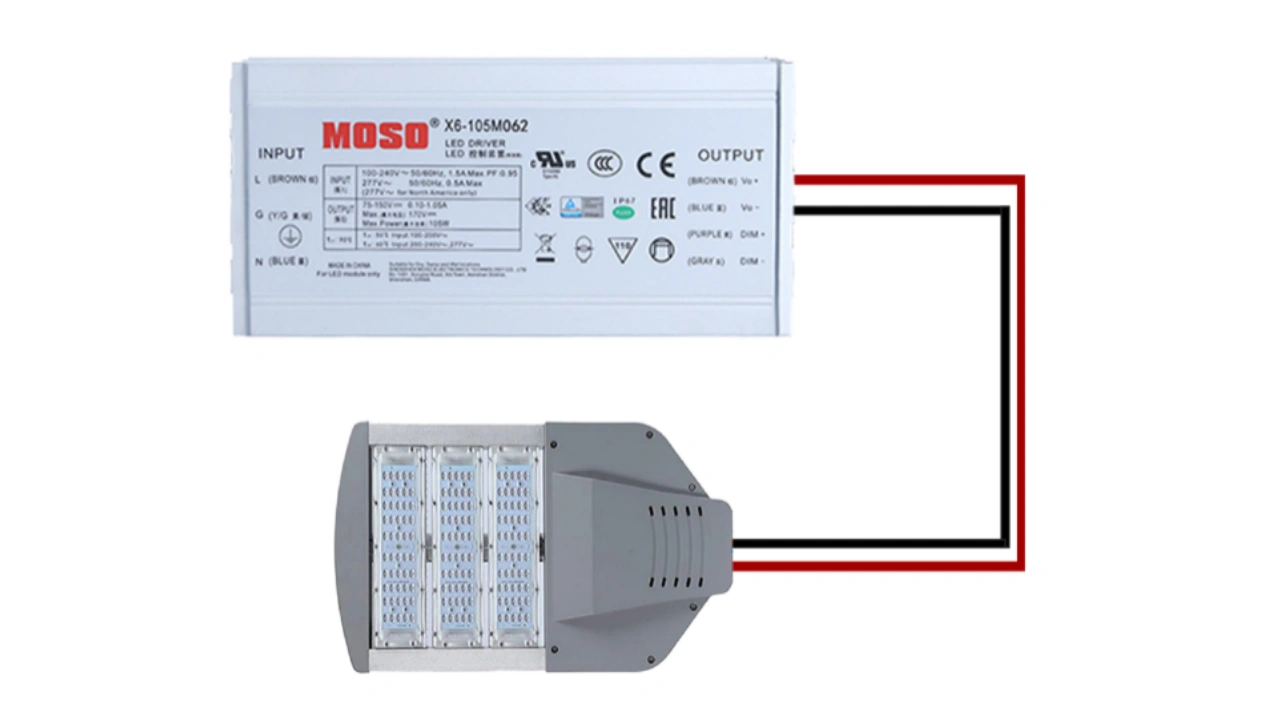
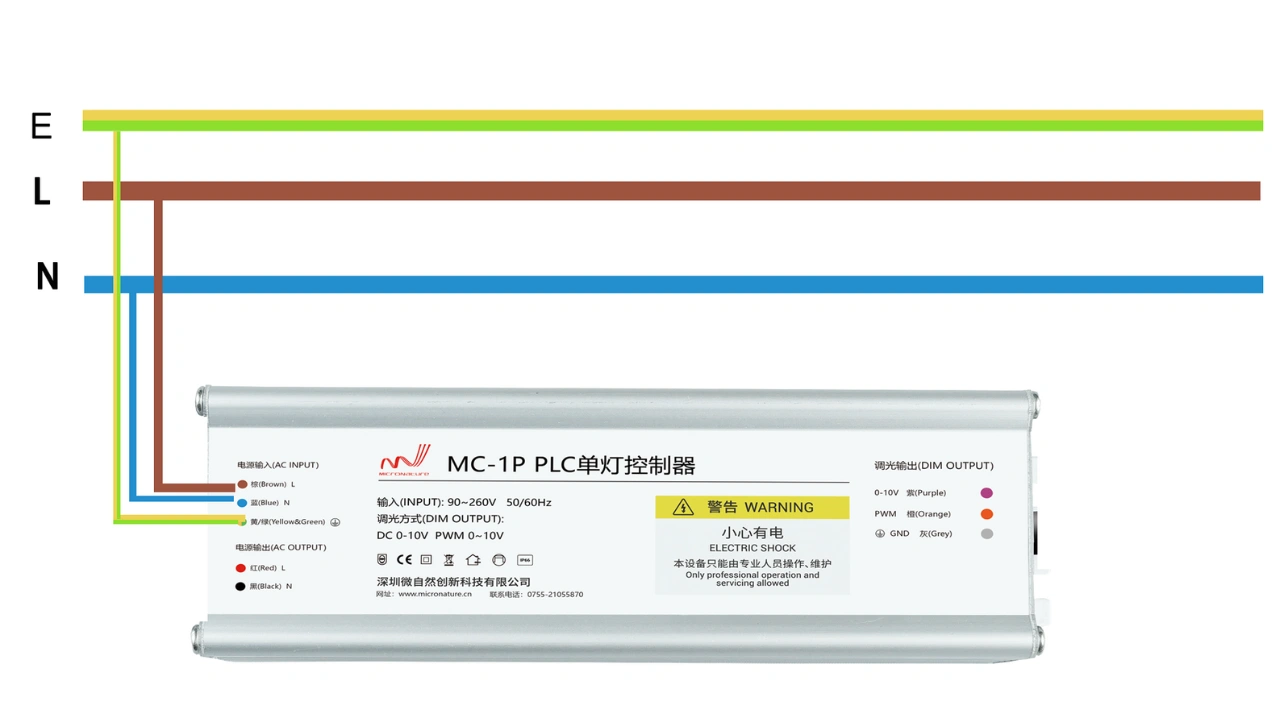
Wire Connection
You Might Also Like
FAQ
1. What is a Single Light Controller and how does it work?
The Single Light Controller is a smart device that uses Broadband Power Line Communication (PLC) to transmit data over existing power cables. It enables remote monitoring and control of individual lights without needing additional communication wiring.