PLC vs Bluetooth lighting is a common comparison when selecting communication technologies for smart lighting systems. While Bluetooth offers flexible wireless connectivity, PLC communication uses existing power lines to provide stable and scalable lighting control across large infrastructure environments.
Power Line Communication (PLC) is emerging as a more robust and future-proof alternative—especially for vehicle parking lighting systems that demand high reliability, centralized management, and low operational cost. Bluetooth communication standards are maintained by organizations such as the Bluetooth Special Interest Group (Bluetooth SIG).
This article compares PLC vs Bluetooth and explains why PLC is increasingly suitable for smart parking lighting upgrades in Singapore.
PLC vs Bluetooth Lighting Comparison Table
| Feature | PLC Lighting | Bluetooth Lighting |
|---|---|---|
| Communication Medium | Power Line | Wireless RF |
| Installation Cost | Low (uses existing power) | Medium to High |
| Communication Stability | Very High | Medium |
| Scalability | Excellent | Limited by distance |
| Interference Resistance | Strong | Moderate |
| Maintenance Complexity | Low | Medium |
| Typical Applications | Street, tunnel lighting | Indoor, small systems |
PLC Lighting System Architecture Overview
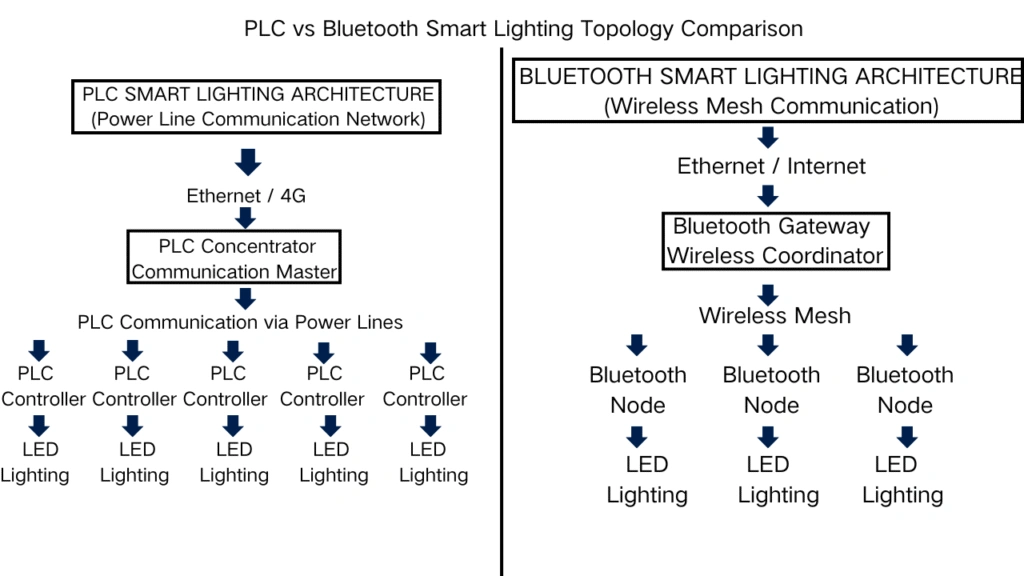
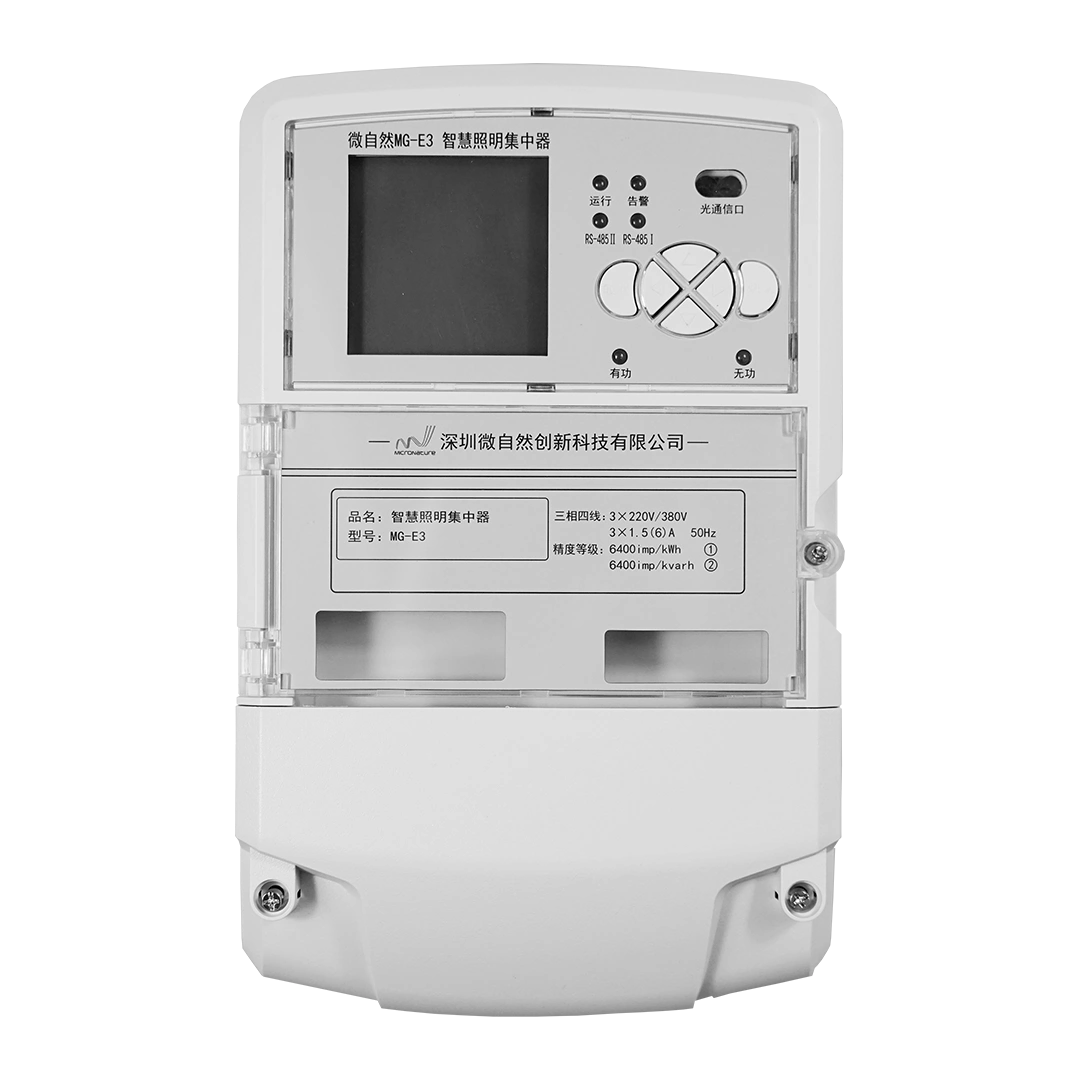
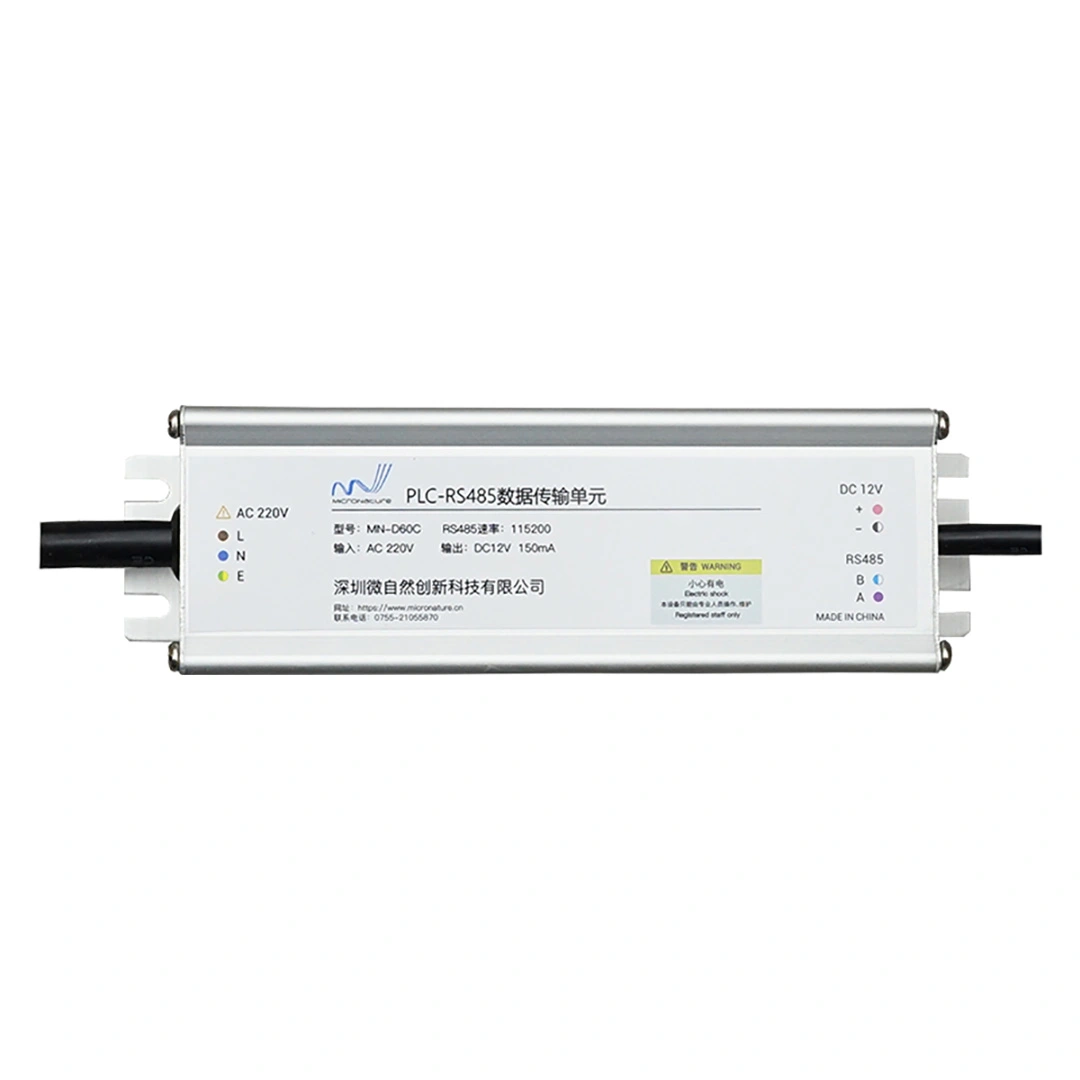
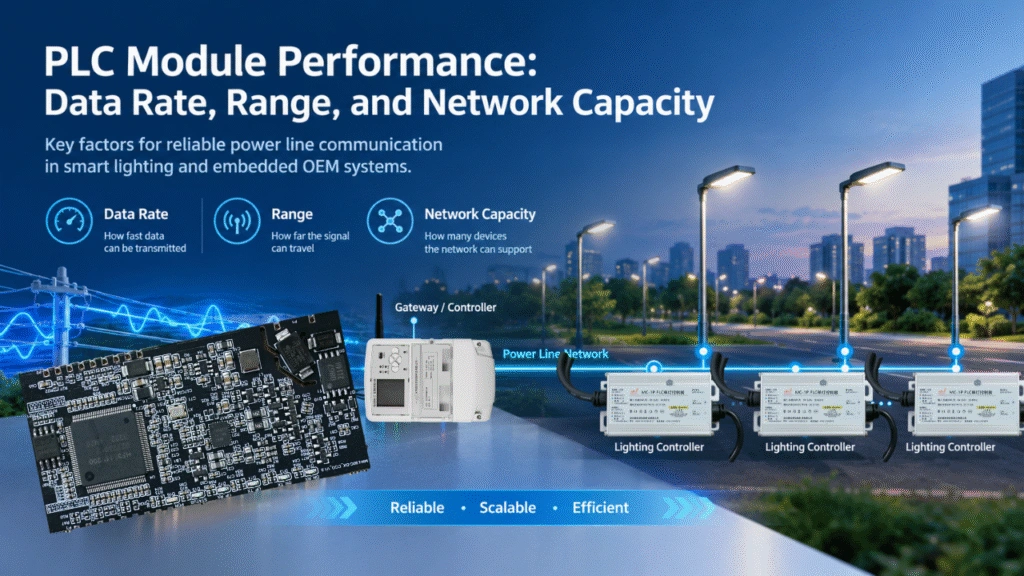
A typical PLC lighting system architecture consists of centralized control units, PLC communication modules, and distributed lighting controllers connected through power line networks.
Key components include:
- PLC concentrator
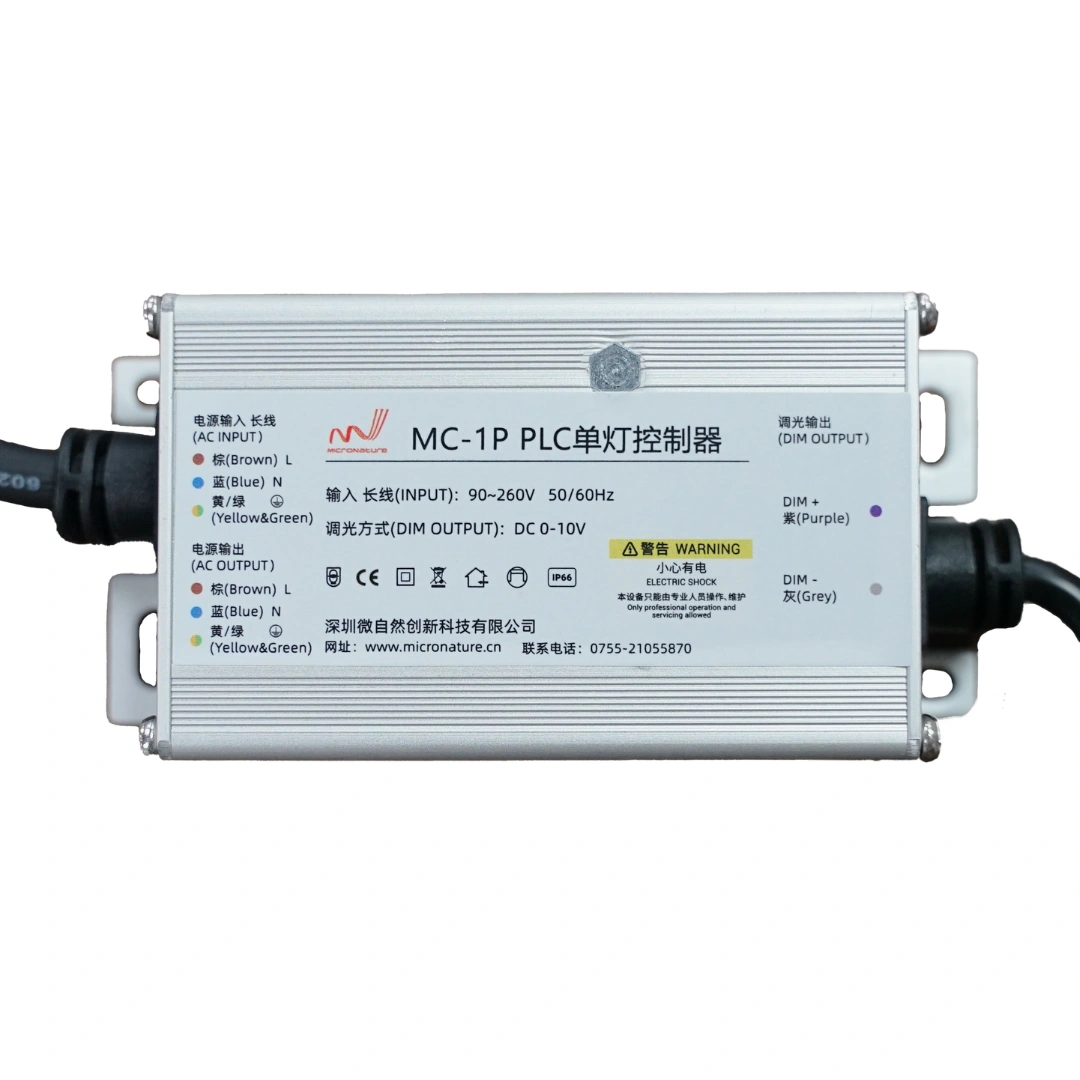
- PLC single lamp controllers
- LED lighting drivers
- Centralized management software
- Communication gateways
This architecture enables stable communication across long distances without requiring additional communication wiring.
Understanding the Two Technologies
What Is Bluetooth Smart Lighting Control?
Bluetooth is a short-range wireless communication technology widely used in consumer electronics. In smart parking lighting, Bluetooth is typically used to connect luminaires, sensors, or controllers to a local gateway or mobile device.
Key characteristics of Bluetooth:
- Short communication range
- Wireless and easy to deploy
- Often relies on mesh networking
- Performance can be affected by interference and obstacles
What Is PLC (Power Line Communication)?
PLC transmits data directly over existing power lines. In a smart lighting system, both power and control signals share the same electrical cable—eliminating the need for additional communication wiring or wireless links.
Key characteristics of PLC:
- Uses existing electrical infrastructure
- Stable communication over long distances
- Strong resistance to interference
- Centralized and scalable system architecture
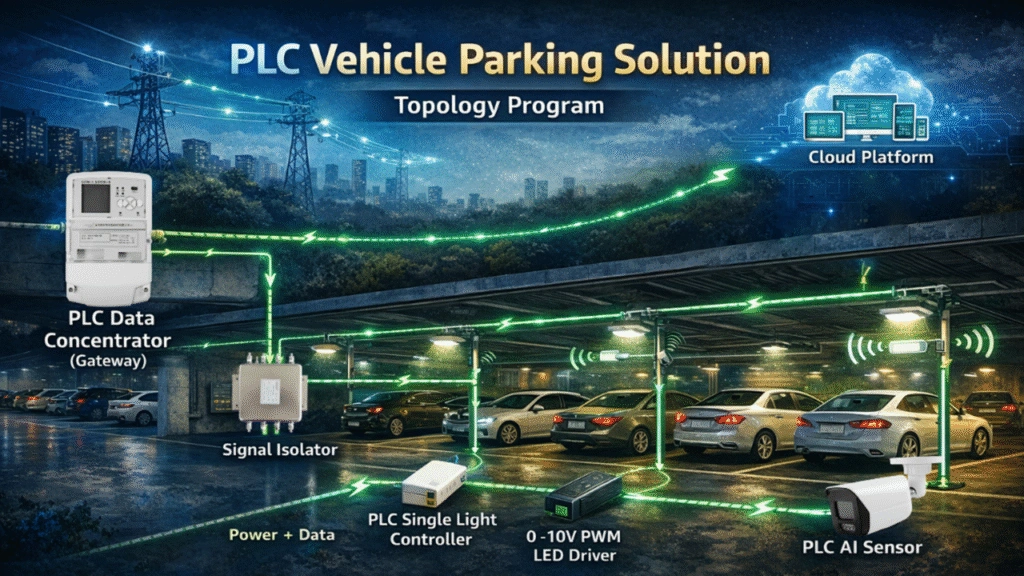
PLC vs Bluetooth: A Comparison for Parking Lighting Applications
1. Communication Stability
Bluetooth:
Parking environments often include concrete structures, metal vehicles, ramps, and underground levels. These elements can block or weaken wireless signals, leading to:
- Unstable connections
- Delayed responses
- Device disconnections
PLC:
PLC communicates through power cables, which are already installed and shielded from environmental interference. This ensures:
- Consistent signal quality
- Reliable real-time lighting control
- Stable operation in underground and multi-level car parks
Winner: PLC
2. Coverage Range and Scalability
Bluetooth:
- Limited transmission range
- Mesh networks increase complexity
- Performance degrades as node count grows
PLC:
- Covers long distances via power lines
- Ideal for large parking facilities
- Easily scales from dozens to thousands of lights
- Supports centralized gateways and cloud platforms
Winner: PLC
3. Installation and Infrastructure Cost
Bluetooth:
- No additional cables required
- Lower initial deployment cost
- However, may require signal repeaters and frequent maintenance
PLC:
- Uses existing power cables
- No need for wireless repeaters
- Reduces long-term maintenance and troubleshooting costs
For Singapore’s existing parking structures, PLC is especially attractive for retrofit projects, as it avoids major construction work.
Winner: PLC (long-term ROI)
4. System Management and Maintenance
Bluetooth:
- Often relies on local configuration
- Troubleshooting requires on-site intervention
- Limited visibility of system-wide performance
PLC:
- Centralized management via PLC gateways
- Real-time monitoring of each luminaire
- Remote fault detection and maintenance
- Supports integration with sensors, AI analytics, and city platforms
Winner: PLC
5. Security and Reliability
Bluetooth:
- Wireless signals are more exposed
- Security depends heavily on encryption and configuration
- Potential risk in public infrastructure environments
PLC:
- Closed communication network via power lines
- Reduced exposure to external attacks
- Designed for industrial-grade reliability
Winner: PLC
Why PLC Is Ideal for Smart Parking Lighting in Singapore
Singapore’s urban environment presents unique challenges:
- High-density parking facilities
- Underground and multi-storey car parks
- Long operating hours
- Strong demand for energy efficiency and system reliability
PLC smart lighting systems address these challenges by enabling:
- Stable “lights on when vehicles arrive, lights off when spaces are empty” control
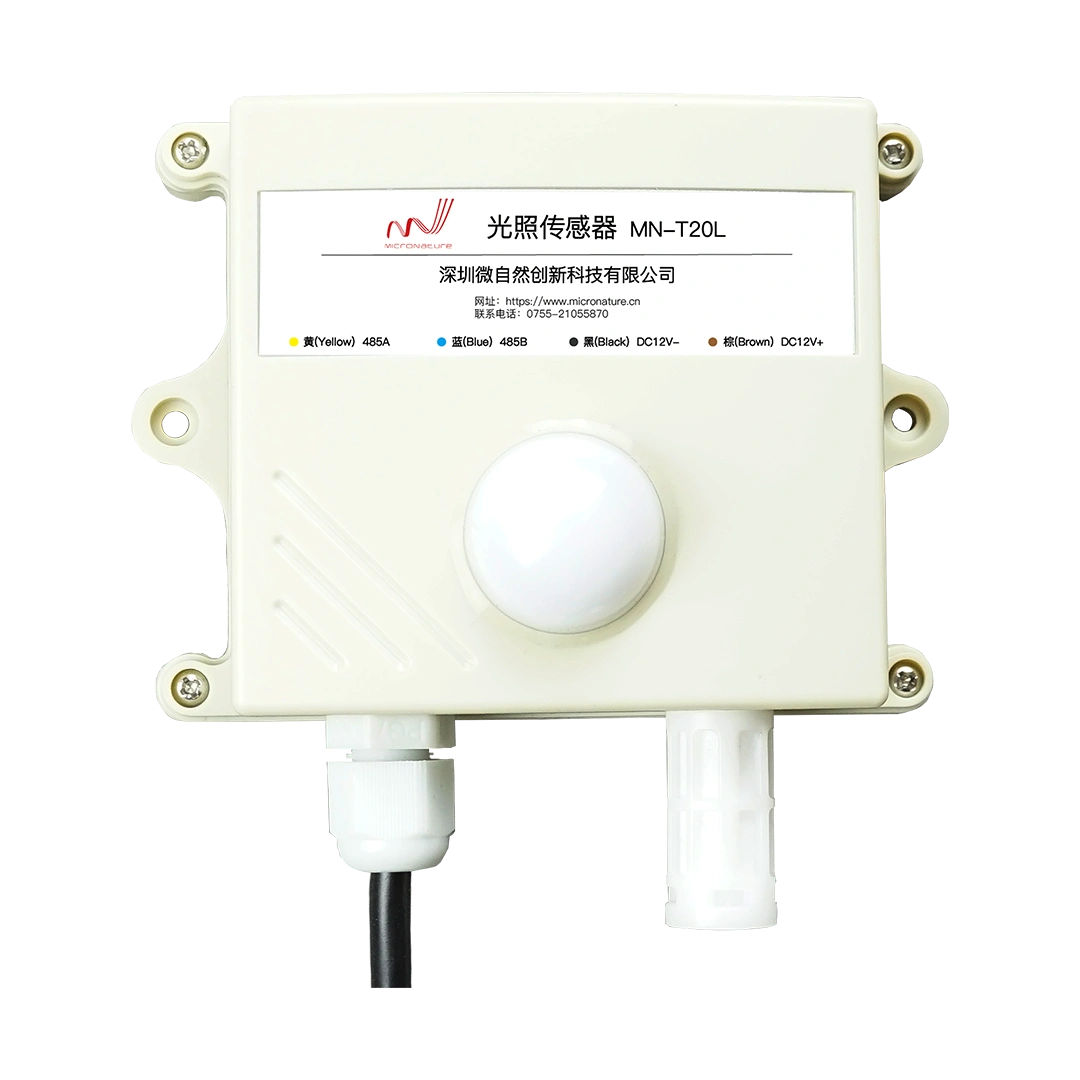
- Seamless integration with motion, brightness, and AI sensors
- Centralized energy management and reporting
- Lower operational and maintenance costs over time
As Singapore continues upgrading its smart city infrastructure, PLC provides a future-ready foundation for parking lighting control.
When to Use PLC Lighting vs Bluetooth
Selecting between PLC and Bluetooth lighting depends on project size, infrastructure conditions, and communication reliability requirements.
PLC lighting is recommended for:
- Large outdoor lighting systems
- Urban street lighting networks
- Tunnel and highway lighting
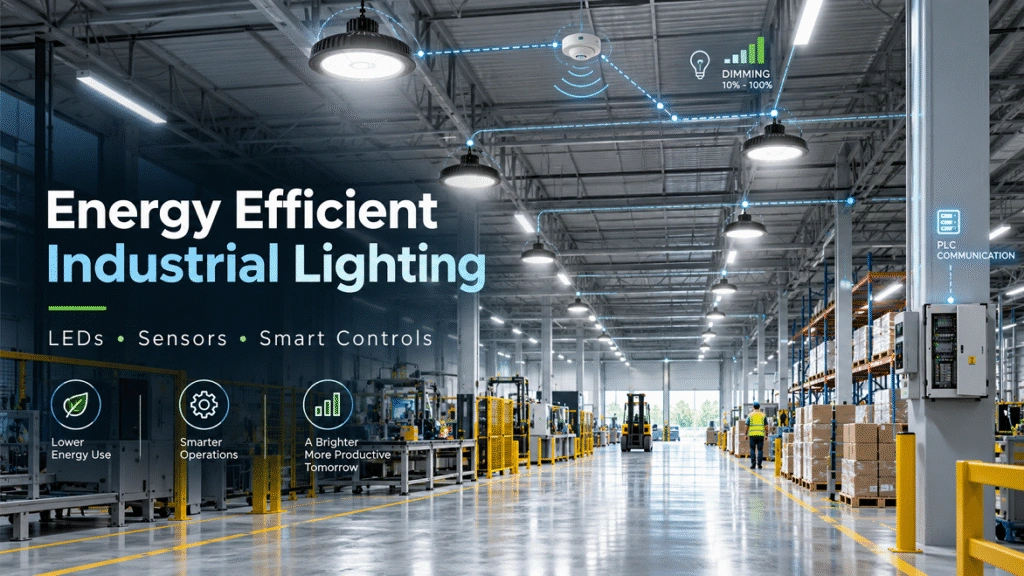
- Industrial facilities
Bluetooth lighting is recommended for:
- Small indoor lighting systems
- Residential automation
- Office lighting control
- Temporary installations
Understanding these use cases helps engineers select the most appropriate communication technology.