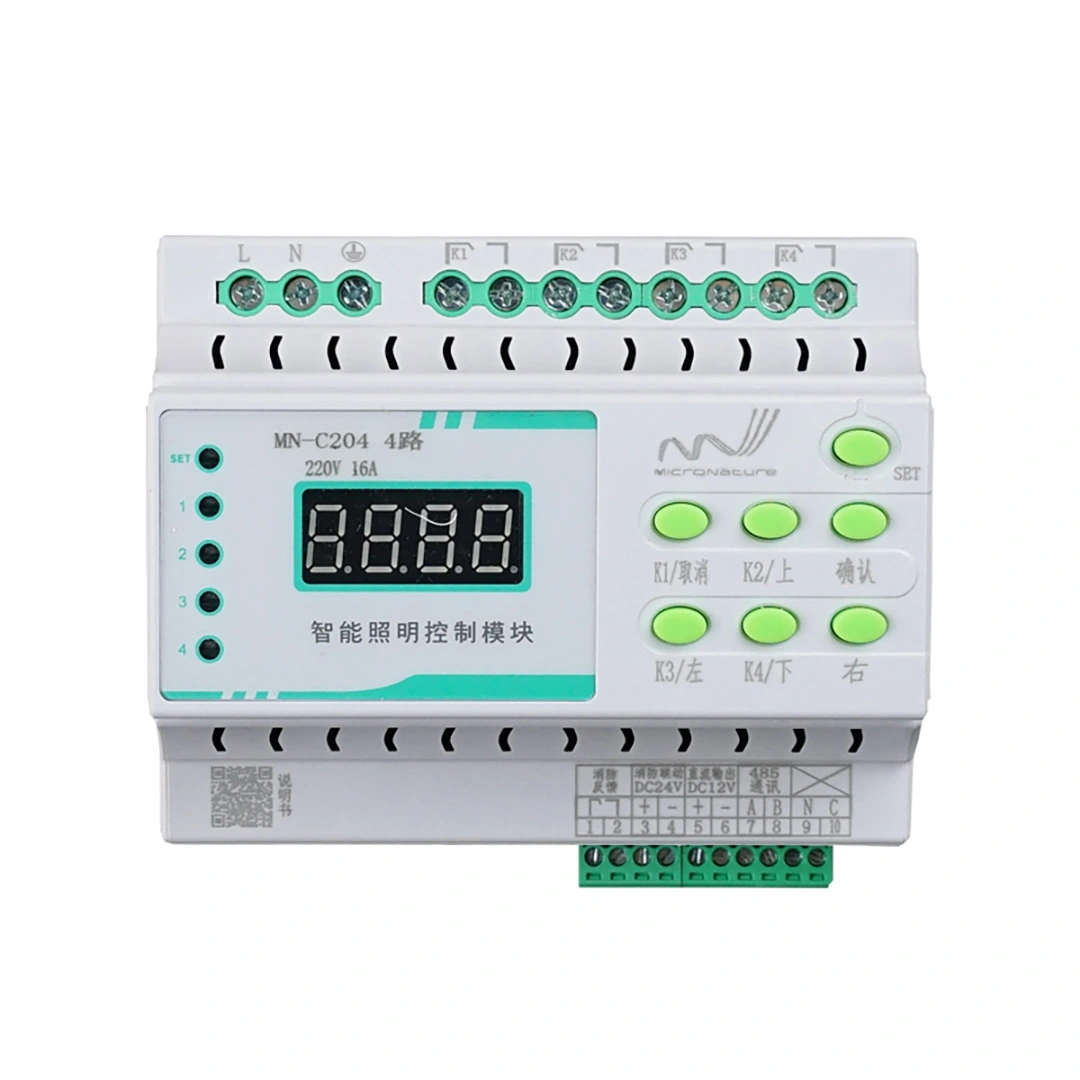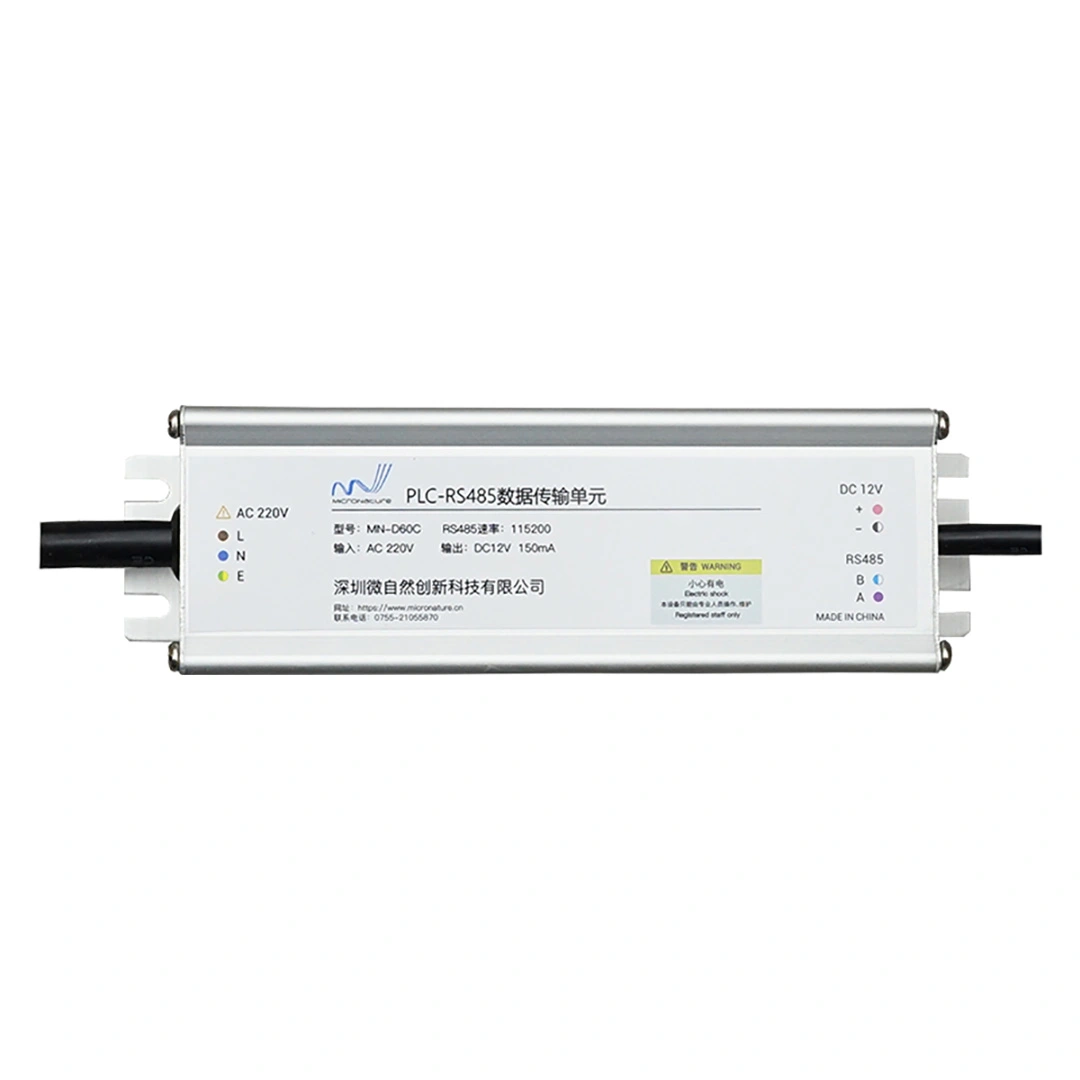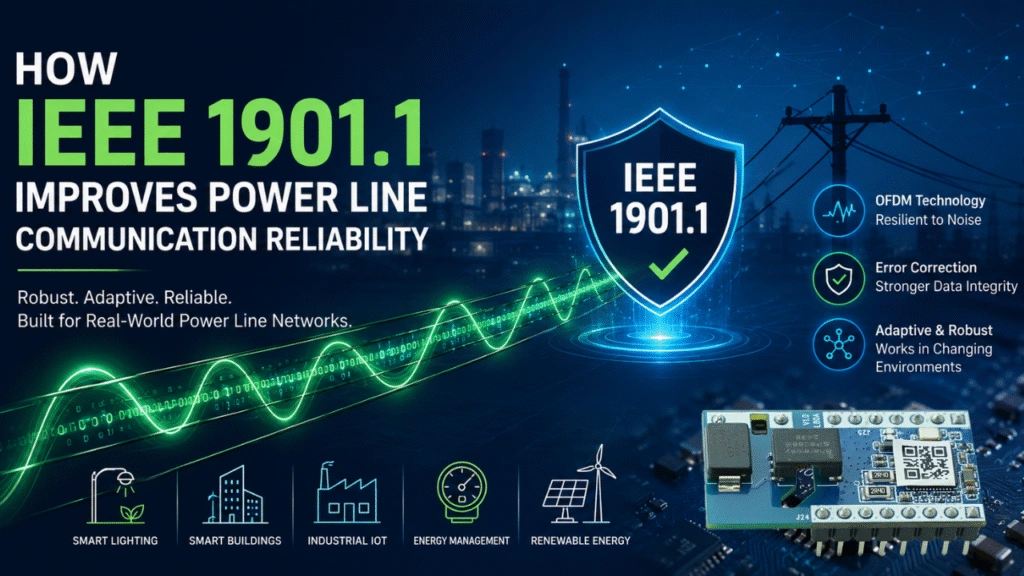
Smart lighting AMEA markets are expanding rapidly as cities across Asia, the Middle East, and Africa invest in digital infrastructure and energy-efficient lighting systems. Governments and infrastructure developers are adopting intelligent lighting technologies to improve operational efficiency, reduce maintenance cost, and support long-term smart city development.
While NEMA dominates in the Americas and Zhaga in Europe, decision-making in Asia, the Middle East, and Africa (AMEA) is far more complex. The region’s diverse infrastructure, geographic challenges, and fast urbanization demand a strategic approach. Increasingly, cities are turning to PLC (Power Line Communication) as a preferred technology for building scalable and cost-effective smart lighting networks.
Smart Lighting Growth Across the AMEA Region
The AMEA region includes diverse markets with rapidly growing demand for smart lighting infrastructure. Smart city initiatives across the AMEA region are supported by international development programs led by organizations such as the World Bank.
Key regional segments include:
Asia:
Large-scale urban expansion and smart city development are driving demand for intelligent street lighting systems and centralized infrastructure control.
Middle East:
Government-led smart city initiatives and energy efficiency programs are accelerating the adoption of connected lighting technologies.
Africa:
Infrastructure modernization projects and off-grid lighting systems are creating new opportunities for scalable and reliable lighting communication technologies.
These regional differences highlight the importance of flexible smart lighting architectures that can adapt to varying infrastructure conditions.
Beyond Standards: The Unique Challenges of the AMEA Region
AMEA is not a single, uniform market. It includes emerging megacities, brand-new smart developments, and regions upgrading basic infrastructure for the first time. This diversity makes choosing the right smart lighting system a strategic—not merely technical—decision. Key regional factors include:
1. Infrastructure Diversity
The region’s electrical grid quality, telecom coverage (4G/5G), and fiber optic availability vary widely. In many cities, PLC offers an advantage because it works over existing power lines and does not rely on costly or inconsistent telecom networks.
2. Environmental Extremes
Harsh environments—desert heat in the Middle East, monsoons in Southeast Asia, or dust storms in Africa—can disrupt wireless communication. PLC’s wired communication pathway offers exceptional stability under these conditions.
3. Strategic Leapfrogging
Many AMEA cities are bypassing legacy systems and building IoT-integrated smart infrastructure from scratch. PLC enables cities to deploy a future-proof lighting system without investing heavily in new communication wiring.
4. Localization Imperative
Successful adoption depends on technology adapted to local conditions, including climate, maintenance capacity, communication stability, and long-term service needs.
Why PLC (Power Line Communication) Is Transforming Smart Lighting in AMEA
Before diving into each region’s characteristics, it’s important to understand why PLC has become a preferred technology for smart street lighting projects.
✔ No Extra Wiring Required
PLC uses existing electrical lines to deliver data—significantly reducing installation time and cost.
This is especially valuable for developing cities where excavation or cable installation is expensive or disruptive.
✔ Highly Reliable in Dense or Harsh Environments
Where wireless signals may fail due to buildings, interference, humidity, or sandstorms, PLC remains stable and consistent.
✔ Energy Savings Through Precision Control
Cities can remotely adjust lighting levels, schedule dimming, and detect faults. Many achieve 30–60% energy savings.
✔ Cloud and Mobile App Integration
Modern PLC systems support complete remote management:
- Real-time status and fault detection
- Energy reporting
- On/off and dimming commands
- Predictive maintenance
✔ Scalable for City-Wide Lighting Networks
PLC supports large, high-density lighting systems that need to function reliably over long distances—ideal for expanding AMEA cities.
✔ Compatible With Hybrid Architectures
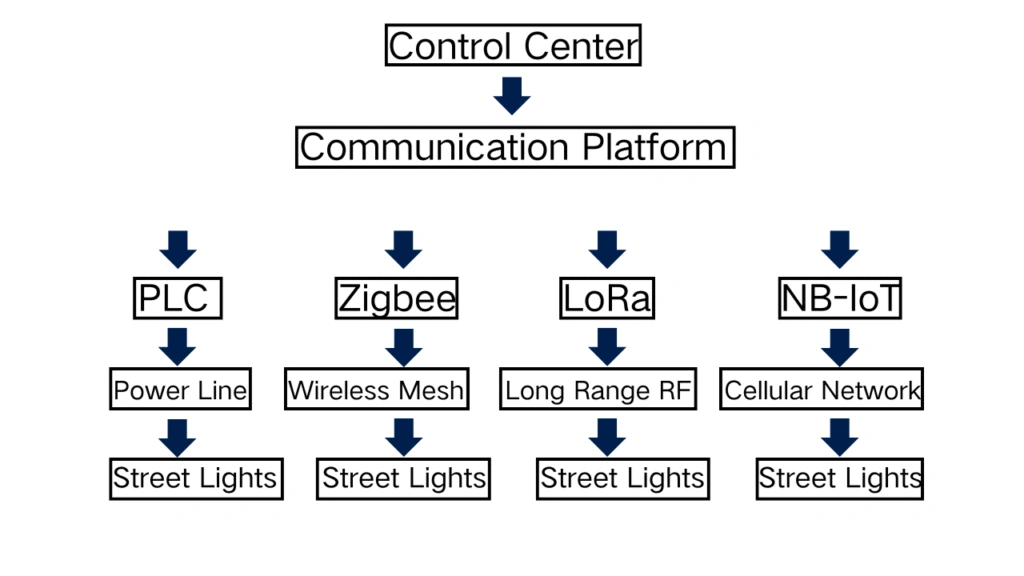
PLC can serve as the main communication backbone, while wireless modules (Zigbee, LoRaWAN, NB-IoT) can be added as needed for sensors or remote locations.

Technologies Supporting Smart Lighting in AMEA
Several communication technologies support smart lighting deployment across AMEA infrastructure projects.
Common technologies include:
- Power Line Communication (PLC) for reliable long-distance communication
- Cellular networks such as 4G and NB-IoT for wide-area connectivity
- IoT platforms enabling centralized monitoring
- AI-based analytics supporting predictive maintenance
These technologies enable smart lighting networks to scale across large geographic regions while maintaining operational reliability.
Regional Analysis: Strategic Smart Lighting Choices Across AMEA
1. Southeast & South Asia: Growth, Greenfields, and Integration
Countries such as Vietnam, Thailand, Malaysia, India, and Indonesia are rapidly developing smart infrastructure. With a mix of new developments and retrofitting projects, the region demands cost-effective yet flexible solutions.
Key Characteristics
- High urbanization
- Cost sensitivity
- Emphasis on integration with broader smart city systems
Technical Priority: Openness and Scalability
PLC is particularly well-suited for dense Asian cities where wireless congestion is a challenge. It provides a stable backbone, while optional wireless protocols can complement specific zones.
Recommended Approach
- Choose PLC-based controllers for core lighting networks.
- Use hybrid systems with wireless add-ons for parks, campuses, or areas with non-standard wiring.
- Look for platforms supporting multi-protocol integration (traffic sensors, environmental monitoring, security systems).
2. The Middle East: Ambition, Extremes, and Sustainability
Driven by programs such as Saudi Vision 2030, UAE’s smart city initiatives, and Qatar’s Smart Nation development, the Middle East is adopting smart technologies at scale.
Key Characteristics
- Ambitious large-scale smart city projects
- Extreme weather (heat, dust, UV exposure)
- High demand for durability and energy optimization
Technical Priority: Robustness and Advanced Smart Features
PLC is highly valued in the region because it delivers reliable communication even in harsh climates, overcoming challenges like wireless interference caused by dust storms or extreme temperatures.
Recommended Approach
- Prioritize PLC-enabled controllers with high ingress protection (IP66 or above).
- Leverage advanced management software for predictive maintenance and sustainability reporting.
- Utilize PLC as a secure backbone while integrating sensors for parking, traffic, and renewable energy monitoring.
3. Africa: Pragmatism, Leapfrogging, and Multifunctionality
Africa presents enormous opportunities, particularly as cities expand under infrastructure programs and international investment frameworks.
Key Characteristics
- Foundational infrastructure development
- Need for cost-effective, reliable solutions
- Growth of multifunctional smart poles
Technical Priority: Reliability and Value-added Functionality
PLC enables African cities to deploy smart lighting without investing heavily in telecom infrastructure, making it ideal for budget-sensitive or large-scale rural-to-urban projects.
Recommended Approach
- Use PLC-based controllers for maximum stability and simplified installation.
- Choose multi-functional smart poles integrating Wi-Fi, CCTV, EV charging, and public service tools.
- Select vendors offering strong local support, training, and long-term maintenance partnerships.
Decision-Making Framework for AMEA Smart Lighting Projects
| Region | Key Characteristics | Technical Priorities | Recommended Solution Focus |
|---|---|---|---|
| Southeast/South Asia | High-growth, dense, cost-sensitive | Openness, scalability, hybrid systems | PLC backbone + optional wireless modules |
| Middle East | Harsh environment, large-scale gov’t projects | Extreme durability, advanced analytics | Robust PLC-based controllers, high IP, integrated sensors |
| Africa | Foundational yet rapidly innovating | Reliability, multifunctionality | PLC systems, multi-functional smart poles, strong local service |
Typical Smart Lighting Applications in AMEA
Smart lighting technologies are widely deployed across infrastructure projects throughout the AMEA region.
Typical applications include:
- Urban street lighting systems
- Highway and tunnel lighting
- Industrial and logistics zones
- Smart building infrastructure
- Solar-powered rural lighting
These applications demonstrate the versatility of smart lighting systems across diverse environmental and infrastructure conditions.
The Future: Integrated, Open, and PLC-Driven
Smart lighting is evolving from standalone systems into interconnected components of the urban digital ecosystem. As more global manufacturers adopt open standards such as Matter, PLC continues to play a major role as a stable, secure communication backbone for large lighting networks.
Cities that choose PLC today benefit from:
- Lower installation costs
- Higher network reliability
- Cleaner data communication
- Reduced maintenance
- Seamless integration with future smart city applications
Ultimately, the most effective smart lighting solution is one that transforms technology into local value—enhancing safety, improving energy savings, strengthening sustainability, and supporting the long-term digital growth of cities across Asia, the Middle East, and Africa.
What Are Your City’s Smart Lighting Challenges?
Every city has a different journey toward smarter, more sustainable lighting.
Share your challenges or priorities in the comments—let’s explore the best solutions together.