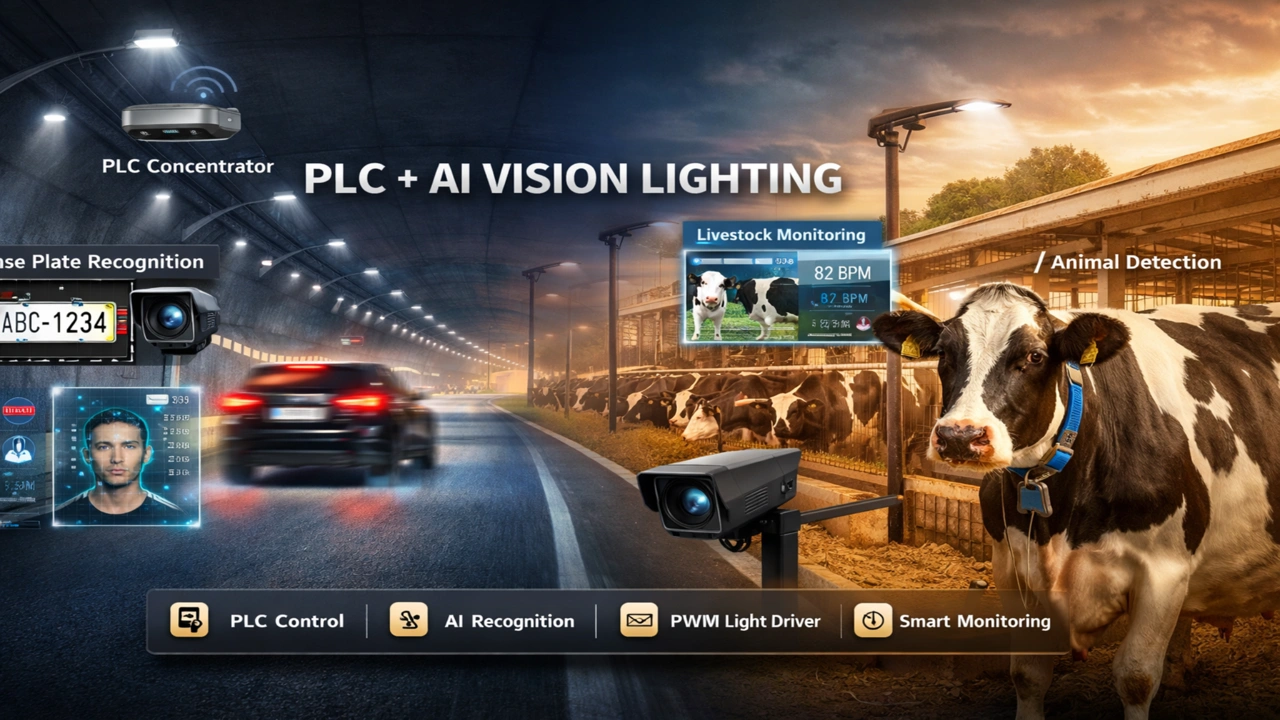
As infrastructure and agricultural operations move toward digital automation, lighting systems are evolving beyond illumination. Today, PLC (Power Line Communication) + AI Vision integration enables lighting networks to become intelligent sensing and control platforms.
From high-speed transport corridors to modern dairy farms, intelligent lighting systems deliver real-time data visibility, safety optimization, and operational efficiency — all through existing power infrastructure.
This article explores how PLC-enabled lighting combined with AI vision sensors is transforming two critical application environments.
Intelligent Lighting for High-Speed Road & Tunnel Infrastructure
High-speed transportation environments demand:
- Ultra-reliable communication
- Real-time adaptive lighting
- Safety-critical monitoring
- Low maintenance complexity
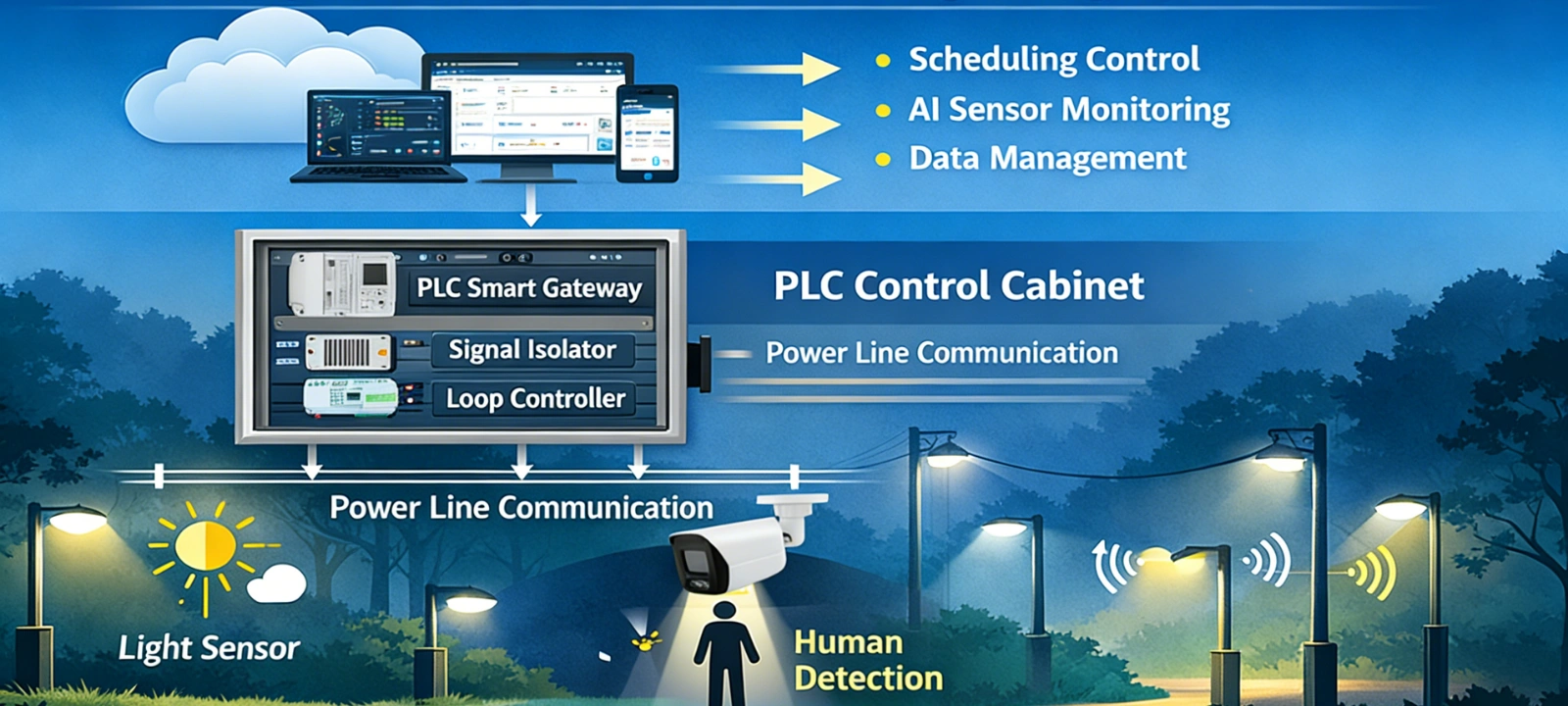
A PLC + AI lighting architecture solves these challenges by integrating:
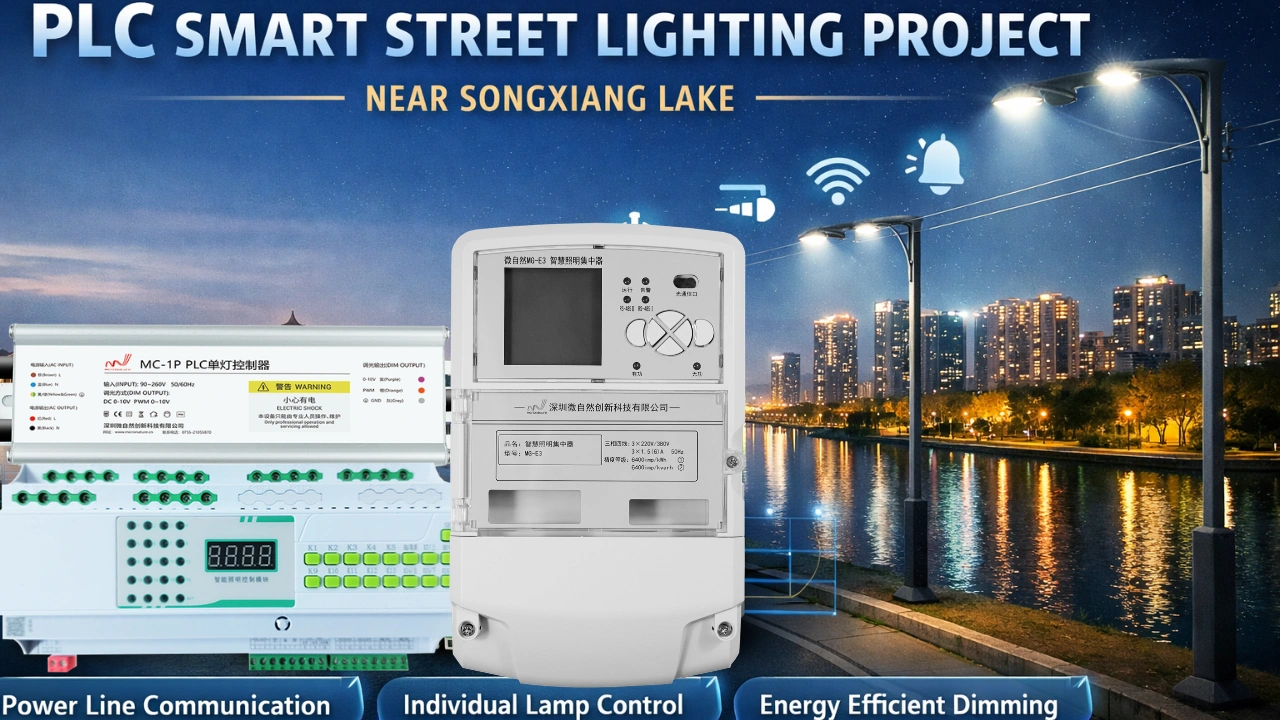
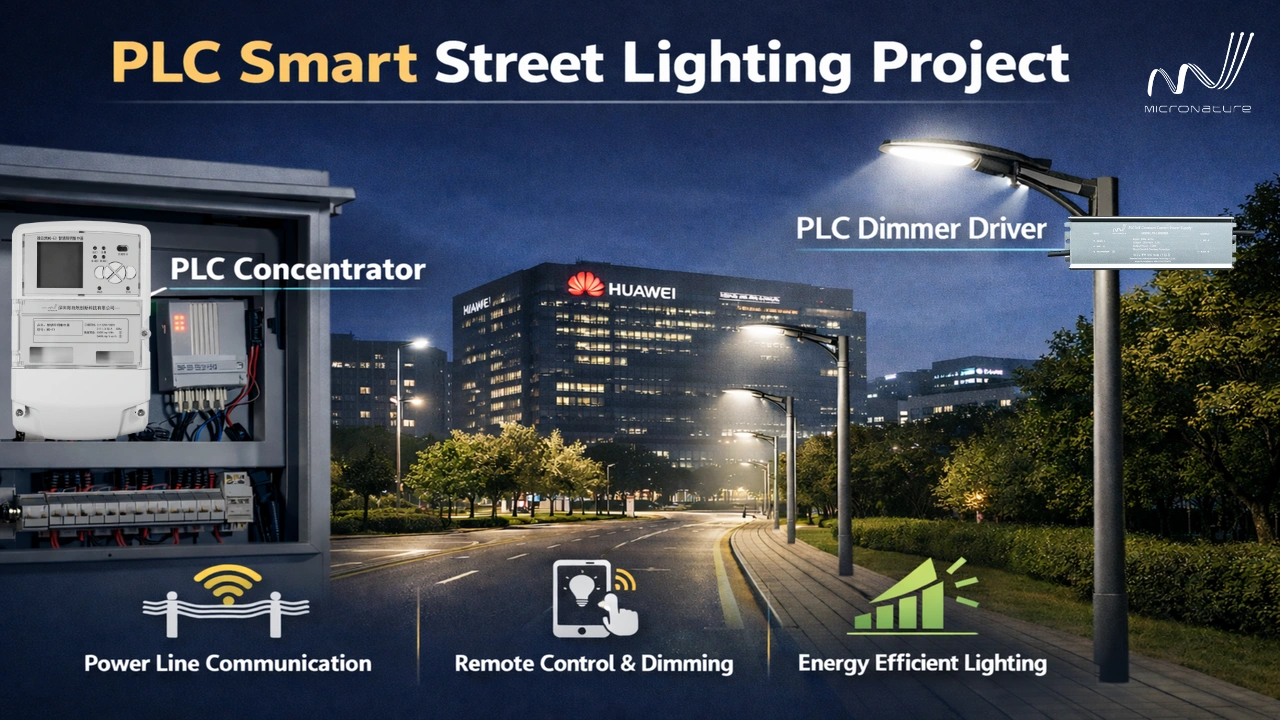
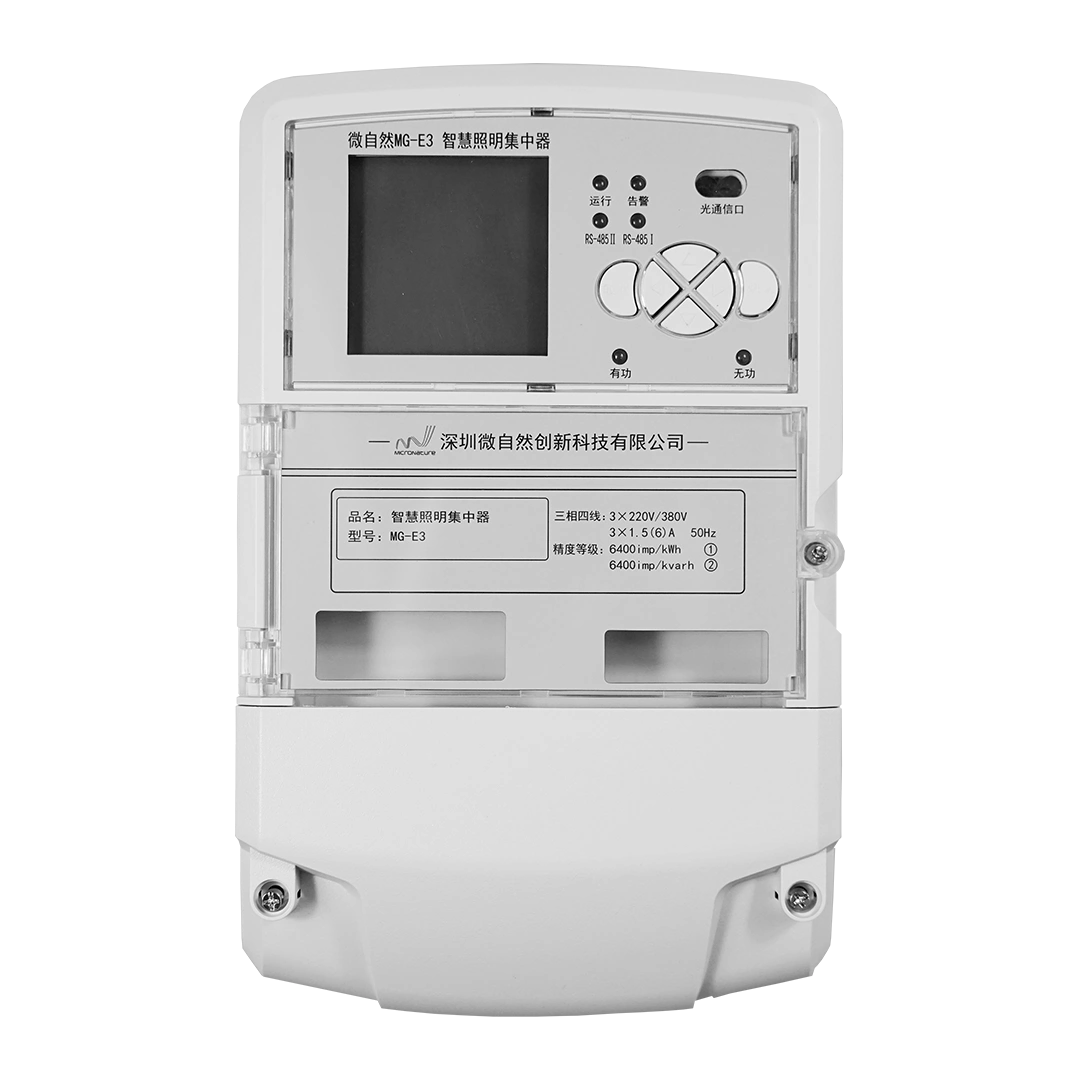
- PLC concentrator (central communication gateway)
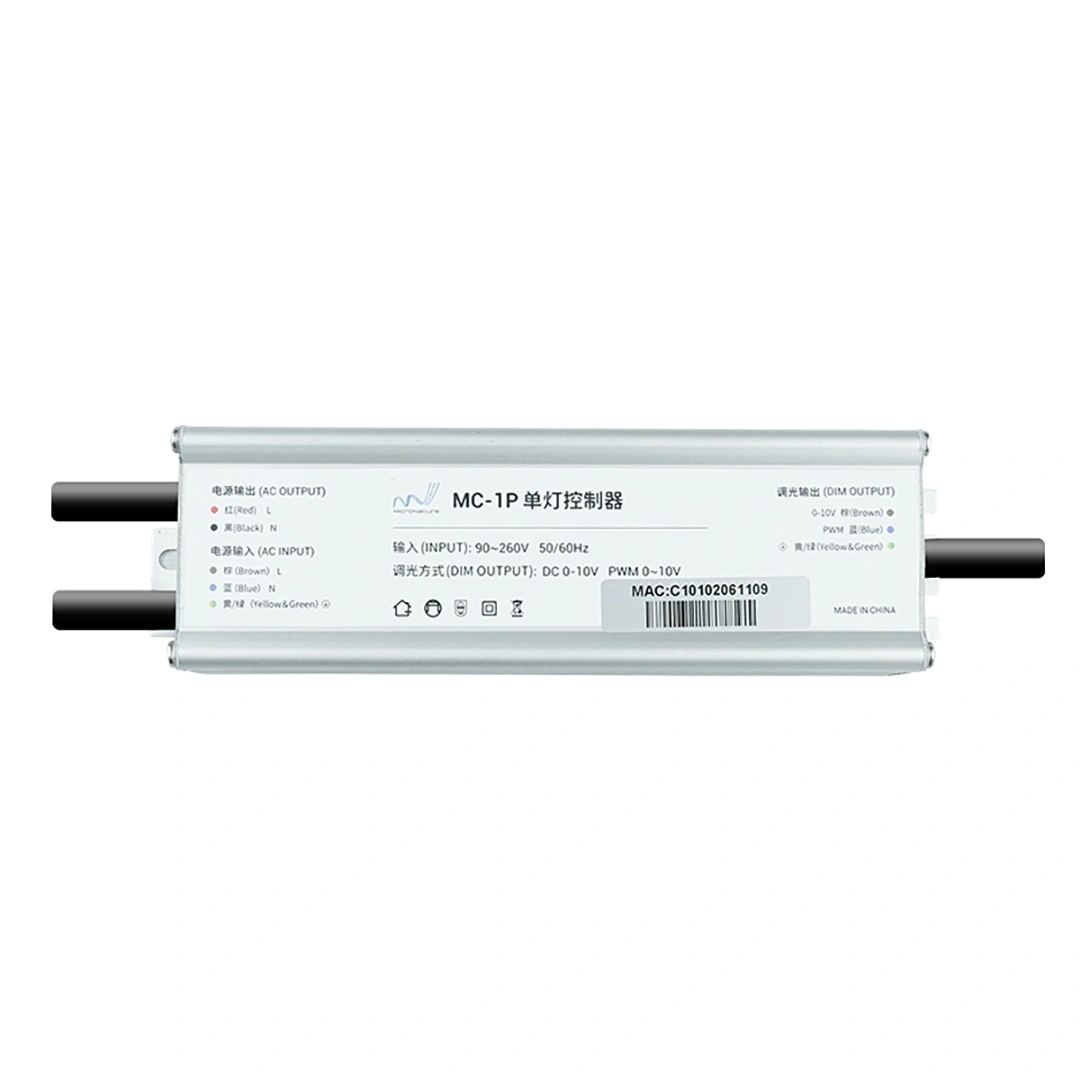
- PLC single light controller (per-fixture intelligence)
- PWM dimmable LED driver (precision brightness control)
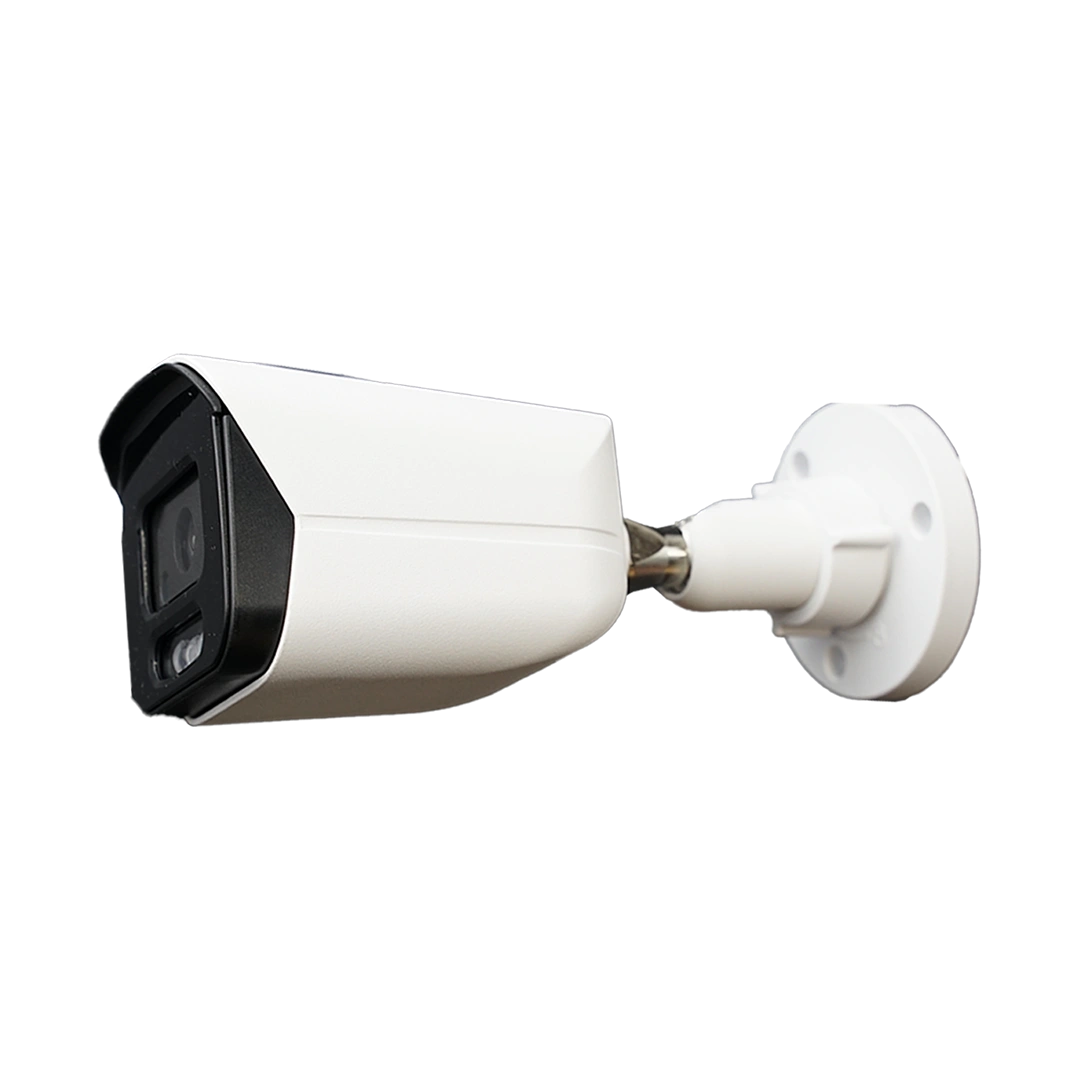
- AI vision sensor (environmental perception & analytics)
Key Functional Advantages
1. AI-Driven Adaptive Lighting
AI vision sensors continuously analyze:
- Vehicle speed and flow
- Lane occupancy
- Incident detection
- Environmental conditions
Lighting levels automatically adjust via PWM drivers to ensure:
- Optimal visibility
- Energy efficiency
- Reduced glare risk
2. Accurate Vehicle Plate Recognition
The AI vision module can accurately identify:
- Vehicle license plates
- Vehicle classification
- Traffic density patterns
This enables integration with:
- Tolling systems
- Traffic enforcement
- Smart highway analytics
3. Human & Object Recognition for Safety
The system can reliably detect:
- Pedestrians in restricted zones
- Emergency responders
- Maintenance personnel
Unlike traditional motion sensors, the AI vision sensor:
- Is not affected by irrelevant moving objects
- Maintains stable detection accuracy
- Supports customized recognition algorithms
Smart Dairy Farm Lighting with AI Vision Integration
Modern dairy farms are evolving into data-driven livestock environments where lighting impacts:
- Milk production
- Animal health
- Operational efficiency
- Labor cost
PLC + AI lighting infrastructure enables intelligent farm management without deploying new communication cabling.
Intelligent Livestock Monitoring
AI vision sensors provide:
- Individual cow identification
- Behavioral analysis
- Movement tracking
- Welfare monitoring
Lighting conditions are automatically optimized based on:
- Circadian rhythm simulation
- Activity level detection
- Feeding schedule integration
Environmental Optimization
The system enables:
- Dynamic lighting intensity control
- Zone-based livestock management
- Energy consumption optimization
- Automated anomaly alerts
Because PLC uses existing power lines, farms benefit from:
- Rapid deployment
- Lower installation cost
- Higher system reliability
- Reduced maintenance complexity
PLC Architecture Advantage Across Both Applications
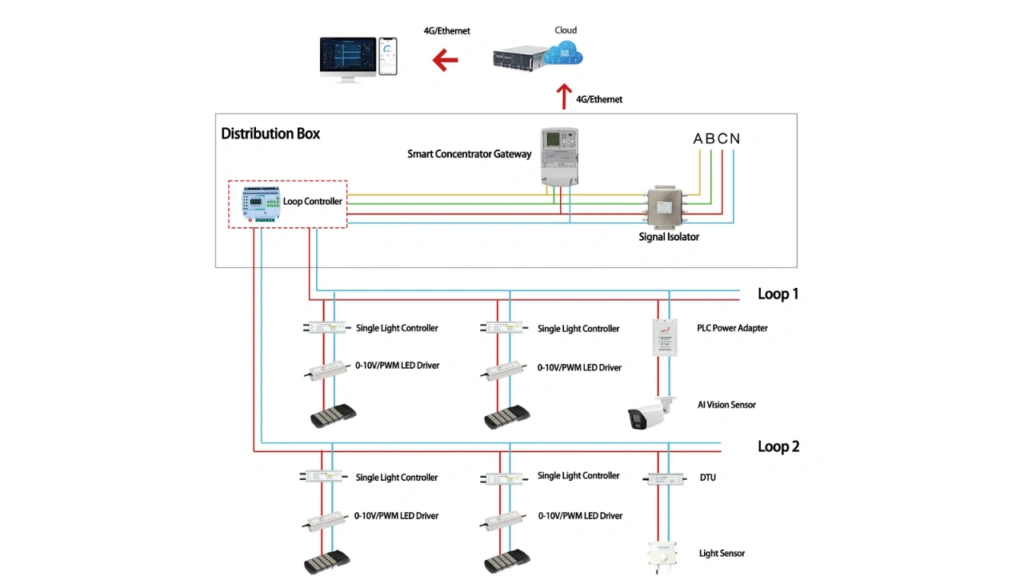
Unified System Components
| Component | Function |
|---|---|
| PLC Concentrator | Central system communication and data aggregation |
| PLC Single Light Controller | Fixture-level intelligence and control |
| PWM LED Driver | Smooth dimming and energy optimization |
| AI Vision Sensor | Real-time environment perception and analytics |
Core System Benefits
- No additional communication wiring required
- High reliability in harsh environments
- Scalable for large-area deployments
- Real-time cloud integration capability
- Supports customized AI recognition models
AI Vision Sensor — The Key Intelligence Layer
The AI vision sensor acts as the perception engine of the smart lighting system.
Advanced Recognition Capabilities
- Vehicle plate identification
- Human face recognition
- Object classification
- Livestock monitoring
- Customized industrial detection tasks
Stable Detection Performance
Unlike traditional motion detection technologies, AI vision:
- Filters irrelevant movement
- Maintains high accuracy in dynamic environments
- Supports edge computing processing
- Enables predictive operational insights
This makes it ideal for:
- High-speed infrastructure safety systems
- Precision agriculture automation
- Smart industrial lighting environments
Future Outlook: Lighting as an Intelligent Infrastructure Platform
By combining PLC communication with AI vision sensing, lighting networks evolve into:
- Distributed sensing systems
- Operational intelligence platforms
- Safety-critical infrastructure layers
This convergence supports:
- Smart city development
- Intelligent transport systems
- Digital agriculture transformation
- Industrial automation strategies
Lighting is no longer just illumination — it is becoming a core digital infrastructure asset.