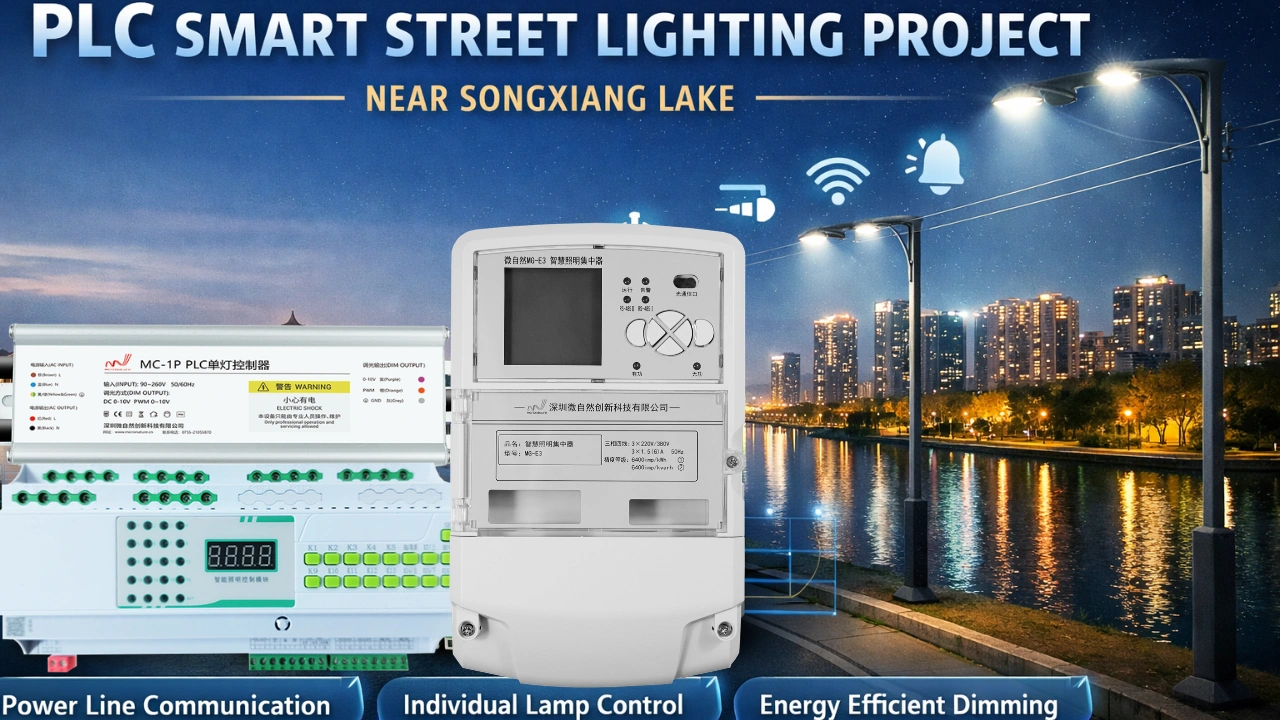
PLC Urban Street Lighting Project case studies demonstrate how intelligent lighting systems improve city infrastructure. This PLC Urban Street Lighting Project showcases the successful deployment of smart PLC lighting technology across urban roads, enabling reliable control, energy savings, and centralized management. PLC communication technologies used in this project follow principles aligned with recommendations from the International Telecommunication Union for reliable data transmission.
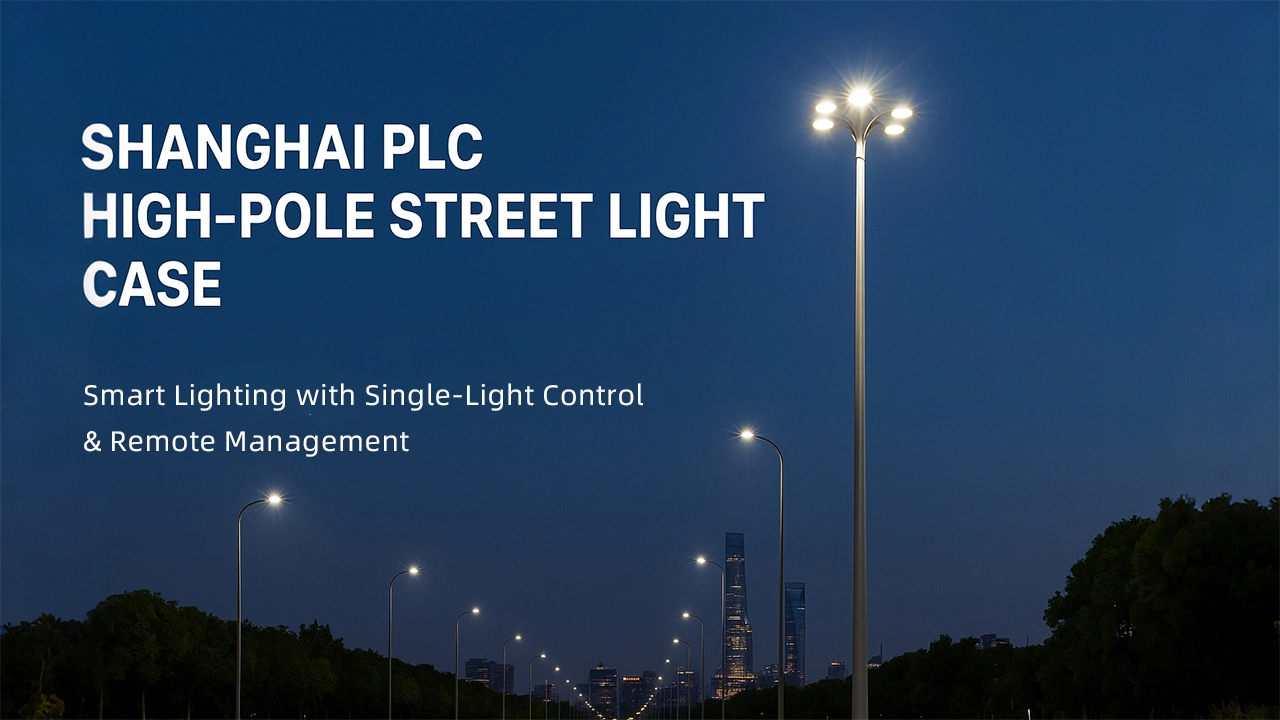
A recent PLC smart street lighting project deployed near Songxiang Lake demonstrates how PLC technology can enable efficient, reliable, and scalable urban lighting management.
Project Overview: Smart Lighting Deployment Near Songxiang Lake
This PLC Urban Street Lighting Project was designed to modernize traditional city lighting infrastructure using intelligent Power Line Communication (PLC) technology. The objective was to improve lighting efficiency, enhance public safety, and enable centralized monitoring without installing additional communication wiring.
The system allows operators to remotely control lighting schedules, monitor system status, and detect faults in real time.
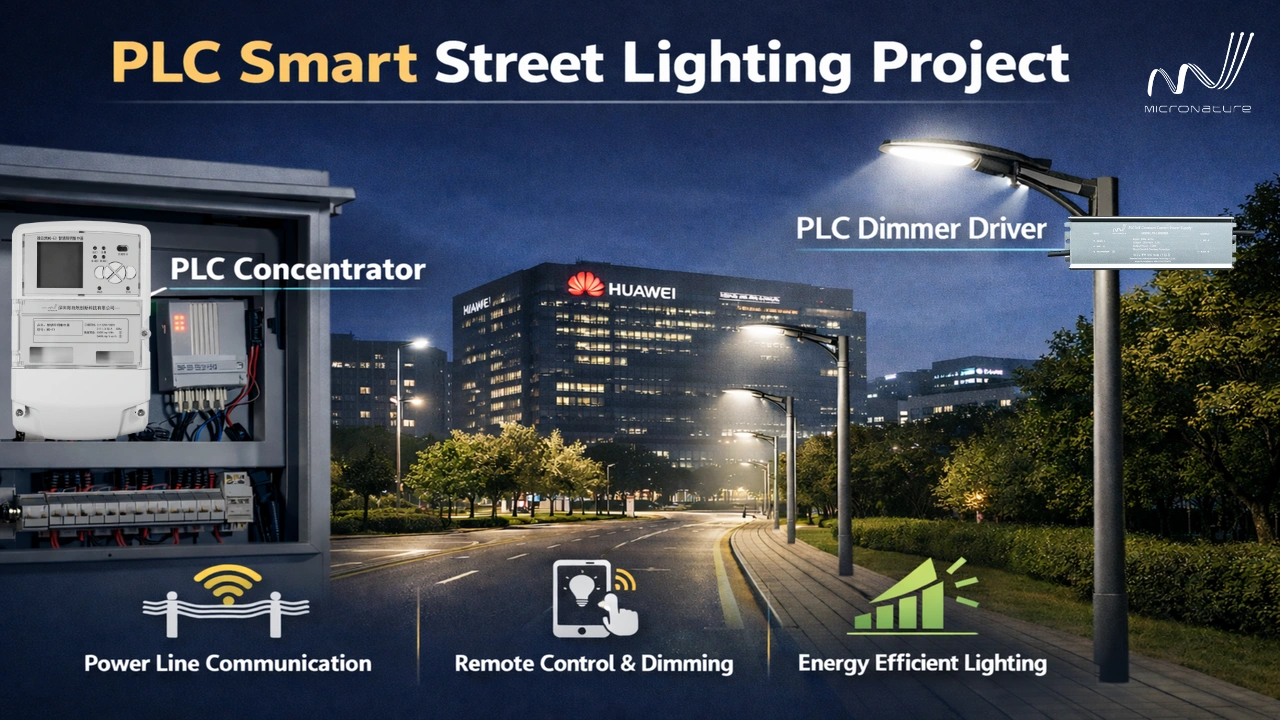
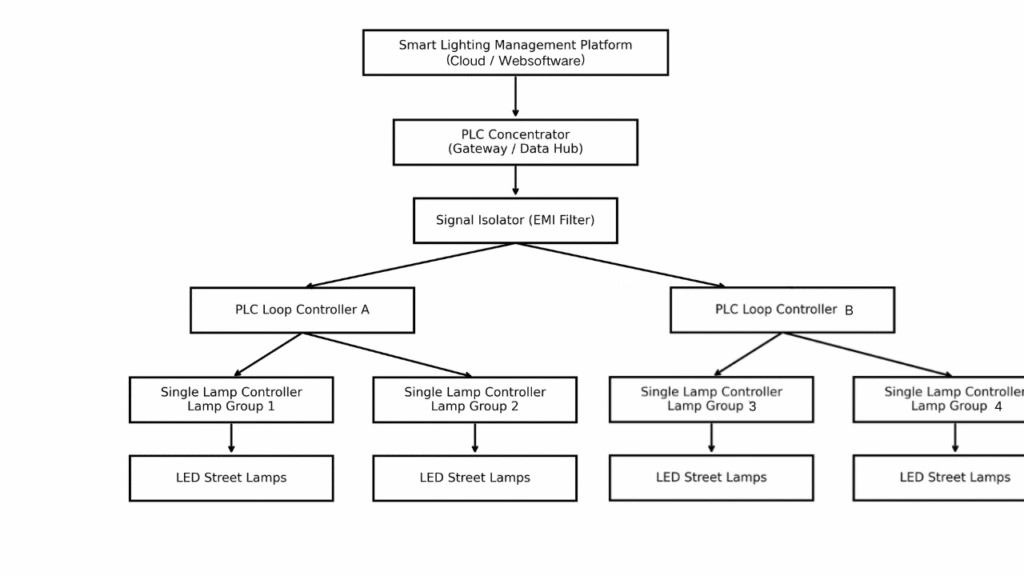
The system includes the following key PLC components:
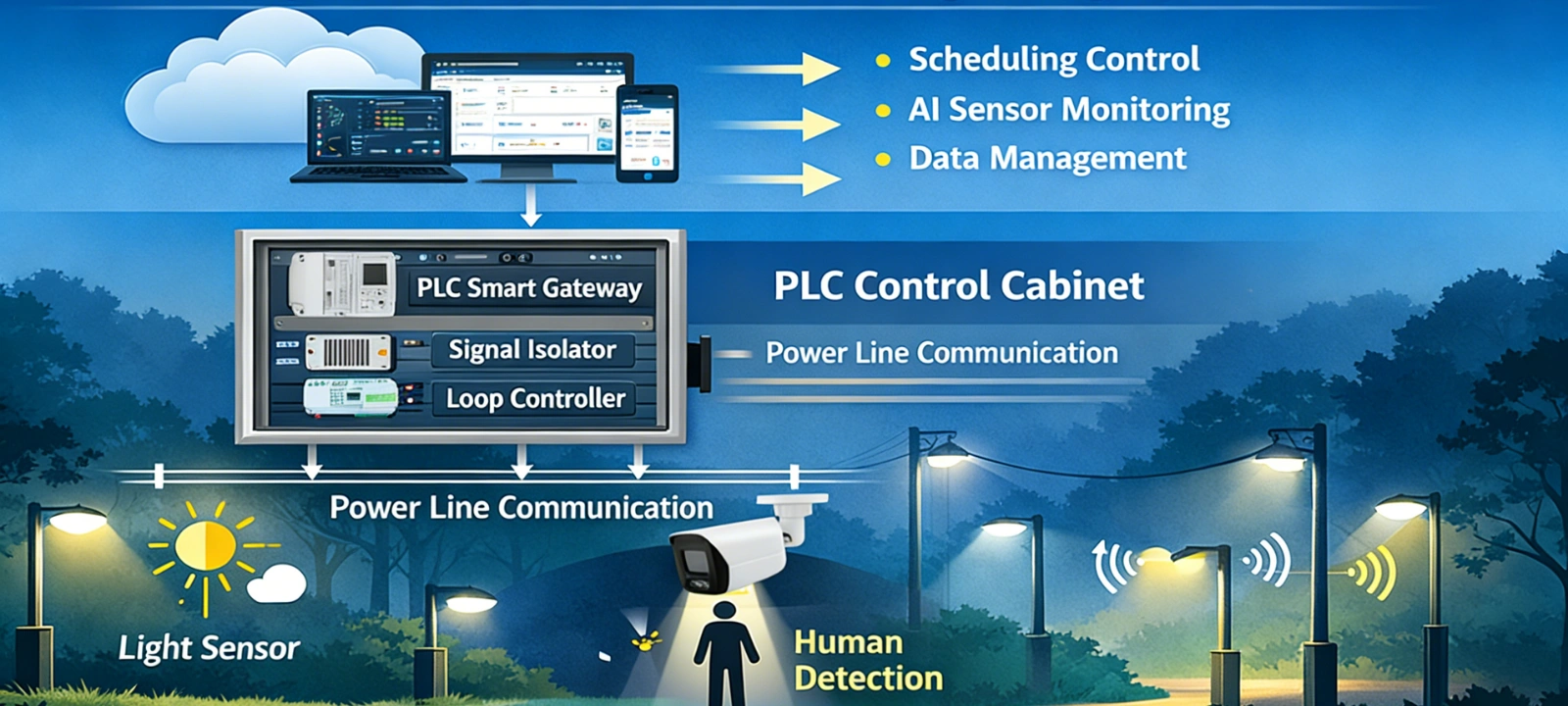
- PLC Concentrator – Central communication hub connecting lighting circuits with the management platform
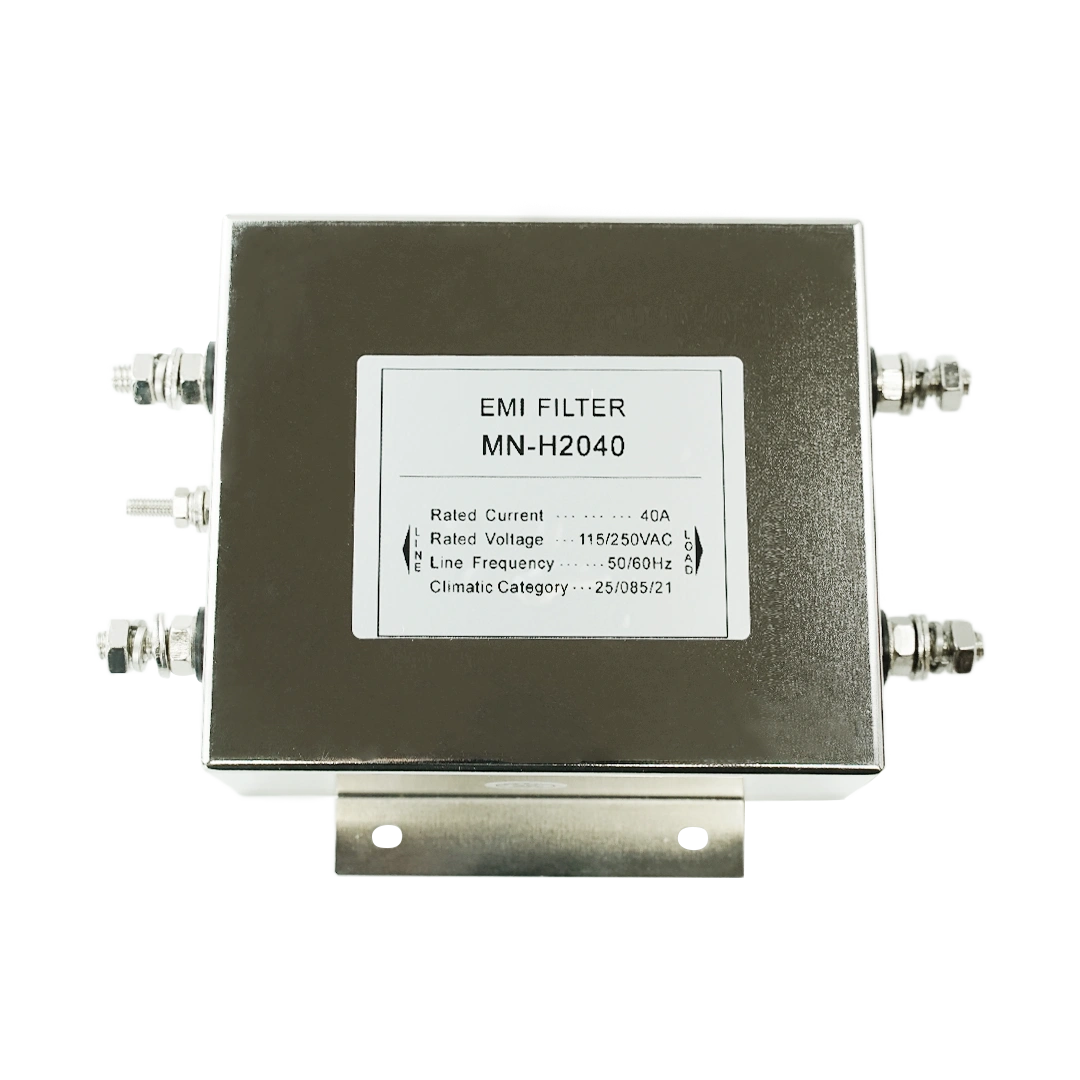
- Signal Isolator (EMI) – Ensures stable communication by filtering electrical noise and protecting signal quality
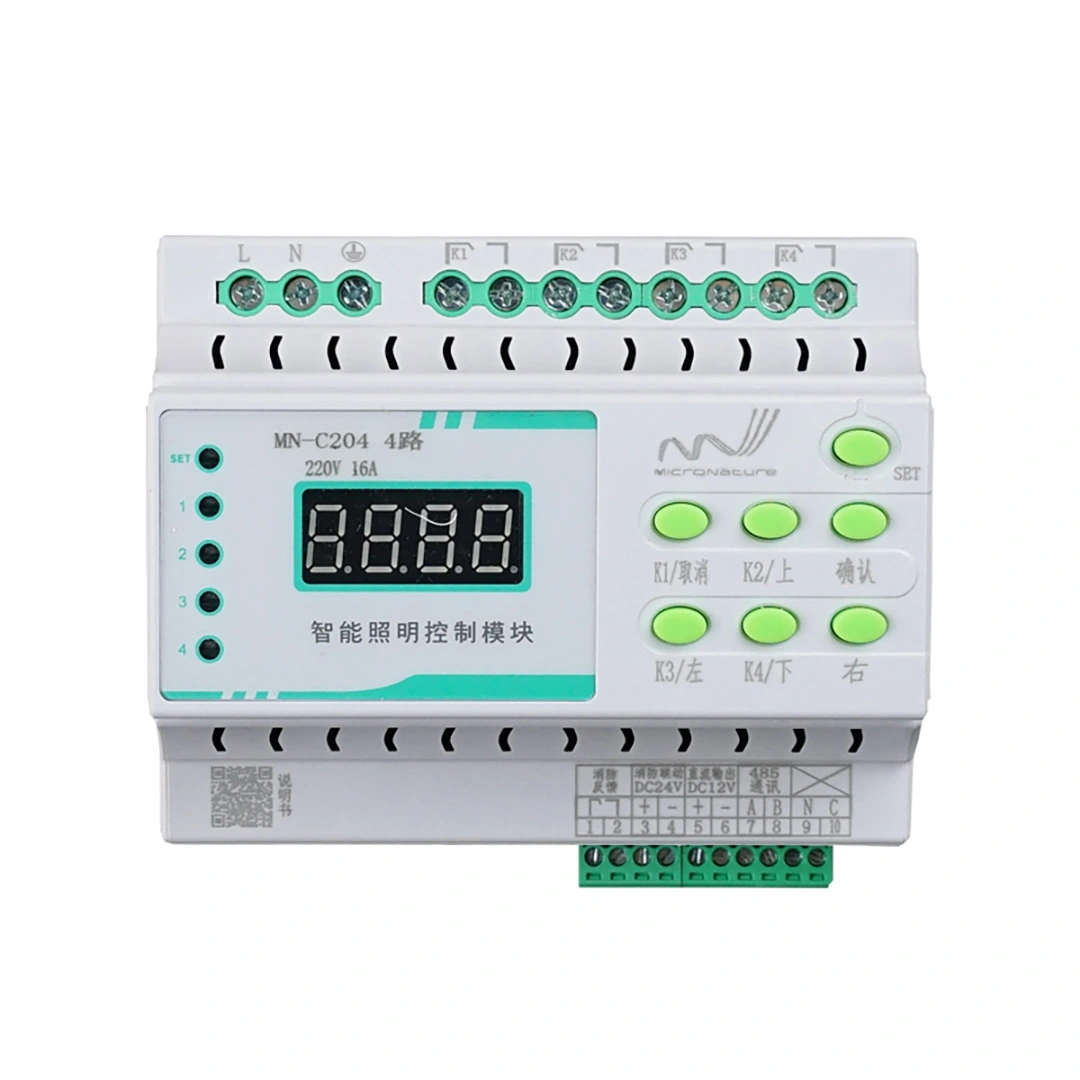
- PLC Loop Controller – Manages lighting circuits and coordinates communication between devices
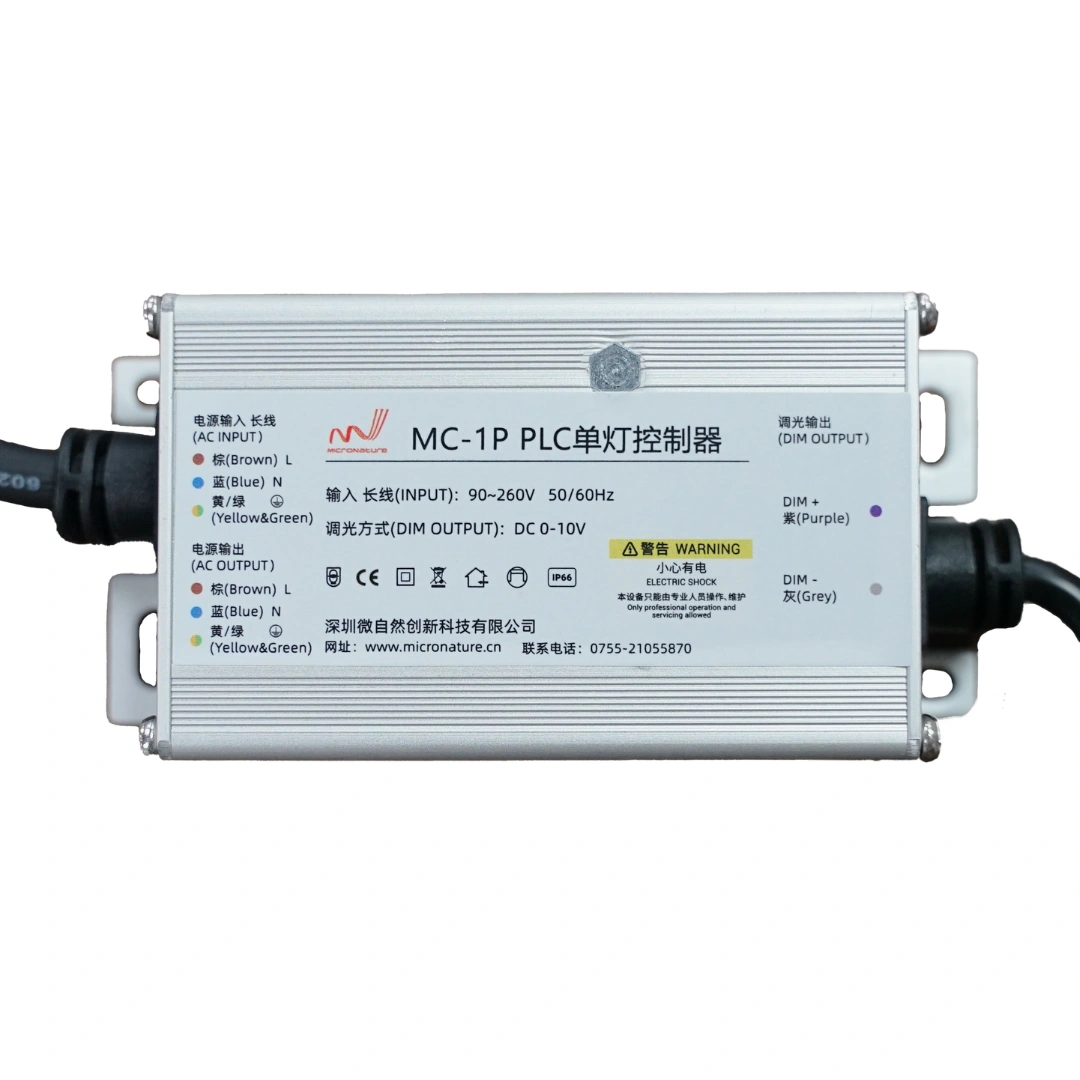
- PLC LED Light Dimmer Switch (Single Lamp Controller) – Enables individual lamp control and monitoring
Together, these devices form a distributed intelligent lighting network, enabling seamless communication through existing power lines.
Project Challenges
This urban street lighting project faced several challenges:
- Long-distance communication requirements
- High energy consumption
- Manual maintenance operations
- Limited fault detection capability
- Complex urban infrastructure
Reliable communication is critical for large-scale urban lighting systems to maintain consistent performance and safety.
Smart Lighting Functions Enabled by PLC Technology
The PLC smart lighting system near Songxiang Lake supports a wide range of operational capabilities essential for modern urban infrastructure.
Centralized On/Off Control
Operators can remotely switch entire lighting circuits on or off through the central management platform. This eliminates the need for manual switching and allows lighting schedules to be optimized based on real operational requirements.
Individual Lamp Monitoring and Control
Each luminaire is equipped with a PLC single lamp controller, enabling:
- Individual lamp switching
- Real-time operational monitoring
- Fault detection and reporting
This level of visibility significantly reduces maintenance response time.
Adaptive Dimming
PLC communication enables precise dimming control for each lamp, allowing cities to:
- Reduce energy consumption during low traffic periods
- Maintain optimal illumination levels
- Extend LED lifespan
Adaptive lighting strategies can be implemented dynamically through software.
Manual and Remote Operation
In addition to automated scheduling, the system also supports manual control through the loop controller, allowing operators to respond immediately to unexpected events or operational needs.
Why PLC Technology Is Ideal for Smart Street Lighting Infrastructure
Compared with wireless or additional communication cabling, Power Line Communication offers several key advantages in large-scale lighting infrastructure projects.
No Additional Communication Wiring
PLC uses existing electrical power lines as the communication channel, which means:
- No need to install new communication cables
- Faster deployment in existing urban infrastructure
- Lower installation cost
This is particularly valuable for street renovation and smart city upgrades.
Highly Reliable Communication
Urban environments often present challenges such as electromagnetic interference or wireless signal blockage.
By using power lines for communication and integrating EMI signal isolators, PLC systems maintain stable and reliable data transmission, even in complex electrical environments.
Scalable Smart Lighting Architecture
PLC-based lighting systems are inherently scalable.
Cities can:
- Expand lighting networks gradually
- Add new luminaires or controllers without redesigning the communication infrastructure
- Integrate future smart city applications
This makes PLC an excellent long-term infrastructure solution.
Real-Time Maintenance and Fault Detection
Traditional lighting systems often rely on manual inspection to identify failures.
With PLC smart lighting systems:
- Faults are automatically reported
- Maintenance teams receive precise location information
- Repair time is significantly reduced
This leads to lower operational costs and improved service reliability.
PLC Smart Street Lighting System Topology
Supporting Smart City Infrastructure
Street lighting networks represent one of the largest distributed electrical infrastructures in cities. By integrating PLC technology, these networks can evolve into platforms that support broader smart city services.
Potential future integrations include:
- Environmental sensors
- Traffic monitoring systems
- Smart parking solutions
- Public safety infrastructure
PLC communication provides a stable data backbone for these applications.
Key Benefits of This Project
- Centralized lighting management
- Improved operational efficiency
- Reduced energy consumption
- Increased system reliability
- Scalable smart city infrastructure
PLC lighting improves infrastructure efficiency by enabling centralized control and automated monitoring.
PLC Lighting: A Future-Proof Solution for Urban Infrastructure
The Songxiang Lake smart street lighting project illustrates how PLC technology can modernize urban lighting infrastructure while minimizing installation complexity.
Through centralized management, individual lamp control, and adaptive dimming capabilities, PLC-based lighting systems deliver:
- Higher energy efficiency
- Improved maintenance efficiency
- Scalable smart city integration
As cities continue to pursue digital transformation and sustainable infrastructure, PLC smart lighting solutions offer a practical and reliable path toward intelligent urban environments.