Introduction
PLC (Power Line Communication) lighting systems are widely used in street lighting, tunnels, and industrial infrastructure due to their reliability and cost efficiency.
However, like any communication technology, PLC systems can face challenges — especially in complex electrical environments.
The good news:
Most PLC lighting issues are predictable and can be solved with proper design and configuration.
This guide explains the most common PLC lighting problems and how to fix them effectively.
What Causes PLC Lighting Problems?
PLC systems transmit data over electrical wiring, which means performance can be affected by:
- Electrical noise
- Grid quality
- Installation design
- Device compatibility
👉 Understanding these factors is key to troubleshooting.
Problem 1: Signal Noise and Interference
Issue
Electrical equipment (motors, transformers, LED drivers) can generate noise that interferes with PLC signals.
👉 Symptoms:
- Unstable communication
- Delayed commands
- Packet loss
Solution
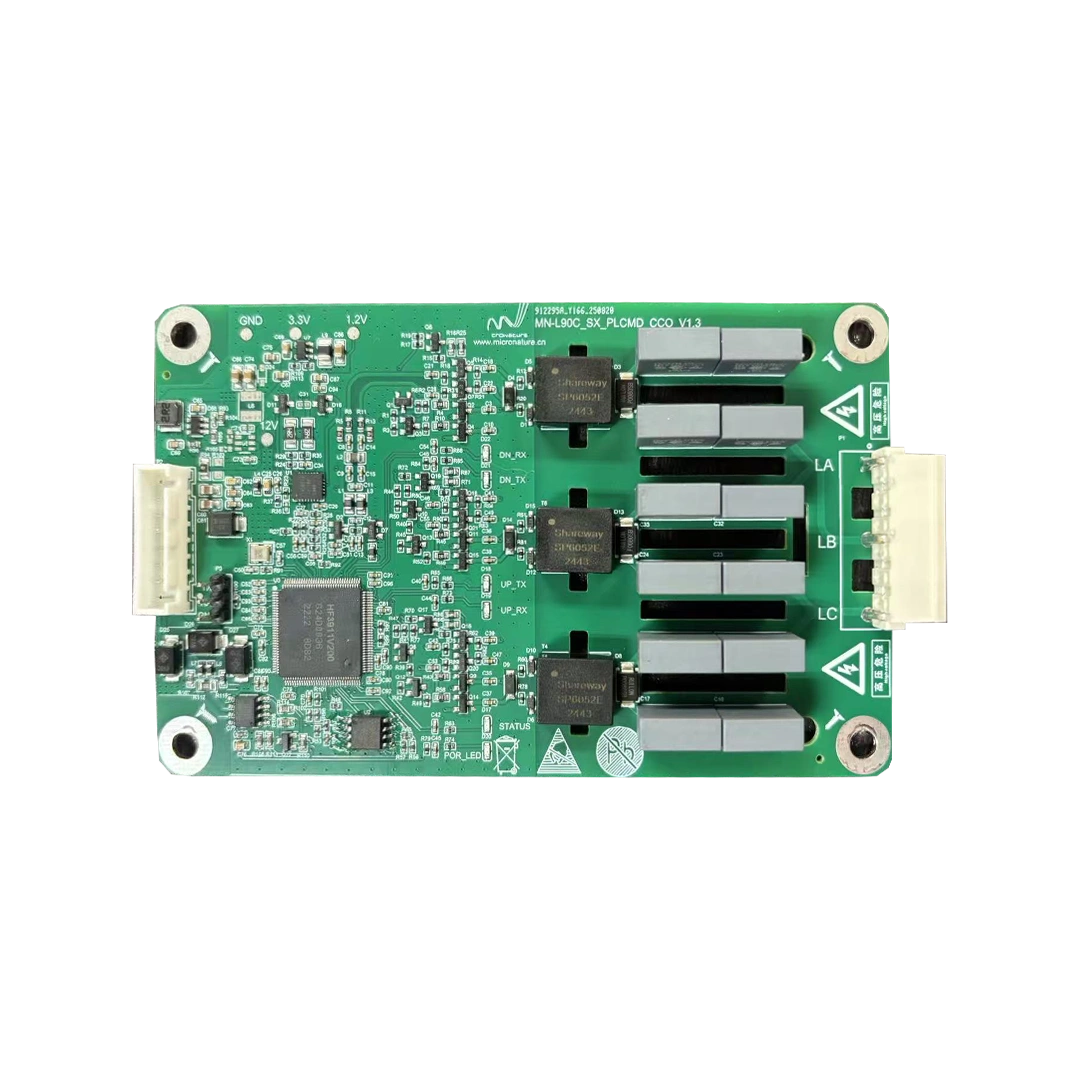
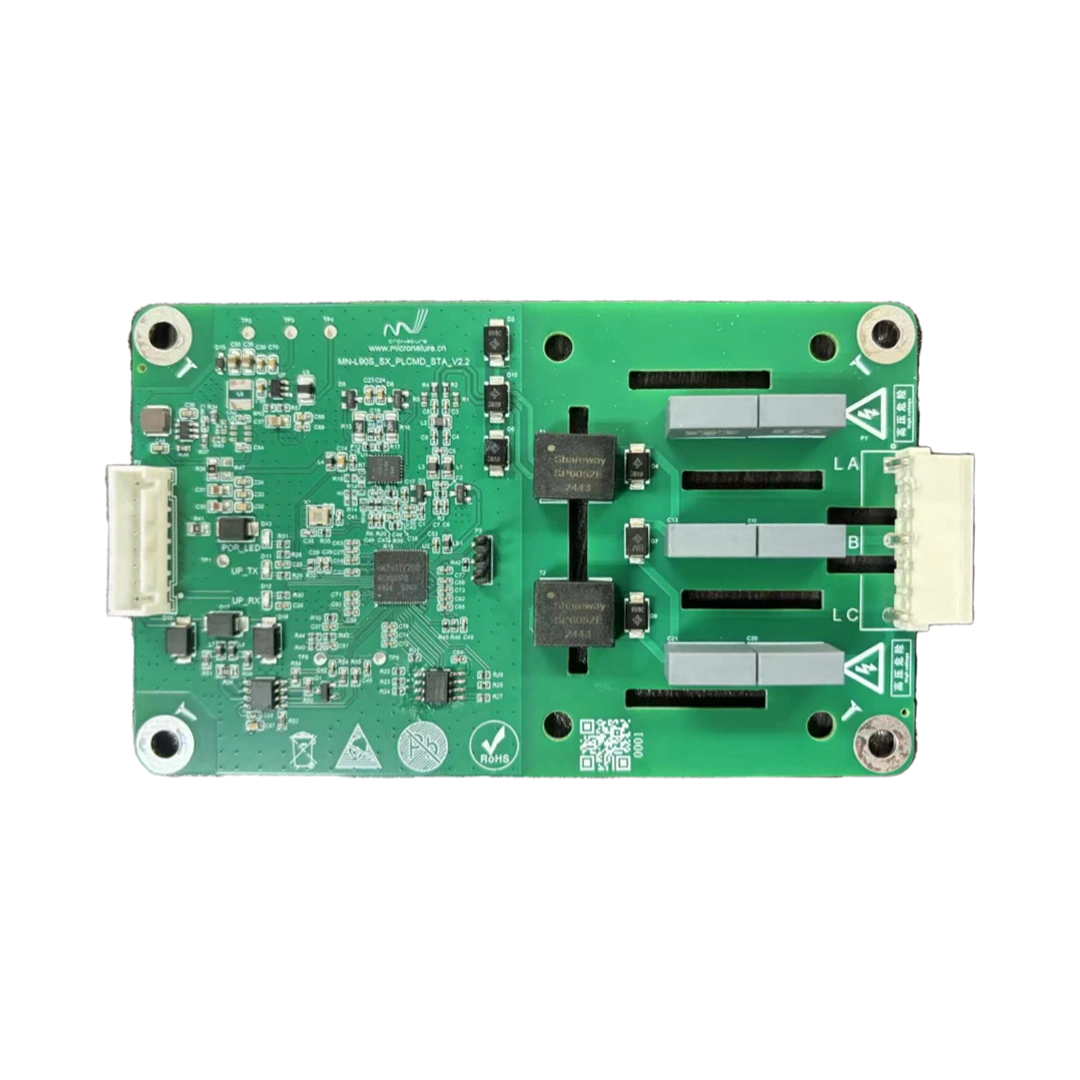
- Use high-quality PLC chipsets with noise resistance
- Install line filters
- Separate lighting circuits from heavy machinery
- Optimize frequency bands
Problem 2: Weak Signal Over Long Distances
Issue
Signal strength decreases over long cable distances or across multiple distribution points.
👉 Symptoms:
- Some lights not responding
- Intermittent connectivity
Solution
- Install additional PLC concentrators or repeaters
- Segment the network into zones
- Optimize topology design
Problem 3: Poor Power Grid Quality
Issue
Unstable voltage or aging infrastructure affects communication reliability.
👉 Symptoms:
- Random disconnections
- Inconsistent performance
Solution
- Conduct power quality assessment before deployment
- Use industrial-grade controllers
- Stabilize voltage with proper electrical design
Problem 4: Incorrect Installation or Wiring
Issue
Improper wiring can disrupt signal transmission.
👉 Symptoms:
- Devices not detected
- Communication failure in specific areas
Solution
- Follow standard installation guidelines
- Ensure proper grounding
- Avoid mixing phases incorrectly
- Verify wiring continuity
Problem 5: Device Compatibility Issues
Issue
Different vendors or outdated firmware may cause communication mismatches.
Solution
- Use standardized PLC protocols
- Update firmware regularly
- Ensure system compatibility before deployment
Problem 6: Limited Awareness of Network Topology
Issue
Poor network design leads to inefficient communication.
Solution
- Design a clear network architecture
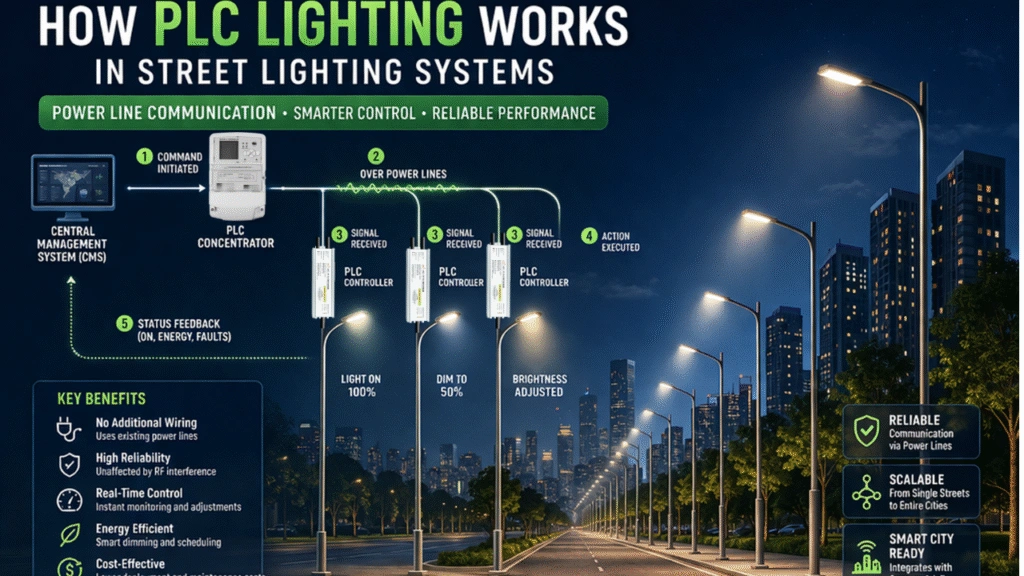
- Use hierarchical structure (CMS → concentrator → controller)
- Monitor network performance continuously
Problem 7: Lack of Real-Time Monitoring
Issue
Without monitoring, small issues become major failures.
Solution
- Implement a central management system (CMS)
- Enable real-time alerts and diagnostics
- Use data analytics for predictive maintenance
Best Practices for Reliable PLC Lighting Systems
✅ Plan Before Deployment
- Site survey
- Power quality analysis
✅ Use High-Quality Hardware
- Industrial-grade controllers
- Reliable PLC modules
✅ Optimize Network Design
- Proper segmentation
- Balanced load distribution
✅ Regular Maintenance
- Firmware updates
- System diagnostics
✅ Integrate Smart Technologies
- AI monitoring
- Automated fault detection
Real-World Insight
In large-scale street lighting or tunnel projects:
- 80% of PLC issues come from installation and design, not technology
- Proper planning can eliminate most problems before deployment
PLC vs Wireless: Reliability Perspective
| Factor | PLC | Wireless |
|---|---|---|
| Interference Source | Electrical noise | RF interference |
| Stability | High (with proper design) | Medium |
| Troubleshooting | Predictable | Variable |
👉 Conclusion:
PLC systems are highly reliable when properly designed and implemented
Future Improvements
AI-Assisted Diagnostics
- Automatic fault detection
- Predictive maintenance
Hybrid Communication Systems
- PLC + wireless backup
- Improved redundancy
Summary
Most PLC lighting problems are:
- Predictable
- Preventable
- Fixable
👉 With the right design, PLC remains one of the most reliable lighting control technologies