PLC AI vision lighting systems are transforming modern infrastructure by combining reliable power line communication with intelligent sensing technology. These systems enable real-time lighting control, enhanced safety, and automated monitoring in smart city environments.
By combining PLC (Power Line Communication) with AI vision technology, infrastructure lighting systems can now:
- Detect vehicles and pedestrians
- Adapt lighting in real time
- Improve safety in critical environments
- Generate actionable data
This guide explains how PLC + AI vision lighting systems work, why they matter, and where they deliver the highest value.
What Is a PLC AI Vision Lighting System?
A PLC + AI vision lighting system integrates:
- Power line-based communication (PLC)
- AI-powered vision sensors (cameras + edge computing)
- Smart lighting controllers
👉 In simple terms:
It transforms lighting infrastructure into an intelligent sensing and control network
How PLC AI Vision Lighting Systems Work
1. AI Vision Sensor (Core Intelligence)
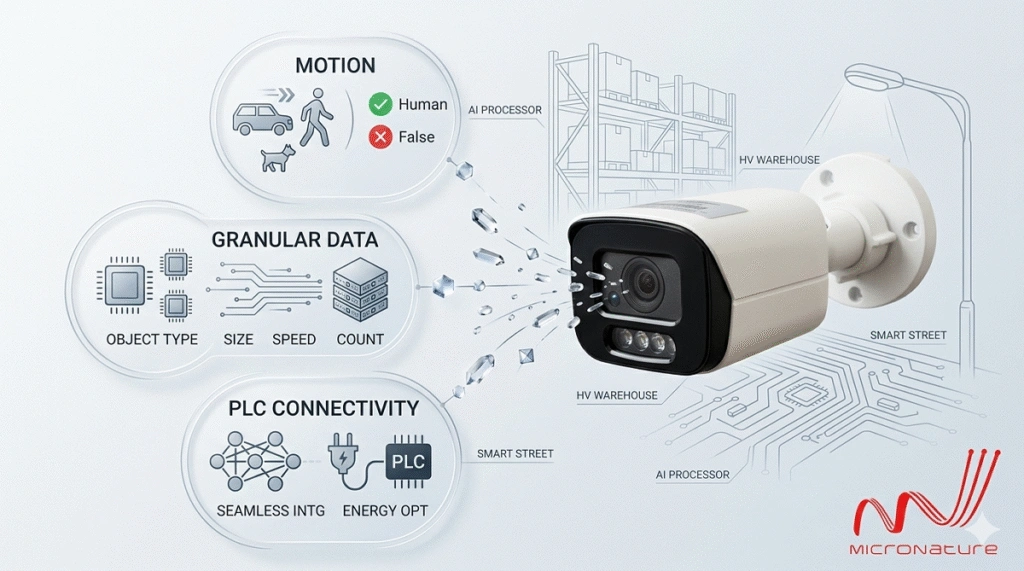
AI vision systems use advanced computer vision algorithms. In addition, these systems process data in real time to improve decision-making. Installed on or near lighting fixtures, AI vision sensors can:
- Detect vehicles, pedestrians, and objects
- Recognize license plates (LPR)
- Analyze traffic flow
- Identify anomalies (accidents, stopped vehicles)
2. Edge AI Processing
Instead of sending raw video to the cloud:
- Data is processed locally
- Only meaningful insights are transmitted
👉 Benefits:
- Lower latency
- Reduced bandwidth
- Faster response
3. PLC Communication Network
Power Line Communication (PLC) is a widely used method for transmitting data over electrical wiring. All devices communicate via power lines:
- No wireless dependency
- Stable in tunnels and industrial zones
- Real-time command delivery
4. Smart Lighting Controller
Each lighting node:
- Receives commands via PLC
- Adjusts brightness dynamically
- Reports status and faults
5. Central Management System (CMS)
- Monitors entire network
- Stores analytics
- Enables remote control
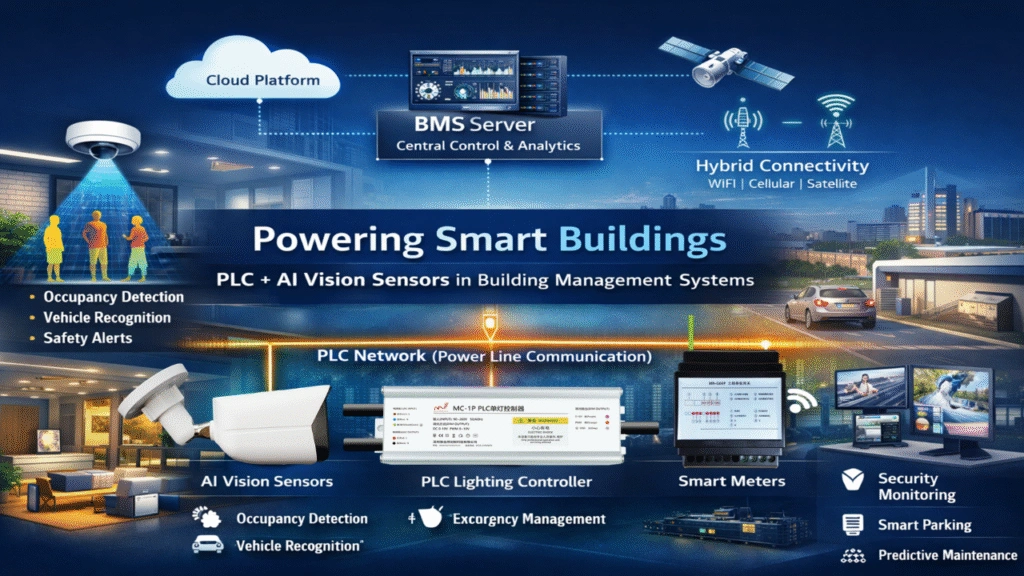
PLC AI Vision Smart Lighting System Architecture
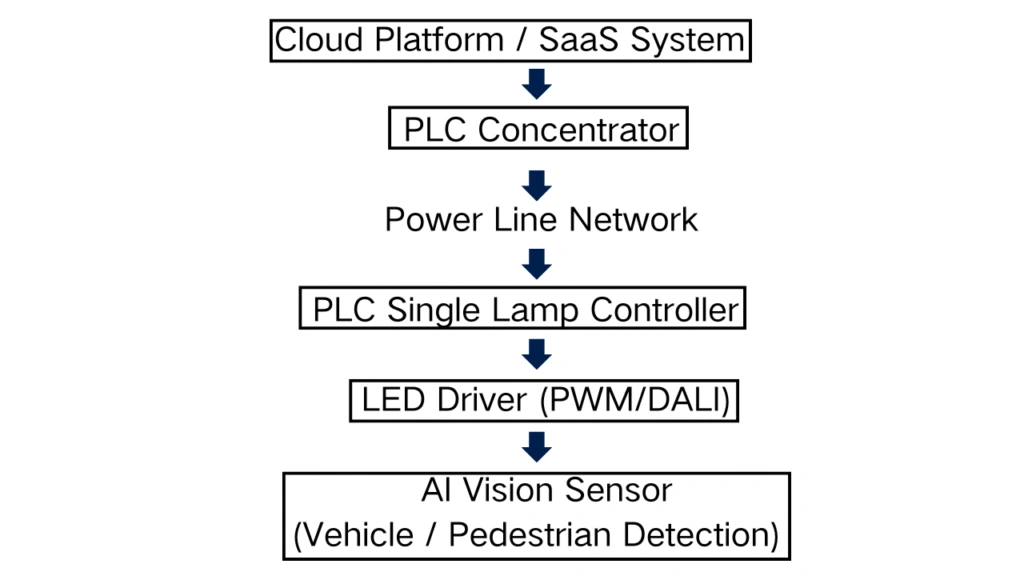
👉 Data Flow:
AI Sensor → Edge Processing → PLC Network → Lighting Adjustment → CMS Dashboard
Why PLC + AI Vision Matters
🚦 1. Real-Time Safety Enhancement
Lighting adapts instantly based on:
- Vehicle speed
- Traffic density
- Pedestrian presence
👉 Critical for:
- Highways
- Tunnels
- Urban intersections
💡 2. Adaptive Energy Optimization
Instead of static lighting:
- Lights dim when no activity
- Brighten when motion is detected
👉 Typical savings:
30–60% energy reduction
📡 3. Reliable Communication in Harsh Environments
Unlike wireless systems:
- No RF interference
- Works underground and in metal-heavy environments
🤖 4. Data-Driven Infrastructure
System generates:
- Traffic analytics
- Usage patterns
- Incident detection
👉 Lighting becomes a data platform, not just illumination
🔧 5. Reduced Maintenance Costs
- Automatic fault detection
- Predictive maintenance
- Remote diagnostics
Key Applications
Many cities are adopting PLC AI vision lighting to support smart transportation and adaptive street lighting control.
🚇 Tunnel Lighting Systems
- Detect entering/exiting vehicles
- Adjust brightness zones dynamically
- Improve driver visibility and safety
👉 PLC ensures stable communication underground
🛣️ Smart Highways
- Adaptive lighting based on traffic flow
- Accident detection
- Emergency response triggers
🏭 Industrial Facilities
- Monitor movement in restricted areas
- Improve worker safety
- Optimize lighting usage
🏙️ Smart City Infrastructure
- Integrates with traffic systems
- Supports surveillance and analytics
- Enables centralized control
⚖️ PLC + AI Vision vs Traditional Smart Lighting
| Feature | Traditional Smart Lighting | PLC + AI Vision |
|---|---|---|
| Control | Scheduled / manual | Real-time adaptive |
| Data | Limited | Rich analytics |
| Safety | Passive | Active detection |
| Communication | Wireless dependent | Power line (stable) |
| Intelligence | Low | High (AI-driven) |
👉 Conclusion:
Traditional systems react slowly, while PLC + AI systems think and respond instantly
Real-World Use Case (Simplified)
Scenario: Highway Lighting System
Without AI:
- Lights operate on schedule
- No awareness of traffic
With PLC + AI Vision:
- Detects approaching vehicles
- Increases brightness ahead
- Reduces lighting behind
- Detects stopped vehicles or accidents
👉 Result:
- Higher safety
- Lower energy consumption
- Faster incident response
Challenges (And How to Solve Them)
⚠️ Initial System Complexity
Solution:
- Use modular architecture
- Deploy in phases
⚠️ Higher Upfront Cost
Reality:
- Offset by long-term energy and maintenance savings
⚠️ Data Processing Requirements
Solution:
- Use edge AI (reduces cloud dependency)
Future Trends
AI + Lighting + Infrastructure Convergence
Lighting systems will become:
- Multi-sensor platforms
- Integrated with smart cities
- Connected to traffic, security, and energy systems
Hybrid Communication Systems
- PLC + 5G
- PLC + NB-IoT
Autonomous Infrastructure
- Self-adjusting lighting
- Predictive safety systems
- Fully automated control
Benefits of PLC AI Vision Lighting Systems
PLC AI vision lighting systems provide multiple advantages compared to traditional lighting networks.
Key benefits include:
- Real-time detection of vehicles and pedestrians
- Adaptive lighting based on environmental conditions
- Improved road and tunnel safety
- Reduced energy consumption
- Enhanced infrastructure monitoring
- Data-driven decision support