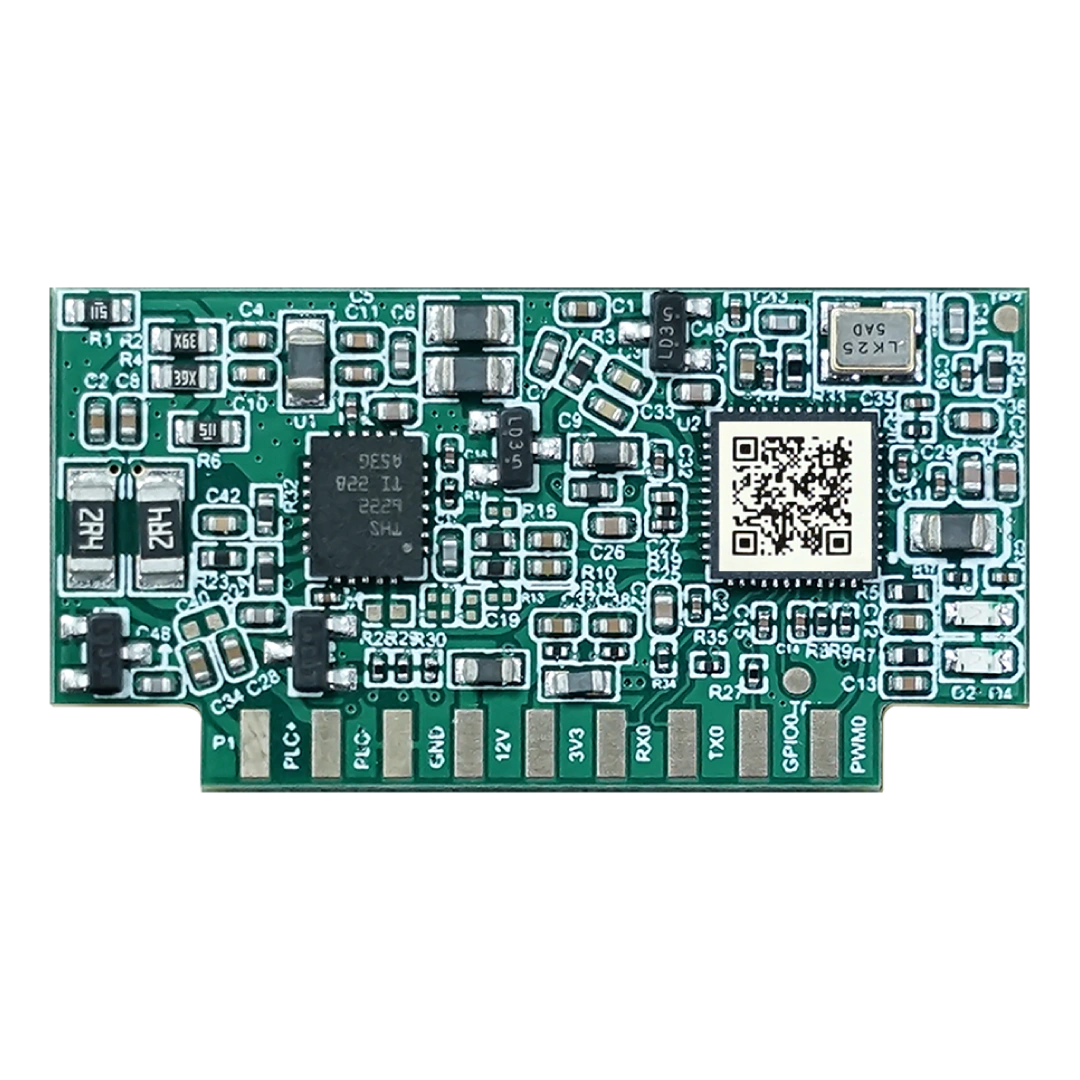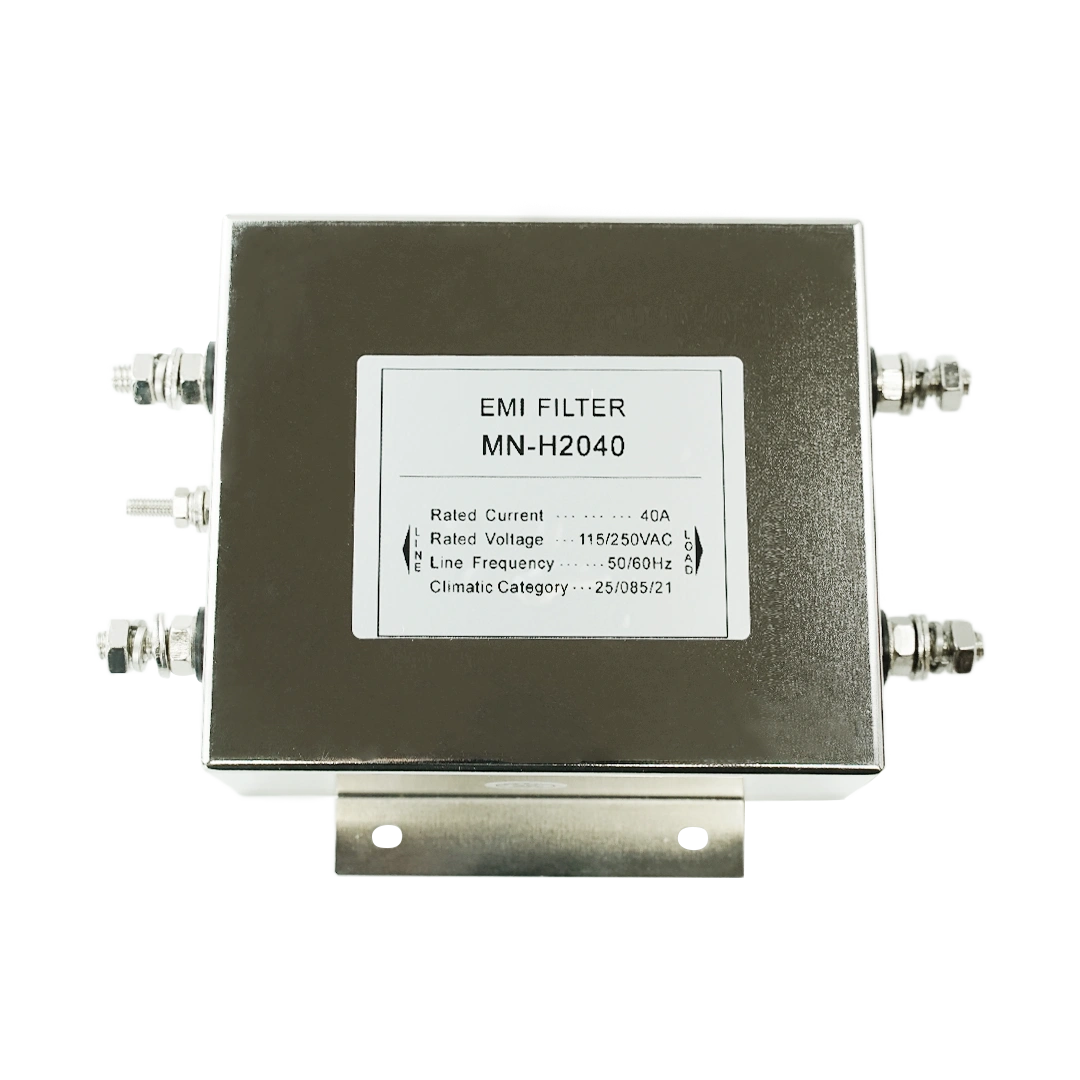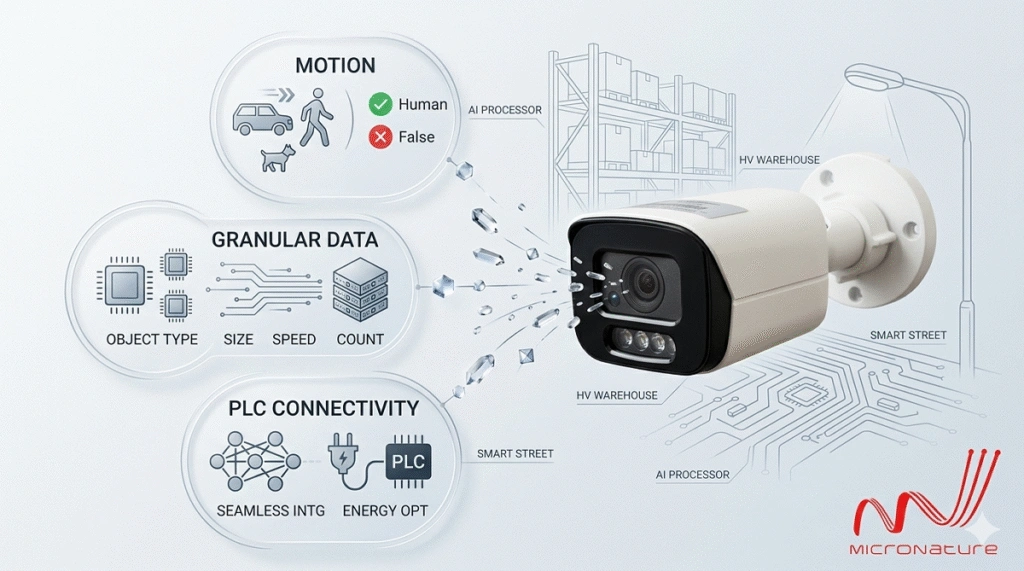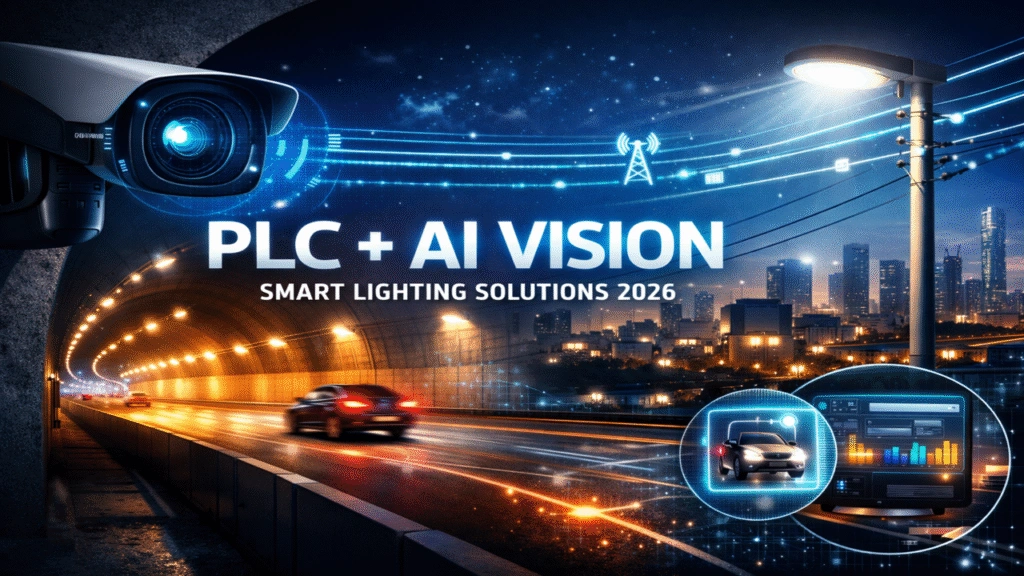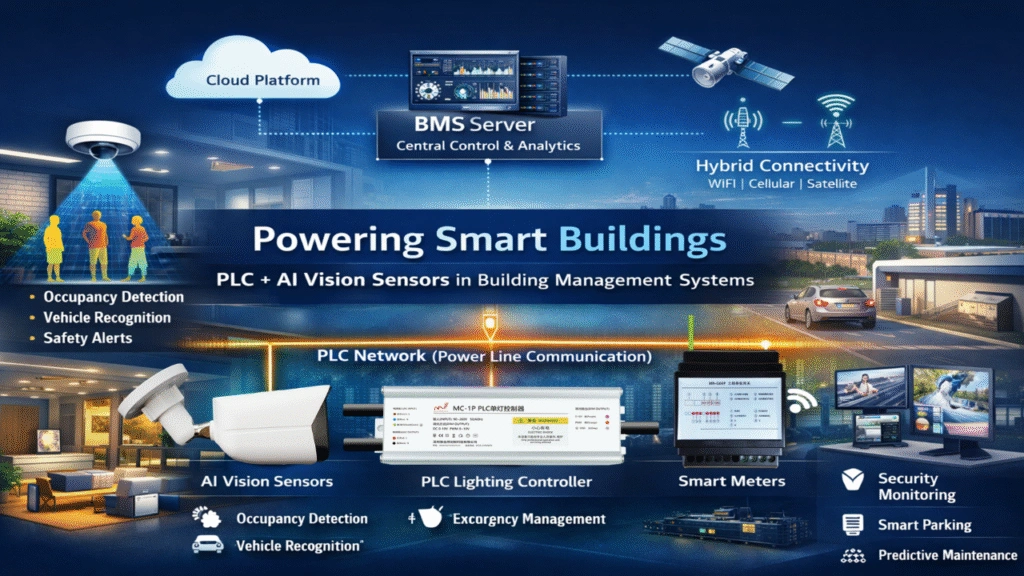
A PLC AI vision system combines power line communication with intelligent visual detection technologies to enable automated monitoring and adaptive lighting control. This technology supports smart infrastructure applications that require accurate sensing, fast response, and reliable communication.
But this transformation is not limited to factories.
The same principles powering smart manufacturing — AI vision, real-time data processing, and autonomous optimization — are now reshaping smart lighting infrastructure across cities, tunnels, industrial parks, highways, and large facilities.
At the center of this evolution is a highly practical combination:
PLC + AI Vision Smart Lighting Solutions for New & Renewal Projects
This architecture delivers intelligent lighting control without additional communication wiring, making it ideal for both new projects and renewal/retrofit upgrades.
What is a PLC AI Vision System?
A PLC AI vision system integrates power line communication with intelligent vision sensors to enable automated detection, monitoring, and control in smart lighting environments. AI vision technology plays an important role in intelligent automation, as described in global artificial intelligence standards developed by the National Institute of Standards and Technology (NIST).
By combining reliable PLC communication and advanced image processing, these systems can analyze real-time visual data and trigger lighting responses automatically.
Why 2026 Infrastructure Requires More Than Traditional Smart Lighting
Modern lighting projects face three core challenges:
- Energy efficiency requirements are tightening
- Labor costs and maintenance complexity are rising
- Infrastructure upgrades must minimize downtime
Traditional smart lighting systems often require:
- Extra control cables
- Separate communication networks
- High installation costs
- Complex retrofitting work
For renewal projects — especially tunnels, highways, or large industrial sites — adding communication wiring can be disruptive and expensive.
This is where PLC + AI Vision becomes strategically superior.
What is PLC + AI Vision Architecture?
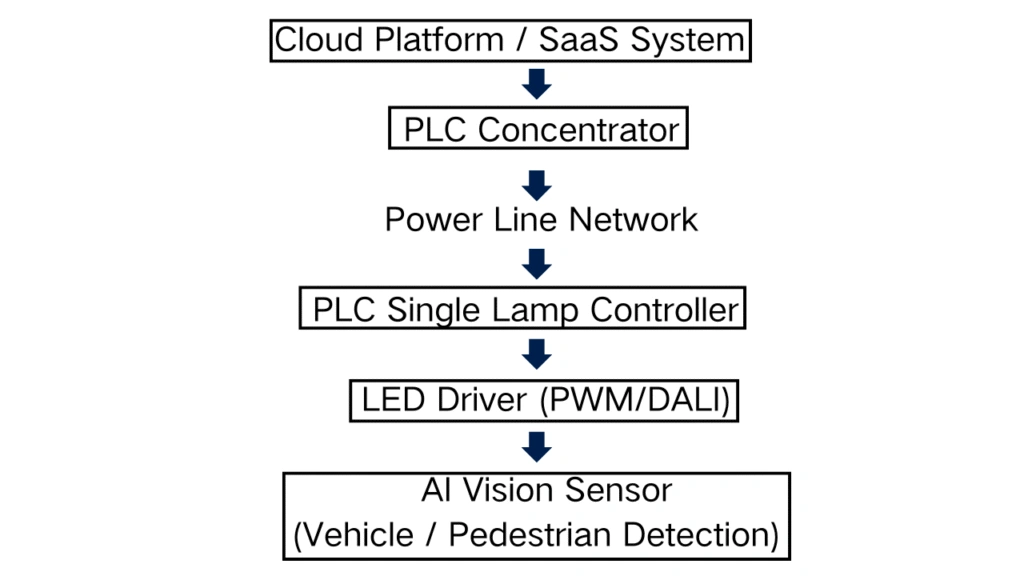
Modern industrial communication systems follow standards defined by the International Electrotechnical Commission (IEC).
1️⃣ Power Line Communication (PLC)
PLC uses existing power lines to transmit control data.
No additional communication wiring is required.
Advantages:
- No new signal cable installation
- Reduced construction cost
- Faster deployment
- Perfect for retrofit and renewal projects
- Stable communication over existing infrastructure
2️⃣ AI Vision Sensors
AI vision sensors detect:
- Vehicle movement
- Traffic density
- Pedestrian presence
- Environmental brightness
- Incident conditions
Instead of fixed dimming schedules, lighting becomes:
✔ Adaptive
✔ Autonomous
✔ Real-time responsive
Just like AI machine vision in smart factories, lighting systems now “see” and react.
How PLC + AI Vision Works in Real Projects
Smart Tunnel Lighting
For tunnel projects (new or renewal):
- AI vision detects vehicle entry, speed, and traffic flow
- Lighting levels adjust dynamically by zone
- PLC transmits commands through existing power lines
- No extra control cable installation required
Result:
- Optimized brightness transitions
- Energy savings
- Extended luminaire lifespan
- Reduced maintenance
For renewal tunnels, this avoids shutting down infrastructure for rewiring — a major operational advantage.
Smart Road & Highway Projects
- AI detects traffic volume and weather conditions
- PLC ensures instant response across lighting segments
- Brightness increases during high traffic
- Dims automatically during low usage hours
Energy savings can reach significant levels while maintaining safety compliance.
Industrial Parks & Large Facilities
Inspired by trends discussed in IIoT World:
- AI vision supports security and activity detection
- Lighting responds to movement zones
- PLC ensures stable large-scale communication without network congestion
This mirrors the AI-driven automation growth in smart factories — but applied to infrastructure.
Why PLC + AI Vision Is Ideal for Renewal Projects
Renewal projects are complex because:
- Infrastructure is already installed
- Adding control wiring increases cost
- Downtime affects operations
- Civil engineering work is expensive
With PLC:
✔ Use existing power cables
✔ No trenching
✔ No additional communication conduit
✔ Faster commissioning
With AI Vision:
✔ No fixed programming
✔ Adaptive brightness control
✔ Smart energy optimization
✔ Improved safety response
This reduces total cost of ownership and speeds ROI.
Alignment With 2026 Smart Infrastructure Trends
The 2026 smart factory outlook shows:
- AI vision adoption accelerating
- Edge intelligence becoming standard
- Autonomous optimization replacing manual configuration
Smart lighting is now following the same path.
Instead of static control:
- Systems learn
- Systems respond
- Systems optimize
PLC + AI Vision creates an autonomous lighting infrastructure, not just a connected one.
Technical Advantages of PLC + AI Vision Smart Lighting
Infrastructure Level
- No additional signal wiring
- Lower CAPEX for renewal projects
- Scalable architecture
Operational Level
- Real-time adaptive dimming
- Data-driven optimization
- Reduced energy consumption
- Extended luminaire life
Strategic Level
Applications of PLC AI Vision Systems
PLC AI vision systems are widely used across modern infrastructure and industrial environments.
Typical applications include:
- Smart street lighting with traffic detection
- Tunnel lighting automation
- Industrial facility monitoring
- Smart parking and roadway systems
- Security and perimeter lighting
These applications demonstrate how AI-driven lighting improves operational safety and energy efficiency.