How PLC lighting works in street lighting systems is an important topic for engineers and city planners designing modern smart lighting infrastructure. Smart street lighting is a key component of urban development, helping cities improve energy efficiency, reduce maintenance costs, and enhance public safety.
PLC (Power Line Communication) lighting systems enable street lights to transmit control signals through existing electrical power lines, eliminating the need for additional communication wiring.
Among available technologies, PLC (Power Line Communication) lighting systems stand out for their reliability and cost-effectiveness.
This guide explains how PLC lighting works in street lighting systems, including architecture, data flow, benefits, and real-world applications.
What Is PLC Street Lighting and How It Works
PLC (Power Line Communication) enables street lights to communicate through existing electrical power lines.
👉 In simple terms:
The same cable that powers the light also carries control signals
This eliminates the need for:
- Wireless networks
- Additional communication wiring
PLC Street Lighting System Architecture Explained
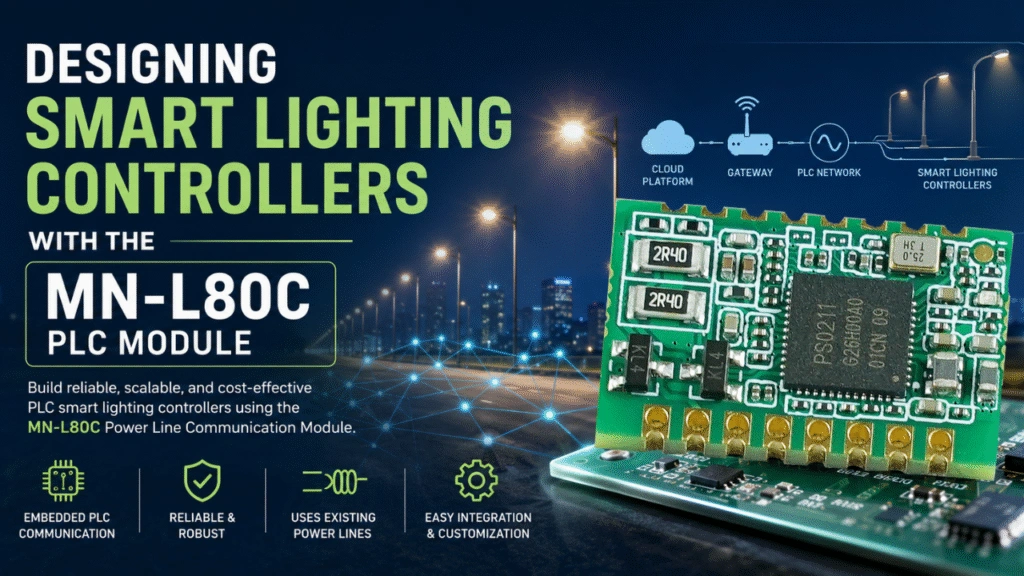
A typical PLC street lighting system consists of:
1. Central Management System (CMS)
- Cloud-based or local platform
- Controls and monitors all street lights
- Provides scheduling, analytics, and alerts
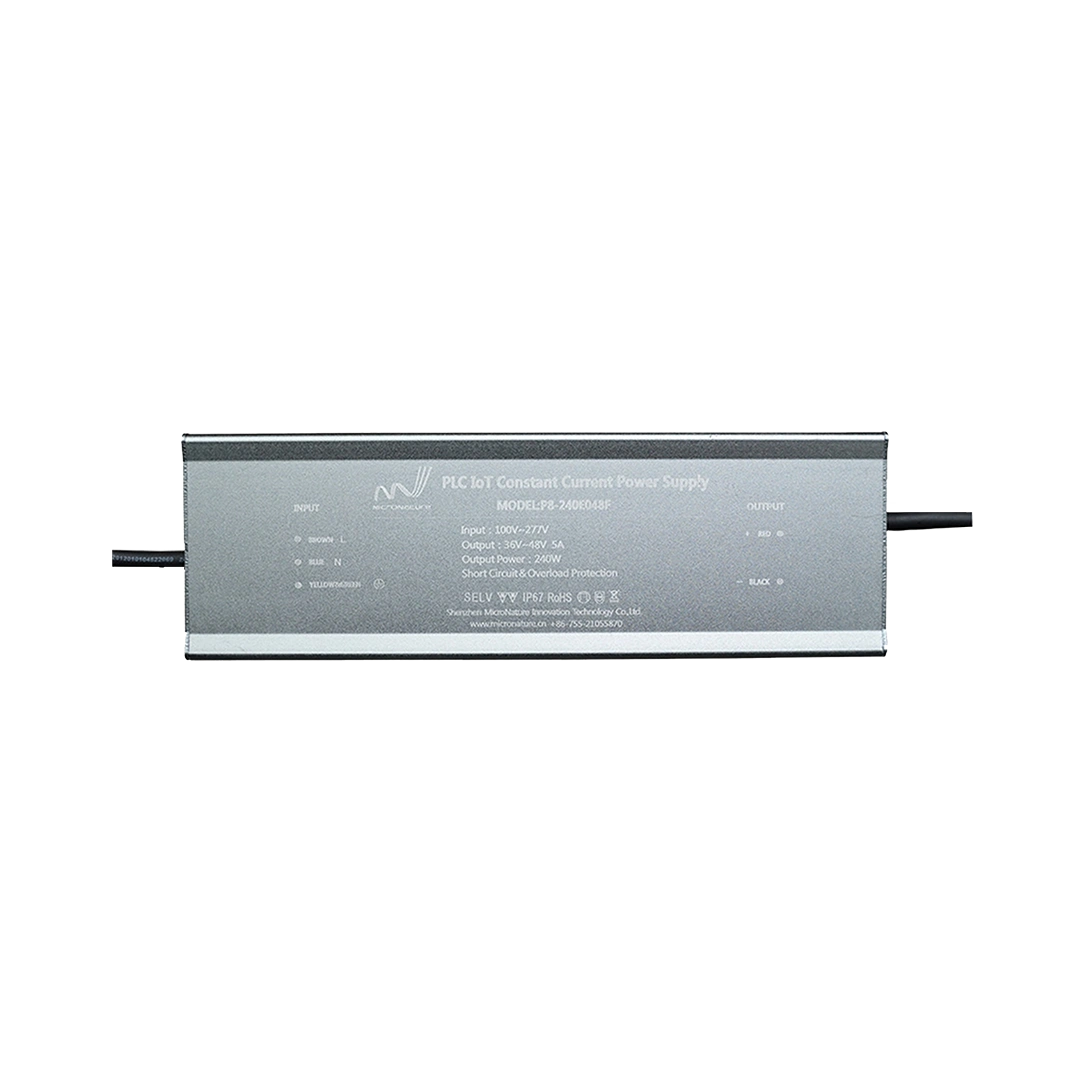
2. PLC Concentrator
- Installed in distribution cabinets
- Acts as a gateway between CMS and field devices
- Sends and receives signals via power lines
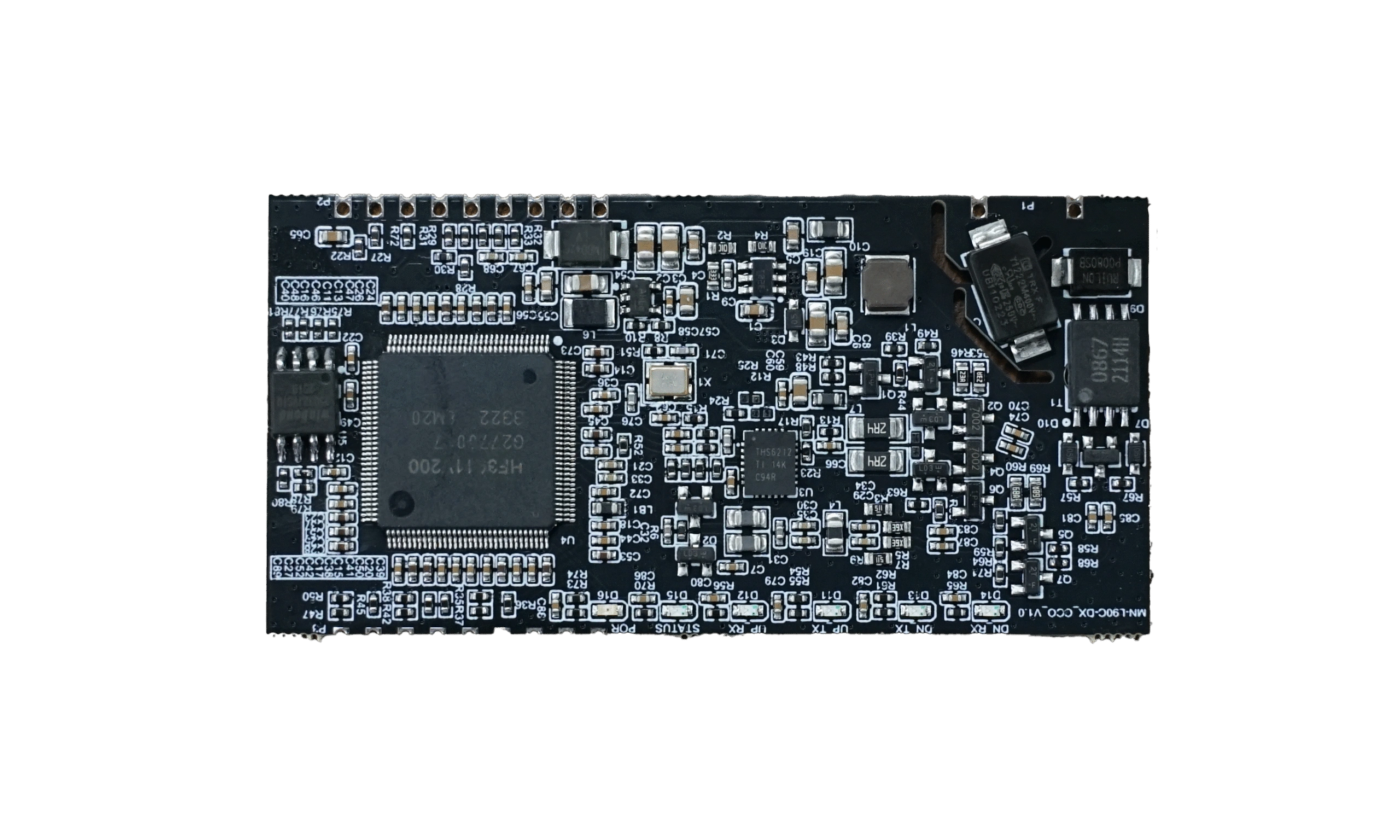
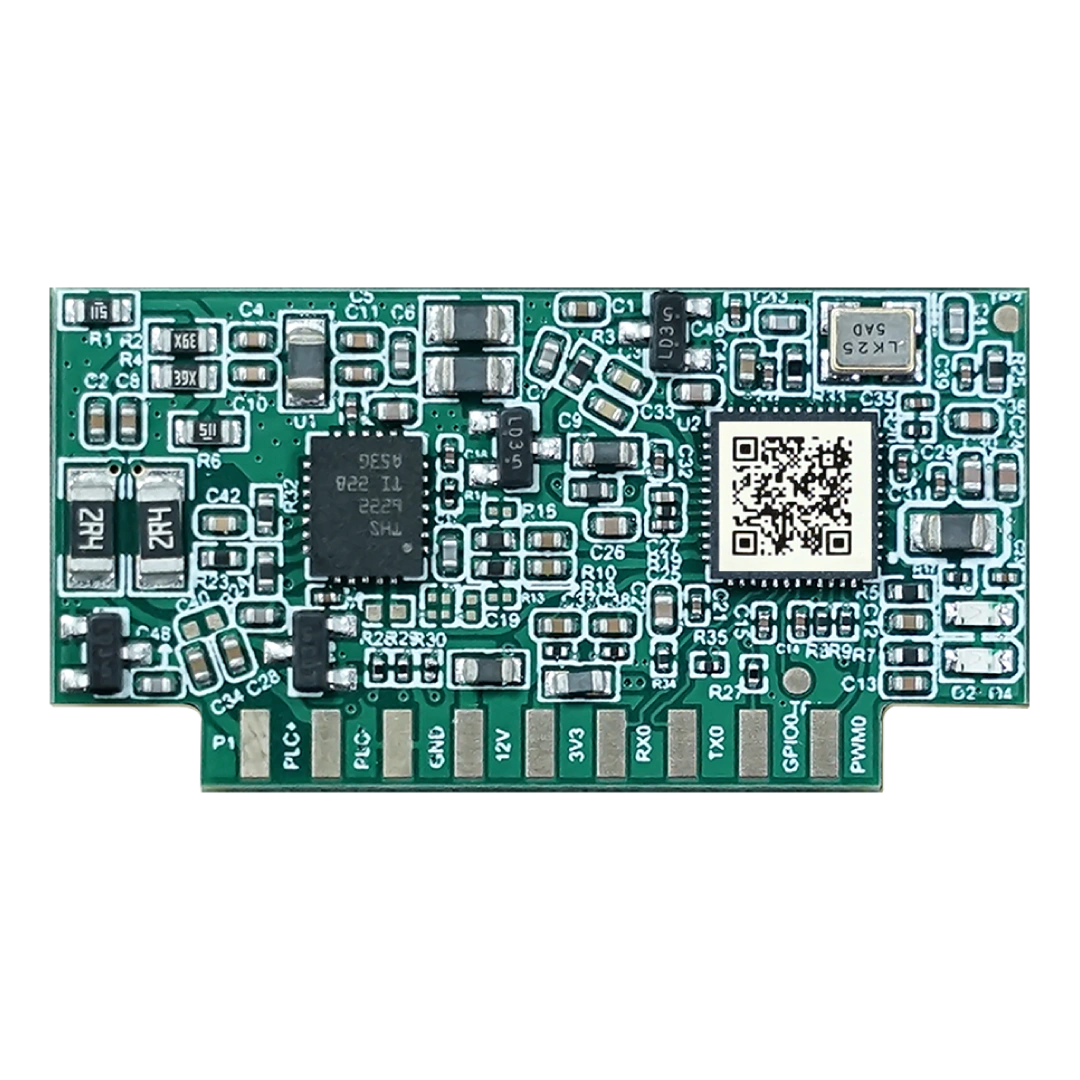
3. PLC Street Light Controller
- Installed on each lamp
- Receives commands
- Controls brightness (dimming)
- Reports status (on/off, faults, energy usage)
4. Power Line Communication Network
- Uses existing electrical wiring
- Transmits data between devices
5. Optional Sensors & AI Integration
- Motion sensors
- Ambient light sensors
- AI vision cameras
PLC Street Lighting System Architecture Diagram
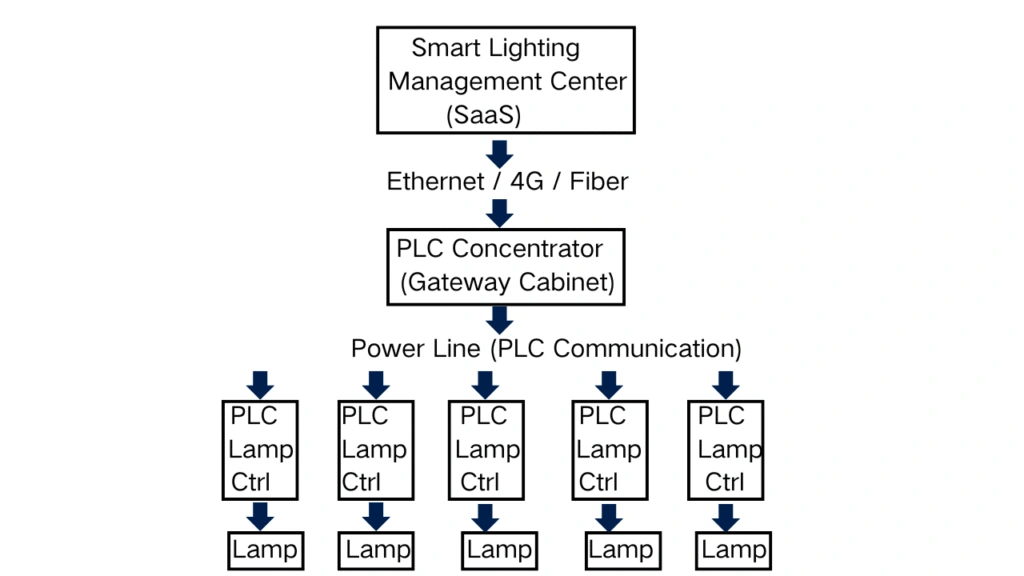
How PLC Street Lighting Works:
Step 1: Command Initiation
The CMS sends a command (e.g., dim lights to 50%)
Step 2: Signal Transmission
The PLC concentrator encodes the command and sends it through power lines
Step 3: Signal Reception
Each street light controller receives the signal
Step 4: Action Execution
Lights adjust brightness accordingly
Step 5: Feedback Loop
Controllers send status data back to CMS
👉 Result:
Real-time, two-way communication without wireless networks
Key Benefits of PLC Street Lighting Systems
1. No Additional Communication Infrastructure
- Uses existing power lines
- No RF modules or SIM cards required
2. High Reliability in Urban Environments
Unlike wireless systems:
- No signal interference
- Works in dense cities
3. Lower Deployment and Maintenance Cost
- Reduced installation complexity
- Fewer components
4. Real-Time Monitoring and Control
- Remote switching
- Dimming control
- Fault detection
5. Energy Efficiency
- Adaptive lighting schedules
- Motion-based dimming
👉 Typical savings: 30–60%
Real-World Applications:
1. Urban Street Lighting
- Adaptive brightness based on traffic
- Centralized control across districts
2. Highway Lighting
- Reliable long-distance communication
- Real-time adjustment
3. Bridges and Special Infrastructure
- Stable communication in complex environments
PLC vs Wireless Street Lighting
| Feature | PLC | Wireless |
|---|---|---|
| Communication | Power line | RF signal |
| Stability | High | Medium |
| Interference | Low | High |
| Cost | Lower long-term | Higher |
| Deployment | Simple | Medium |
👉 Conclusion:
PLC is ideal for dense urban and infrastructure-heavy environments
While PLC is highly effective in street lighting, its advantages become even more critical in enclosed environments like tunnels, where wireless communication is often unstable. A PLC tunnel lighting solution ensures reliable control by using existing power lines for communication.
Challenges and Considerations:
⚠️ Electrical Noise
Solution:
- Use advanced PLC chipsets
- Install filters
⚠️ Grid Quality Dependency
Solution:
- Proper system design
- Professional deployment
Future Trends:
Integration with AI Vision
- Vehicle detection
- Traffic analytics
- Smart safety systems
Smart City Integration
- Connected to traffic management
- Integrated with IoT platforms
Summary
PLC street lighting systems provide:
- Reliable communication
- Cost-effective deployment
- Real-time control
- Strong scalability
👉 Making them a preferred solution for modern smart cities