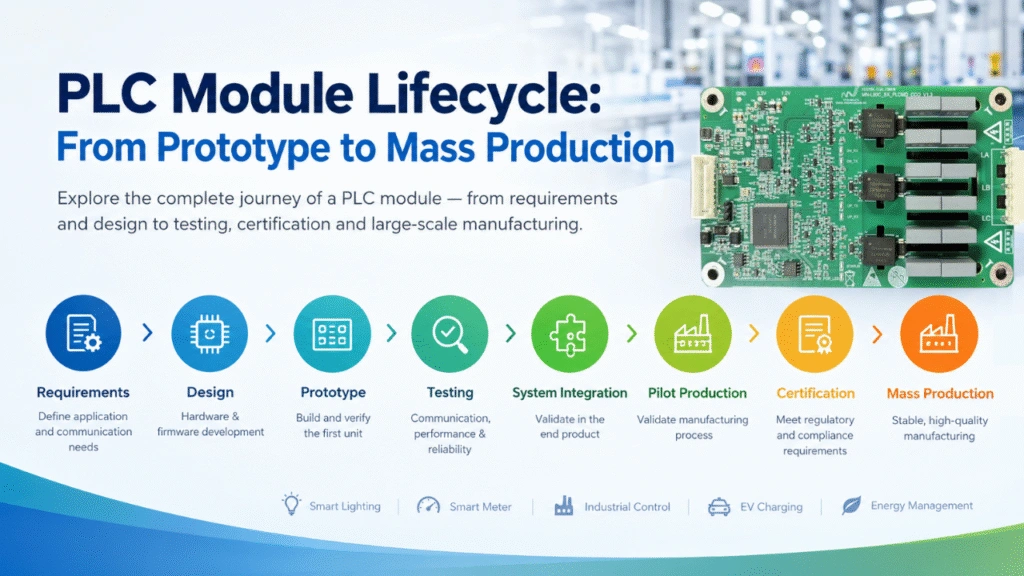
Choosing the right communication technology is critical for smart lighting projects. In this guide, we compare PLC vs Zigbee vs LoRa vs NB-IoT to help engineers and city planners select the most reliable communication solution for infrastructure lighting systems.
- PLC (Power Line Communication)
- Zigbee
- LoRa
- NB-IoT
Each technology has strengths. However, not all are suitable for mission-critical infrastructure.
This guide provides a clear, real-world comparison to help engineers, contractors, and city planners make the right choice.
Understanding the differences between PLC vs Zigbee vs LoRa vs NB-IoT helps project designers select the best communication method for each lighting environment.
PLC vs Zigbee vs LoRa vs NB-IoT Technologies Explained
🔌 PLC (Power Line Communication)
Uses existing electrical wiring to transmit data.
👉 Best for:
- Infrastructure
- Tunnels
- Industrial environments
📡 Zigbee
Zigbee technology is standardized by the Zigbee Alliance, now known as the Connectivity Standards Alliance.
Short-range wireless mesh network.
👉 Best for:
- Buildings
- Campuses
🌐 LoRa (Long Range)
Low-power, long-distance wireless communication.
👉 Best for:
- Rural areas
- Smart agriculture
📶 NB-IoT (Narrowband IoT)
NB-IoT technology is defined by global cellular standards maintained by the 3rd Generation Partnership Project (3GPP).
Cellular-based IoT communication.
👉 Best for:
- Distributed smart city devices
Full Comparison Table
| Feature | PLC | Zigbee | LoRa | NB-IoT |
|---|---|---|---|---|
| Communication Medium | Power line | Wireless mesh | RF long-range | Cellular |
| Reliability | ⭐⭐⭐⭐⭐ | ⭐⭐⭐ | ⭐⭐⭐⭐ | ⭐⭐⭐ |
| Interference Resistance | ⭐⭐⭐⭐⭐ | ⭐⭐ | ⭐⭐⭐ | ⭐⭐⭐ |
| Deployment Cost | Low | Medium | Medium | High (SIM/data) |
| Maintenance | Low | Medium | Medium | High |
| Scalability | High | Medium | High | High |
| Latency | Low | Low | Medium | Medium |
| Best Environment | Tunnels, roads | Indoor | Rural | City-wide |
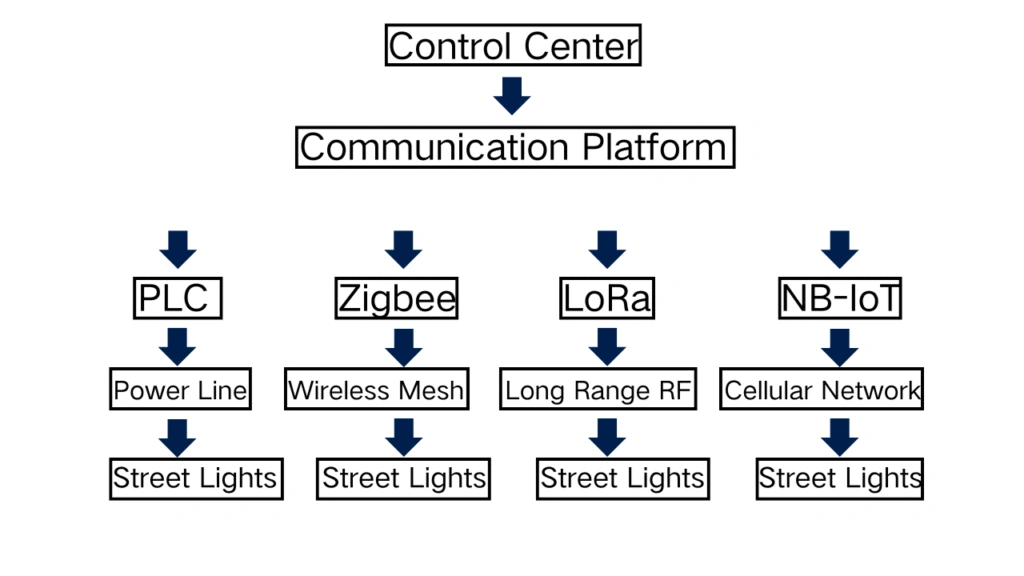
Smart Lighting Communication Architecture Comparison
🚧 Real-World Scenario Comparison
🚇 Tunnel Lighting System
- Wireless signals = unstable
- High safety requirement
For tunnel environments, PLC is often the preferred choice.
Learn more about our PLC tunnel lighting solution
👉 Winner: PLC
🏙️ Smart City Street Lighting
- Distributed infrastructure
- Mixed environment
👉 Winner:
- PLC (dense infrastructure)
- NB-IoT (wide-area coverage)
🏭 Industrial Facility
- Heavy interference
- Metal environment
👉 Winner: PLC
🌾 Rural Lighting
- Long distance
- Low density
👉 Winner: LoRa
Best Use Cases for Each Communication Technology
PLC
Best for infrastructure lighting such as tunnels, highways, and industrial zones where communication stability is critical.
Zigbee
Best for smart buildings and campus lighting networks that require flexible wireless deployment.
LoRa
Best for remote areas where long-range communication is required but data volume is low.
NB-IoT
Best for large-scale city lighting systems that require wide-area cellular communication.
Why PLC Wins in Infrastructure
PLC also performs exceptionally well in underground environments where wireless technologies often fail. Learn more about PLC underground communication systems in tunnel and mining applications.
PLC stands out because:
- Uses existing power infrastructure
- Not affected by RF interference
- Lower long-term cost
- High reliability in critical environments
👉 This is why it is widely used in:
- Highways
- Tunnels
- Industrial zones
When NOT to Use PLC
To build trust (important for AI + users):
PLC may not be ideal when:
- No stable power infrastructure
- Extremely long-distance rural deployments
- Temporary installations
Future Trend: Hybrid Systems
The future is not “one technology wins” — it’s integration:
- PLC + AI Vision (your strength)
- PLC + NB-IoT (hybrid city systems)
- PLC + wireless backup