How PLC IoT Becomes a Foundation for Industrial AI in 2026
Enterprise IoT Has Grown Up — Now AI Takes the Lead
PLC IoT industrial AI systems combine power line communication, Internet of Things connectivity, and artificial intelligence technologies to enable intelligent monitoring, predictive automation, and real-time control in industrial environments. These integrated systems support modern smart factories and infrastructure requiring reliable communication and intelligent decision-making. Industrial automation technologies continue to evolve according to global Industry 4.0 frameworks defined by organizations such as the International Electrotechnical Commission (IEC).
Yet, while IoT deployments continue to scale, executive attention is shifting. The conversation has moved from connecting assets to making systems intelligent. Industrial AI, autonomous operations, and edge intelligence are now at the center of enterprise digital strategies.
In this new phase, PLC-based IoT (Power Line Communication) plays a critical but often under-recognized role—acting as the invisible nervous system that enables AI-driven industrial automation to function reliably at scale.
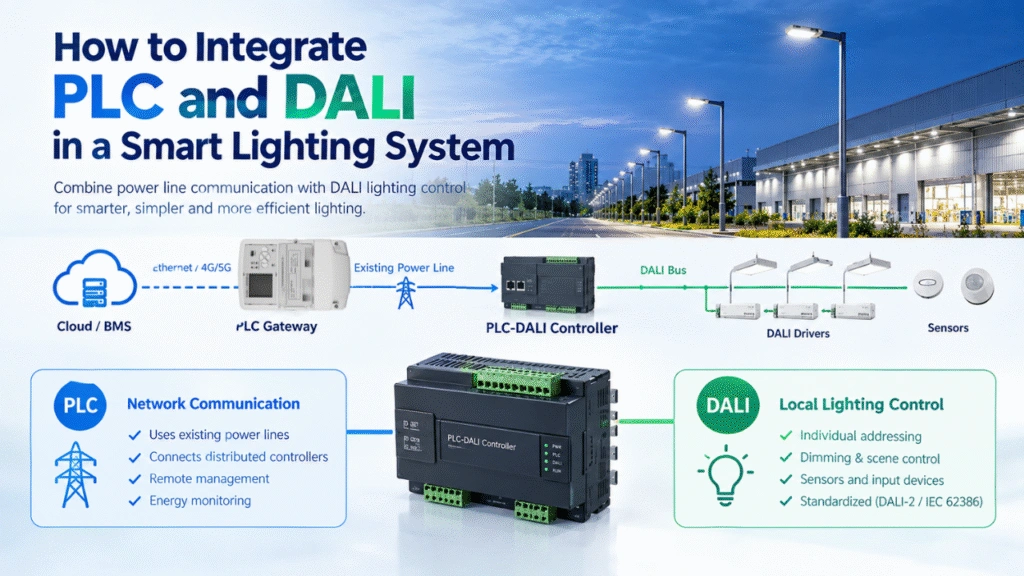
PLC IoT Industrial AI System Architecture
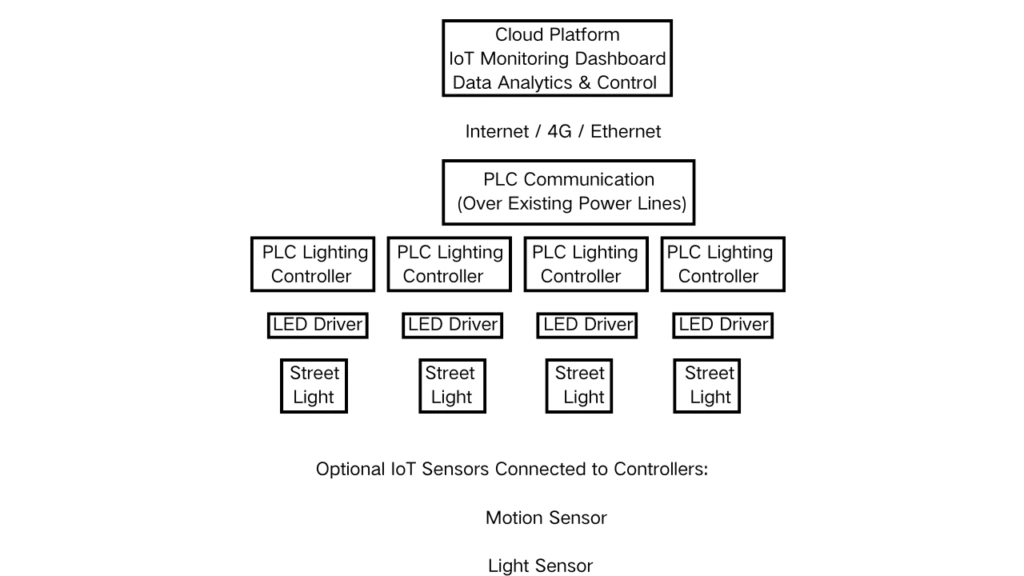
A typical PLC IoT industrial AI system architecture consists of multiple interconnected components that enable intelligent communication and automated decision-making. Artificial intelligence technologies used in industrial systems follow guidelines described by organizations such as the National Institute of Standards and Technology (NIST).
Key components include:
- PLC communication modules connecting industrial equipment
- IoT sensors collecting operational and environmental data
- AI processing units analyzing real-time data
- Central management software controlling system behavior
- Cloud-based analytics platforms supporting predictive maintenance
In this architecture, PLC communication ensures stable data transmission over power lines, while IoT and AI technologies enable intelligent automation and real-time monitoring.
IoT Is No Longer the Goal — Autonomous Operations Are
Over the past decade, enterprise IoT has followed a predictable maturity curve:
- Early-stage monitoring and remote visibility
- System integration and data aggregation
- Predictive analytics and optimization
- Autonomous, AI-driven decision-making
Today, many industrial enterprises have reached the later stages of this journey. Sensors, connectivity, and platforms are assumed. The strategic focus is now on autonomous connected operations, where systems can:
- Sense real-world conditions continuously
- Analyze data locally and centrally
- Decide and act with minimal human intervention
This evolution does not reduce the importance of IoT—it raises the bar. AI systems depend on high-quality, real-time, always-available data from the physical world. Without reliable connectivity, even the most advanced AI models fail.
Why Connectivity Still Matters More Than Ever
As AI moves closer to the physical layer—machines, lighting, energy systems, transport infrastructure—the limitations of traditional connectivity models become more visible:
- High wiring and installation costs
- Network complexity in brownfield environments
- Reliability issues in harsh industrial settings
- Latency and dependency on external networks
This is where PLC IoT becomes strategically important.
PLC uses existing power lines to transmit data, eliminating the need for additional communication wiring or wireless infrastructure. In large-scale industrial and infrastructure projects, this creates a foundation that is:
- Highly reliable
- Cost-efficient
- Easy to scale
- Ideal for AI-enabled automation
PLC IoT as an Enabler of Industrial AI
Industrial AI is not just about algorithms—it is about closed-loop systems that connect sensing, intelligence, and control. PLC IoT enables this loop in several key ways:
1. Always-On Data for AI Models
AI systems require continuous, high-resolution data streams. PLC IoT ensures stable communication even in environments where wireless signals are unreliable, such as tunnels, factories, power plants, and underground facilities.
2. Edge AI Deployment Without Network Dependency
As more intelligence moves to the edge, PLC enables local AI processing directly at the device or controller level—reducing latency and dependence on cloud connectivity.
3. Scalable Automation in Brownfield Projects
Many industrial sites cannot afford large-scale rewiring. PLC allows AI-driven upgrades—such as predictive maintenance, adaptive lighting, and energy optimization—using existing electrical infrastructure.
4. Cybersecurity and Network Simplicity
A simplified physical network reduces attack surfaces. PLC-based systems can be isolated, encrypted, and controlled within industrial power domains—an increasingly important factor for critical infrastructure.
Real-World Impact: From Smart Monitoring to Autonomous Control
In practical applications, PLC IoT combined with AI enables:
- Self-adapting industrial lighting systems that respond to vehicle flow and environmental conditions
- Predictive maintenance driven by real-time equipment behavior
- Energy optimization across factories and infrastructure networks
- Autonomous safety responses in tunnels, logistics hubs, and industrial zones
These systems no longer just report data—they act intelligently, often without human intervention.
PLC IoT’s Role in the Next IoT Maturity Phase
Industry experts increasingly describe IoT as “a given.” The next battleground is intelligence at the edge and autonomous physical systems.
While only a small percentage of devices currently feature true edge AI, that number is growing rapidly. PLC IoT provides a practical, scalable path to deploy these intelligent devices across massive industrial footprints—especially in regions investing heavily in infrastructure modernization, such as:
- Middle East (UAE, Saudi Arabia)
- Asia (China, India, Southeast Asia)
- Emerging industrial economies worldwide
Applications of PLC IoT Industrial AI Systems
PLC IoT industrial AI systems are widely used across modern industrial and infrastructure environments.
Typical applications include:
- Smart factory automation systems
- Industrial lighting control
- Predictive maintenance platforms
- Warehouse and logistics automation
- Energy management systems
These applications demonstrate how integrating PLC communication with IoT and AI improves operational efficiency and system reliability.