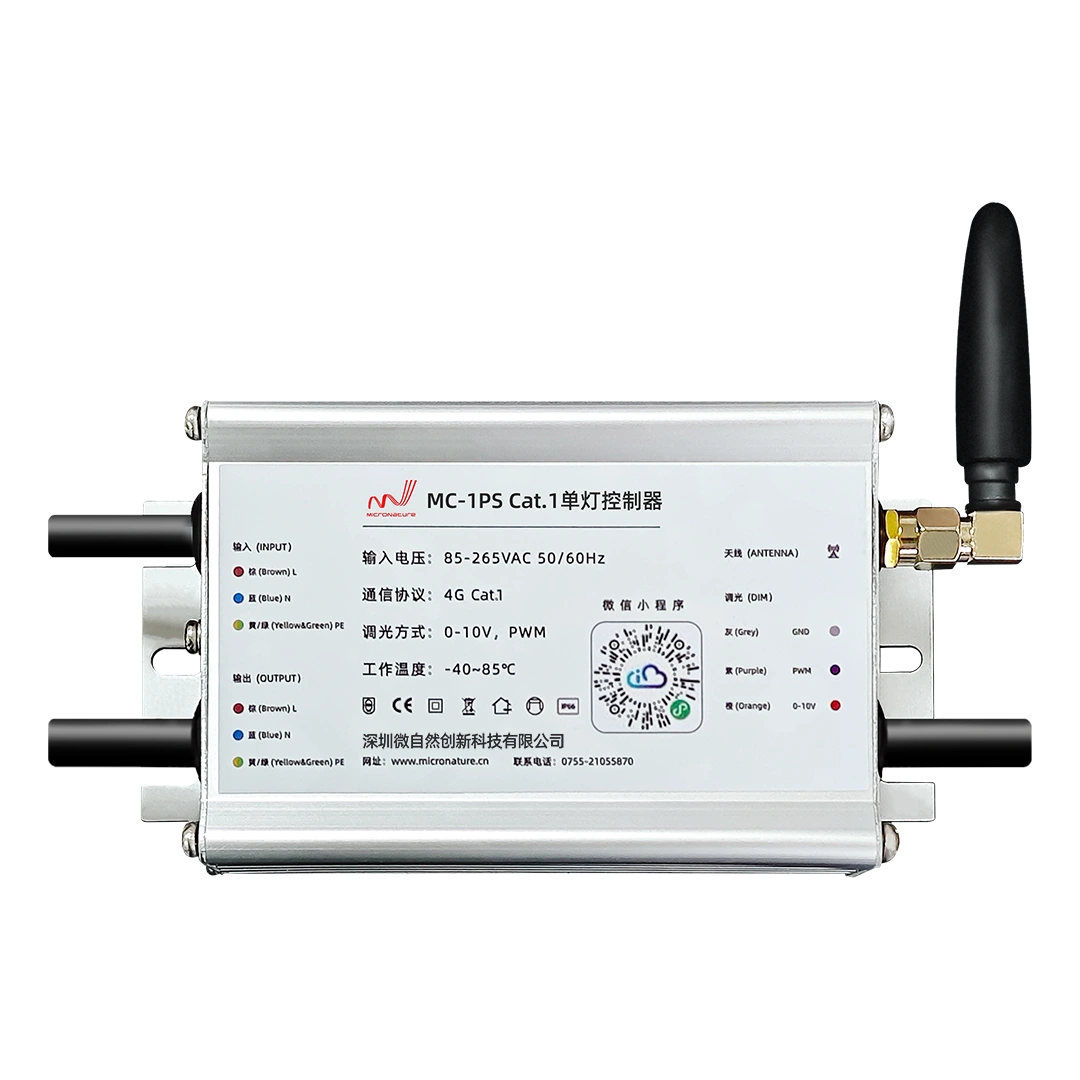
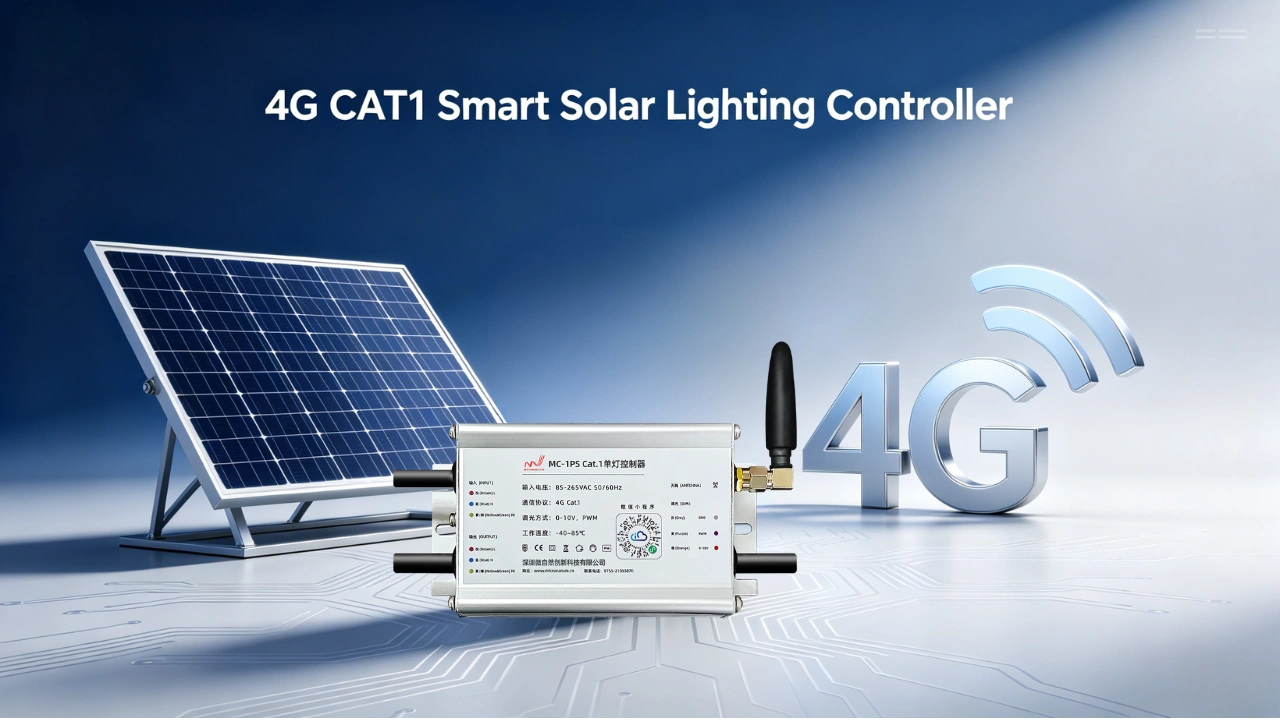
The 4G CAT.1 Solar Lighting Controller with wireless MPPT gateway delivers remote monitoring, adaptive dimming, and intelligent battery management for solar street lighting projects. According to the International Energy Agency (IEA), solar photovoltaic deployment continues to expand worldwide, creating growing demand for intelligent monitoring and remote management solutions. Traditional solar controllers often only offer basic charge/discharge control, making fault diagnosis and energy optimization difficult. MicroNature’s 4G CAT.1 solution combines cloud connectivity with a wireless 2.4GHz MPPT gateway for centralized, scalable management.
MicroNature’s new solution combines a 4G CAT.1 smart lighting controller with a wireless 2.4GHz MPPT gateway system, integrated with our Smart Lighting Management Platform for centralized monitoring and remote operation. The 4G controller manages the lamp and cloud connectivity, while the MPPT gateway collects charging and battery data from distributed solar controllers.
What this solves
- Remote lamp switching and dimming over LTE CAT.1
- Real-time battery, PV, and charging monitoring
- Wireless deployment without extra communication cabling
- Longer battery life through intelligent MPPT charging
- Scalable management for roads, parks, campuses, and smart-city projects
How the Hybrid Architecture Works
Cloud Platform
Centralized monitoring
4G CAT.1
4G CAT.1 Lighting Controller
Remote ON/OFF, dimming, scheduling, alarms, OTA upgrades
Wireless 2.4GHz
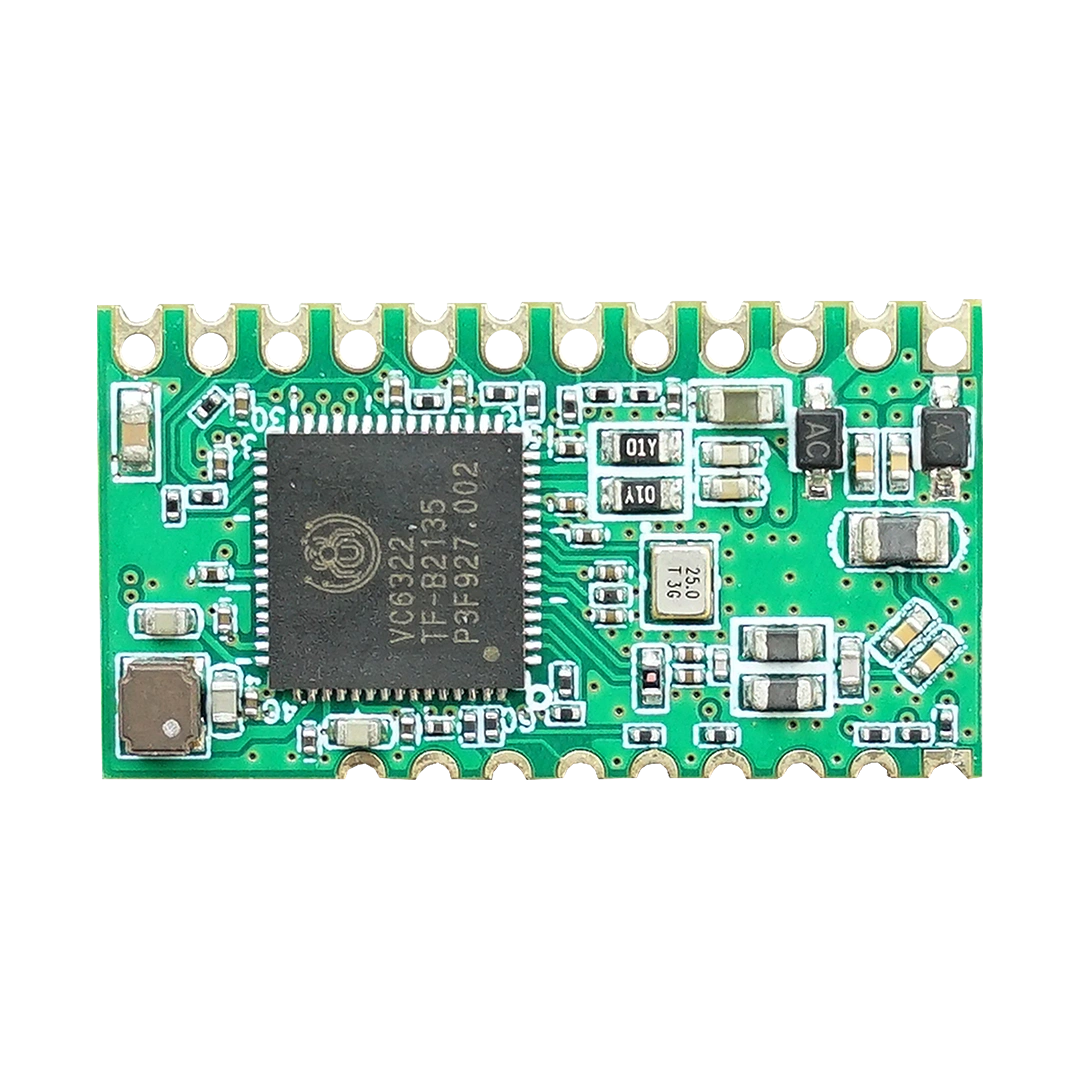
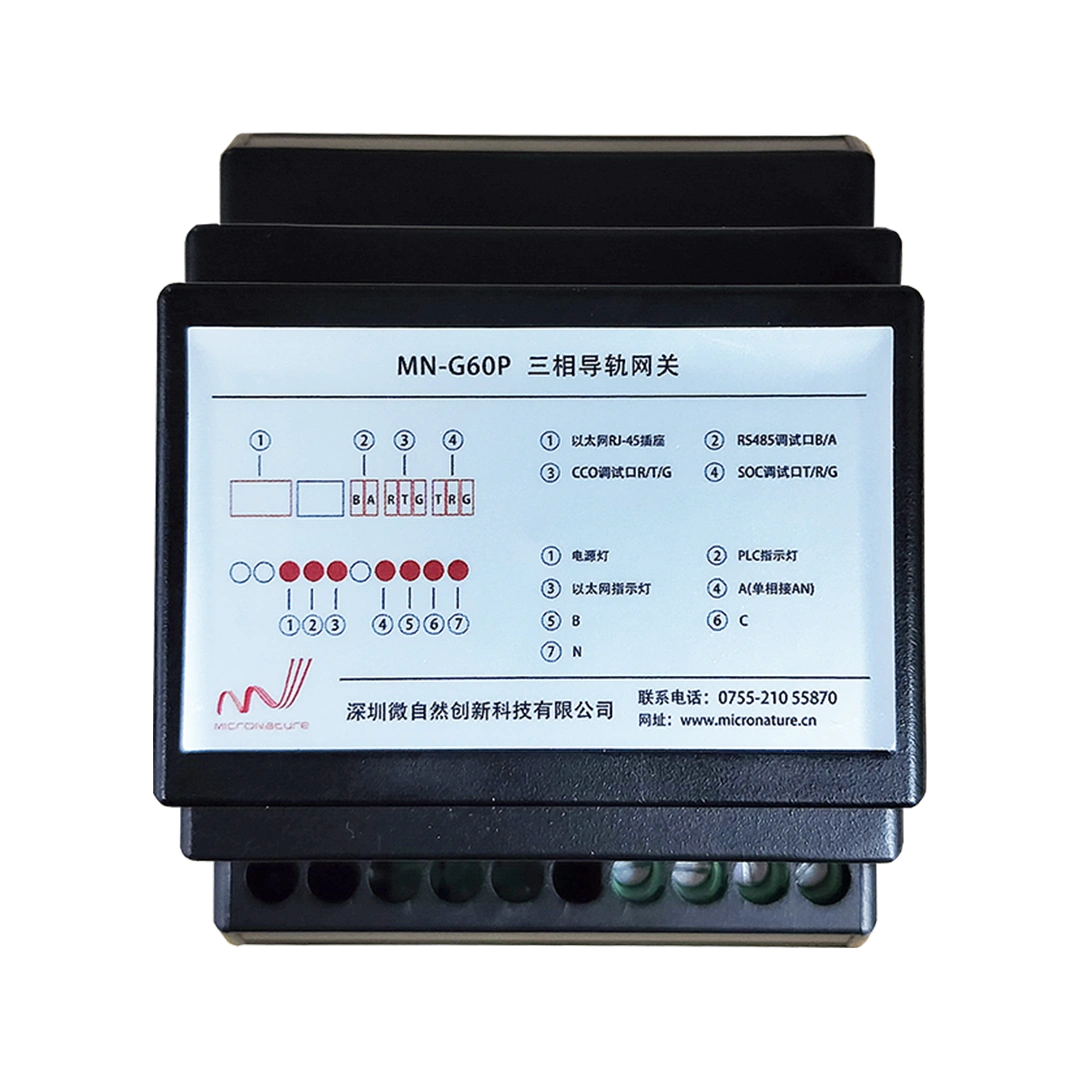
RTU / Gateway
Collects data from multiple MPPT controllers
Local wireless network
MPPT Controllers
Manage solar panel, battery, and LED load charging
Solar Panel
Lithium Battery
LED Lamp
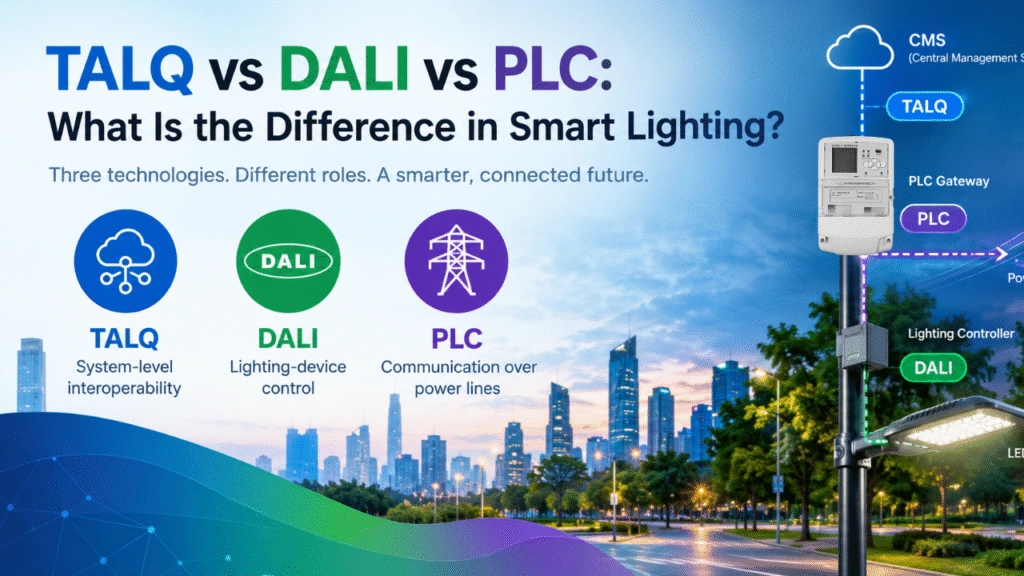
This design keeps cloud communication on the 4G network while using a low-power local wireless network for the solar charging controllers. This architecture follows the same communication principles used in our Smart Street Lighting Solution, allowing operators to remotely monitor thousands of luminaires from a centralized cloud platform.
What Makes the MPPT Controller Different?
The MPPT controller is not a generic PWM charger. It is a boost-type MPPT solar street light controller designed specifically for lithium battery lighting systems.
True MPPT Energy Tracking
Core feature
The controller continuously tracks the photovoltaic array’s maximum power point, As explained by the U.S. National Renewable Energy Laboratory (NREL), Maximum Power Point Tracking (MPPT) continuously adjusts the operating point of a photovoltaic array to maximize energy harvest under changing sunlight and temperature conditions. This technology enables higher charging efficiency than conventional PWM controllers. Compared with conventional PWM charging, it harvests more energy and supports a wider PV voltage range. To learn more about how communication technologies are used in outdoor lighting systems, read our guide on PLC vs Wireless Lighting Cost Comparison.
Multi-Voltage Battery Support
3V / 12V / 24V
Supports single-cell lithium systems (3V), 12V systems, and 24V systems for a wide range of solar lighting designs.
Flexible Charging Current
10A / 15A / 20A
Models are available with up to 20A battery-side charging current for higher-power solar luminaires.
Advanced Lighting Control Features
7+1 Time-Segment Scheduling
7 segments + dawn
Each night can be divided into seven programmable periods plus an additional dawn-light segment. Every segment supports independent duration and dimming settings.
Adaptive Dawn Lighting
Automatic
The controller automatically calculates night length from seasonal sunrise and sunset changes, ensuring the dawn-light period always occurs at the correct time.
Battery-Voltage Power Reduction
Longer autonomy
When battery voltage drops to a configurable threshold, the controller automatically reduces lamp power to extend operating hours during consecutive cloudy days.
Designed for Harsh Outdoor Environments
Thermal Protection
Auto derating
During charging or discharging, the controller monitors internal temperature and automatically derates output if overheating is detected.
Industrial Temperature Range
-40°C to 85°C
Engineered for extreme outdoor conditions, including deserts, highways, ports, and cold-climate installations.
Built-In Commissioning
20-second test
A built-in lamp test automatically illuminates the LED load for 20 seconds after correct PV, battery, and load wiring, simplifying installation checks.
Gateway-Based Wireless MPPT Network
Instead of connecting every solar controller directly to the cellular network, multiple MPPT controllers communicate over 2.4GHz wireless with a nearby Remote Terminal Unit (RTU).
Lower communication cost: One 4G uplink can serve multiple lights.
No extra communication cabling: Ideal for retrofits and remote sites.
Easy expansion: Add new solar lights without rewiring.
Centralized maintenance: Operators view all charging and lighting data from one platform.
What Can Be Monitored Remotely?
Lighting Data
- Lamp ON/OFF status
- Dimming percentage
- Operating hours
- Energy consumption
- Fault alarms
Solar & Battery Data
- PV voltage and current
- Charging power
- Daily energy generation
- Battery voltage and state of charge
- Battery temperature
System Management
- Device online/offline status
- Historical records
- Alarm notifications
- Remote parameter updates
Typical Applications
- Solar street lightinga
- Highways
- Industrial parks
- Residential communities
- Campuses
- Parking lots
- Parks
- Smart city projects
Technical Snapshot
| Feature | Specification |
|---|---|
| Cloud communication | 4G LTE CAT.1 |
| Local MPPT communication | 2.4GHz wireless via RTU gateway |
| Battery systems | 3V / 12V / 24V lithium |
| Charging current options | 10A / 15A / 20A |
| Load current | Up to 5A |
| Control modes | 7+1 time segments, adaptive dawn, dimming |
| Protection | Over-temperature, battery protection, automatic power reduction |
| Operating temperature | -40°C to 85°C |