Smart lighting systems are becoming a standard requirement for municipalities, industrial facilities, campuses, tunnels, warehouses, and smart city projects. However, one of the most common questions project owners ask is:
Should we choose Power Line Communication (PLC) lighting or a wireless lighting system?
While wireless technologies such as Zigbee, LoRaWAN, NB-IoT, and cellular networks are widely used in smart lighting, PLC offers a unique advantage by transmitting data through existing power cables.
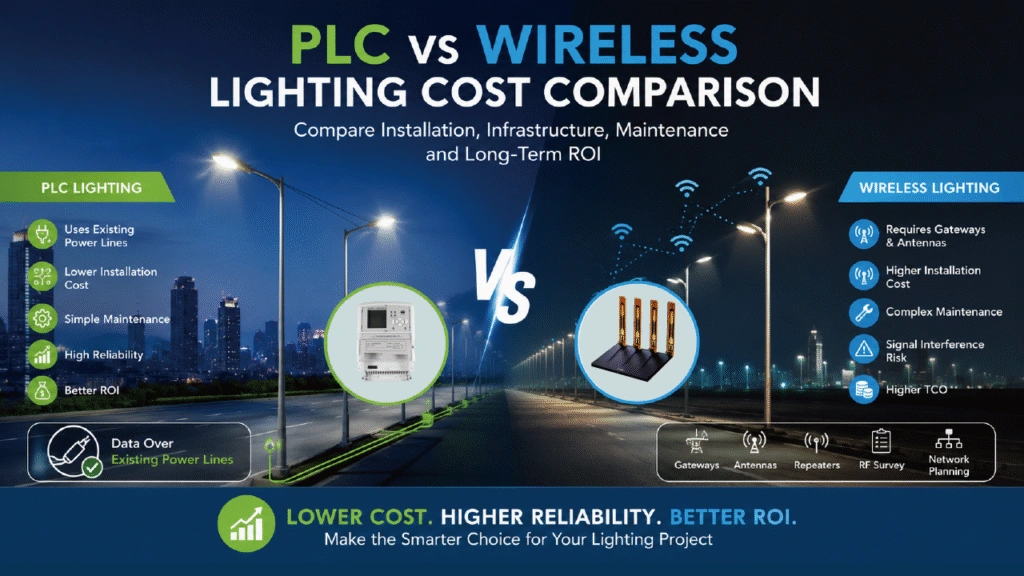
This article compares the total cost of ownership (TCO), installation expenses, maintenance requirements, and long-term return on investment (ROI) of PLC and wireless lighting systems.
Understanding the Two Technologies
What Is PLC Lighting?
Power Line Communication (PLC) lighting uses existing electrical power lines to transmit both power and communication signals.
Instead of deploying additional communication cables or relying on wireless signals, PLC devices communicate directly through the power infrastructure already connected to lighting fixtures.
Typical PLC smart lighting systems include:
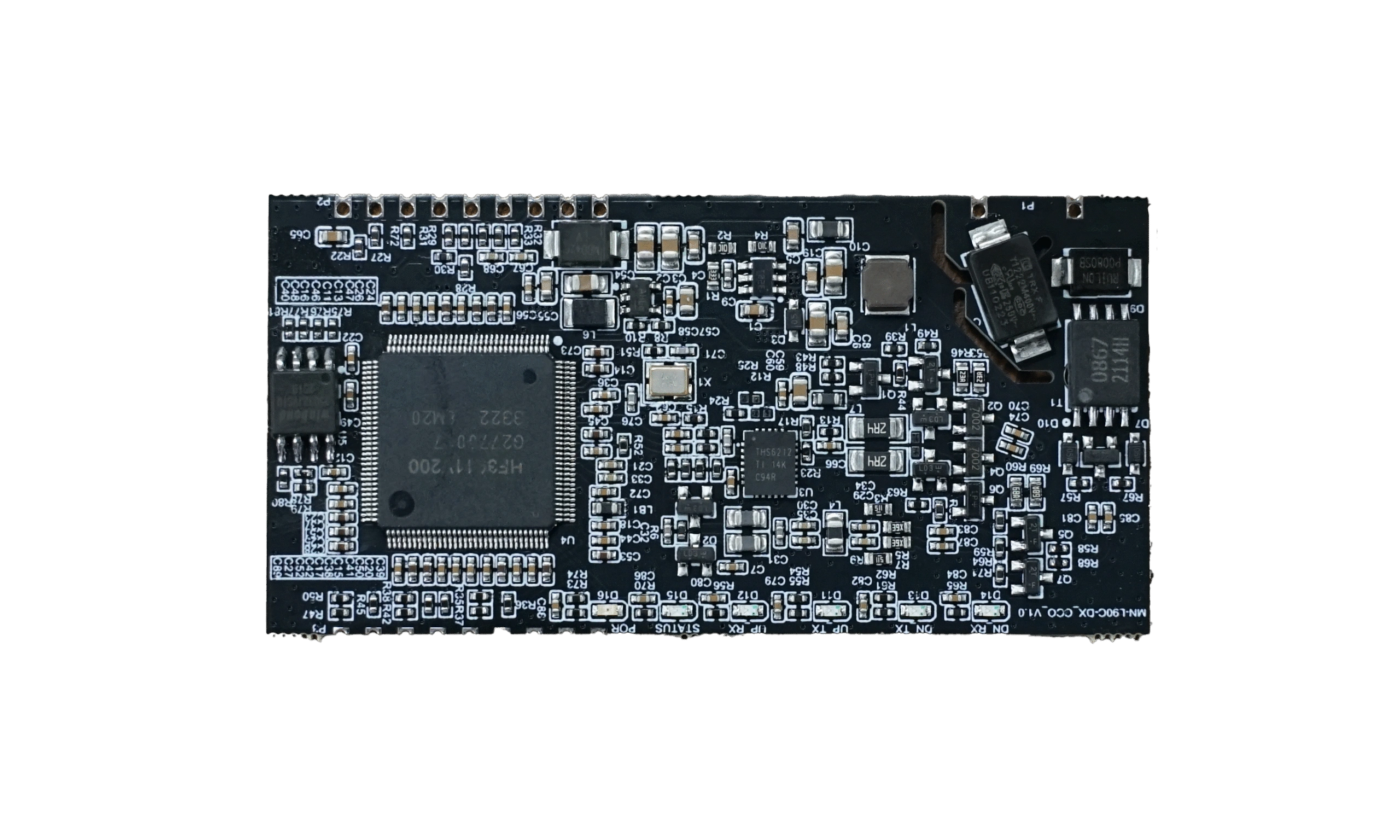
- PLC Gateway (CCO)
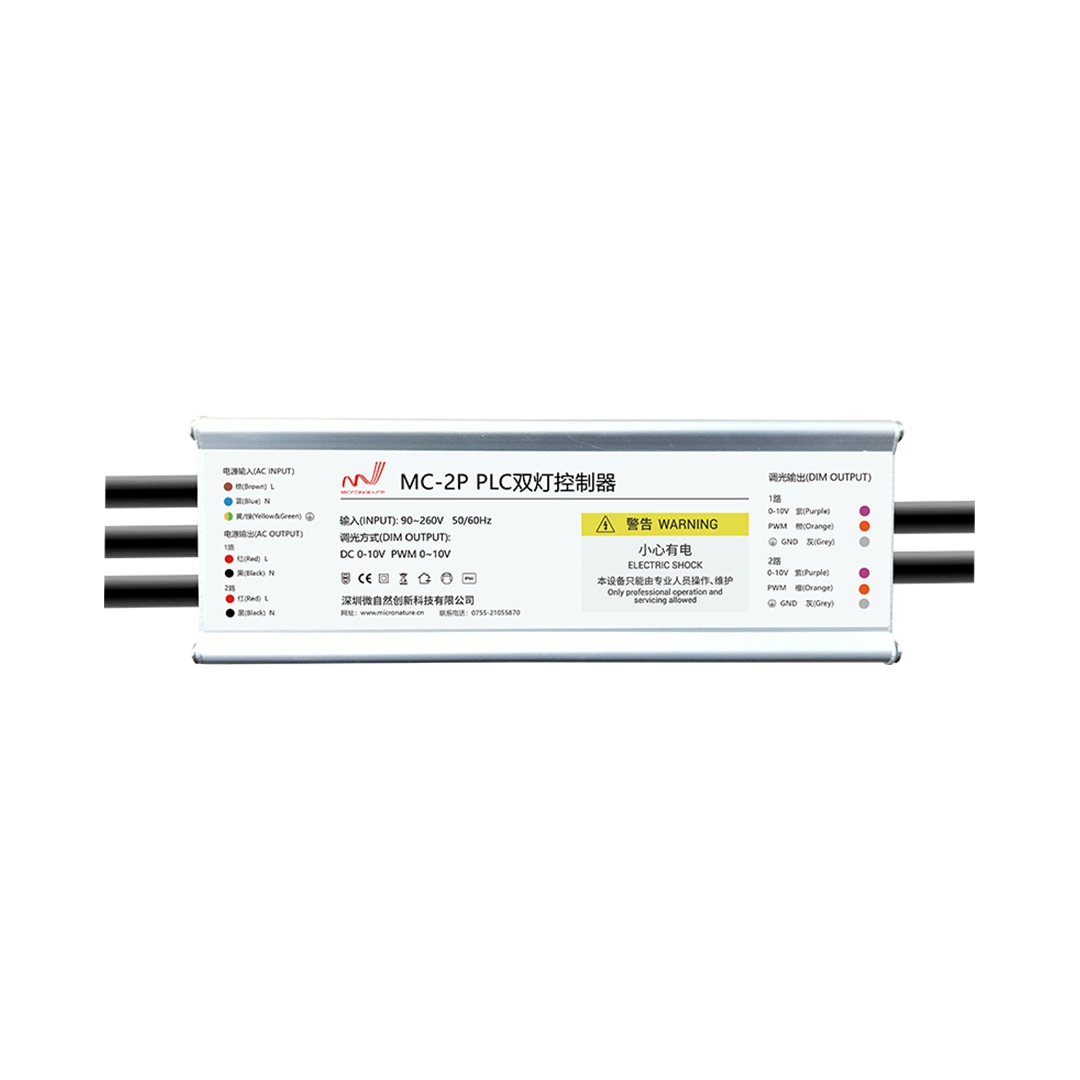
- PLC Light Controllers (STA)
- Smart Dimming Drivers
- Cloud Management Platform
- Sensors and Monitoring Devices
What Is Wireless Lighting?
Wireless lighting systems use radio-frequency communication technologies such as:
- Zigbee
- LoRaWAN
- NB-IoT
- LTE/4G/5G
- Bluetooth Mesh
Each lighting fixture communicates through wireless networks and gateways to reach a central management platform.
Initial Installation Cost Comparison
The installation phase often determines the overall project budget.
| Cost Item | PLC Lighting | Wireless Lighting |
|---|---|---|
| Communication Cabling | None | None |
| Additional Gateways | Few | Often Required |
| Signal Repeaters | Not Required | Frequently Required |
| Antenna Installation | Not Required | Required |
| RF Site Survey | Not Required | Usually Required |
| Network Commissioning | Simple | Moderate to Complex |
| Labor Cost | Lower | Higher |
PLC Advantage
PLC leverages existing power cables, eliminating the need for:
- Wireless antenna deployment
- RF planning
- Signal repeater installation
- Additional communication infrastructure
For retrofit projects, this can significantly reduce deployment costs.
Infrastructure Cost Comparison
PLC Infrastructure
A PLC system primarily requires:
- PLC gateways
- PLC controllers
- Existing power network
No additional communication backbone is necessary.
Wireless Infrastructure
Wireless systems may require:
- Multiple gateways
- Antennas
- Repeaters
- SIM cards (NB-IoT or cellular solutions)
- Dedicated network management equipment
As project size increases, wireless infrastructure costs often grow proportionally.
Winner: PLC
For large-scale lighting projects, PLC typically offers lower infrastructure investment because communication travels through the existing electrical network.
Maintenance Cost Comparison
Maintenance expenses can significantly impact the long-term operating budget.
PLC Maintenance
PLC systems typically require:
- Software updates
- Device replacement when necessary
- Cloud platform maintenance
Because communication is wired through power lines, there are fewer environmental factors affecting connectivity.
Wireless Maintenance
Wireless systems may require:
- Gateway maintenance
- Antenna replacement
- RF troubleshooting
- Network optimization
- SIM card management
- Signal coverage adjustments
Environmental interference can also affect performance.
Winner: PLC
The absence of wireless signal management generally results in lower maintenance costs over the system lifecycle.
Reliability and Cost Impact
Communication failures directly affect operational costs.
PLC Reliability
PLC performs particularly well in:
- Tunnels
- Industrial facilities
- Warehouses
- Ports
- Shipyards
- Underground environments
Because communication remains on the wired electrical infrastructure, PLC is less affected by:
- Signal blockage
- Metal structures
- Electromagnetic interference
- Weather conditions
Wireless Challenges
Wireless networks can experience:
- Coverage dead zones
- Signal attenuation
- Interference
- Gateway congestion
These issues may increase maintenance visits and operational costs.
Large Project Cost Analysis
Consider a smart street lighting project with 5,000 lighting fixtures.
PLC Solution
Required equipment:
- PLC gateways
- PLC controllers
- Cloud software
No repeaters or antennas are required.
Wireless Solution
Required equipment:
- Wireless gateways
- Controllers
- Antennas
- Repeaters
- Network planning services
As the project expands, additional gateways may be needed to maintain communication quality.
Result
Many municipalities find that PLC becomes increasingly cost-effective as the number of lighting fixtures grows.
The larger the deployment, the greater the infrastructure savings.
Operational Savings
Both technologies can deliver energy savings through:
- Dimming schedules
- Adaptive lighting
- Remote monitoring
- Fault detection
- Predictive maintenance
However, PLC often reduces operational expenses further because:
- Fewer communication devices are required
- No RF network management is needed
- Existing power infrastructure is fully utilized
PLC vs Wireless Cost Comparison Table
| Cost Category | PLC Lighting | Wireless Lighting |
| Initial Deployment | Low | Medium to High |
| Infrastructure Investment | Low | Medium |
| Gateway Requirements | Low | Medium to High |
| Maintenance Cost | Low | Medium |
| Network Management | Simple | Complex |
| Scalability | Excellent | Good |
| Reliability in Harsh Environments | Excellent | Moderate |
| Long-Term ROI | High | Medium to High |
When Wireless May Be the Better Choice
Wireless lighting remains a strong option when:
- Power infrastructure is unavailable
- Temporary installations are required
- Remote locations lack continuous power networks
- Rapid deployment is prioritized over long-term infrastructure efficiency
Examples include:
- Temporary construction sites
- Event lighting
- Remote agricultural applications
When PLC Is the Better Choice
PLC is often the preferred solution for:
- Smart street lighting
- Tunnel lighting
- Industrial lighting
- Warehouse lighting
- Port and terminal lighting
- Campus lighting
- Smart city infrastructure
Projects with existing power networks can benefit from lower deployment costs, simplified maintenance, and higher long-term ROI.