As smart infrastructure projects continue to evolve, lighting systems are no longer isolated electrical devices. Modern lighting networks now integrate communication, sensing, cloud management, AI analytics, and centralized control into one intelligent platform.
One of the most reliable technologies enabling this transformation is PLC smart lighting.
Unlike wireless lighting systems that rely on radio signals, PLC (Power Line Communication) smart lighting uses existing electrical power lines for both power delivery and data communication. This creates a highly stable, scalable, and infrastructure-friendly architecture for roads, tunnels, industrial facilities, ports, airports, campuses, and smart city deployments.
Understanding PLC smart lighting topology is essential for project owners, system integrators, contractors, and smart infrastructure planners because the topology directly impacts:
- Communication reliability
- System scalability
- Maintenance efficiency
- Deployment cost
- Energy optimization
- AI and IoT integration capability
This guide explains the complete PLC smart lighting system architecture, how the topology works, and how each component interacts inside a modern intelligent lighting network.
What Is PLC Smart Lighting Topology?
PLC smart lighting topology refers to the communication and control architecture used in a PLC-based lighting system.
In simple terms, topology defines:
- How devices connect
- How commands travel
- How data is transmitted
- How lighting fixtures communicate with the central management platform
Instead of deploying separate communication cables or depending on wireless mesh signals, PLC topology uses existing electrical wiring as the communication backbone.
This architecture enables lighting devices to exchange control commands and operational data directly through power lines.
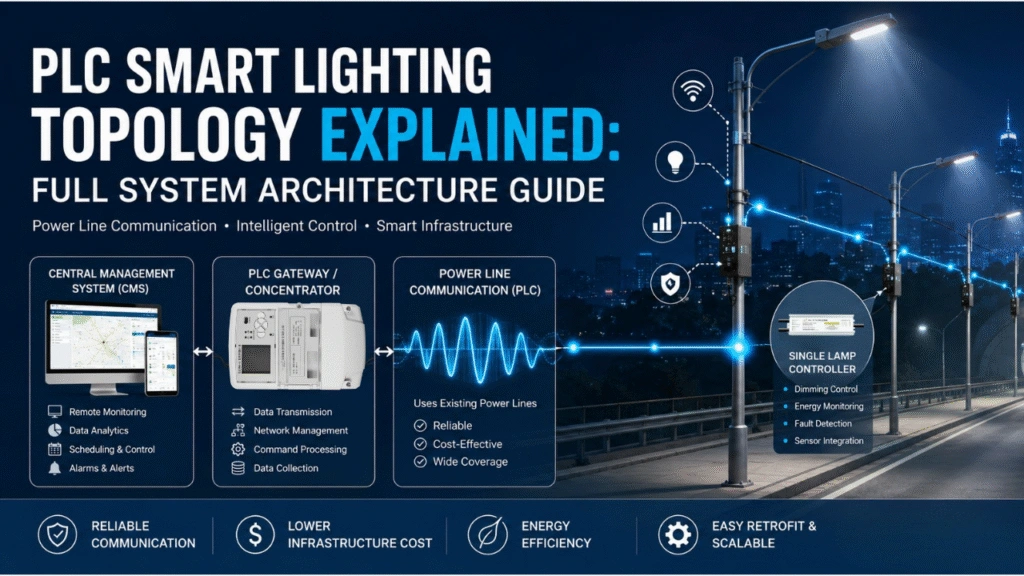
A typical PLC smart lighting topology includes:
- Cloud or Central Management System (CMS)
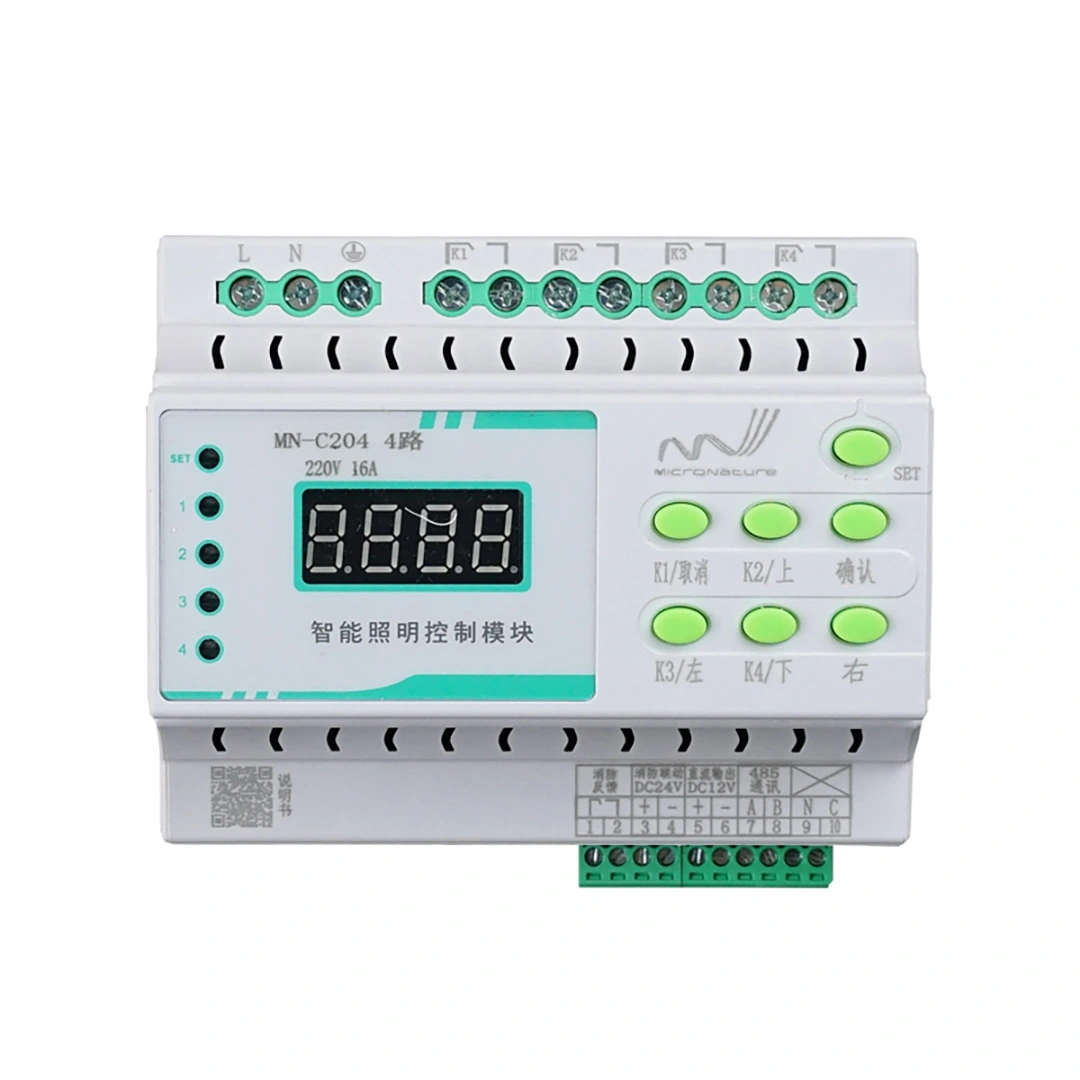
- PLC Smart Gateway / Concentrator
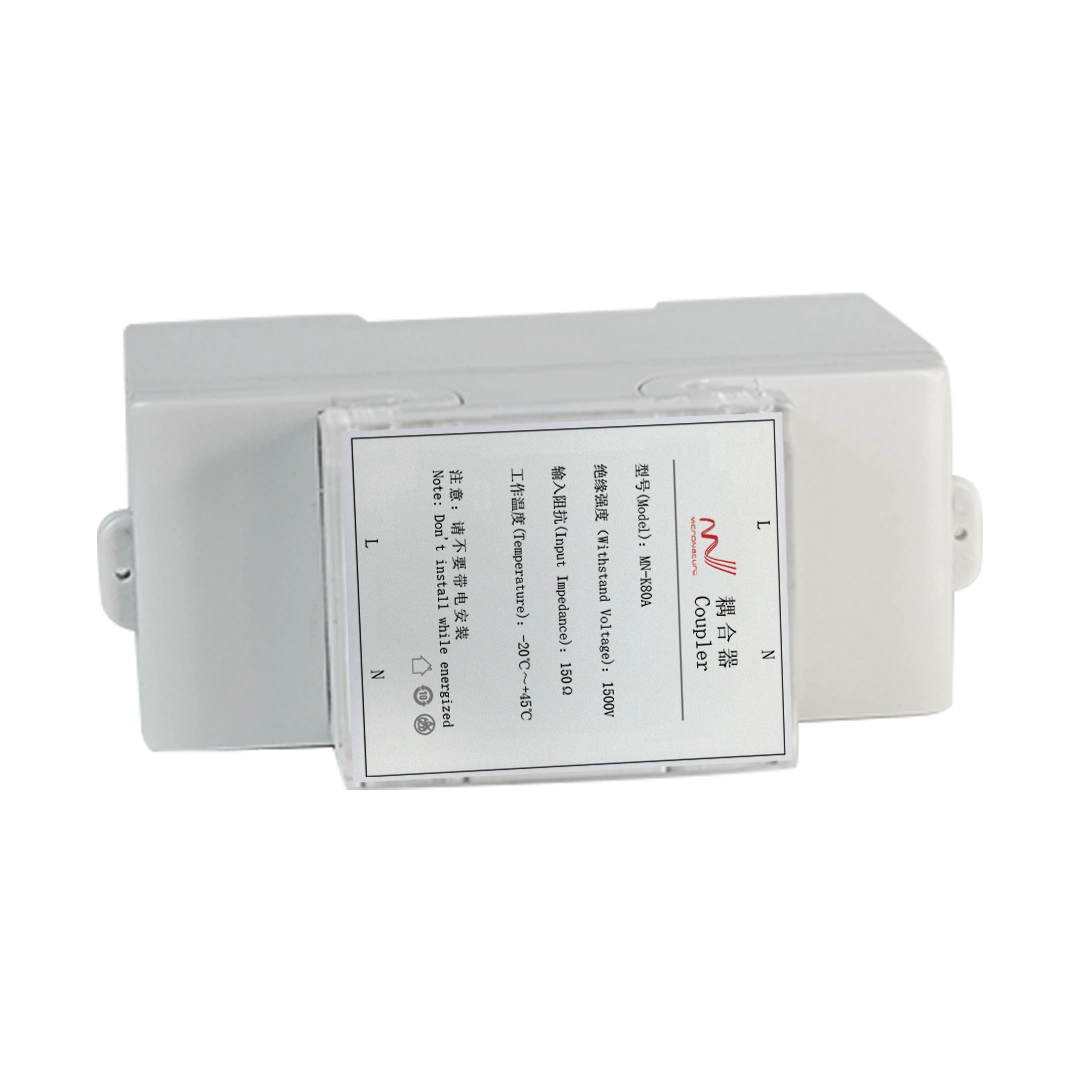
- Power Line Communication Network
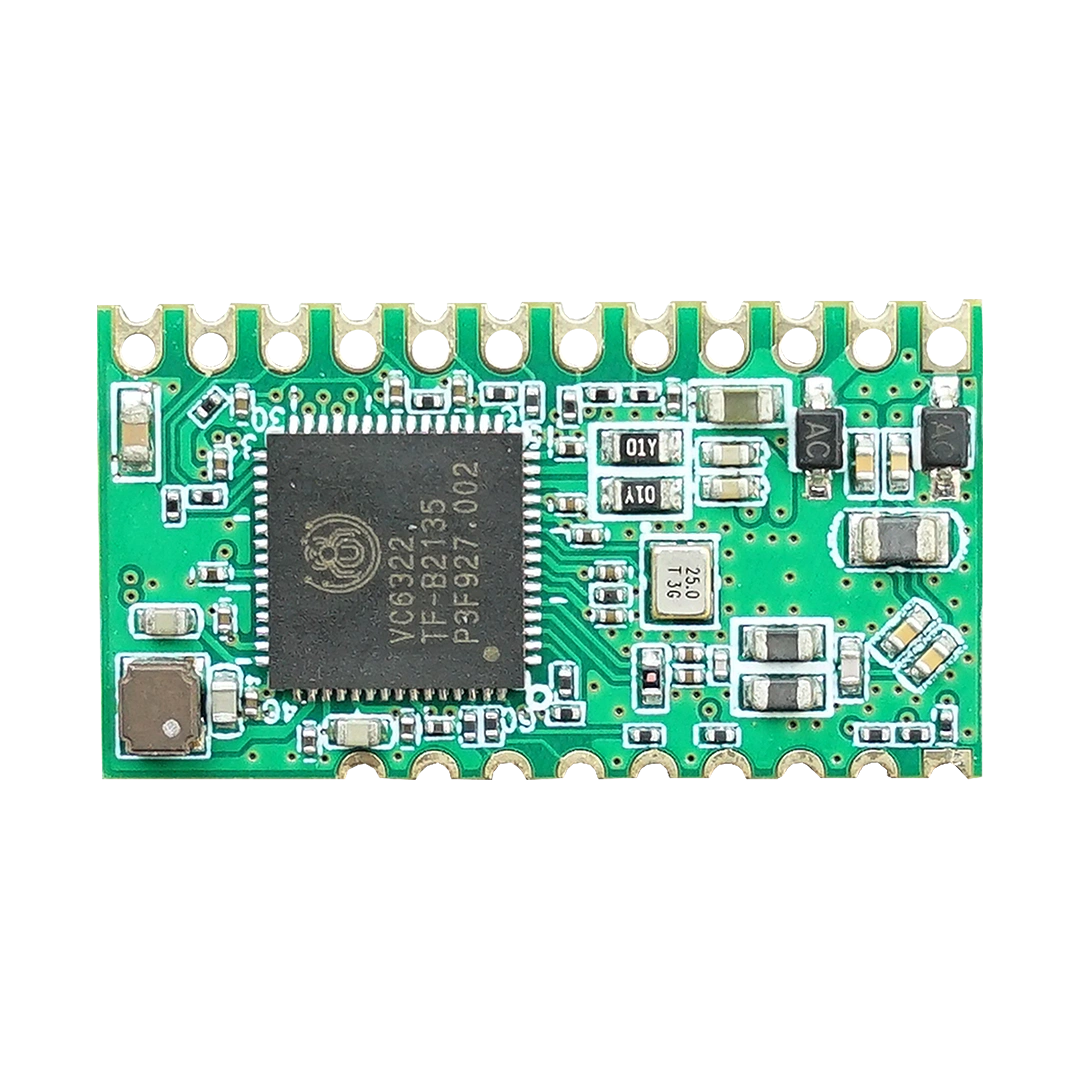
- Single Lamp Controllers
- LED Drivers and Fixtures
- Sensors and AI Devices
- Monitoring and Analytics Platform
The result is a centralized and intelligent lighting infrastructure capable of:
- Remote switching
- Adaptive dimming
- Real-time fault detection
- Energy monitoring
- Predictive maintenance
- AI-based automation
Core PLC Smart Lighting System Architecture
1. Central Management System (CMS)
The Central Management System acts as the brain of the PLC smart lighting network.
This platform is usually cloud-based or deployed on a local server depending on project requirements.
Main functions include:
- Remote lighting control
- Scheduling
- Energy analytics
- Device monitoring
- Alarm management
- Fault diagnostics
- Firmware updates
- Data visualization
- AI analytics integration
The CMS communicates with PLC concentrators through:
- Ethernet
- Fiber network
- 4G/5G
- NB-IoT
- VPN infrastructure
In large-scale infrastructure projects, the CMS enables operators to manage thousands of lighting points from a centralized dashboard.
2. PLC Concentrator / Smart Gateway
The PLC concentrator is the core communication bridge between the management platform and field lighting devices.
Its responsibilities include:
- Receiving commands from the CMS
- Encoding PLC communication signals
- Injecting data into power lines
- Managing local lighting groups
- Collecting operational data from controllers
- Reporting system status back to the cloud
The concentrator essentially converts digital management commands into PLC signals that travel through electrical cables.
In large deployments, multiple concentrators can be distributed across different lighting zones.
Typical deployment locations include:
- Electrical cabinets
- Distribution boxes
- Roadside control cabinets
- Tunnel equipment rooms
- Industrial substations
3. Power Line Communication Layer
The communication layer is the foundation of PLC smart lighting topology.
Unlike traditional communication systems, PLC uses existing AC power cables to transmit data.
This means:
- No additional communication cabling
- Reduced installation complexity
- Lower infrastructure cost
- Simplified retrofit deployment
The PLC signal travels over the same electrical wires already supplying power to lighting fixtures.
This architecture is especially valuable in:
- Highway lighting
- Tunnel lighting
- Industrial plants
- Ports
- Airports
- Underground facilities
- Smart campuses
Because the communication network already exists inside the power infrastructure, deployment becomes significantly faster and more reliable.
Single Lamp Controller Topology
4. Single Lamp Controllers
Single lamp controllers are installed directly on lighting fixtures or inside poles.
These controllers receive PLC commands from the concentrator and execute lighting operations locally.
Main controller functions include:
- ON/OFF switching
- Dimming control
- Energy metering
- Status monitoring
- Fault reporting
- Driver communication
- Sensor integration
Each controller usually has a unique address, enabling individual lighting control.
This creates a highly flexible topology where every lighting point can operate independently.
Advantages include:
- Precise energy optimization
- Individual fault detection
- Adaptive lighting scenarios
- Zone-based control
- Reduced maintenance time
In advanced projects, controllers may also support:
- GPS synchronization
- AI sensor interfaces
- Motion detection
- Environmental sensing
- Traffic-based dimming
LED Driver and Fixture Layer
5. LED Drivers and Smart Fixtures
The LED driver converts electrical power into controlled output for the lighting fixture.
In PLC smart lighting systems, the driver often works together with the lamp controller.
Depending on system design, the controller may:
- Directly control the driver
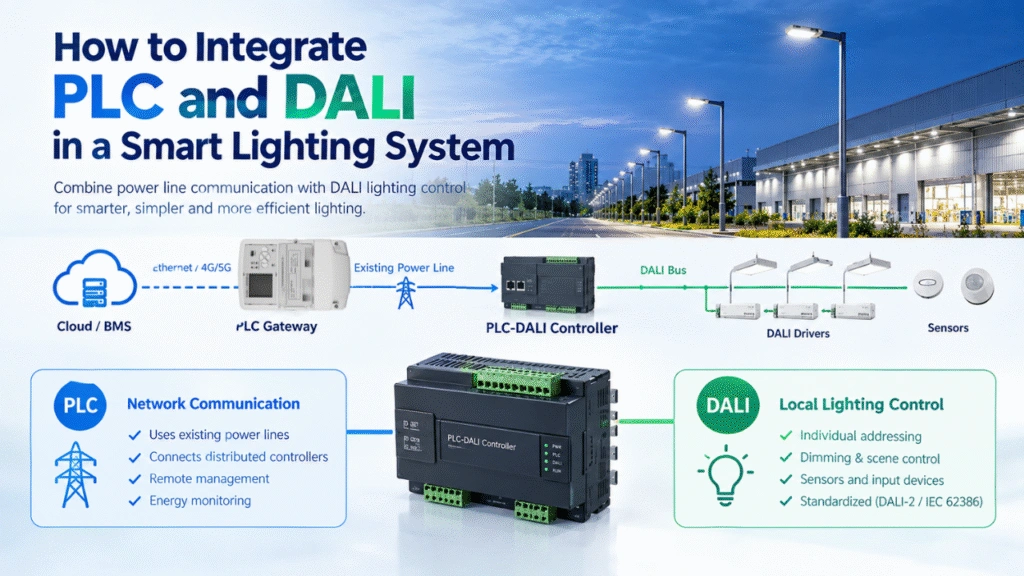
- Communicate through DALI
- Use PWM dimming
- Support 0-10V dimming
- Enable intelligent scene control
This layer is responsible for actual lighting performance.
Key capabilities include:
- Dynamic brightness adjustment
- Energy-efficient operation
- Constant illumination control
- Color temperature management
- Adaptive environmental response
The integration of smart drivers with PLC communication enables real-time lighting optimization.
Sensor Integration Architecture
6. Sensors and AI Devices
Modern PLC lighting topology increasingly includes intelligent sensing devices.
These sensors collect environmental and operational data that helps optimize lighting behavior.
Common sensor types include:
- Motion sensors
- Radar sensors
- Ambient light sensors
- Traffic detection sensors
- Environmental sensors
- AI vision cameras
- Parking occupancy sensors
- Pedestrian monitoring systems
Sensor data can trigger automatic lighting responses such as:
- Adaptive dimming
- Traffic-responsive lighting
- Emergency lighting activation
- Security enhancement
- Energy-saving schedules
AI-enabled PLC lighting systems may also support:
- Vehicle flow analysis
- Predictive maintenance
- Abnormal behavior detection
- Smart city integration
- Infrastructure analytics
This transforms lighting infrastructure into an intelligent data platform.
Typical PLC Smart Lighting Topology Structure
Below is a simplified topology flow commonly used in infrastructure lighting projects:
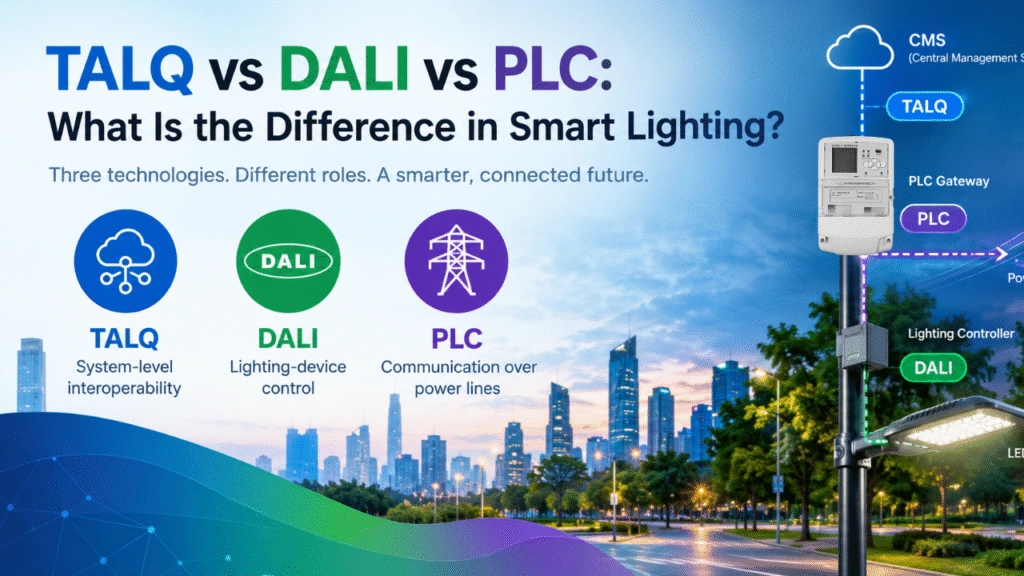
Cloud Platform / CMS ↓ Smart Gateway / PLC Concentrator ↓ Power Line Communication Network ↓ Single Lamp Controllers ↓ LED Drivers & Fixtures ↓ Sensors & AI Devices ↓ Real-Time Monitoring & Analytics
This hierarchical architecture enables centralized management while maintaining distributed device intelligence.
Types of PLC Smart Lighting Topologies
Centralized Topology
In centralized architecture:
- One concentrator manages many lighting nodes
- Communication is centrally coordinated
- Suitable for highways and large road systems
Advantages:
- Easier management
- Simplified maintenance
- Strong centralized control
Distributed Topology
In distributed architecture:
- Multiple concentrators operate across different zones
- Local intelligence improves scalability
- Reduces communication bottlenecks
Advantages:
- Better fault isolation
- Higher scalability
- Improved redundancy
Hybrid Topology
Many smart city projects combine centralized and distributed architectures.
This approach balances:
- Reliability
- Flexibility
- Scalability
- Infrastructure complexity
Hybrid topology is increasingly common in:
- Smart city deployments
- Airport lighting systems
- Industrial parks
- Tunnel networks
- Multi-zone campuses
PLC Communication Workflow Explained
Understanding how PLC communication works inside a smart lighting system helps infrastructure planners and engineers better understand the advantages of PLC topology.
Unlike traditional lighting systems that operate independently, PLC smart lighting creates a fully connected communication network across existing electrical infrastructure.
Below is a simplified workflow of how a PLC smart lighting system operates in real-world deployments.
Step 1: Central Management Platform Sends Commands
The process begins at the Central Management System (CMS), which is usually cloud-based or hosted on a local control server.
Operators can remotely issue commands such as:
- Turn lights ON or OFF
- Adjust brightness levels
- Create dimming schedules
- Activate emergency lighting
- Monitor energy consumption
- Detect abnormal device behavior
For example, a city operator may schedule highway lighting to dim to 60% brightness after midnight to reduce energy consumption.
The CMS converts these management instructions into digital communication commands.
Step 2: PLC Gateway or Concentrator Receives the Data
The command is then transmitted to the PLC gateway or concentrator.
The concentrator acts as the communication bridge between:
- The cloud management platform
- The field lighting network
Its main responsibilities include:
- Receiving control commands
- Managing lighting groups
- Encoding PLC communication signals
- Sending data through power lines
- Collecting operational feedback from field devices
The concentrator is usually installed inside:
- Electrical distribution cabinets
- Smart lighting control boxes
- Tunnel control rooms
- Roadside infrastructure cabinets
In large smart city projects, multiple concentrators may manage different lighting zones independently.
Step 3: Communication Signals Travel Through Power Lines
Once the concentrator encodes the command, the PLC signal is injected directly into the electrical power line.
This is one of the biggest advantages of PLC smart lighting topology.
Instead of installing:
- Fiber optic cables
- Ethernet communication lines
- Wireless mesh repeaters
PLC systems use existing electrical infrastructure as the communication channel.
The signal travels through the same AC power cable already supplying electricity to the lighting fixtures.
This architecture significantly reduces:
- Installation complexity
- Civil engineering work
- Infrastructure costs
- Retrofit difficulty
It also improves deployment speed for large infrastructure projects.
How PLC Signals Reach Lighting Fixtures
PLC signals travel along the power network until they reach the target lamp controllers.
Each controller has its own communication address.
When the signal reaches the controller:
- The controller identifies whether the command belongs to its assigned address
- The controller decodes the communication signal
- The controller executes the requested lighting action
This allows the system to control lighting individually or in groups.
For example:
- One road section may dim to 40%
- Another area may remain at full brightness
- Emergency routes may switch to maximum illumination
All of this can happen simultaneously inside the same lighting network.
Step 4: Lamp Controllers Execute Commands
The single lamp controller is the intelligent device installed on each lighting fixture or pole.
After receiving the PLC signal, the controller performs actions such as:
- Switching the fixture ON or OFF
- Dimming brightness levels
- Monitoring power usage
- Detecting driver failures
- Reporting abnormal voltage
- Collecting sensor information
Modern lamp controllers may also support:
- DALI communication
- 0-10V dimming
- PWM dimming
- GPS synchronization
- Motion sensing
- Environmental monitoring
This creates distributed intelligence across the entire lighting infrastructure.
Step 5: Operational Data Returns to the CMS
PLC communication is bidirectional.
This means lamp controllers not only receive commands, but also send data back to the management platform.
Typical feedback data includes:
- Real-time power consumption
- Device operating status
- Driver health information
- Fault alarms
- Voltage and current measurements
- Temperature data
- Sensor analytics
This information allows operators to monitor the entire lighting network remotely.
For example, the system can automatically detect:
- Failed fixtures
- Power abnormalities
- Communication interruptions
- Energy inefficiencies
Maintenance teams can then respond quickly without manually inspecting every lighting pole.
Real-Time Monitoring and Intelligent Automation
One major advantage of PLC smart lighting topology is real-time automation.
The system can automatically adjust lighting behavior based on:
- Traffic density
- Pedestrian activity
- Ambient brightness
- Weather conditions
- Emergency events
- Security alerts
For example:
- Lighting brightness can increase when traffic flow rises
- Empty roads can automatically dim during low-usage periods
- Tunnel lighting can adapt to changing external daylight conditions
This intelligent automation helps reduce energy waste while improving public safety.
PLC Communication Workflow in Smart City Infrastructure
In modern smart city projects, lighting infrastructure increasingly functions as a connected digital platform.
The PLC communication workflow may also integrate with:
- AI analytics platforms
- Traffic management systems
- Environmental monitoring systems
- EV charging infrastructure
- Smart parking systems
- Public safety networks
This transforms lighting poles into intelligent infrastructure nodes capable of supporting multiple urban technologies simultaneously.
Example: Smart Highway PLC Lighting Workflow
A real-world smart highway deployment may operate like this:
- Traffic sensors detect reduced vehicle activity after midnight
- The cloud platform calculates optimized dimming levels
- Commands are sent to PLC concentrators
- PLC signals travel through roadside power cables
- Lamp controllers dim lighting to energy-saving levels
- Energy usage data returns to the cloud dashboard
- The AI platform continuously analyzes operational efficiency
This closed-loop communication architecture enables highly efficient infrastructure management.
Why PLC Communication Workflow Is Important
Understanding the PLC workflow is important because it directly affects:
- System reliability
- Communication stability
- Maintenance efficiency
- Energy optimization
- Scalability
- Smart city integration capability
A well-designed PLC topology ensures that lighting systems can operate efficiently even in challenging environments such as:
- Tunnels
- Ports
- Airports
- Industrial facilities
- Underground infrastructure
- Long-distance highways
This is one reason why PLC smart lighting is increasingly adopted in modern intelligent infrastructure projects.