As electric vehicle (EV) adoption accelerates worldwide, EV charging stations are evolving from simple charging points into intelligent energy management hubs. Modern charging infrastructure now integrates smart lighting, energy monitoring, dynamic load balancing, renewable energy systems, and centralized cloud control. This guide explains how PLC communication supports EV charging infrastructure, smart lighting integration, energy management, ISO 15118 communication, and future smart city charging networks.
At the center of this transformation is PLC (Power Line Communication) technology.
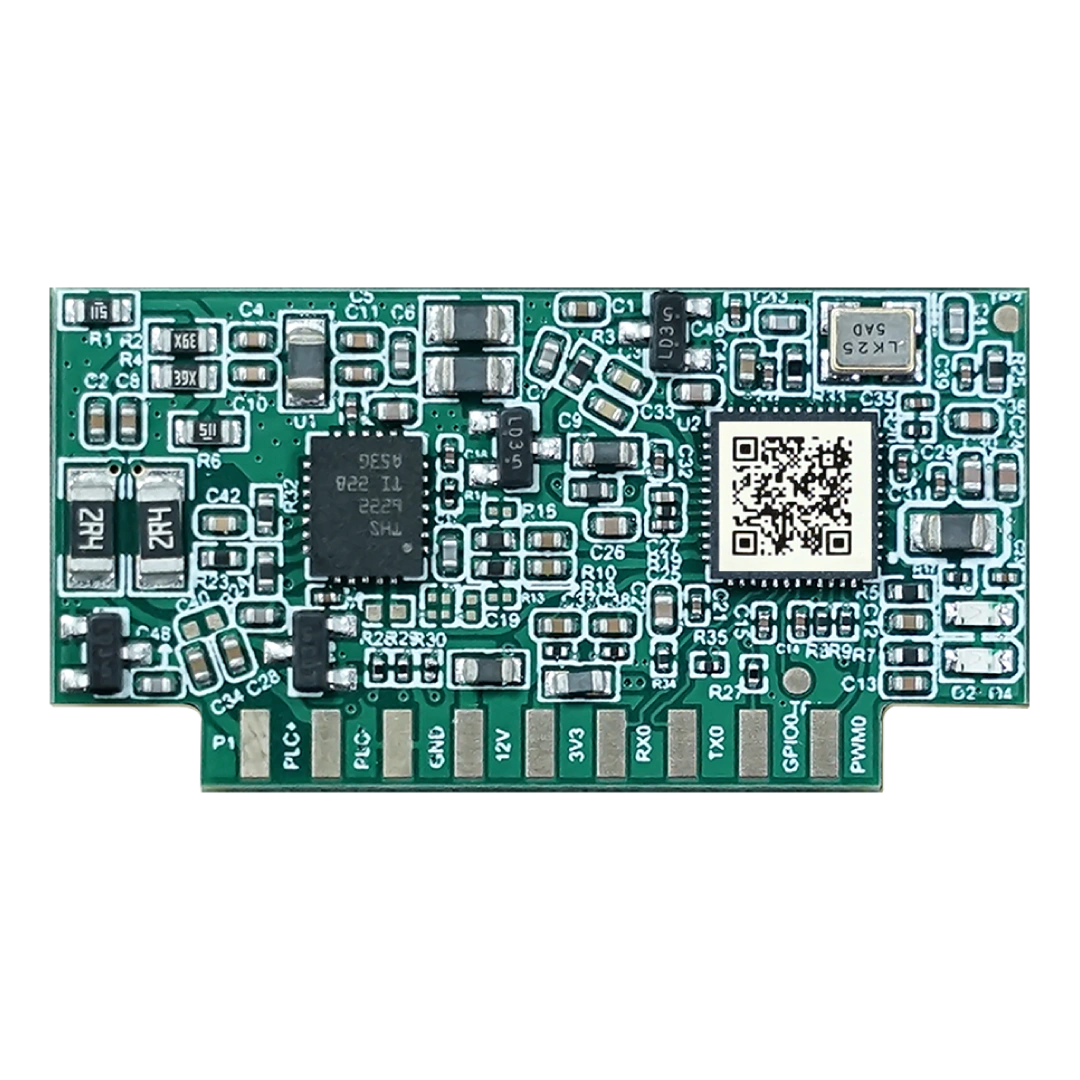
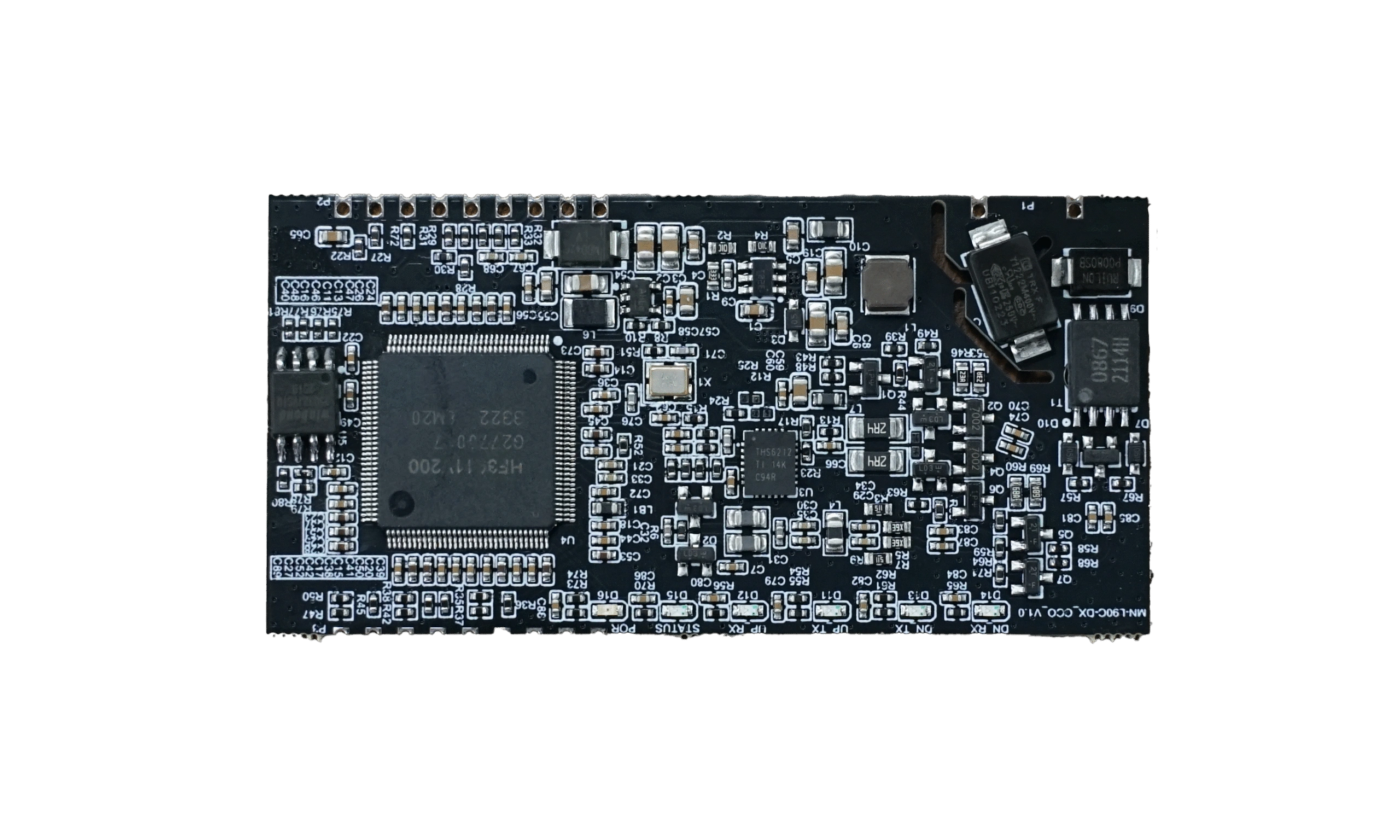
By transmitting data through existing power cables, PLC enables EV charging stations to achieve reliable communication without additional networking wiring. This makes PLC an increasingly attractive solution for smart charging infrastructure, parking facilities, commercial buildings, smart cities, and integrated energy management projects.
In this article, we explore how PLC communication enhances EV charging stations, how it integrates with smart lighting systems, and why it is becoming a key technology for next-generation smart energy infrastructure.
What Is PLC Communication in EV Charging?
PLC communication in EV charging stations uses existing electrical power lines to transmit both electricity and communication data. This enables EV chargers, smart lighting systems, cloud platforms, and energy management systems to communicate without separate networking cables.
In EV charging applications, PLC enables communication between:
- EV chargers and central management systems
- Chargers and smart meters
- Charging stations and lighting systems
- EV chargers and renewable energy systems
- Charging networks and cloud platforms
- Vehicle-to-grid (V2G) communication systems
PLC technology is already widely recognized in smart grids, intelligent lighting systems, and EV charging communication standards. Modern EV charging systems increasingly rely on high-reliability PLC protocols to support advanced charging functions, smart scheduling, and grid coordination.
Why PLC Is Ideal for EV Charging Infrastructure
EV charging stations often face deployment challenges:
- Long communication distances
- Complex outdoor environments
- Underground parking structures
- Electromagnetic interference
- High installation costs
- Difficult retrofitting conditions
PLC solves many of these issues because it uses existing electrical infrastructure.
Key Advantages of PLC in EV Charging Stations
1. No Additional Communication Wiring
Traditional RS485, Ethernet, or fiber communication requires separate communication cabling. PLC eliminates this requirement by transmitting data through existing power lines.
This significantly reduces:
- Installation cost
- Construction time
- Maintenance complexity
- Retrofit difficulty
Especially in parking garages, highways, malls, and public charging facilities, PLC simplifies deployment dramatically.
2. Stable Communication in Harsh Environments
EV charging stations operate in electrically noisy environments due to:
- High-power switching
- Fast chargers
- Inverters
- HVAC systems
- Renewable energy equipment
Modern PLC technologies such as G3-PLC are specifically designed to operate reliably in noisy electrical environments. Industry research highlights PLC’s strong anti-interference capability and suitability for EV charging communication.
3. Scalable Network Expansion
As EV adoption grows, charging networks continue expanding.
PLC allows operators to:
- Add new chargers easily
- Expand parking-lot charging systems
- Integrate smart lighting controls
- Connect distributed energy systems
Without major rewiring projects.
4. Lower Total Infrastructure Cost
Using existing power cables for communication reduces:
- Material costs
- Labor costs
- Cable trenching
- Maintenance expenses
This makes PLC particularly attractive for:
- EPC contractors
- Smart city projects
- Commercial parking facilities
- Industrial charging systems
- Public charging infrastructure
Smart Energy Integration in EV Charging Stations
Modern EV charging infrastructure is no longer isolated. Charging stations are becoming part of broader smart energy ecosystems.
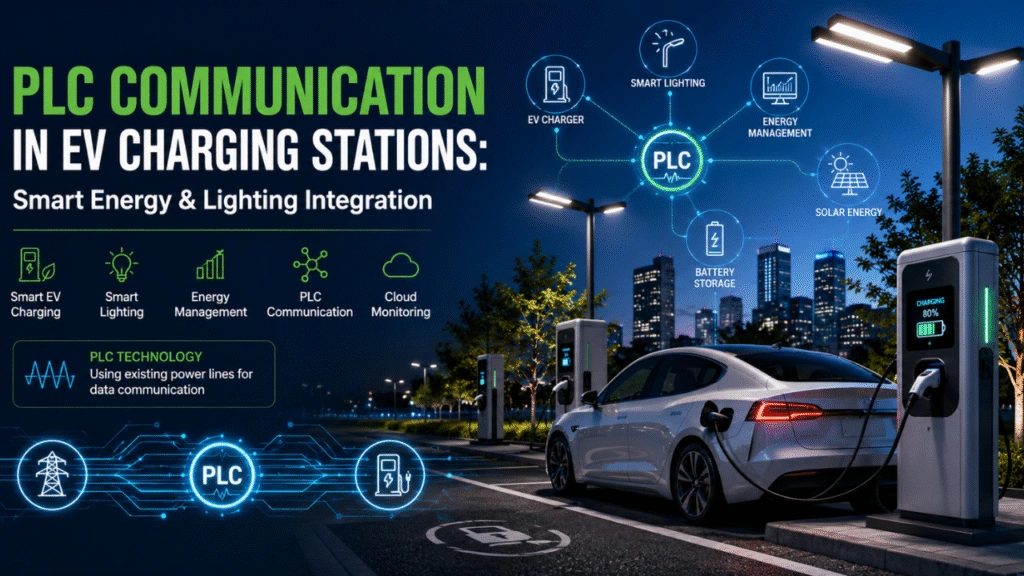
PLC communication enables integration between:
- EV chargers
- Smart lighting
- Solar PV systems
- Battery storage
- Smart meters
- Building management systems
- Utility demand response platforms
This interconnected architecture improves energy efficiency and operational intelligence.
PLC vs. Wireless Communication in EV Charging Stations
PLC + Smart Lighting Integration
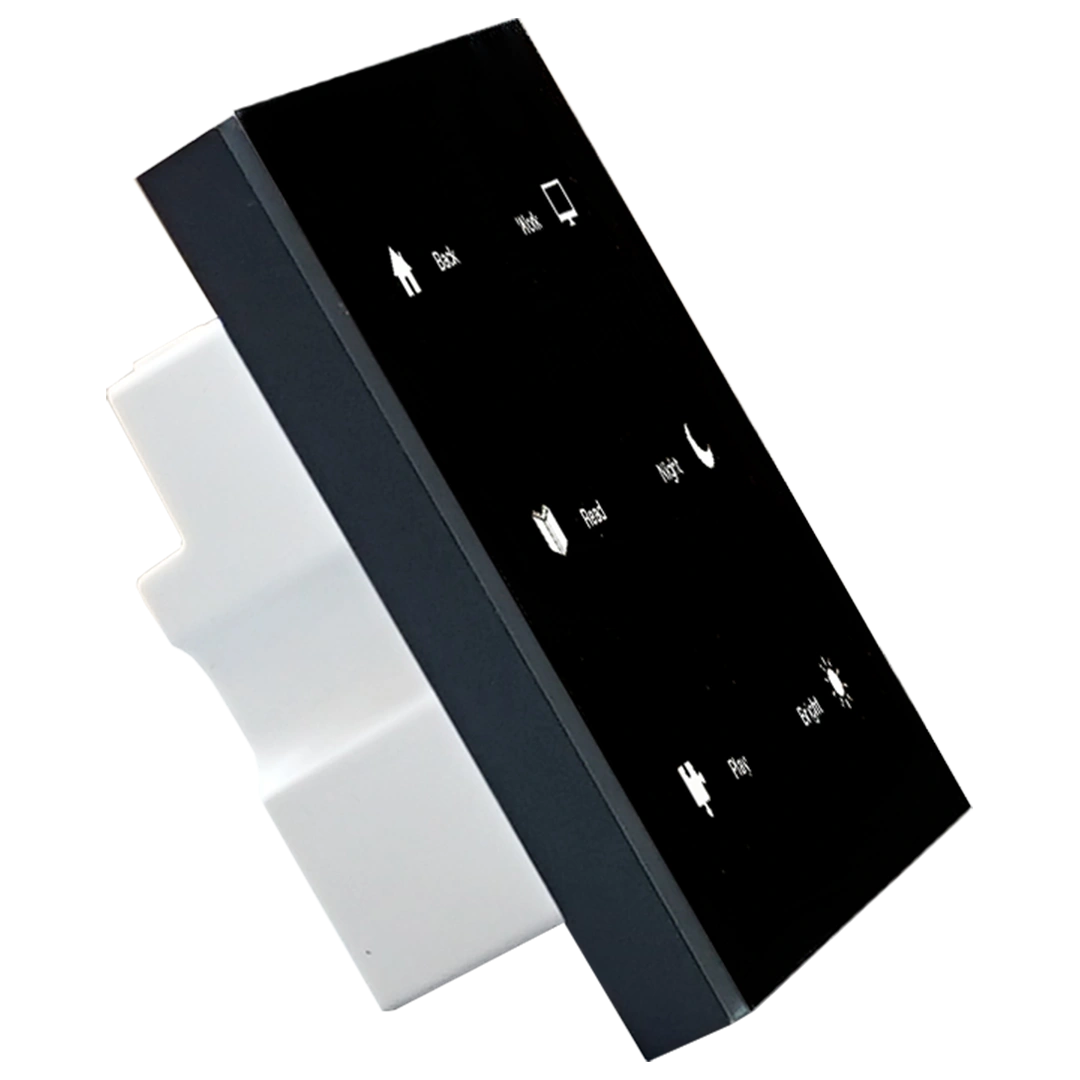
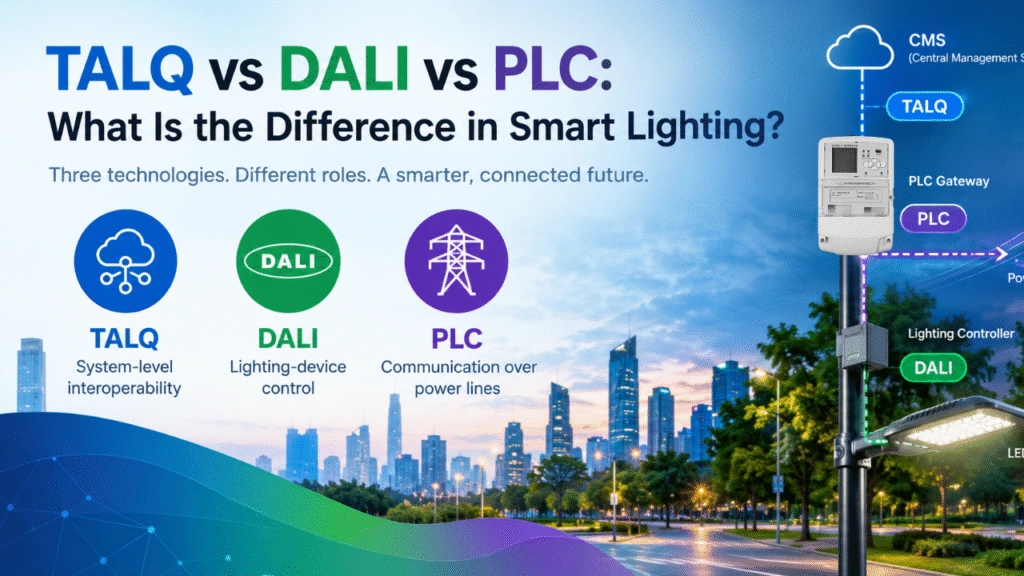
One of the most promising applications is the integration of EV charging stations with PLC smart lighting systems. Many modern PLC smart lighting systems already support centralized energy management and remote monitoring.
Because both lighting fixtures and EV chargers already connect to power infrastructure, PLC allows them to share the same communication backbone.
Benefits of Smart Lighting Integration
Unified Infrastructure
Parking lots, charging stations, and street lighting can operate on one integrated PLC network.
This simplifies:
- Installation
- Monitoring
- Maintenance
- Remote management
Energy Optimization
Smart lighting systems can dynamically respond to charging demand.
Examples include:
- Dimming lights during peak charging loads
- Activating brighter lighting when vehicles arrive
- Coordinating charging schedules with lighting energy consumption
- Optimizing overall site energy usage
Centralized Monitoring
Operators can manage:
- Lighting systems
- Charging stations
- Energy consumption
- Fault detection
- Power quality
Through a single cloud platform.
Smart City Compatibility
Integrated PLC lighting and EV charging infrastructure aligns perfectly with smart city development strategies. Cities increasingly deploy hybrid PLC and 4G lighting architecture to support scalable smart infrastructure.
Cities increasingly seek unified infrastructure capable of supporting:
- Intelligent transportation
- Smart energy management
- Public safety lighting
- Renewable energy integration
- Real-time data analytics
Typical Architecture of PLC-Based EV Charging Systems
A PLC-enabled EV charging architecture typically includes:
EV Chargers
Smart chargers equipped with PLC communication modules enable real-time monitoring and remote control.
PLC Communication Network
Existing power lines act as both the energy supply and communication channel.
Smart Lighting Controllers
Streetlights or parking-lot lights connect to the same PLC network.
Energy Management Platform
A centralized software platform manages:
- Charger status
- Energy distribution
- Lighting control
- Load balancing
- Alarm reporting
- Usage analytics
Renewable Energy Systems
Solar PV and battery storage systems can also integrate into the PLC communication network.
Dynamic Load Balancing with PLC
One major challenge in EV infrastructure is preventing grid overload during peak charging periods.
PLC enables dynamic load balancing by allowing chargers and energy systems to exchange real-time power data.
Benefits include:
- Preventing transformer overload
- Reducing peak demand charges
- Improving charging efficiency
- Supporting demand response programs
- Enabling smart charging schedules
Industry experts increasingly view communication-enabled smart charging as essential for future grid stability and energy optimization.
PLC and Vehicle-to-Grid (V2G) Technology
Future EV charging networks will support bidirectional energy flow through Vehicle-to-Grid (V2G) systems.
PLC communication plays an important role by enabling:
- Secure charger-to-vehicle communication
- Energy transaction coordination
- Smart grid interaction
- Real-time energy balancing
Modern EV communication standards such as ISO 15118 rely heavily on PLC-based communication mechanisms for advanced charging features and V2G support.
Cybersecurity Considerations
As charging stations become more connected, cybersecurity becomes increasingly important.
PLC-based charging systems should include:
- Encrypted communication
- Device authentication
- Secure firmware updates
- Network segmentation
- Real-time anomaly detection
Research also highlights the importance of protecting smart charging systems against communication-based cyberattacks.
Real-World Application Scenarios
Commercial Parking Facilities
PLC enables integrated management of:
- EV chargers
- Parking lot lighting
- Energy monitoring
- Access systems
Smart City Street Charging
Cities can deploy:
- Smart streetlights
- Public EV chargers
- Environmental sensors
On a shared PLC infrastructure.
Residential Communities
Apartment complexes can use PLC for:
- Shared charging systems
- Smart lighting control
- Energy billing
- Remote monitoring
Industrial & Logistics Parks
Industrial facilities benefit from:
- Lower wiring costs
- Centralized control
- High reliability
- Scalable charging infrastructure
Why PLC Is Becoming More Important in EV Infrastructure
Several global trends are accelerating PLC adoption:
- Rapid EV growth
- Smart city expansion
- Renewable energy integration
- Demand for energy efficiency
- Grid modernization
- Infrastructure retrofit projects
PLC offers a unique combination of:
- Reliability
- Cost efficiency
- Scalability
- Simpler deployment
- Strong smart-grid compatibility
As EV charging networks continue growing, PLC communication is expected to become a foundational technology for intelligent charging ecosystems.
How PLC Lighting Supports EV Charging Integration
At PLC Lighting, we develop advanced PLC communication solutions for smart lighting, energy management, and EV charging integration.
Our PLC communication technologies support:
- Smart street lighting
- EV charging infrastructure
- Solar energy systems
- Industrial automation
- Smart city applications
- Centralized cloud management
Our solutions help EPC contractors, system integrators, municipalities, and infrastructure developers build reliable, scalable, and future-ready smart energy systems.
Learn more about our PLC communication technologies here:
- PLC Communication Modules
- IoT PLC Smart Lighting Systems
- Hybrid PLC + 4G Smart Lighting Architecture
Final Thoughts
EV charging stations are rapidly evolving into intelligent energy nodes connected to broader smart infrastructure systems.
PLC communication provides an efficient and scalable way to integrate:
- EV charging
- Smart lighting
- Renewable energy
- Energy management
- Smart city infrastructure
By leveraging existing power lines for communication, PLC reduces deployment complexity while enabling advanced automation and energy optimization capabilities.
As the future of mobility becomes increasingly connected and electrified, PLC technology will continue playing a vital role in building smarter, more sustainable charging infrastructure.