IoT PLC smart lighting combines Internet of Things (IoT) technology enables connected devices to communicate and exchange data, as defined in global IoT standards developed by the International Telecommunication Union (ITU). By using existing electrical infrastructure for communication, PLC-based IoT lighting systems provide stable connectivity without additional communication wiring.
According to Fortune Business Insights, the global IoT market was valued at USD 714.48 billion in 2024 and is projected to grow from USD 864.32 billion to USD 4,062.34 billion by 2032, registering a remarkable 24.3% CAGR.
Read the full IoT market report
IoT as the Foundation of the Connected Economy
IoT refers to a network of physical objects embedded with software and sensors that exchange data with other systems over the internet. This infrastructure enables interoperable data flows and supports automated communication without human intervention.
The technology is expected to:
- Generate new revenue streams
- Improve operational efficiency
- Enable innovative business models
- Transform service delivery across sectors
As industries become increasingly data-driven, IoT is evolving into the backbone of modern digital services.
IoT PLC Smart Lighting System Architecture
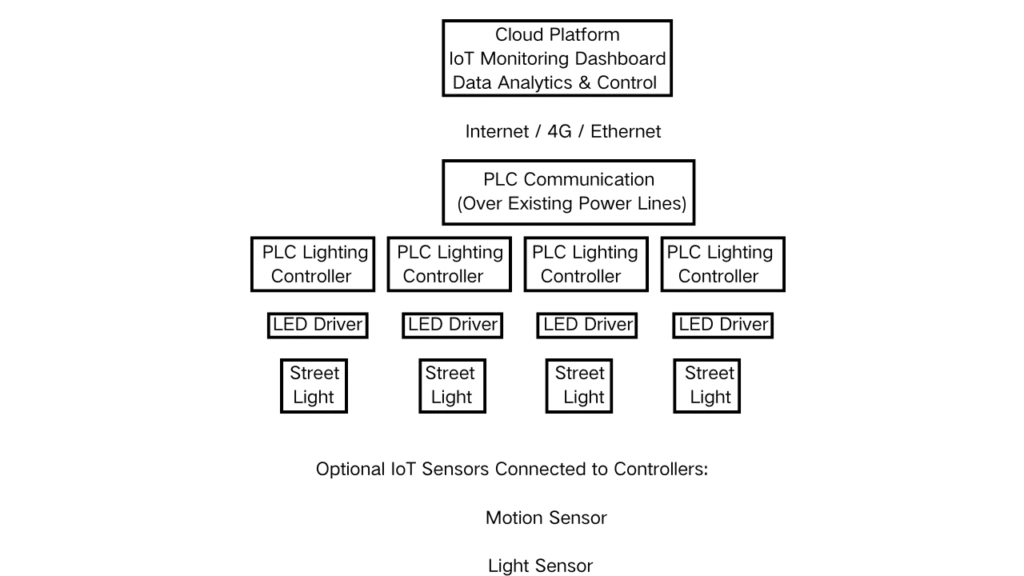
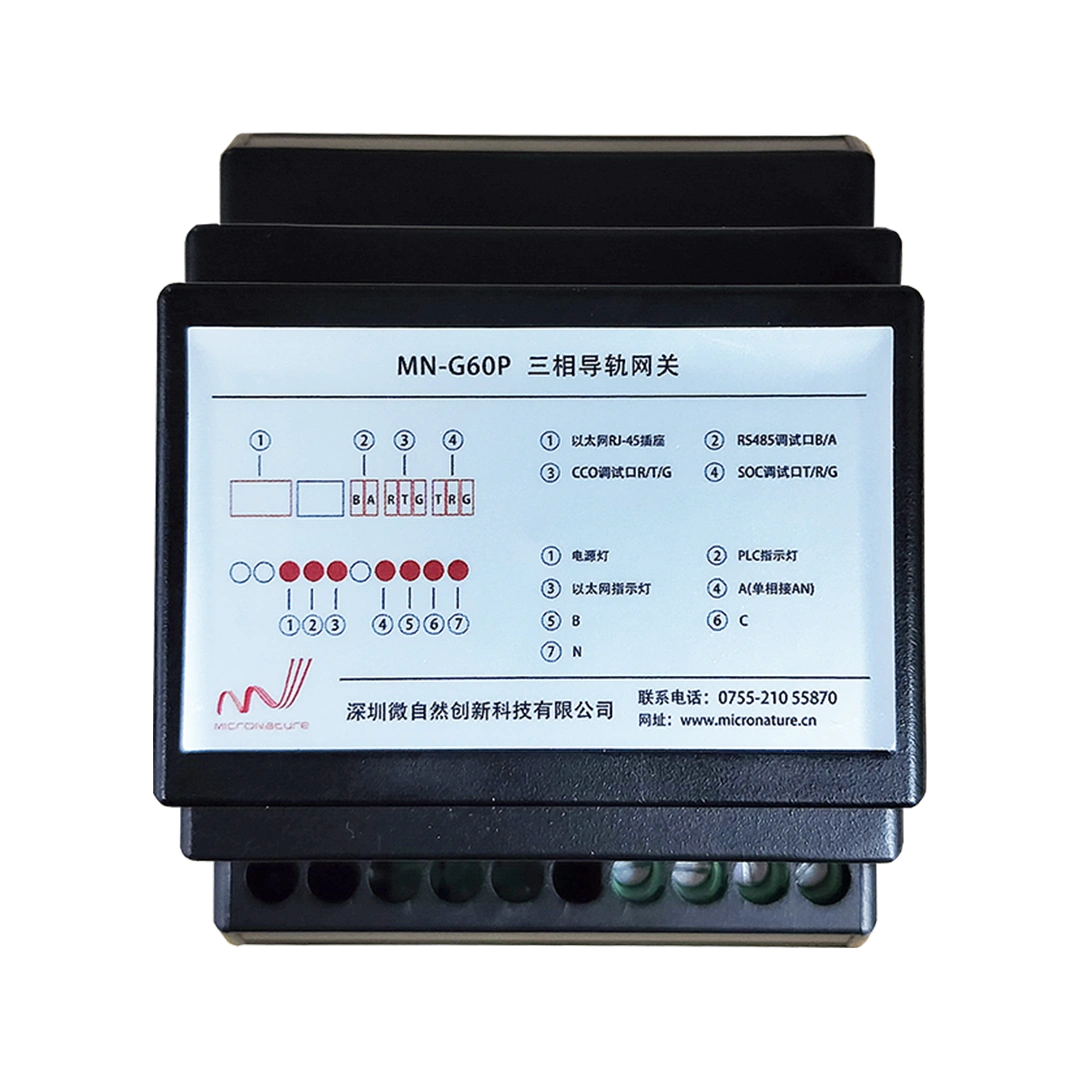
A typical IoT PLC smart lighting system architecture integrates communication devices, sensors, and centralized control software. Industrial communication technologies are commonly standardized by organizations such as the International Electrotechnical Commission (IEC).
Key components include:
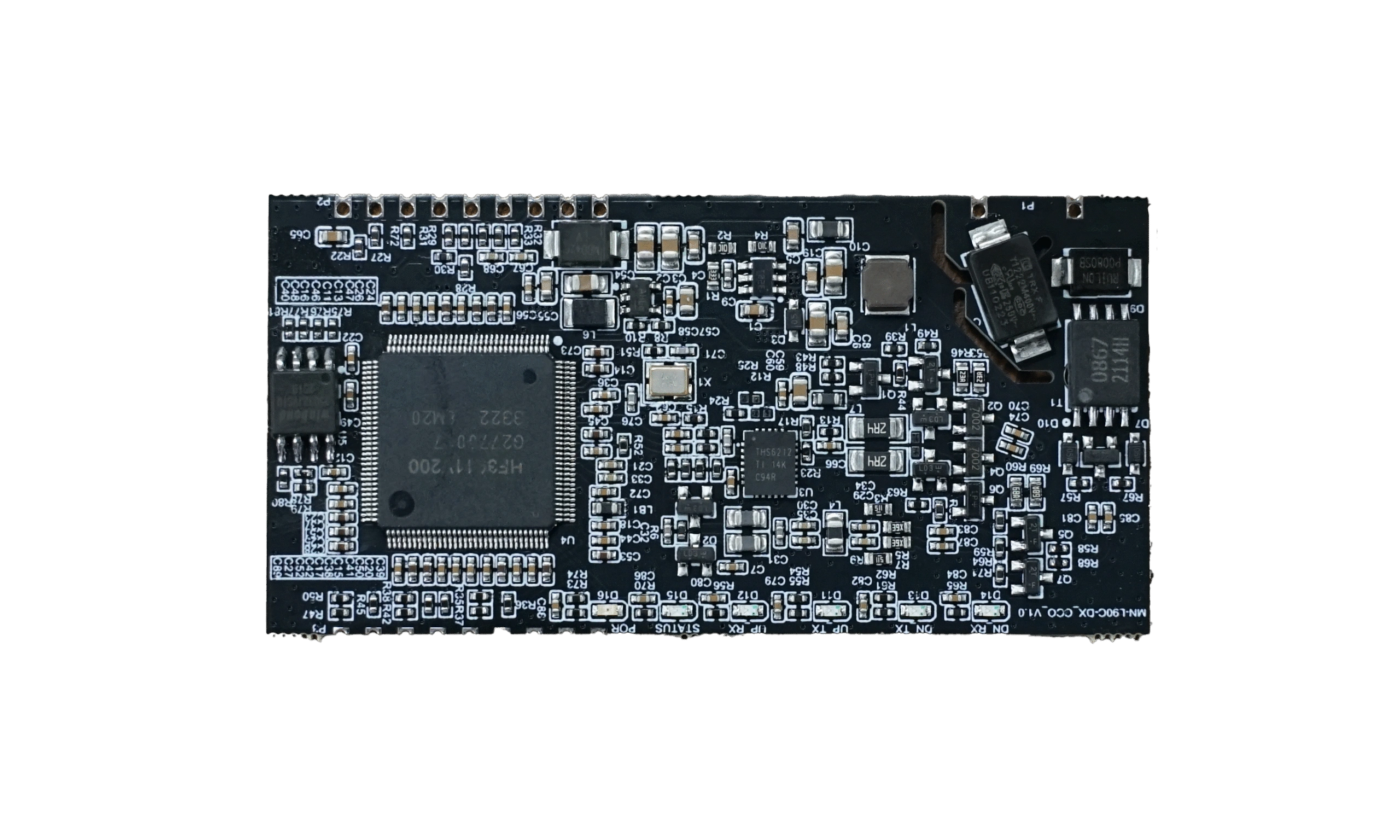
- PLC communication modules installed in lighting controllers
- IoT sensors collecting environmental and operational data
- Central management software enabling monitoring and automation
- Cloud-based platforms supporting remote control and analytics
- Field devices such as lighting drivers and controllers
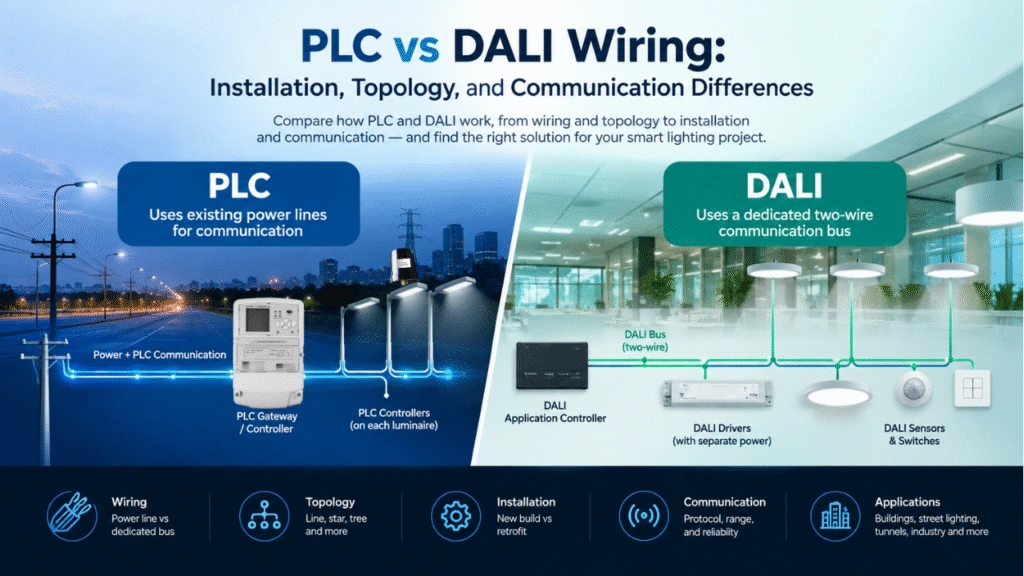
In this architecture, PLC communication enables stable data transmission across power lines, while IoT platforms provide intelligent monitoring and system optimization.
AI, Cloud, and Blockchain Are Accelerating Adoption
Emerging technologies are amplifying IoT’s capabilities and market momentum.
Generative AI, for example, can analyze massive datasets collected from IoT sensors to support predictive maintenance, anomaly detection, energy optimization, and fraud prevention.
Meanwhile, blockchain is gaining traction as a decentralized security architecture that helps address privacy and data-integrity challenges associated with connected devices.
Cloud deployment continues to play a critical role by enabling advanced analytics, machine learning services, and actionable insights that enhance decision-making and innovation.
Together, these technologies are shaping a smarter, more autonomous industrial landscape.
Smart Cities and Industrial Transformation Drive Growth
One of the strongest catalysts behind IoT expansion is the rapid rise of smart cities. Connected devices such as intelligent meters, smart lighting, transportation systems, and environmental sensors are improving urban efficiency and sustainability.
At the same time, Industrial IoT, smart manufacturing, and intelligent infrastructure are expected to create major business transformation opportunities.
Large enterprises currently dominate adoption due to their resources and ability to integrate IoT data with enterprise systems, while SMEs are increasingly deploying cost-effective solutions like remote monitoring and inventory management.
Regional Momentum Signals Long-Term Expansion
North America holds the largest market share, supported by growing cloud adoption, strong R&D investment, and widespread deployment of advanced technologies such as 5G.
Asia-Pacific is expected to record the highest growth rate, fueled by smart-city initiatives and expanding cloud spending.
Healthcare is projected to capture significant market share as digital transformation improves productivity and supply chain performance.
These trends indicate that IoT is no longer an emerging technology — it is becoming a global operational standard.
Why PLC Is Becoming a Critical Connectivity Layer for Industry 4.0
As IoT deployments scale from thousands to millions of devices, connectivity strategy becomes a decisive success factor. Traditional wired and wireless infrastructures often require costly installation, complex retrofitting, and ongoing maintenance.
Power Line Communication offers a smarter alternative.
By transmitting data through existing electrical wiring, PLC enables organizations to deploy connected systems without installing additional communication cables. This approach delivers several strategic advantages:
1. Faster Infrastructure Deployment
Industrial facilities, tunnels, warehouses, and campuses can digitize operations using the power network already in place.
2. Lower Total Cost of Ownership
Reduced cabling, labor, and downtime translate into measurable cost savings — a key consideration as enterprises scale IoT.
3. High Reliability for Mission-Critical Environments
Unlike some wireless technologies, PLC can provide stable communication in electrically dense industrial settings.
4. Strong Alignment with Smart Infrastructure
From intelligent lighting to predictive maintenance systems, PLC supports the connected environments driving smart-city innovation.
PLC + AI: Enabling Autonomous Industrial Operations
The next evolution of Industry 4.0 is not just connectivity — it is autonomy.
When PLC networks are combined with AI-powered analytics, organizations gain the ability to:
- Detect anomalies in real time
- Optimize energy consumption
- Automate maintenance workflows
- Improve safety across industrial sites
This convergence supports the transition from reactive operations to predictive and ultimately self-optimizing systems.
Overcoming IoT Challenges with Smarter Connectivity
Despite its rapid growth, the IoT market faces constraints related to data security, privacy, and device complexity.
Deploying resilient communication architectures is therefore essential.
PLC helps address these concerns by simplifying network design, reducing hardware touchpoints, and enabling centralized control — all of which contribute to more manageable and secure infrastructures.
The Road Ahead: Connectivity Will Define Industrial Leaders
The projected multi-trillion-dollar expansion of the IoT market signals a clear reality: connectivity is becoming the foundation of competitive advantage.
Organizations that prioritize scalable, intelligent communication technologies today will be best positioned to lead tomorrow’s autonomous industrial economy.
Power Line Communication is no longer just an alternative networking method — it is rapidly becoming a strategic enabler of Industry 4.0, empowering enterprises to connect faster, operate smarter, and innovate with confidence.
Applications of IoT PLC Smart Lighting
IoT PLC smart lighting systems are widely used in modern smart lighting infrastructure and industrial environments.
Typical applications include:
- Smart street lighting systems
- Industrial lighting automation
- Smart campuses and parks
- Highway and tunnel lighting
- Municipal infrastructure projects
These applications demonstrate how PLC-based IoT systems improve reliability, energy efficiency, and centralized control.