Energy-efficient industrial lighting combines high-efficacy LED luminaires with appropriate lighting design, occupancy sensing, daylight-responsive controls, and intelligent dimming. In factories and warehouses, the objective is to maintain the illumination required for safe operations while reducing unnecessary electricity consumption and maintenance costs. PLC (Power Line Communication) can provide a control and monitoring communication layer over suitable existing power wiring, helping simplify some industrial lighting retrofit projects.
What Is Energy Efficient Industrial Lighting?
Energy efficient industrial lighting is a lighting approach that provides the illumination required for industrial tasks while minimizing energy consumption over the system’s operating life. It covers more than the efficiency of an individual lamp. The design must account for mounting height, work surfaces, visual tasks, operating schedules, maintenance conditions, and how often specific areas are occupied.
Key Factors That Affect Industrial Lighting Energy Use
Luminous efficacy, measured in lumens per watt (lm/W), indicates how much visible light a luminaire produces for each watt of electrical input. Higher efficacy can help reduce power demand, provided the product also delivers an appropriate distribution of light.
However, energy use also depends on total installed wattage and operating hours. An efficient high-bay fixture that operates at full output in an empty warehouse aisle may still consume unnecessary electricity. Appropriate fixture spacing, control zoning, dimming capability, and occupancy patterns should be considered together rather than separately.
How LED Lighting Reduces Energy Consumption in Industrial Facilities
Lower Energy Consumption Compared with Traditional Lighting
LED luminaires can replace older metal halide, high-pressure sodium, and fluorescent systems while delivering the light output required for industrial operations with lower electrical input. The actual reduction depends on the old equipment, ballast losses, replacement design, operating hours, and required illumination levels. An accurate comparison therefore uses measured or documented system wattage, not a general savings percentage applied to every building.
Efficient equipment selection also requires attention to beam distribution. A luminaire that directs light effectively onto work surfaces may allow a more suitable arrangement than a poorly matched fixture with impressive headline specifications. Project designers should check illuminance, uniformity, glare, and the environmental rating of the luminaire rather than choosing solely by wattage.
Longer Service Life and Reduced Maintenance
Industrial lighting maintenance can be disruptive in high-ceiling environments because replacing a fixture may require lifting equipment, work-area access, and scheduling around production. Properly specified LEDs can reduce the frequency of replacement compared with many older lighting technologies. Product lifetime claims must still be interpreted alongside operating temperature, driver quality, maintenance practices, and lumen depreciation: a rated lifetime is not a guarantee that every fixture will operate for that duration.
Instant Switching and Reduced Heat Output
LEDs respond quickly to switching and dimming commands, making them suitable for occupancy-based strategies without the warm-up or restrike behavior associated with some legacy discharge lighting. They also generally convert a greater share of electrical input into useful light and can reduce unwanted heat compared with less efficient fixtures, although the effect on a facility’s HVAC load depends on the building and its heating or cooling conditions.
Types of Energy Efficient Industrial Lighting Fixtures
The best industrial fixture depends on the geometry and function of the space. Open production floors, storage aisles, loading areas, and specialized process zones can require different optical distributions and environmental protections.
UFO LED High Bay Lights
UFO high bays are compact, typically round luminaires commonly considered for open warehouse areas, manufacturing floors, and other spaces with relatively high ceilings. Their suitability depends on mounting height, beam angle, required illuminance, and the spacing between fixtures. Where compatible dimming drivers and controllers are available, UFO high bays may also form part of a zoned smart lighting system.
Linear LED High Bay Lights
Linear high bays are often useful in long aisles, racked storage areas, and production lines where a more elongated light distribution can suit the layout. In tall-rack warehouses, designers should consider vertical illumination on shelving as well as horizontal light on the floor. The fixture form factor alone does not determine efficiency; optical design and layout remain essential.
Specialized Industrial Lighting Fixtures
Some sites require products designed for elevated temperatures, moisture, dust, washdown conditions, or potentially hazardous areas. Requirements such as explosion protection or food-processing suitability demand product-specific certifications and an engineering assessment. A standard high-bay light should not be assumed suitable for those environments merely because it uses LEDs.
| Fixture type | Typical application | Primary design consideration |
|---|---|---|
| UFO LED high bay | Open warehouses and manufacturing floors | Mounting height, coverage and beam angle |
| Linear LED high bay | Rack aisles and elongated work areas | Vertical and horizontal distribution |
| Specialized industrial luminaire | Harsh or regulated environments | Environmental rating and applicable certification |
How Smart Lighting Controls Improve Industrial Energy Efficiency
Replacing inefficient fixtures addresses the power consumed while a lamp is operating. Smart lighting controls address a different question: does the lamp need to operate at that brightness at this moment? This distinction matters especially in facilities with changing shifts, intermittently used aisles, or areas with access to daylight.
Occupancy Sensors and Motion-Based Lighting
Occupancy and motion sensors allow a control system to respond to activity in a defined area. A warehouse aisle may operate at a reduced light level when unoccupied, then brighten when a worker or vehicle enters. The sensitivity, detection coverage, time delay, and minimum light level must be configured for the activity and site requirements. In high-rack areas, sensor positioning is particularly important because shelving can obstruct detection.
Daylight Harvesting and Brightness Adjustment
Where skylights or windows provide useful daylight, a brightness sensor can signal the control system to reduce artificial lighting while maintaining the target illumination. This is most valuable in zones with sufficient and variable natural light; it offers little benefit in windowless spaces. Commissioning should account for sensor calibration and changes in daylight throughout the day.
Adaptive Dimming and Zoned Lighting Control
Rather than treating an entire building as one lighting circuit, zoned controls adjust groups of luminaires according to tasks, occupancy, schedules, or production activity. Suitable dimmable LED drivers can receive 0–10V dimming signals to change output. Scheduling and task tuning can complement occupancy sensing, provided minimum light levels and operational requirements are respected.
AI Vision Sensors for Intelligent Lighting Adjustment
AI-based sensing can provide another way to recognize activity patterns and adjust lighting. At MicroNature, our PLC AI Vision Sensor is designed as an intelligent sensing device for lighting energy management, not as a conventional CCTV security camera. For supported local PLC-and-AI functions, the sensor can operate without an internet, Wi-Fi, or 4G connection. This should not be confused with cloud-based remote management features, which may have separate network requirements.
The key efficiency gain comes from reducing unnecessary operating hours or light output while still providing appropriate illumination for the work being performed. Controls must therefore be planned around actual industrial processes, not deployed as a one-size-fits-all setting.
The Role of PLC Technology in Energy Efficient Industrial Lighting Systems
How Power Line Communication Works in Lighting Control
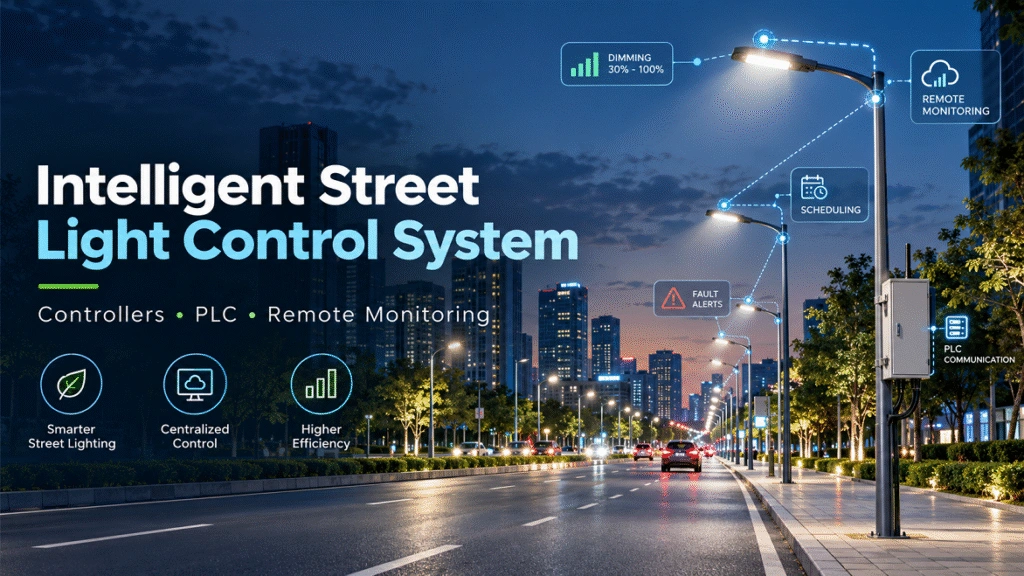
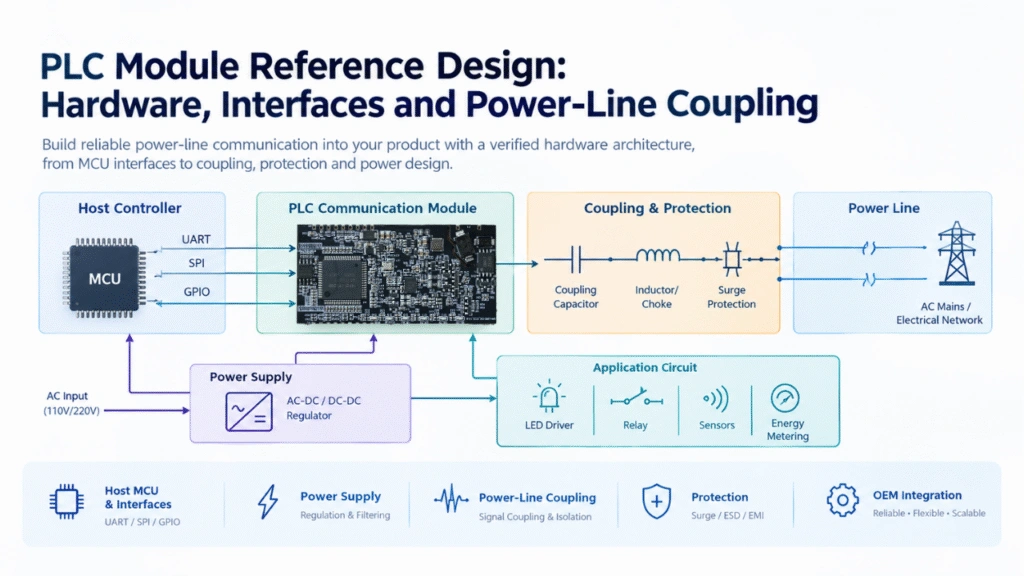
Power Line Communication (PLC) transmits communication signals over electrical power wiring. In an industrial lighting system, compatible PLC devices can use those signals to carry commands and operational information between controllers and connected equipment. PLC is the communication method; it is not the light source and is not itself a dimming signal.
For example, a controller may communicate a brightness command over the power line, while a compatible local driver implements the requested dimming level through its supported control interface, such as 0–10V. Keeping the communication layer separate from the dimming method helps engineers specify components correctly.
Reducing Additional Communication Wiring in Existing Facilities
Installing a separate communication network throughout a working factory can add cabling, labor, and downtime. By reusing suitable existing power wiring as the communication medium, PLC-based lighting controls can reduce the need to install dedicated communication cables. This is especially relevant to retrofit projects where access is difficult or operational interruptions are costly.
Reuse of power wiring is not a promise of installation without electrical work. Existing circuits, electrical noise, phase arrangements, equipment compatibility, and local electrical requirements must be assessed before a system is specified. Industrial environments with significant electromagnetic interference may also require appropriate network design and signal protection.
Connecting Lighting Controllers, Sensors and Management Systems
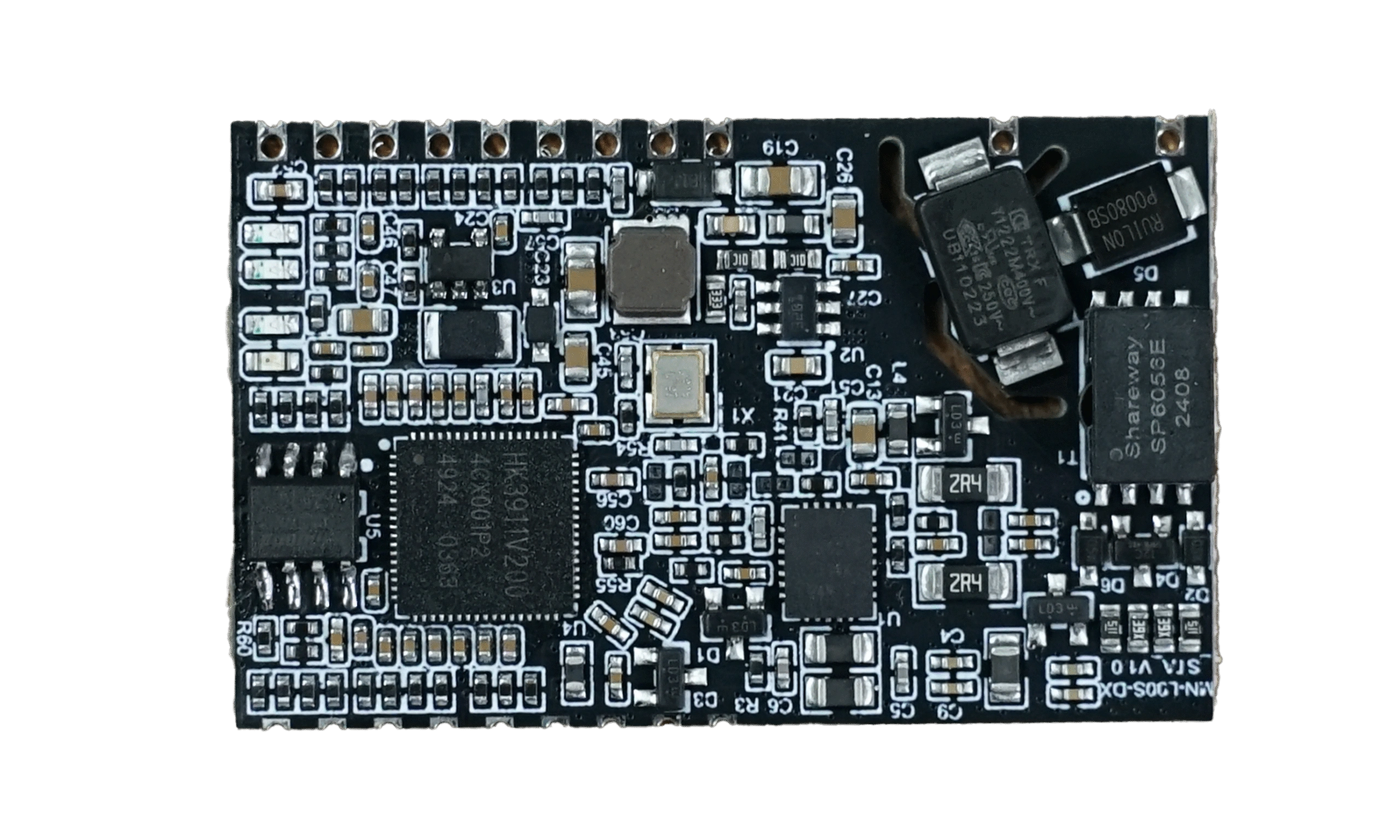
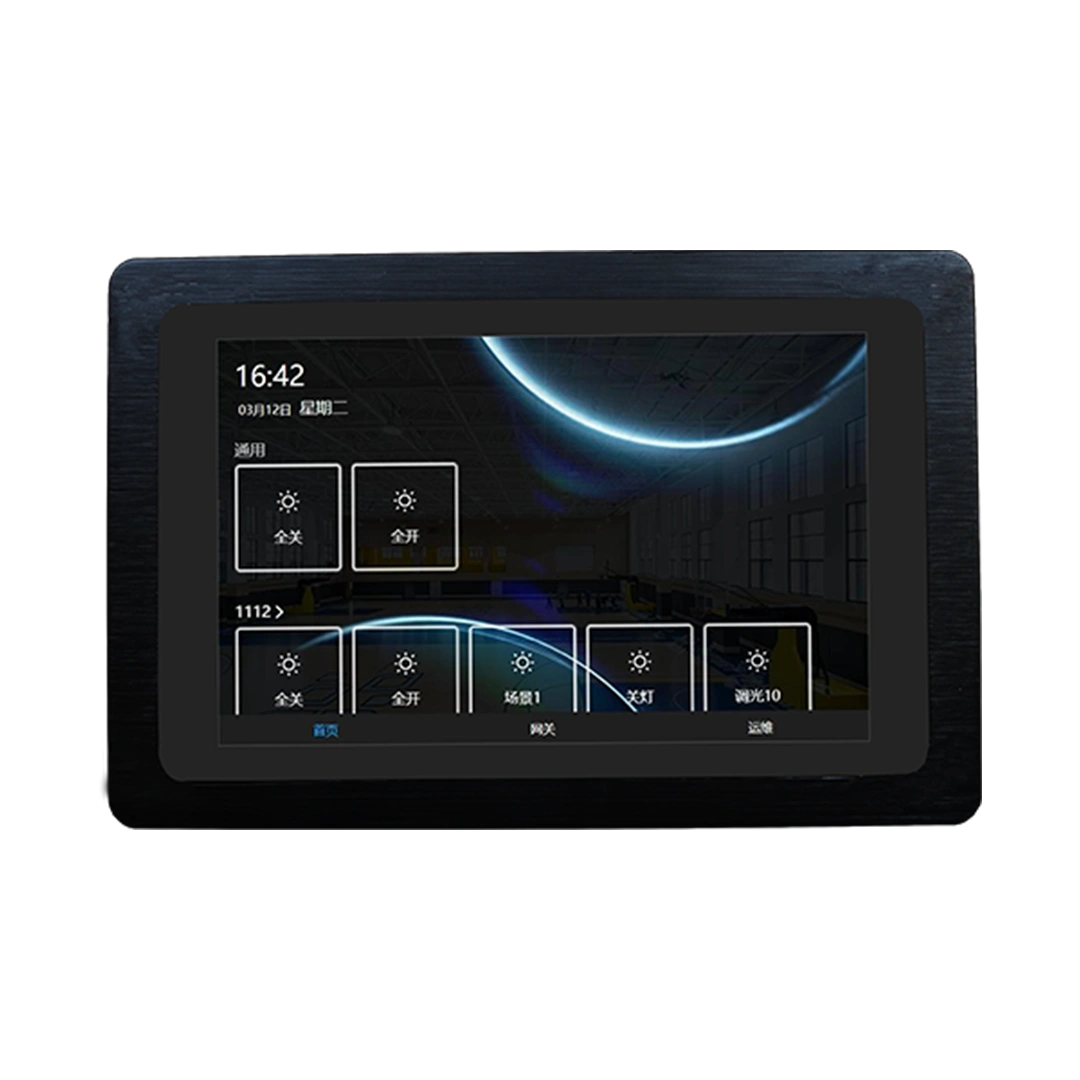
A PLC lighting architecture can connect compatible communication modules, controllers, sensors, and management components. Sensors detect conditions; controllers interpret commands and apply the control strategy; LED drivers adjust light output; and a gateway or management platform may support higher-level monitoring. The exact architecture depends on the project and product capabilities.
MicroNature develops PLC communication modules, lighting controllers, AI sensing devices, and associated management solutions for industrial and infrastructure projects. When integration with a customer’s software is needed, supported gateways can provide API or SDK interfaces rather than requiring the gateway hardware itself to be customized. Engineers should verify the applicable product specifications and interface details for each deployment.
Energy Saving Lighting Strategies for Different Industrial Environments
Warehouses and Logistics Facilities
Large warehouses often combine continuously staffed packing stations with intermittently occupied storage aisles. These zones should not necessarily share the same brightness schedule. Efficient high-bay fixtures, aisle-based occupancy sensing, and locally appropriate dimming levels can reduce unnecessary operation in less-used areas without compromising required visibility when workers or vehicles return.
High rack heights and mobile equipment affect sensor placement and control timing. A useful project begins by mapping activity patterns and critical work areas, then choosing fixture distribution and control zones that match the layout. MicroNature’s PLC-based approach can be considered where the existing electrical infrastructure makes additional communication cabling undesirable.
Manufacturing Plants and Industrial Workshops
Factories contain varied tasks: assembly, inspection, machinery operation, circulation, and storage may all require different lighting conditions. Shift schedules can support planned reductions in unused sections, while occupancy sensing can respond to changing activity. Controls must be set so they do not introduce distracting transitions or inadequate lighting around active machinery.
For facilities where equipment is rearranged, engineers should also consider how easily lighting zones and settings can be reconfigured. Long-term energy performance depends as much on usable controls and maintenance procedures as it does on the initial fixture selection.
Power Plants and Complex Industrial Facilities
Power stations and heavy industrial sites can introduce electrical interference, long wiring runs, and limited physical access. Lighting control communication requires careful assessment under these conditions. PLC may be a practical option in suitable installations, but communication reliability should be confirmed through site evaluation, electrical design, and testing rather than assumed from the technology name alone.
In critical work areas, lighting requirements and system behavior during communication faults should also be reviewed by qualified engineering teams.
How to Calculate Industrial Lighting Energy Savings and ROI
Estimating Annual Lighting Energy Consumption
A useful first estimate is annual electricity consumption: Annual kWh = Total lighting watts × operating hours per year ÷ 1,000. If a facility operates 100 fixtures rated at 200 W each for 4,000 hours annually, the estimated lighting consumption at full power is 80,000 kWh. These figures are illustrative assumptions, not measured results from a MicroNature installation.
Comparing LED Upgrades and Smart Lighting Controls
Suppose the same installation replaces the 200 W fixtures with suitable 120 W LED luminaires while maintaining its required lighting conditions. At 4,000 full-output hours, estimated consumption becomes 48,000 kWh, a reduction of 32,000 kWh against the original example. If a subsequent control strategy reduces the LEDs’ equivalent full-output operating time by 20%, consumption would fall to approximately 38,400 kWh. This additional 9,600 kWh reduction is calculated from the LED baseline, not added as an unrelated percentage to the initial retrofit savings.
The example simplifies dimming behavior and excludes standby energy, driver characteristics, changing occupancy, and control-system power use. A credible project estimate should model these factors where material and verify the resulting performance.
Evaluating Installation Costs, Maintenance and Payback
To estimate annual electricity cost savings, multiply the measured or modeled kWh reduction by the site’s applicable electricity rate. Then examine maintenance savings, equipment costs, installation labor, commissioning, necessary electrical modifications, and any production interruptions. Simple payback can be estimated as net initial project cost divided by annual net savings, although a full financial evaluation may also consider equipment life, replacement costs, and the time value of money.
Available rebates or incentives vary by location, eligibility, and product qualification, so local schemes should be checked separately rather than assumed. For larger projects, a baseline energy audit and post-installation measurement plan provide a stronger basis for evaluating real performance.
How to Choose the Right Energy Efficient Industrial Lighting System
Start with the required lighting quality for each task and a realistic picture of how the building operates. Confirm fixture efficacy, photometric performance, environmental suitability, and expected maintenance requirements. Then assess whether occupancy sensing, daylight-responsive dimming, scheduling, or zoning will meaningfully reduce energy use in the facility’s actual conditions.
For a retrofit, evaluate the existing electrical infrastructure before choosing the communication approach. Confirm that sensors, controllers, drivers, and any management platform can work together; clarify whether remote access is necessary; and request a commissioning and verification plan. A supplier should be able to explain what the system controls, how it communicates, what installation changes are required, and how expected savings will be validated.
Building a More Energy Efficient Industrial Lighting System
The strongest industrial lighting projects combine efficient luminaires with controls matched to real usage. LEDs reduce the power needed to deliver light; sensors and dimming reduce unnecessary operation; and a suitable communication architecture helps the system work as intended across an industrial site.
At MicroNature, we support industrial lighting projects with PLC-based communication, controllers, and intelligent sensing solutions designed to work with compatible lighting equipment. If you are planning a warehouse or factory lighting upgrade, contact MicroNature to discuss your site conditions, control objectives, and integration requirements.