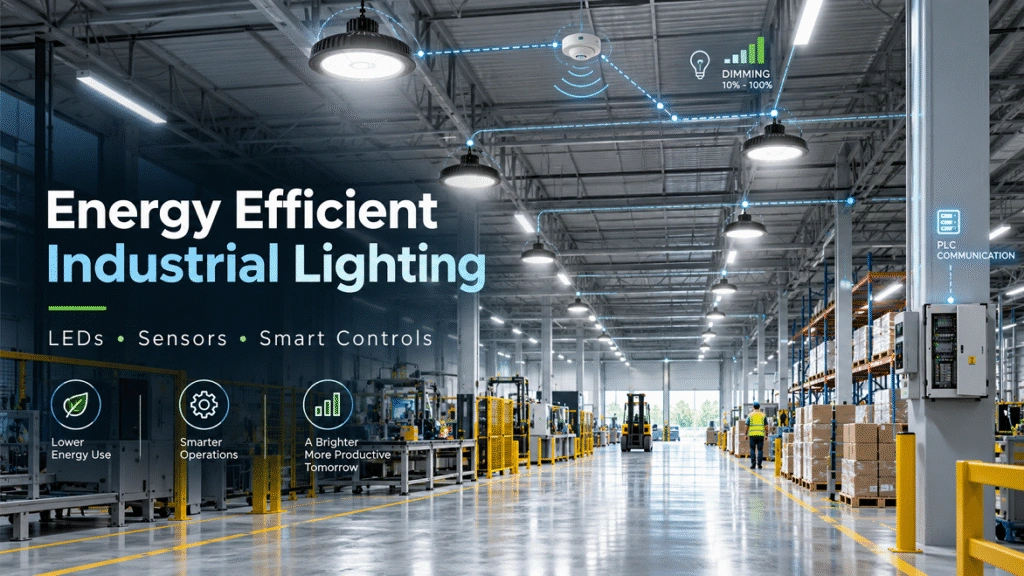
An intelligent street light control system enables municipalities, road operators, and lighting contractors to remotely switch, dim, schedule, and monitor street lights through connected controllers and centralized management software.
A typical system combines LED luminaires, individual light controllers, a communication network, and a management platform. Depending on the project, communication can use Power Line Communication (PLC) over suitable existing power wiring or cellular technologies such as 4G. The right architecture depends on the electrical infrastructure, coverage, control requirements, and long-term operating costs.
This guide explains how intelligent street lighting systems work, how to select the right controllers and communication technology, and how to plan a reliable deployment for municipal roads, highways, and commercial outdoor lighting.
What Is an Intelligent Street Light Control System?
An intelligent street light control system is a connected lighting network that allows operators to switch, dim, schedule and monitor street lights from a central platform. Instead of relying exclusively on local timers or manual inspections, the system uses field controllers to carry out lighting commands and return available operating data. Its exact capabilities depend on the controllers, luminaires, communication network and software selected.
How Intelligent Street Lighting Systems Work
A typical system starts with a central management platform. An operator sets a schedule or sends a command; a communication network carries that instruction to a street light controller, which switches the lamp or adjusts a compatible LED driver’s dimming input. The controller may also report measurements or fault conditions back to the platform. Some systems can execute stored schedules locally during temporary interruptions to their upstream connection.
The architecture varies. A power line communication (PLC) network may use a concentrator and existing power conductors, while a cellular controller communicates over a mobile network. Both approaches can enable individual light control, but their installation requirements and ongoing operating costs differ.
Typical Intelligent Street Lighting System Architecture
A centralized intelligent street lighting system generally contains four main layers:
1.Management layer: Cloud or server software for schedules, device groups, alarms, energy data, and remote operation.
2.Communication layer: PLC, cellular, or another suitable network that transfers commands and device data.
3.Field control layer: Individual street light controllers that execute switching commands and support compatible dimming and monitoring functions.
4.Lighting layer: LED luminaires and drivers that provide the required road illumination.
In a PLC-based design, a gateway or concentrator communicates with compatible field controllers over suitable power conductors. In a cellular design, individual controllers use a mobile network to connect to the management system. Hybrid architectures can also be considered where project conditions justify combining communication methods.
The final design should be verified against the electrical layout, driver interfaces, network performance, required lighting levels, and operating policies.
Conventional Street Lighting vs Intelligent Street Lighting
Conventional systems often switch entire circuits on a fixed schedule, providing limited information about individual lamps. Intelligent systems can add individual control, configurable dimming, status monitoring and more targeted maintenance. Neither approach changes the need to meet local road-lighting requirements: illumination levels, uniformity and operational reliability must remain part of the design.
Key Features of an Intelligent Street Light Control System
Remote Monitoring and Centralized Management
A central dashboard gives operators a consolidated view of connected lighting assets. Depending on the installed equipment, they can identify a lamp, see its reported operating condition, change a schedule or send an on/off command without making a site visit. Zone-based control is useful when different roads, junctions or public spaces need different operating patterns. A cloud-connected platform may also allow authorized teams to work from different locations, provided the necessary upstream connectivity is available.
Automatic Switching, Scheduling and Dimming
Street lights do not always need the same output throughout the night. A controller may follow time-based schedules, supported astronomical timing or locally configured policies. In suitable locations, a planned reduction in output during low-use periods can lower electricity consumption. The dimming strategy must still respect applicable lighting requirements, traffic conditions and the characteristics of the driver and luminaire.
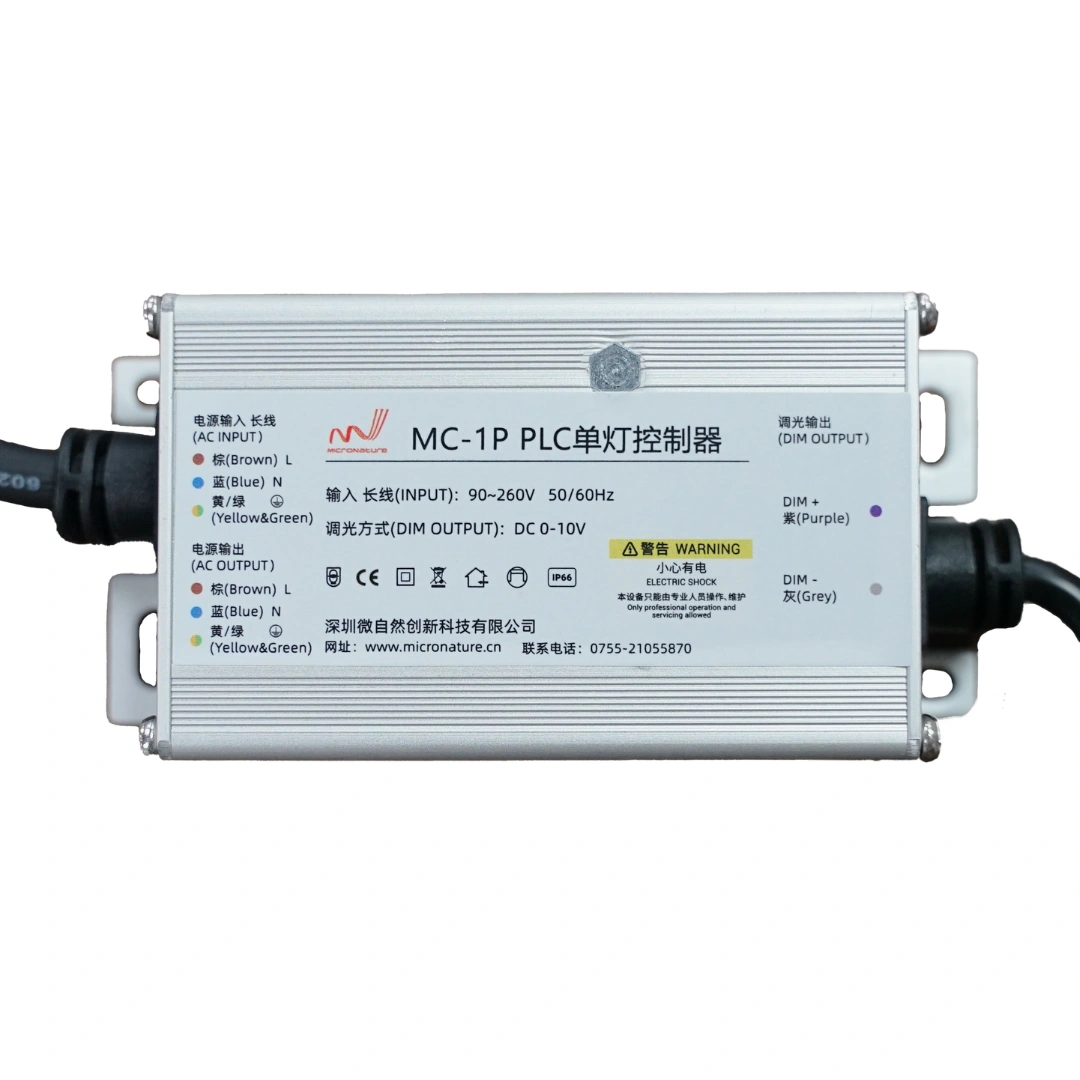
In MicroNature’s relevant control configurations, PLC carries commands between network devices while a compatible 0–10V dimming interface adjusts the LED driver’s output. These are different functions: the communication method is not itself the dimming signal.
Fault Detection and Maintenance Alerts
With compatible monitoring hardware, the system can flag abnormal voltage or current, unexpected power consumption, communication loss or other reported operating conditions. This helps maintenance teams decide which locations need inspection instead of depending solely on routine patrols. A fault alert is a diagnostic lead, not always a conclusive identification of which internal component has failed; technicians should verify the underlying cause on site.
Energy Monitoring and Lighting Optimization
Controller measurements can support reviews of power use, schedules and unexpected loads. Combined with a properly commissioned dimming policy, this information can help operators compare operation before and after an upgrade. Reported savings should distinguish the effect of replacing older luminaires with LEDs from the additional effect of controls; these benefits should not be added together without a consistent baseline.
Core Components of an Intelligent Street Lighting System
Street Light Controllers and LED Luminaires
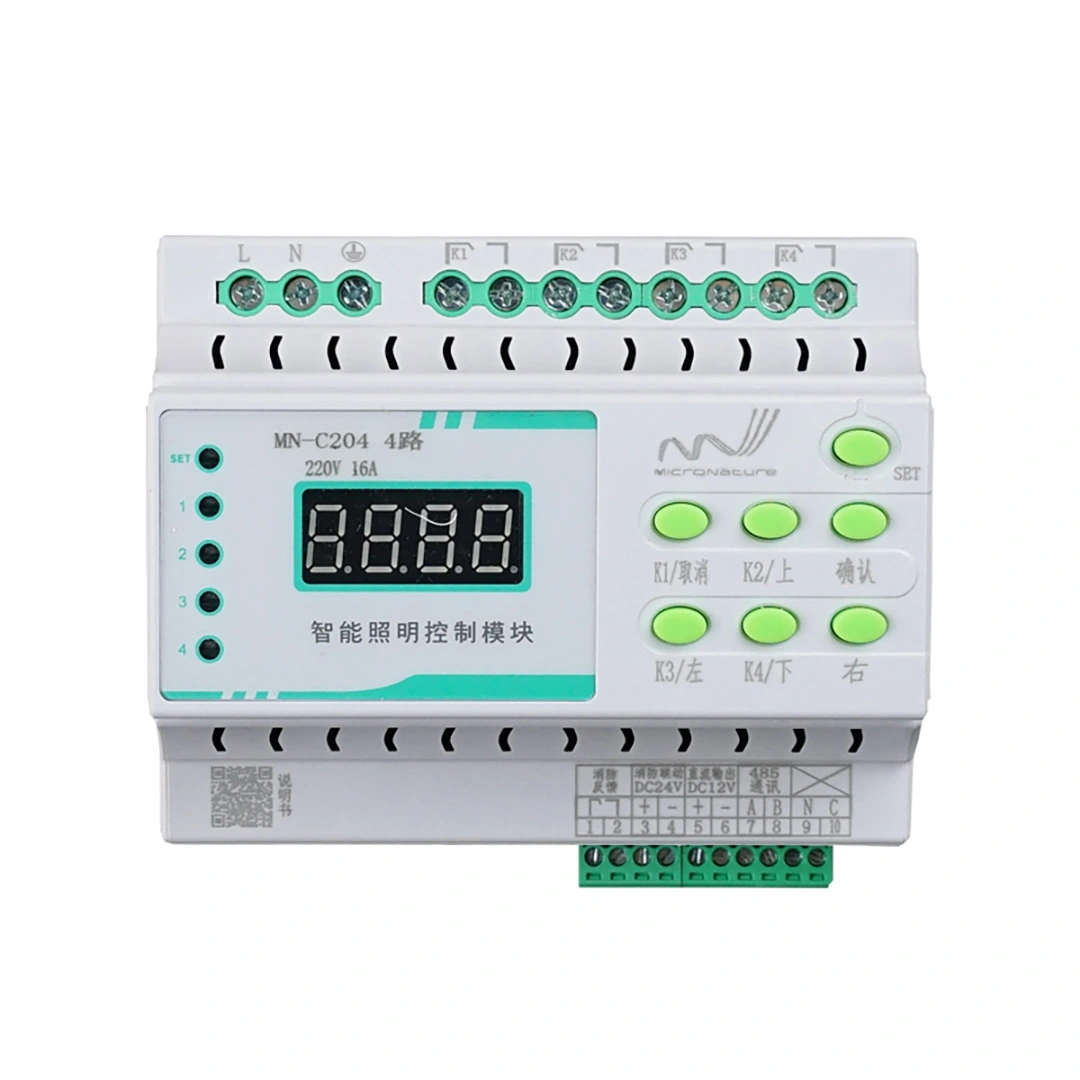
The luminaire produces the light; the LED driver supplies and regulates electrical power; and the intelligent street light controller accepts operating instructions and controls switching or a compatible dimming interface. A controller may also measure electrical variables such as voltage, current and power. These functions are related, but a controller is not the same device as an LED driver or a motion sensor.
PLC Gateways, Concentrators and Communication Networks
For a PLC-based installation, a concentrator or gateway links the management side of the system to controllers communicating over suitable existing power conductors. Loop controllers and signal-conditioning devices may be required by the electrical topology. Engineering teams must check transformer boundaries, circuit layouts, interference sources and network performance rather than assuming every existing power cable will support the same configuration.
Sensors and Dimming Interfaces
Brightness sensing and other appropriate inputs can inform lighting policies. The chosen sensor must suit the environment and the control objective. MicroNature’s AI Vision Sensor is positioned as an intelligent sensing device for energy-management applications, not as a CCTV security system. Its locally operating PLC-and-AI functionality should not be confused with the separate internet connection a remote cloud dashboard may require.
For the MicroNature products discussed here, 0–10V is the relevant analog dimming approach. The LED driver and controller must both support the selected interface and control range.
Central Management Software
Central management software organizes lamp identities, groups, operating schedules, status data and maintenance responses. Useful functions can include map-based asset records, permissions for different users, alarm histories and exports for energy review. Their availability should be checked against the actual software package and project integration scope. The gateway normally exposes or uses defined integration interfaces; it should not be described as freely customizable hardware merely because an API or SDK is available.
What Does an Intelligent Street Light Controller Do?
Single-Lamp Switching, Dimming and Monitoring
An intelligent street light controller is the field device that makes individual lamp management possible. It can receive switching or dimming commands and, where supported, report electrical measurements and operating status. For a municipality with many dispersed lighting assets, single-lamp data helps distinguish a circuit-wide problem from an issue at one lighting point.
PLC Street Light Controllers
MicroNature’s PLC NEMA Smart Street Light Controller communicates over power lines and supports functions including switching, compatible 0–10V dimming and reporting of electrical data. In a PLC street lighting network, this device works with concentrators and the relevant management architecture rather than connecting independently to a public cellular network.
4G Cat.1 Street Light Controllers
A 4G Cat.1 single light controller fulfills a similar individual-lamp control role but uses cellular communication. This can suit sites where a mobile-network design is preferable to PLC networking, subject to local coverage, supported frequency bands, SIM or data arrangements and operating costs. The 4G controller is a control device, not a microwave motion sensor.
NEMA Interfaces and Controller Compatibility
NEMA refers to a physical and electrical interface arrangement, not a communication technology. Before selection, engineers should verify the luminaire’s socket configuration, applicable interface requirements, electrical ratings, dimming connections, environmental protection and the exact controller model. A NEMA-compatible mounting arrangement does not automatically guarantee that every monitoring or dimming function will work with every luminaire.
Communication Technologies for Intelligent Street Lighting Systems
Power Line Communication (PLC)
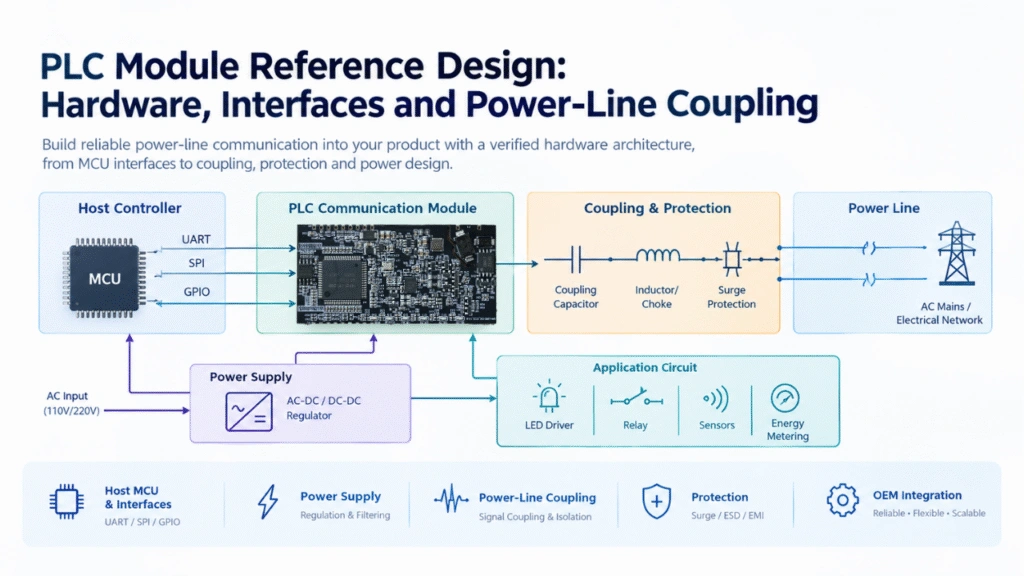
Power Line Communication transmits data over conductors already used to supply electrical power. In a suitable street lighting network, a concentrator communicates with individual PLC controllers so that operators can send instructions and receive device information without installing a separate communication cable to each pole. That can be particularly useful in retrofit projects where excavation and new cabling would be disruptive.
PLC performance still depends on the site. Electrical noise, branching circuits, circuit length and isolation between electrical sections can affect network design. Appropriate couplers, concentrators or signal isolators may be necessary, and practical commissioning tests remain essential.
Wireless and Cellular Communication Options
Street lighting networks can also use radio and cellular technologies, including LoRa-based systems, NB-IoT and 4G solutions. The relevant choice depends on coverage, data requirements, device availability, infrastructure ownership and commercial terms. A cellular controller may simplify communication at dispersed lighting points but requires a suitable mobile service; a local radio network may require dedicated gateways or site planning.
PLC vs Wireless: What Should Project Engineers Consider?
No communication method is automatically best for every road. Engineers should compare the existing electrical layout, radio coverage, network ownership, failure recovery, installation access and long-term management costs. This selection table summarizes practical questions rather than ranking one technology as universally superior.
| Assessment | PLC Network | Wireless or Cellular Network |
|---|---|---|
| Existing infrastructure | Uses suitable power conductors for data transmission | Depends on radio coverage and/or gateway or cellular service |
| Installation planning | Check circuit topology, electrical noise and concentrator placement | Check propagation, coverage, antenna position and network access |
| Recurring considerations | Maintain field network and upstream connectivity | Assess service fees, network ownership and gateway upkeep |
| Best-fit assessment | Potentially attractive where existing circuits can support PLC | Potentially attractive where radio or cellular connectivity is suitable |
Why PLC Can Be Considered for Existing Street Lighting Networks
When streets already have suitable electrical conductors, PLC offers a path to add lighting controls while limiting extra communication wiring. That can reduce one source of installation disruption, although pole access, controller installation, electrical testing and software commissioning are still required. The strongest project decision comes from a site survey and pilot test—not from assuming that an advertised maximum range applies to the entire network.
How to Implement an Intelligent Street Lighting System Project
Assess Existing Street Lighting Infrastructure
Begin with an inventory of poles, luminaires, drivers, distribution cabinets, switching arrangements and operating schedules. Record road types and lighting requirements as well as access restrictions and maintenance history. For a PLC proposal, document electrical circuit boundaries and identify potential sources of interference. This survey establishes whether the project is mainly a luminaire replacement, a control retrofit or a combination of both.
Select Controllers and Communication Architecture
Match the controller to the luminaire and the desired functions. Verify load ratings, connector types, dimming compatibility, measurement capabilities and environmental requirements. Then choose a communication topology and determine where concentrators, gateways and management connections will be located. For cellular equipment, confirm actual carrier coverage and supported bands before specifying devices at scale.
Install, Configure and Integrate the System
Installation normally involves fitting the selected controllers, setting up network equipment and registering each lighting point in management software. Assign lamps to meaningful groups and configure schedules and authorized user roles. Where external software is involved, confirm the available API or SDK integration scope and test data exchange. Controllers and their operating policies should be documented so maintenance teams can identify the correct device after deployment.
Test, Commission and Maintain the Lighting Network
Before full rollout, test a representative pilot area. Verify individual switching, dimming, data reporting, offline behavior and alarm handling. Measure connectivity under different operating conditions and check that the selected lighting schedule maintains appropriate illumination. After acceptance, establish periodic reviews of device status, fault records and energy use. This is what turns a connected installation into a maintainable system.
Real-World Applications of Intelligent Street Lighting Systems
Municipal Road and Urban Street Lighting
Urban roads benefit from coordinated scheduling and the ability to identify individual lighting points. Our PLC urban street lighting project near Songxiang Lake illustrates a power-line-based architecture incorporating a PLC concentrator, signal isolator, loop controller and single-lamp controllers. The project description covers centralized switching, individual lamp monitoring and dimming capabilities. It is a useful example of system architecture, not a guarantee that the same design or outcome fits every city.
Highway and Large-Scale Outdoor Lighting Networks
Long road corridors introduce practical challenges: dispersed equipment, varied electrical sections and maintenance access over a wide area. An intelligent street lighting system project in this setting needs a realistic communications plan, organized controller addressing and robust testing procedures. Operators should also coordinate control policies with the road authority’s lighting requirements; savings cannot come at the expense of required visibility.
Commercial and Industrial Outdoor Lighting Projects
Similar controls can serve logistics campuses, parking areas and industrial access roads. Our commercial outdoor PLC street lighting case study describes group scheduling, remote monitoring and lighting management across a large site. Although the architecture overlaps with municipal lighting, commercial premises have different access patterns, operational responsibilities and design requirements. These examples should therefore be assessed within their actual project contexts.
How to Choose the Right Intelligent Street Light Control System
Evaluate Compatibility, Communication and Scalability
Start by listing the functions that the project genuinely needs: individual switching, dimming, energy readings, fault alarms, local fallback, management access or third-party integration. Test the compatibility of the selected controller, LED driver and luminaire before buying for the entire network. Evaluate the communication architecture in the actual environment and ensure the system can expand without losing visibility of existing assets.
Consider Energy Savings, Installation and Maintenance Costs
Compare total ownership costs, not hardware price alone. Include controller installation, any network or subscription charges, gateway or concentrator equipment, commissioning, maintenance and expected operating life. To assess energy savings, establish a measured baseline and compare equivalent lighting conditions before and after changes. Distinguish LED replacement savings from scheduling and dimming savings, and allow for seasonal operating patterns and required illumination levels.
The right system is the one that delivers dependable control and actionable operating data within the site’s real electrical, lighting and maintenance constraints. A pilot installation and transparent acceptance criteria are more persuasive than an unqualified savings percentage.
Building a Smarter and More Efficient Street Lighting Network
An intelligent street light control system brings together field controllers, suitable communication links and management software to make public lighting easier to operate and maintain. Whether the project uses PLC or cellular communication, success depends on sound equipment selection, installation planning and commissioning.
At MicroNature, we develop PLC-based lighting controls and related products for municipal and industrial applications. If you are planning a street lighting retrofit or a new control network, contact MicroNature to discuss your existing infrastructure, control requirements and the most appropriate system configuration.