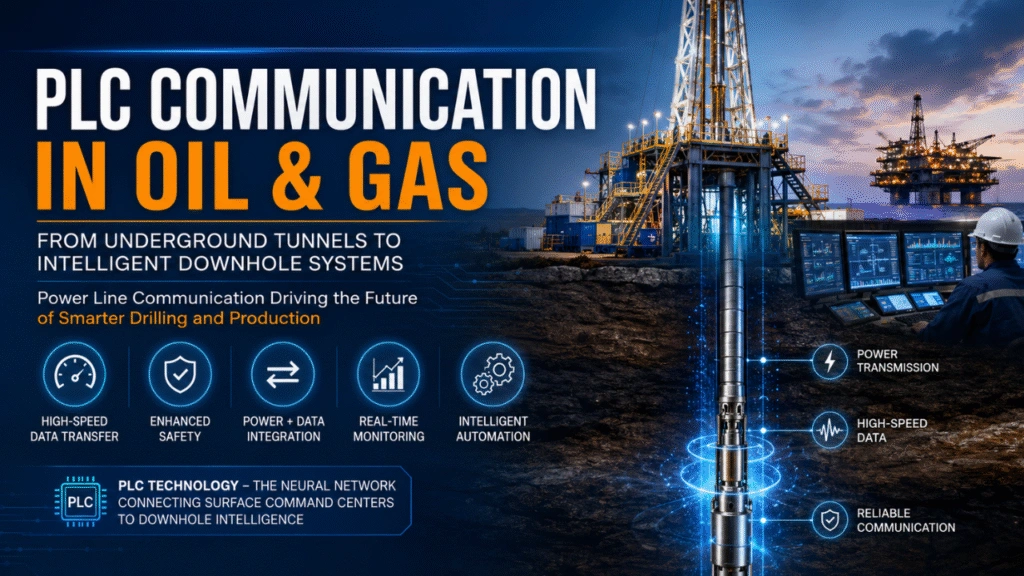
As digital transformation accelerates across industrial sectors, Power Line Communication (PLC) technology is emerging as a critical enabler for reliable underground communication. While PLC has already proven its value in smart tunnel infrastructure and underground utility systems, its application in the oil & gas industry is becoming even more transformative. PLC communication in oil and gas is becoming a critical technology for intelligent drilling, real-time monitoring, and advanced downhole automation.
From top drive drilling systems to intelligent downhole tools, PLC technology is reshaping how petroleum equipment communicates, monitors, and operates in harsh environments. The same logic used in underground tunnel communication is now powering the next generation of intelligent drilling and production systems.
What Is PLC Communication in Oil and Gas?
PLC (Power Line Communication) is a technology that uses existing power cables to simultaneously transmit electrical power and digital data. Instead of deploying separate communication wiring or depending on unstable wireless signals, PLC allows equipment to exchange information directly through the power infrastructure already in place.
In petroleum drilling environments, this approach offers major advantages:
- Reduced cabling complexity
- Lower maintenance costs
- Improved transmission reliability
- Real-time monitoring capability
- Enhanced operational safety
As drilling operations move deeper and become increasingly automated, reliable high-speed communication is becoming essential for intelligent oilfield operations.
Why PLC Technology Fits Harsh Underground Environments
Using Existing Power Infrastructure as the Communication Medium
One of the biggest advantages of PLC technology is that it transforms existing power lines into communication channels.
In both tunnel systems and oil drilling operations, installing dedicated communication cables is expensive, difficult, and vulnerable to environmental damage. Wireless communication is also unreliable underground due to metal structures, rock formations, and electromagnetic interference.
PLC eliminates these limitations by allowing data to travel directly through the power lines already connected to the equipment.
This approach significantly simplifies:
- Wellsite wiring architecture
- Equipment deployment
- Maintenance procedures
- Long-distance communication reliability
Stable Long-Distance Communication in Extreme Conditions
| Communication Method | Speed | Reliability | Real-Time Capability |
|---|---|---|---|
| Mud Pulse Telemetry | Very Low | Medium | Limited |
| Wireless Underground | Unstable | Low | Poor |
| PLC Communication | High | Excellent | Real-Time |
Traditional underground communication technologies face major challenges:
| Technology | Main Limitation |
|---|---|
| Wireless Signals | Severe attenuation underground |
| Mud Pulse Telemetry | Very low transmission speed |
| Hydraulic Control Lines | Slow response and high maintenance |
| Dedicated Communication Cables | Expensive and complex |
PLC technology solves these problems by enabling stable electrical signal transmission through existing conductors, even across several kilometers of downhole infrastructure.
Compared with traditional mud pulse telemetry systems that may only achieve transmission speeds around 10 bits per second, modern wired drill pipe systems integrated with PLC technology can support communication speeds up to 200,000 bits per second.
This massive improvement enables true real-time drilling intelligence.
Integrated Power + Data Transmission
Modern PLC systems are no longer limited to simple status monitoring.
Advanced wired drill pipe systems now support integrated transmission of:
- Electrical power
- Sensor data
- Control commands
- Real-time operational feedback
Some next-generation systems can deliver:
- Up to 300W downhole power supply
- High-speed bidirectional communication
- Near real-time telemetry transmission
- Continuous sensor streaming
This allows downhole tools to become more intelligent, responsive, and autonomous.
Enhancing Remote Monitoring and Operational Safety
Oil & gas operations often occur in hazardous environments where reducing human exposure is critical.
PLC technology enables engineers and operators to remotely monitor:
- Downhole pressure
- Torque
- Vibration
- Pump conditions
- Formation parameters
- Equipment health status
Surface control systems can instantly react to abnormal conditions, reducing the need for personnel to enter dangerous operational zones.
This significantly improves:
- Worker safety
- Equipment protection
- Operational efficiency
- Preventive maintenance capability
Key PLC Applications in Oil and Gas Equipment
1. PLC in Top Drive Drilling Systems
Current Industry Architecture
Modern top drive drilling systems already rely heavily on PLC-based control systems. A typical architecture includes:
- Master PLC controller
- Drive control stations
- Hydraulic source stations
- Driller consoles
- Multiple slave devices connected through fieldbus networks
Protocols such as PROFIBUS-DP and Profinet are commonly used for coordinated drilling operations and precision speed control.
PLC Upgrade Path
The next evolution is replacing conventional fieldbus communication with high-speed real-time PLC technology.
Benefits include:
- Faster communication between master and slave stations
- Improved data reliability
- Lower latency
- Better synchronization
- Enhanced system scalability
This upgrade preserves existing automation logic while dramatically improving communication performance.
2. PLC in MWD & LWD Systems
The Bottleneck of Traditional Mud Pulse Telemetry
Measurement While Drilling (MWD) and Logging While Drilling (LWD) tools depend heavily on downhole communication.
Traditional mud pulse telemetry suffers from:
- Extremely low data rates
- High latency
- Delayed command execution
- Limited real-time visibility
In some cases, sending a single command to downhole equipment may take several minutes.
How PLC Improves Downhole Telemetry
By integrating PLC technology with wired drill pipe systems, operators can achieve high-speed bidirectional communication between the surface and downhole tools.
This enables real-time transmission of:
- Weight on bit
- Torque
- Vibration
- Formation pressure
- Temperature
- Directional drilling data
Engineers can immediately adjust drilling strategies based on live data, improving drilling efficiency and reducing operational risks.
3. PLC in Progressive Cavity Pump (PCP) Systems
The Challenge of Pump-Off Protection
Progressive Cavity Pumps (PCPs) are widely used in artificial lift systems, but dry-running remains a major operational risk.
If fluid levels become too low, the pump stator can rapidly overheat and fail.
Intelligent PLC-Based Pump Protection
PLC-enabled monitoring systems continuously transmit downhole production data to the surface controller.
The system can automatically:
- Adjust Variable Frequency Drive (VFD) speed
- Reduce pump RPM
- Trigger alarms
- Shut down operations during low-fluid conditions
This prevents costly equipment damage and extends pump lifespan.
4. PLC in Blowout Preventer (BOP) Control Systems
Traditional BOP Communication Limitations
Conventional BOP systems often rely on hydraulic control lines and tubing bundles, which are:
- Complex
- Expensive to maintain
- Slow to respond
- Difficult to troubleshoot
Subsea BOP systems have already started adopting PLC-based multiplex electrical control architectures.
High-Speed PLC Safety Upgrades
Introducing high-speed PLC communication further improves:
- Ram control response times
- Valve feedback transmission
- Real-time status monitoring
- Safety interlock execution
Advanced PLC-integrated BOP systems can now embed critical safety logic directly within the control architecture, improving operational reliability during emergency conditions.
5. PLC in Drilling Jars and Shock Absorbers
The Risk of Undetected Downhole Vibrations
Excessive vibration and impact loads can lead to:
- Premature Bottom Hole Assembly (BHA) failure
- Tool fatigue
- Drilling inefficiency
- Expensive downtime
Real-Time Health Monitoring with PLC
Modern intelligent drilling jars and shock absorbers use PLC-enabled high-speed telemetry to continuously monitor:
- Tension
- Impact loads
- Bounce events
- Shock absorber condition
- Downhole vibration patterns
Operators can detect abnormal conditions early and stop operations before severe equipment damage occurs.
PLC Technology Is Becoming the Neural Network of Intelligent Oilfields
The future of oil & gas operations is moving beyond basic automation toward fully intelligent drilling and production systems.
In this transformation, data transmission is becoming just as important as mechanical performance.
PLC technology is evolving into the “neural network” connecting:
- Surface command centers
- Intelligent drilling systems
- Downhole sensors
- Automated production equipment
- Remote monitoring platforms
From underground tunnels to deep oil wells, the core logic remains the same:
Reliable communication creates intelligent infrastructure.
As high-speed PLC systems continue to advance, they will play a central role in enabling:
- Real-time drilling optimization
- Predictive maintenance
- Autonomous operations
- Digital oilfield management
- Safer energy production
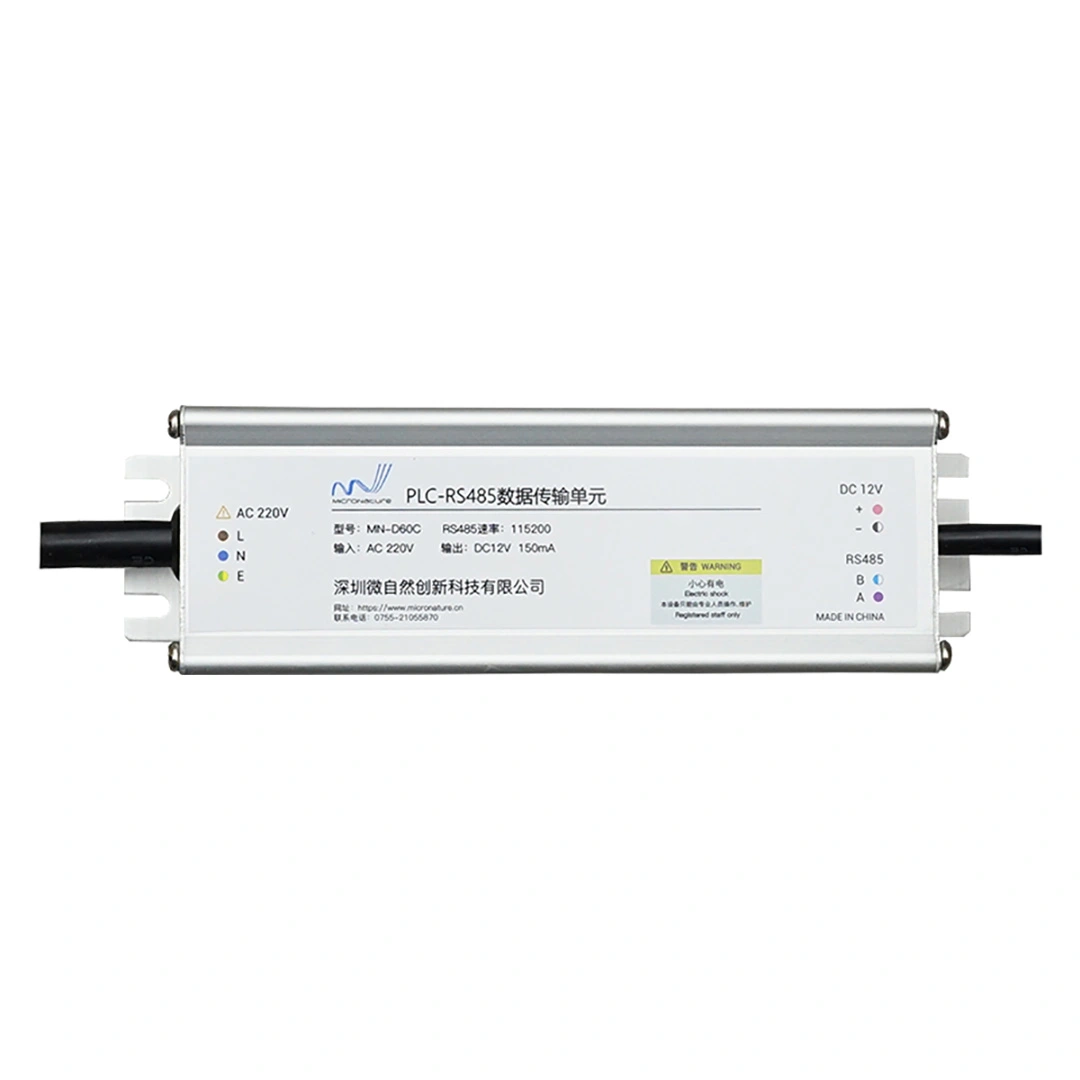
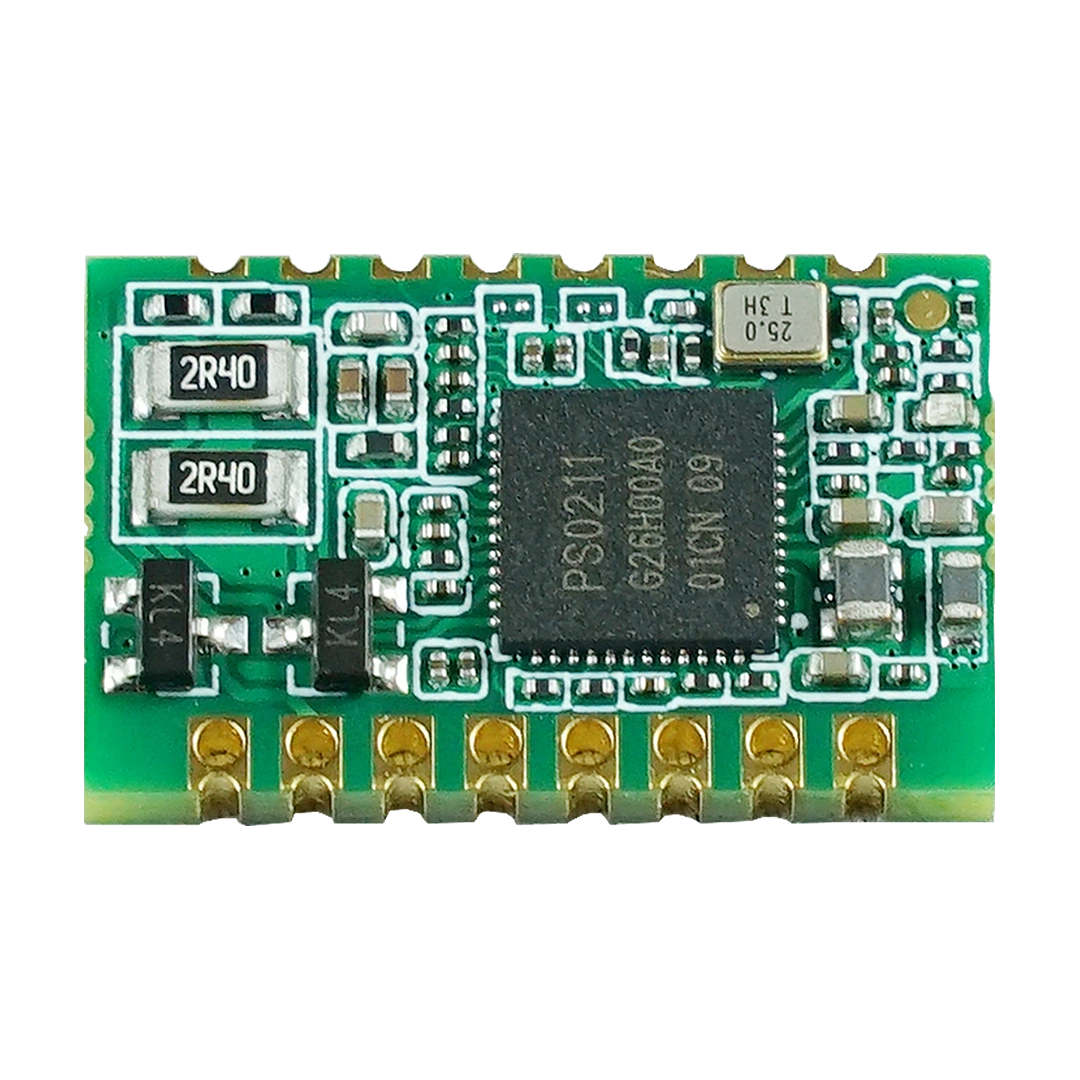
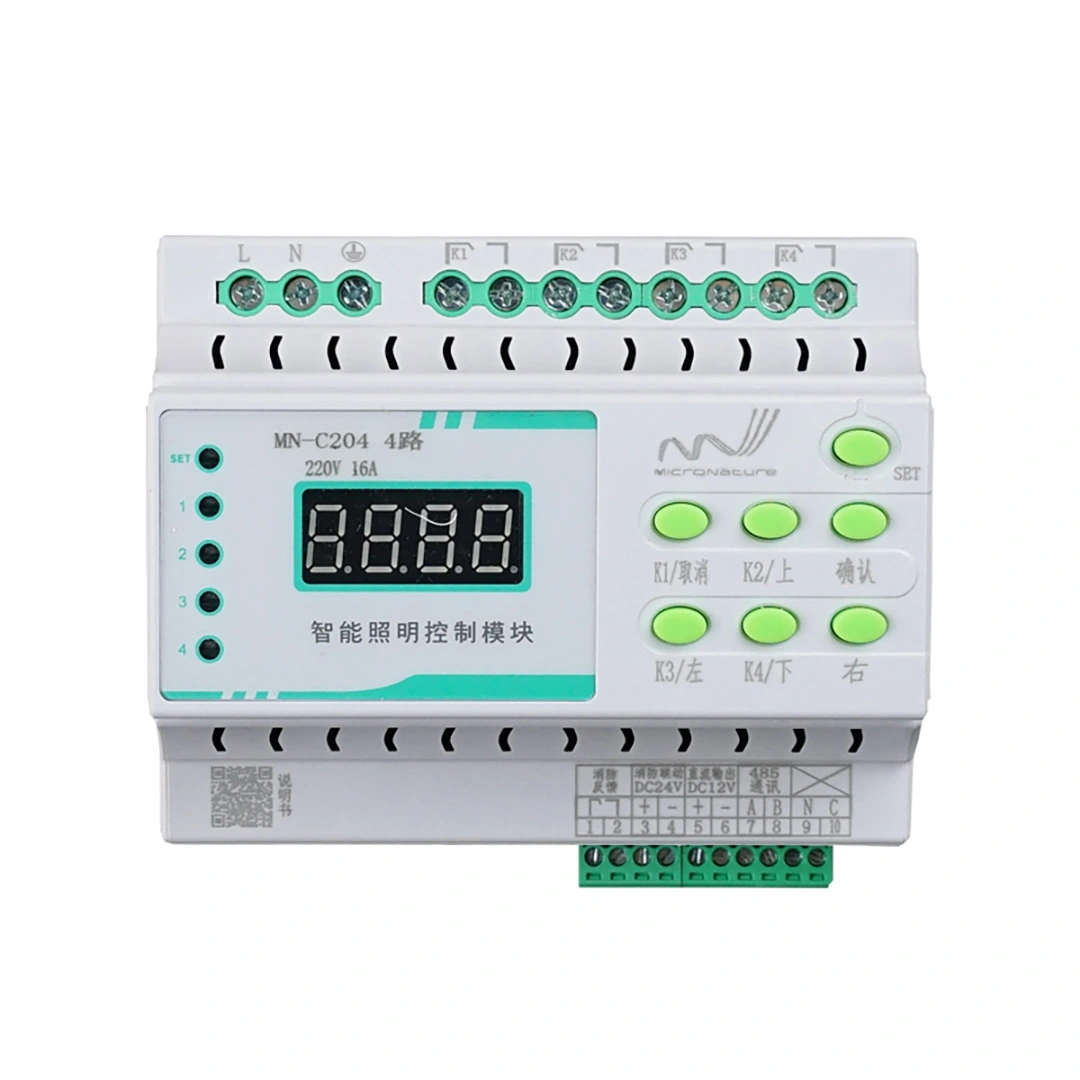
Browse Now High-Performance PLC Modules
For the oil & gas industry, PLC communication is no longer just a control technology — it is becoming the foundation of the next generation of intelligent energy infrastructure.