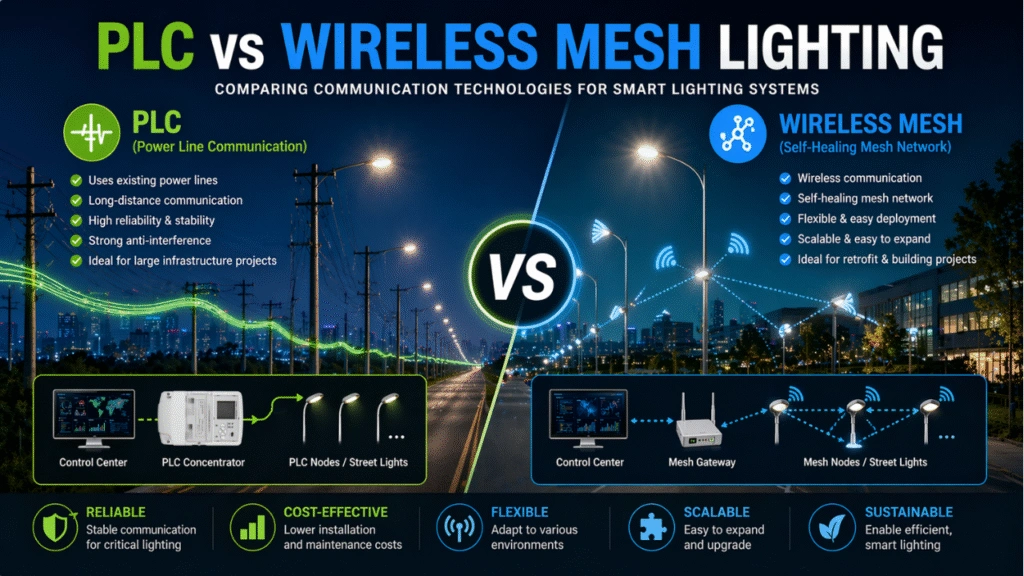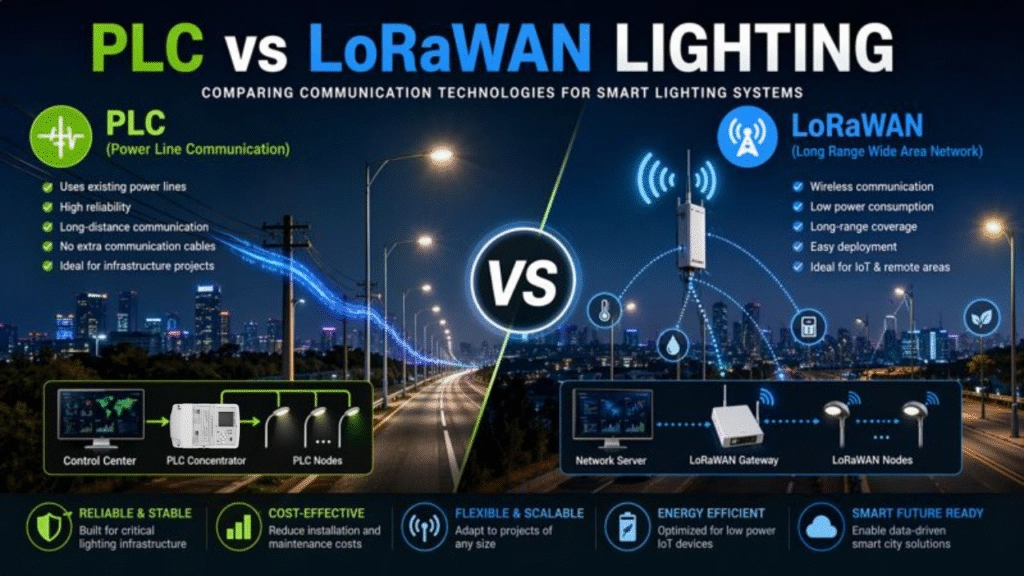
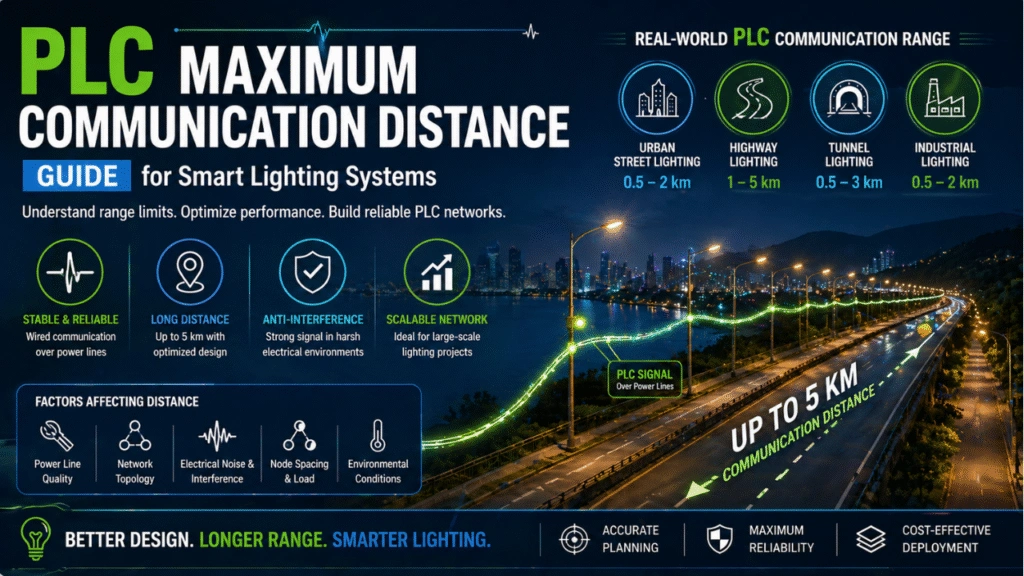
Power Line Communication (PLC) technology enables reliable data transmission over existing electrical infrastructure. One of the most important design considerations in PLC-based smart lighting systems is communication distance.
Understanding the maximum PLC communication distance helps engineers design reliable lighting networks, optimize infrastructure layout, and avoid signal loss issues.
This guide explains the typical PLC communication range, the factors affecting distance, and proven methods to extend communication reliability.
What Is PLC Communication Distance?
PLC communication distance refers to the maximum physical length that communication signals can travel through power lines while maintaining reliable data transmission.
Unlike wireless systems, PLC communication depends on electrical wiring quality, network topology, and environmental conditions.
Typical PLC distances vary depending on technology type and installation environment.
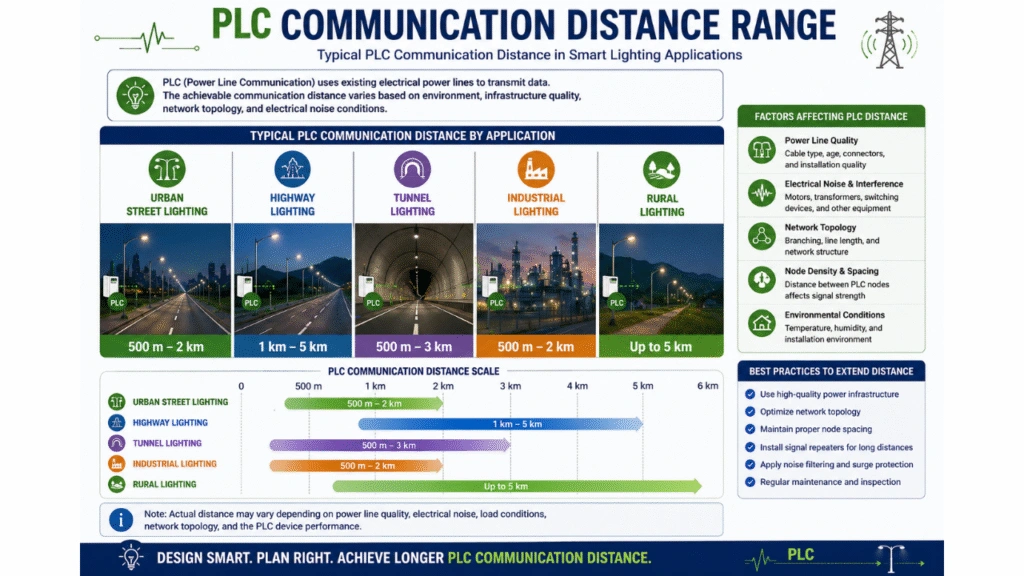
Typical PLC Communication Distance Range
The achievable PLC communication range depends on system configuration and environment.
Common PLC Distance Ranges
| Environment | Typical Distance |
|---|---|
| Urban street lighting | 500 m – 2 km |
| Highway lighting | 1 km – 5 km |
| Tunnel lighting | 500 m – 3 km |
| Industrial lighting | 500 m – 2 km |
| Rural lighting | Up to 5 km |
These ranges represent typical values under standard installation conditions.
Factors That Affect PLC Communication Distance
Several technical and environmental factors influence PLC communication performance.
Power Line Quality
Electrical infrastructure condition plays a major role in PLC signal transmission.
Important considerations include:
- Cable type
- Line aging
- Connector quality
- Electrical noise
Poor wiring quality reduces communication distance significantly.
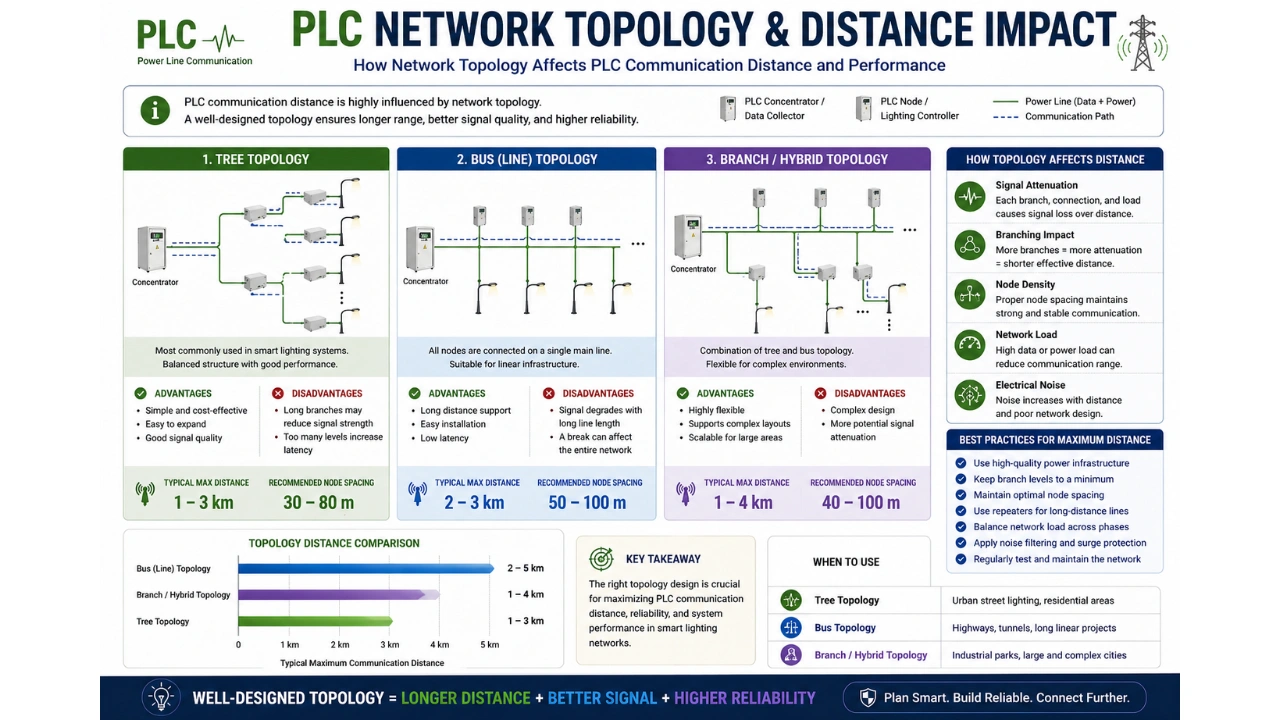
Network Topology Design
PLC network layout affects signal propagation.
Common PLC topologies:
- Tree topology
- Bus topology
- Branch topology
Excessive branching may reduce communication efficiency.
Electrical Noise and Interference
Electrical equipment generates noise that affects PLC signals.
Typical interference sources:
- Industrial machinery
- Motors
- Transformers
- Switching power supplies
Noise filtering improves communication reliability.
Distance Between Nodes
Spacing between PLC nodes impacts signal strength.
Recommended node spacing:
- 30 m – 100 m typical
- Depends on device capability
Too much spacing may reduce signal stability.
Environmental Conditions
Environmental factors also affect communication.
Examples include:
- Temperature variations
- Humidity
- Outdoor exposure
- Underground installation
Harsh environments require additional design considerations.
How to Increase PLC Communication Distance
Several proven strategies improve PLC communication range.
Use High-Quality Power Infrastructure
Stable electrical wiring improves signal integrity.
Recommended practices:
- Use certified cables
- Maintain proper grounding
- Replace aging wiring
Optimize Network Topology
Efficient layout improves performance.
Best practices:
- Reduce unnecessary branches
- Maintain balanced network load
- Use structured topology design
Install Signal Repeaters
PLC repeaters extend communication coverage.
Benefits:
- Increase maximum distance
- Improve signal reliability
- Enhance network scalability
Repeaters are widely used in long-distance installations.
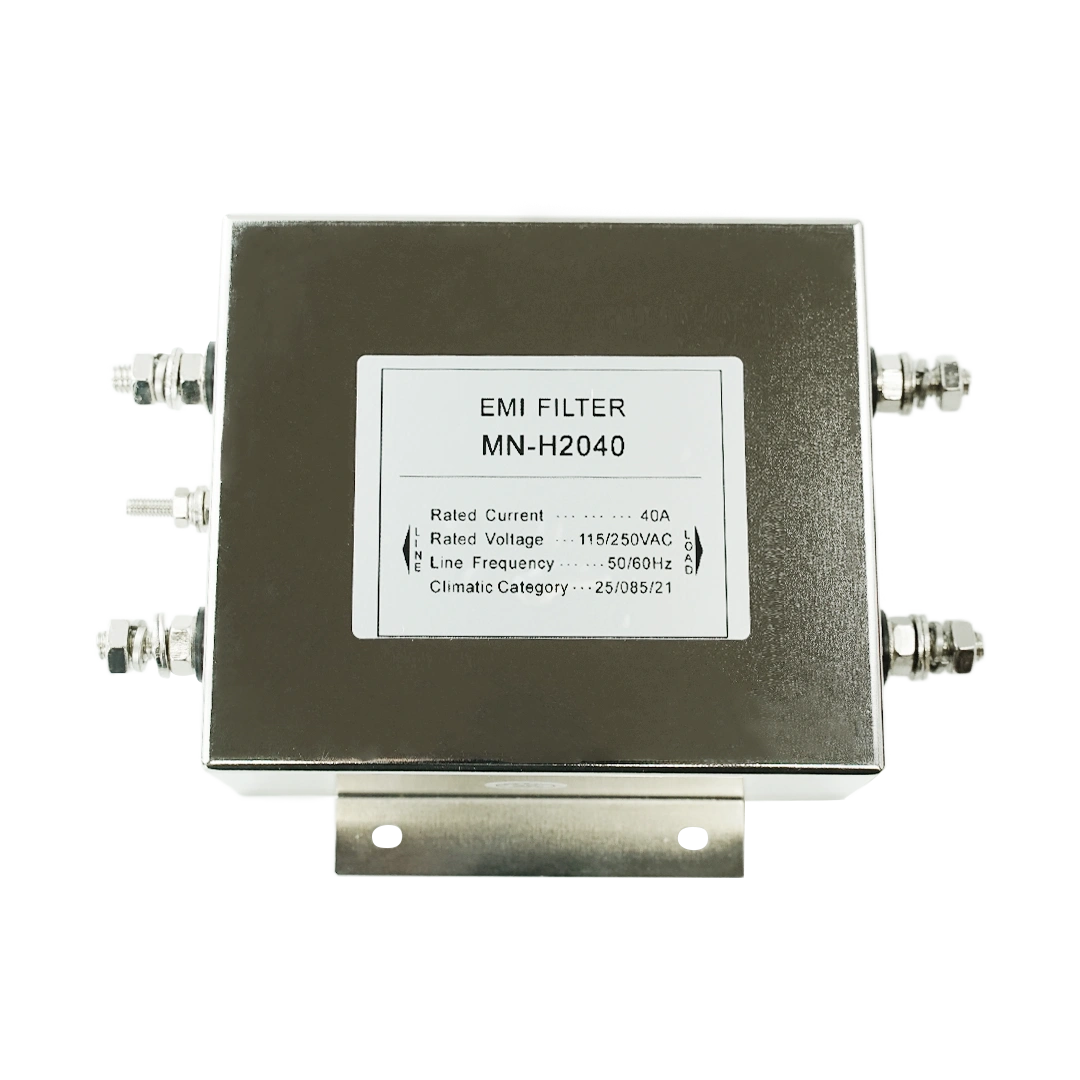
Apply Noise Filtering Techniques
Noise filtering improves communication quality.
Common solutions:
- Line filters
- Isolation transformers
- Surge protection
These methods reduce signal distortion.
Real-World PLC Distance Examples
Understanding real deployment cases helps estimate performance.
Street Lighting Example
Typical configuration:
- PLC concentrator installed at control cabinet
- Lighting nodes distributed along roadway
- Average distance between nodes: 50 m
Typical distance: 1 km – 3 km
Tunnel Lighting Example
Typical configuration:
- PLC nodes installed along tunnel wall
- Central controller at tunnel entrance
Typical distance: 500 m – 2 km
Industrial Lighting Example
Typical configuration:
- PLC network installed across factory areas
Typical distance: 500 m – 2 km
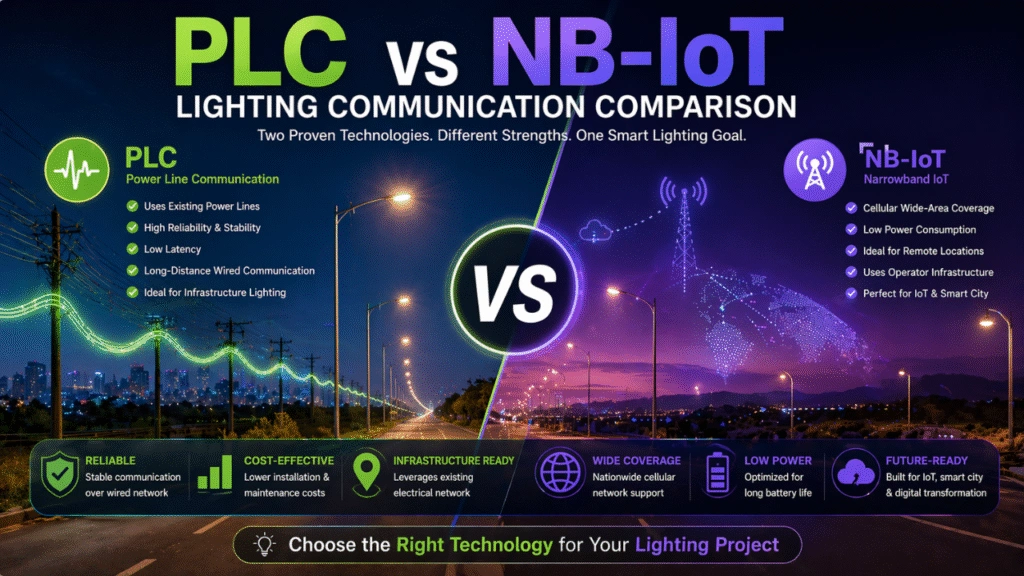
PLC vs Wireless Distance Comparison
PLC communication distance differs significantly from wireless technologies.
| Technology | Typical Distance |
|---|---|
| PLC | Up to 5 km |
| LoRaWAN | Up to 15 km |
| NB-IoT | Wide-area coverage |
| Wireless Mesh | Node-to-node dependent |
When Long PLC Distance Is Critical
Long-distance PLC communication is especially important in:
- Highway lighting systems
- Tunnel lighting networks
- Industrial parks
- Large-scale infrastructure
- Smart city lighting systems
These applications require stable long-range communication.
Future Trends in PLC Communication Distance
Modern PLC technologies continue improving distance performance. Modern lighting systems increasingly align with TALQ smart lighting interoperability standards for centralized management.
Emerging trends include:
- Advanced modulation techniques
- Adaptive signal processing
- Hybrid PLC and wireless networks
- AI-based network optimization
These technologies improve reliability and scalability.