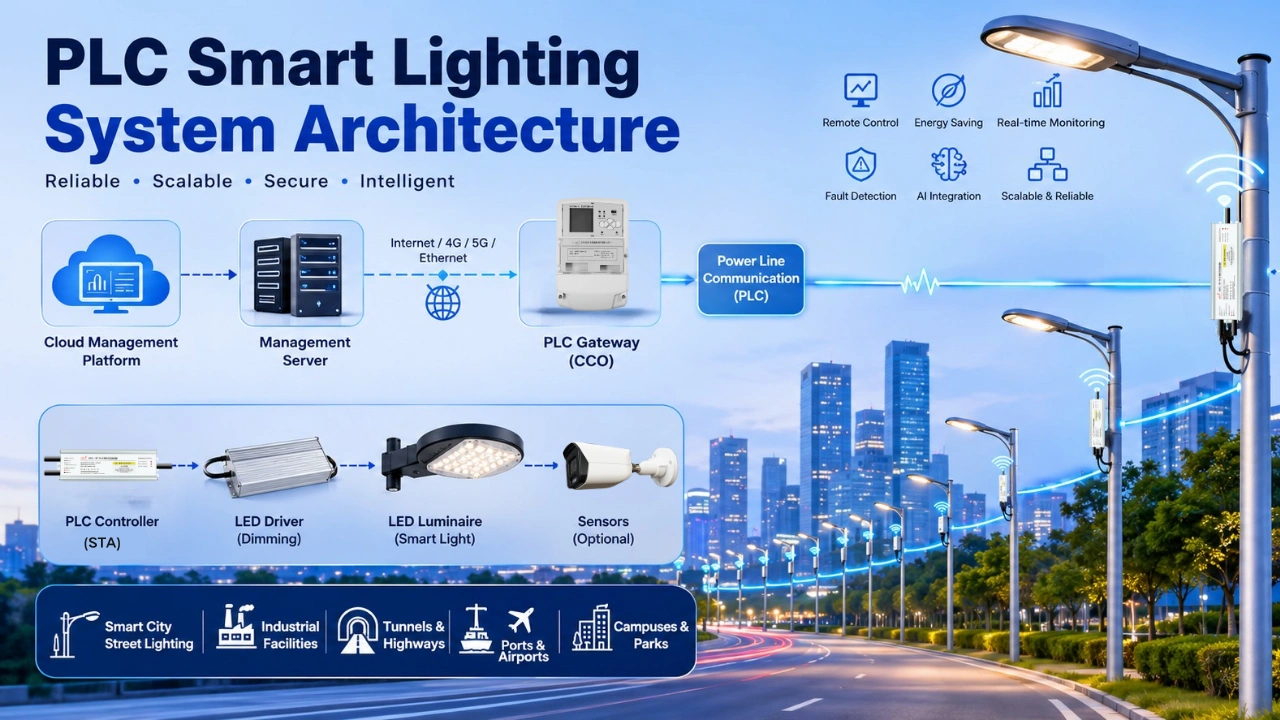
As smart cities and industrial facilities continue to modernize, lighting systems have evolved far beyond simple ON/OFF control. Today’s intelligent lighting networks require real-time monitoring, adaptive dimming, predictive maintenance, AI integration, and centralized management.
One of the most reliable communication technologies enabling this transformation is Power Line Communication (PLC).
Unlike wireless technologies that rely on radio signals, PLC Smart Lighting System Architecture uses existing electrical power cables to transmit both electricity and communication data simultaneously. This approach significantly reduces deployment costs while improving communication stability in electrically noisy environments.
This guide explains the complete architecture of a PLC smart lighting system, the function of each component, network topology, communication workflow, and best practices for designing large-scale lighting projects.
What Is a PLC Smart Lighting System?
A PLC Smart Lighting System is an intelligent lighting control network that communicates through existing power lines.
Instead of installing additional communication cables or relying entirely on wireless signals, PLC modules transmit digital data over the same AC power network that powers the lighting fixtures.
The system allows operators to:
- Remote switch lighting
- Intelligent dimming
- Power consumption monitoring
- Equipment diagnostics
- Fault alarms
- Energy optimization
- Scheduling
- AI-based lighting control
- Sensor integration
- Asset management
The architecture is suitable for:
- Smart street lighting
- Tunnel lighting
- High mast lighting
- Industrial facilities
- Warehouses
- Ports
- Airports
- Campus lighting
- Smart factories
- Parking lots
Why Choose PLC Architecture?
Modern lighting infrastructure often spans hundreds or thousands of fixtures.
Traditional solutions frequently encounter problems such as:
- Weak wireless signals
- Signal interference
- Additional gateway installation
- Communication dead zones
- High maintenance costs
- Complex network planning
PLC architecture solves these issues by utilizing the existing electrical infrastructure.
Key advantages include:
- No additional communication wiring
- Lower installation cost
- Stable communication
- Strong anti-interference capability
- High security
- Long communication distance
- Easy expansion
- Reduced maintenance
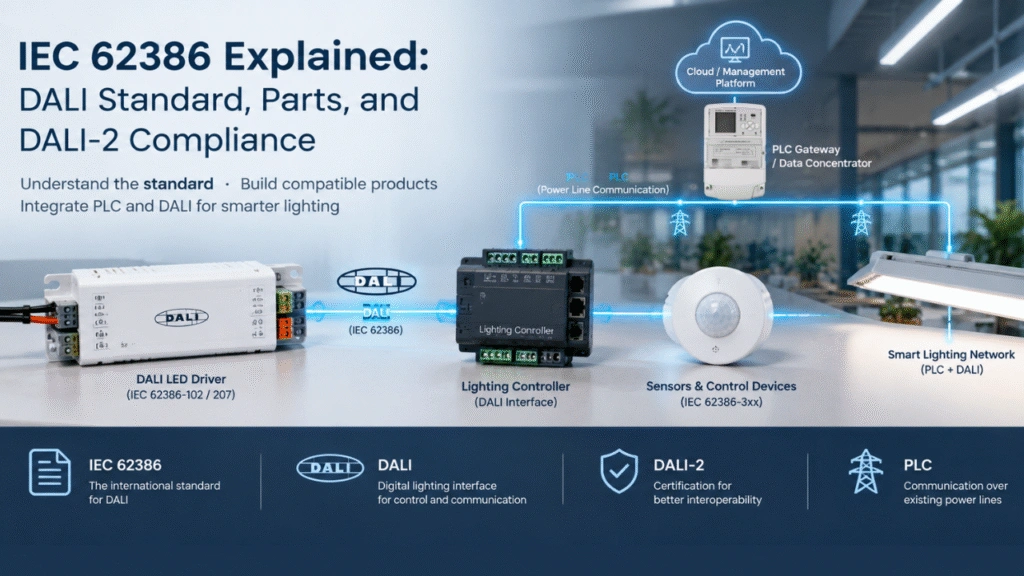
PLC Smart Lighting System Architecture Overview
Below is the typical communication hierarchy.
Cloud Management Platform
           │
     Internet / VPN
           │
  Smart Lighting Server
           │
   Ethernet / 4G / 5G
           │
 PLC Gateway (CCO)
           │
 Existing Power Line
           │
 ───────────────────────────────
 │      │      │      │
PLC     PLC    PLC    PLC
Node    Node   Node   Node
(STA)   (STA)  (STA)  (STA)
 │        │      │      │
LED      LED    LED    LED
Driver   Driver Driver Driver
 │
Sensors
This layered architecture enables centralized management while maintaining distributed intelligence at each lighting fixture.
System Components
1. Cloud Management Platform
The cloud platform serves as the brain of the entire lighting network.
Typical functions include:
- Remote management
- Device configuration
- Energy reports
- Asset management
- GIS map visualization
- AI analytics
- Alarm management
- User permissions
- Firmware upgrades
- API integration
Cloud deployment enables operators to manage thousands of lighting fixtures from anywhere.
2. Central Management Server
The management server processes communication between gateways and the cloud.
Responsibilities include:
- Data storage
- Device authentication
- Real-time communication
- Historical data analysis
- Database synchronization
- Event logging
Large cities often deploy redundant servers for higher reliability.
3. PLC Gateway (CCO)
The Central Coordinator (CCO) acts as the master device of each PLC network.
Its responsibilities include:
- Building PLC networks
- Device discovery
- Address allocation
- Routing management
- Network synchronization
- Data forwarding
- Communication scheduling
The gateway typically communicates with the cloud through:
- Ethernet
- Fiber
- 4G LTE
- Cat.1
- 5G
- VPN
One gateway can manage dozens or even hundreds of lighting nodes depending on the network design.
4. Power Line Communication Network
This is the communication backbone.
Instead of radio transmission, digital packets travel over existing AC power cables.
Benefits include:
- No RF interference
- Excellent penetration
- Stable outdoor communication
- Reduced infrastructure cost
- Easy retrofit projects
5. PLC Lighting Nodes (STA)
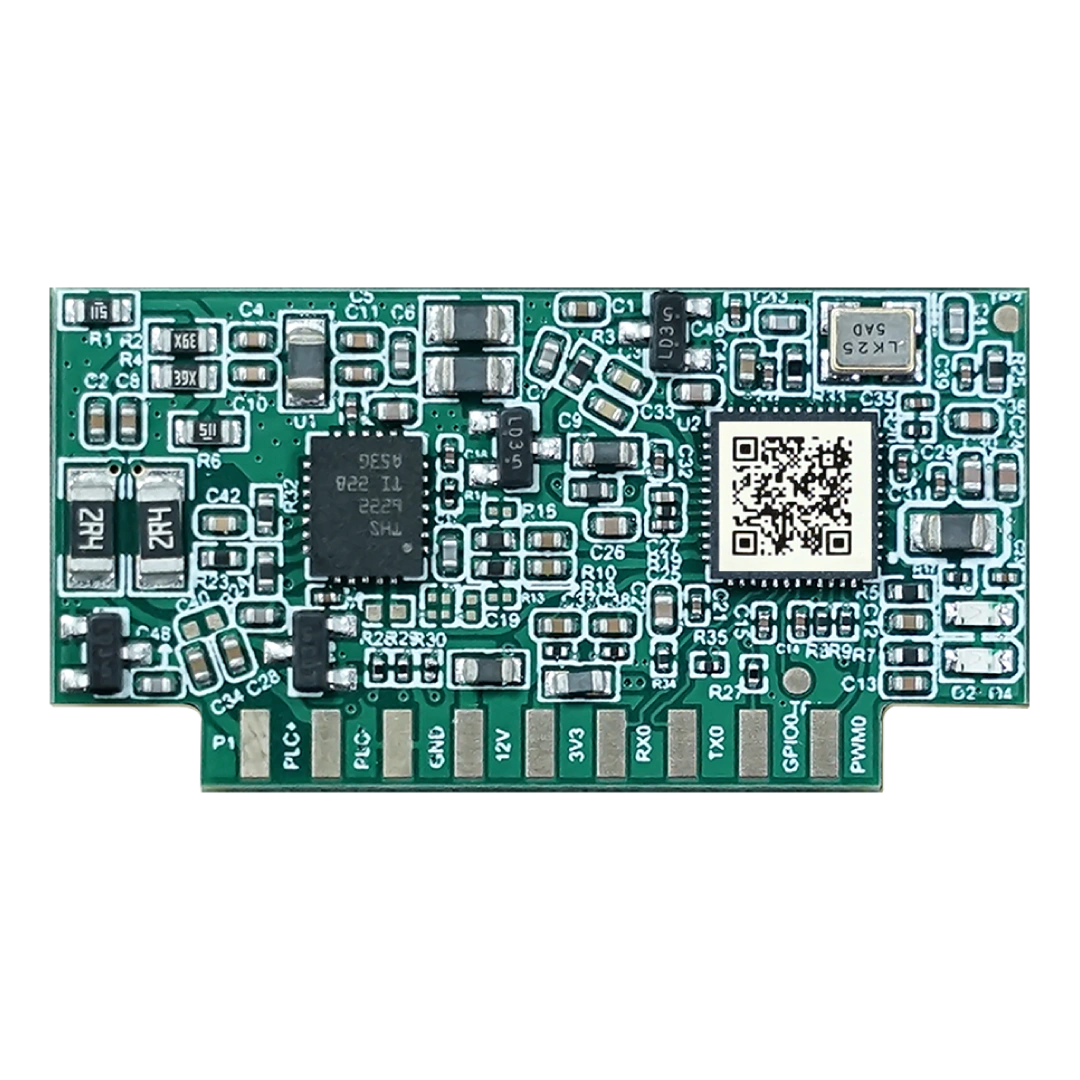
Each lighting fixture contains a PLC communication module.
These intelligent nodes perform:
- Switching
- Dimming
- Power monitoring
- Voltage monitoring
- Current monitoring
- Fault reporting
- Temperature monitoring
- Runtime statistics
Each node communicates directly with the gateway over the power line.
6. LED Driver
The smart LED driver converts electrical power while receiving dimming commands from the PLC node.
Supported dimming interfaces include:
- 0-10V
- DALI
- PWM
- Custom interfaces
Brightness can automatically adjust according to schedules, traffic density, weather, or AI decisions.
7. Sensors
Sensors provide real-time environmental information.
Typical sensor types include:
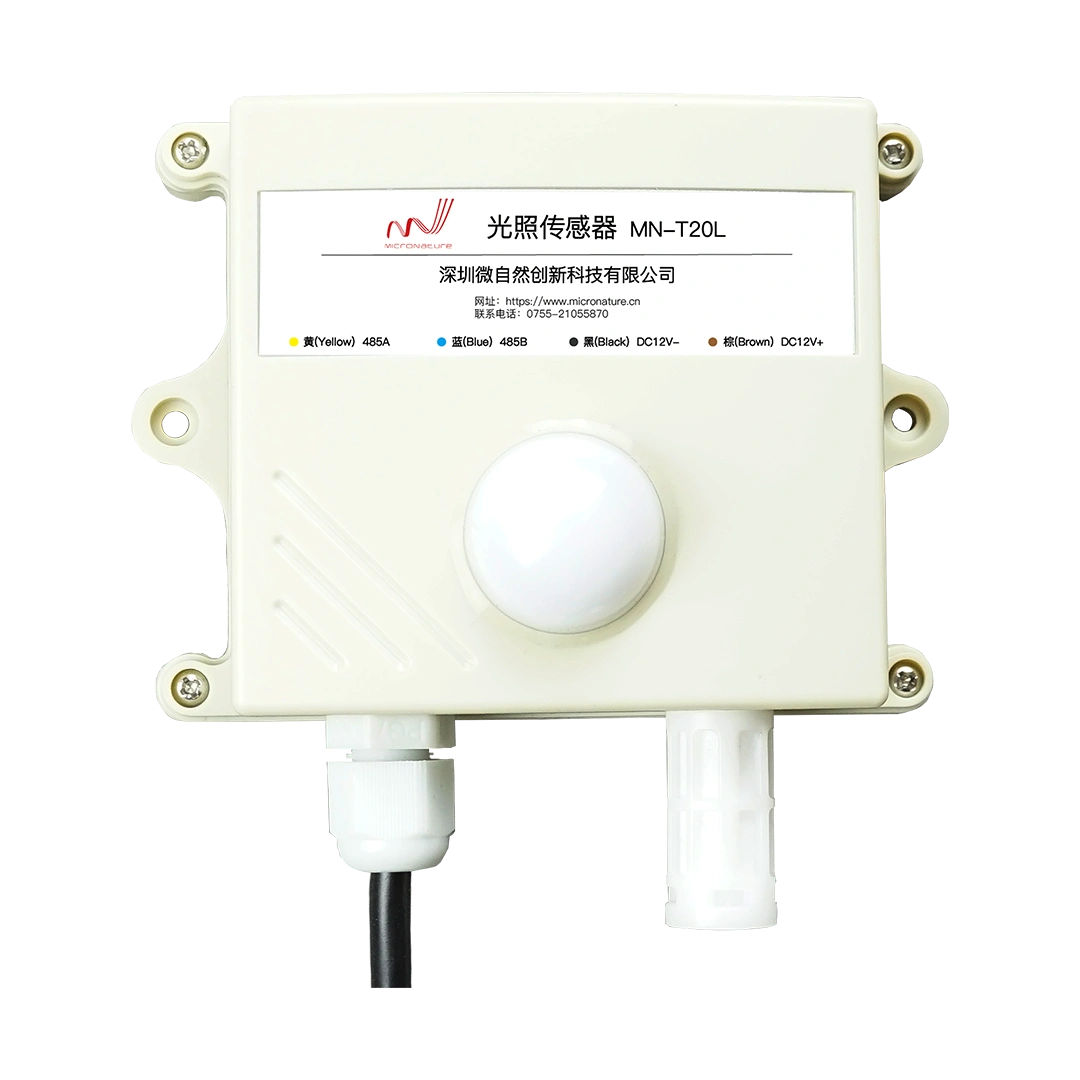
- Ambient light sensors
- Motion sensors
- Microwave sensors
- Radar sensors
- AI Vision cameras
- Temperature sensors
- Humidity sensors
- Environmental sensors
Sensor data enables adaptive lighting strategies that improve energy efficiency while maintaining safety.
Communication Workflow
The complete communication process typically follows these steps:
Step 1
The cloud platform issues a lighting command.
Example:
Dim all street lights to 40%.
↓
Step 2
The server forwards the command to the appropriate PLC gateway.
↓
Step 3
The gateway converts the instruction into PLC communication packets.
↓
Step 4
Commands travel over existing power lines.
↓
Step 5
Each PLC node receives its command.
↓
Step 6
The LED driver adjusts brightness.
↓
Step 7
Status information returns through the same PLC network back to the cloud.
This closed-loop communication enables real-time monitoring and verification.
Typical Network Topologies
Star Topology
Suitable for:
- Small parking lots
- Buildings
- Campuses
Advantages:
- Simple deployment
- Easy maintenance
Tree Topology
Suitable for:
- Residential streets
- Industrial parks
- Municipal roads
Advantages:
- Excellent scalability
- Lower cable cost
Mesh Topology
Suitable for:
- Smart cities
- Large industrial facilities
- Ports
- Airports
Advantages:
- Self-healing communication
- Multiple routing paths
- High reliability
PLC systems can combine multiple topologies within the same project.
AI Integration
Modern PLC systems increasingly integrate AI capabilities.
Examples include:
- Traffic-based dimming
- Pedestrian detection
- Vehicle counting
- Parking occupancy
- Security monitoring
- Energy optimization
- Predictive maintenance
- Carbon reduction analytics
AI Vision sensors can process events locally while communicating results over the PLC network.
Cybersecurity Considerations
A modern PLC architecture should include:
- Device authentication
- AES encryption
- Secure firmware upgrades
- Role-based user permissions
- VPN communication
- HTTPS APIs
- Event logging
- Network isolation
Security should be considered during system design rather than added afterward.
Scalability
One of the greatest strengths of PLC architecture is its scalability.
Projects can begin with a single road or facility and gradually expand without redesigning the communication infrastructure.
Large deployments often include:
- Multiple gateways
- Multiple substations
- Thousands of PLC nodes
- Regional cloud management
- Multi-site dashboards
This makes PLC an ideal solution for smart city expansion projects.
Typical Applications
PLC smart lighting architecture is widely used in:
| Application | Benefits |
|---|---|
| Smart Street Lighting | Centralized management |
| Highway Lighting | Reliable long-distance communication |
| Tunnel Lighting | Stable communication in enclosed environments |
| Industrial Facilities | Strong anti-interference performance |
| Ports | Long cable distance support |
| Airports | High reliability |
| Warehouses | Easy retrofit |
| Smart Campuses | Energy optimization |
| Parking Lots | Adaptive lighting |
| Smart Factories | IoT integration |
Best Practices for System Design
To maximize system performance:
- Design gateway coverage according to electrical distribution.
- Minimize unnecessary electrical noise sources.
- Select industrial-grade PLC modules for outdoor environments.
- Plan future expansion during the initial design phase.
- Integrate sensors to enable adaptive lighting control.
- Use cloud dashboards for centralized monitoring and maintenance.
- Implement secure communication protocols and regular firmware updates.
Why MicroNature PLC Smart Lighting Solutions?
MicroNature designs complete PLC smart lighting solutions that combine communication hardware, intelligent controllers, cloud software, and AI-enabled sensing technologies.
Our solutions support:
- PLC communication over existing power lines
- Remote monitoring and lighting control
- Smart LED dimming
- AI Vision sensor integration
- Energy consumption analysis
- Fault detection and maintenance alerts
- Open APIs for third-party platforms
- Custom hardware and software development
- Industrial-grade reliability for harsh environments
Whether you’re upgrading an existing lighting network or deploying a new smart city project, a well-designed PLC architecture can reduce installation costs, improve operational efficiency, and provide a scalable foundation for future IoT expansion.